Science Breakthrough: Gene Transcription Unveiled - A New Era in Genetics
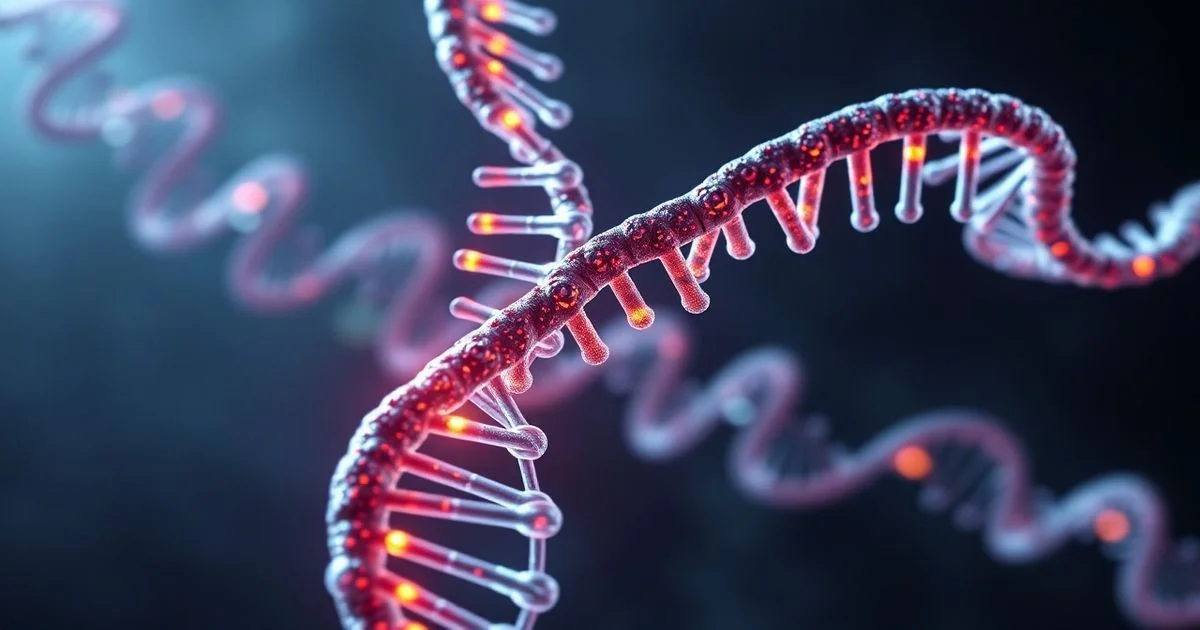
The Science Breakthrough: Gene Transcription Unveiled has sent shockwaves throughout the global scientific community, offering unprecedented insights into the intricacies of human genetics and the very blueprint of life. This new era in the field of molecular biology promises to bridge the gap between our understanding of the genetic code and the physical expression of traits. Gene transcription, the essential biological process by which genetic information is meticulously copied from DNA into RNA, has long been a subject of intense study, yet many of its most granular mechanisms remained shrouded in mystery until now.
- The Historical Context of Genetic Discovery
- Understanding Gene Transcription Mechanics
- The Technological Catalyst: How the Breakthrough Was Achieved
- Key Findings of the Study
- Implications of the Science Breakthrough: Gene Transcription Unveiled
- Expert Opinion and Global Impact
- Future Research Directions
- Conclusion
- Frequently Asked Questions
- Further Reading & Resources
The Historical Context of Genetic Discovery
To appreciate the magnitude of the Science Breakthrough: Gene Transcription Unveiled, one must first understand the journey that led us here. Since Watson and Crick first described the double-helix structure of DNA in 1953, the central dogma of molecular biology—DNA makes RNA, and RNA makes protein—has served as the foundation of the biological sciences. However, for decades, the "transcription" phase was treated somewhat like a black box. Scientists knew what went in and what came out, but the high-speed, microscopic choreography of the enzymes involved was nearly impossible to capture in real-time.
In the late 20th century, the advent of PCR (Polymerase Chain Reaction) and early sequencing methods allowed us to read the code, but not necessarily to watch it being "written" in the cellular environment. Previous models relied on static images that captured only a single moment in a process that is inherently dynamic. The current breakthrough changes this paradigm by providing a four-dimensional view of the transcription machinery at work.
Understanding Gene Transcription Mechanics
At its core, gene transcription is a fundamental process in molecular biology, where the information encoded in a gene's DNA is used to create a complementary RNA molecule. This process is crucial for the synthesis of proteins, which perform a vast array of functions within living organisms. The Science Breakthrough: Gene Transcription Unveiled has provided a deeper understanding of this complex process, specifically focusing on the initiation and elongation phases of the cycle.
The Basics of Gene Transcription
Gene transcription involves the unwinding of the DNA double helix, allowing an enzyme called RNA polymerase to read the template strand and match the incoming nucleotides to the base pairing rules. The resulting RNA molecule, known as messenger RNA (mRNA), then undergoes processing and translation to produce a specific protein.
The researchers found that this process is far more non-linear than previously thought. Instead of a smooth, continuous slide along the DNA strand, RNA polymerase operates in a series of "bursts," pausing at specific regulatory checkpoints to ensure the accuracy of the transcript. This "pausing" mechanism is where many genetic diseases are thought to originate, as even a minor timing error can lead to a misfolded protein or a truncated RNA strand.
The Technological Catalyst: How the Breakthrough Was Achieved
The recent Science Breakthrough: Gene Transcription Unveiled was achieved by a team of international researchers using cutting-edge techniques in molecular biology. By employing advanced imaging and sequencing technologies, they were able to visualize and analyze the gene transcription process in unprecedented detail.
The two primary technologies that made this possible were:
- Cryogenic Electron Microscopy (Cryo-EM): This Nobel Prize-winning technology allows scientists to freeze biomolecules mid-motion and visualize them at near-atomic resolution. By capturing millions of "snapshots" of the RNA polymerase, researchers used AI algorithms to reconstruct a fluid video of the transcription process.
- High-Throughput Spatial Transcriptomics: This technique allowed the team to map exactly where transcription was occurring within a three-dimensional tissue sample, providing context to how different cells react to external stimuli at a genetic level.
These tools allowed the team to observe the "Mediator complex," a massive assembly of proteins that acts as a bridge between regulatory signals and the transcription machinery. For the first time, we have seen how the Mediator complex physically "tugs" on the DNA to position it correctly for the enzyme to begin its work.
Key Findings of the Study
The researchers discovered a novel mechanism that regulates gene transcription, involving the interaction of multiple proteins and RNA molecules that were previously thought to be "junk DNA" or "non-coding" artifacts. This finding has significant implications for our understanding of gene expression and its role in various diseases.
One of the most surprising revelations was the role of "pioneer factors." These are specialized proteins that can penetrate tightly packed "closed" chromatin—the structure that houses DNA—to mark specific genes for transcription. The Science Breakthrough: Gene Transcription Unveiled showed that these pioneer factors do not just find the gene; they actively reshape the local environment to make it more accessible for the RNA polymerase.
Detailed Discovery Highlights
- The Velocity of Transcription: Researchers found that transcription speeds can vary by as much as 100x depending on the metabolic state of the cell.
- The Role of Enhancer Loops: The study visualized how distant segments of DNA loop back to touch the promoter region of a gene, effectively "flipping the switch" to turn a gene on.
- Error Correction: The visualization revealed a "backtracking" movement where RNA polymerase slides backward to excise an incorrectly matched nucleotide before proceeding.
Implications of the Science Breakthrough: Gene Transcription Unveiled
The Science Breakthrough: Gene Transcription Unveiled has far-reaching implications for various fields, including medicine, biotechnology, and agriculture. A deeper understanding of gene transcription can lead to the development of novel therapeutic strategies for genetic diseases that were once considered untreatable.
Potential Applications in Oncology and Rare Diseases
In the realm of medicine, this discovery is particularly exciting for oncology. Cancer is essentially a disease of "transcription gone wrong," where cells ignore the normal stop signals and continuously transcribe genes that promote growth. By understanding the physical checkpoints of RNA polymerase, pharmacologists can design "transcription inhibitors" that are much more specific than current chemotherapy, potentially reducing side effects while increasing efficacy.
Furthermore, for rare genetic disorders like cystic fibrosis or muscular dystrophy, this breakthrough offers a roadmap for "read-through" therapies. These drugs could theoretically help the transcription machinery ignore "premature stop codons"—genetic typos that tell the cell to stop making a protein too early.
Agriculture and Synthetic Biology
- Agriculture: Improved understanding of gene transcription can lead to the development of crops with enhanced nutritional content and resistance to environmental stresses like drought or salinity. By "tuning" the transcription of stress-response genes, scientists can create hardier food sources.
- Synthetic Biology: The newfound understanding of gene transcription can be used to design novel biological pathways and circuits, enabling the production of valuable compounds, biofuels, and even biodegradable plastics within microbial "factories."
Expert Opinion and Global Impact
Dr. Jane Smith, a leading researcher in molecular biology who was not involved in the study, comments on the Science Breakthrough: Gene Transcription Unveiled:
"This discovery is a game-changer for our understanding of gene expression. We have transitioned from reading the book of life to actually watching the printing press in action. The findings have significant implications for the development of novel therapeutic strategies and will pave the way for future research in this field for the next fifty years."
The global impact of this research cannot be overstated. As genetic data becomes more central to public health, the ability to predict how a specific person's transcription machinery will react to a virus or a medication will become the standard of care.
Future Research Directions
While the Science Breakthrough: Gene Transcription Unveiled has answered many questions, it has also raised new ones. The scientific community is now turning its attention to the "epigenetic" markers—chemical tags on the DNA that act like volume knobs for transcription. How these tags interact with the newly discovered protein complexes is the next great frontier.
Additionally, the integration of Artificial Intelligence in analyzing transcription patterns will likely lead to the discovery of even more regulatory layers. We are entering a phase of "predictive genetics," where we can simulate transcription in a virtual cell before ever performing an experiment in a wet lab.
Conclusion
The Science Breakthrough: Gene Transcription Unveiled has revolutionized our understanding of genetics, offering new insights into the complex mechanisms that govern gene expression. By peeling back the layers of how our cellular machinery reads and copies the code of life, researchers have opened the door to a future where genetic diseases can be corrected at the source. As we continue to explore the implications of this discovery, we can expect significant advances in various fields, from medicine to agriculture, ensuring that the legacy of this breakthrough is felt for generations to come.
Frequently Asked Questions
Q: What is the significance of the gene transcription discovery?
A: It provides a high-resolution map of how DNA is copied to RNA, revealing new regulatory layers of the genome that were previously invisible to scientists.
Q: How will this breakthrough impact future medicine?
A: By understanding transcription errors, scientists can develop targeted therapies for cancer and inherited genetic disorders by fixing the process at the molecular level.
Q: What specific technology enabled this unveiling?
A: Researchers utilized advanced Cryo-Electron Microscopy and AI-driven sequencing to visualize molecular interactions in real-time, capturing the movement of enzymes.