Unmasking Deception: Political 'Fake Letter' Goes Viral in India, Igniting Debate
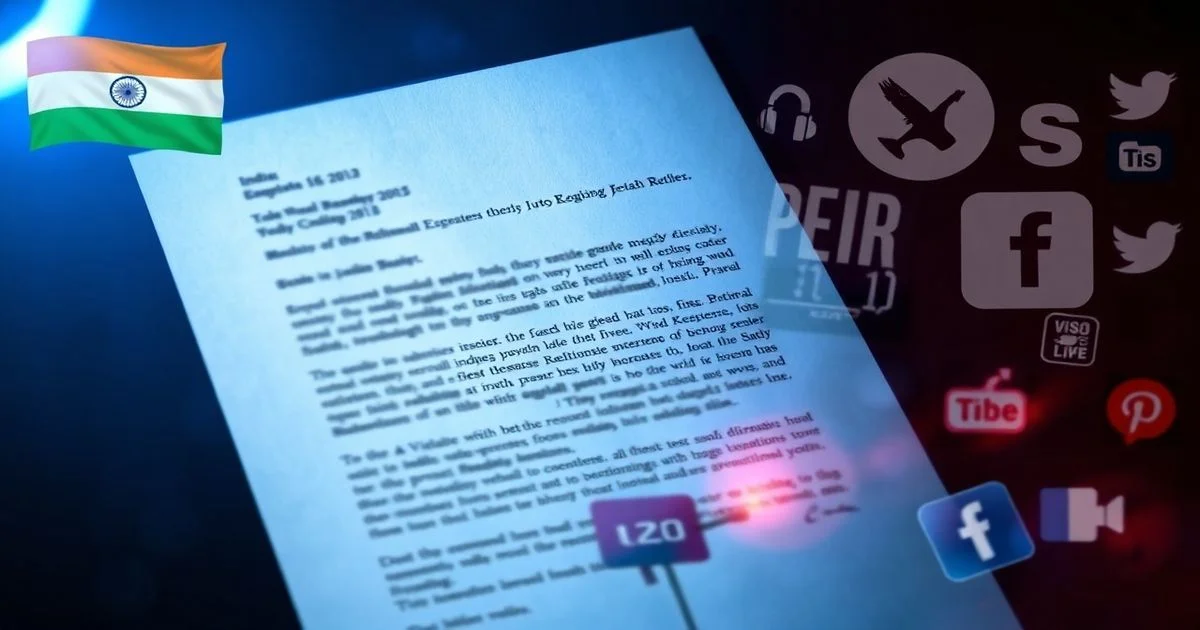
The digital landscape in India has once again become the battleground for political narratives, with a recent Political 'Fake Letter' Goes Viral in India, sparking intense debate and raising critical questions about the spread of misinformation. This incident underscores the volatile nature of online communication and the speed at which unverified information can permeate public discourse, potentially influencing opinions and trust. The widespread circulation of this forged document has forced a closer look at the mechanisms behind digital deception and its profound implications for the nation's political future.
- The Anatomy of a Viral Hoax: Unpacking the Fake Letter's Spread
- The Escalating Challenge: How a Political 'Fake Letter' Goes Viral in India
- Immediate Fallout and Public Reaction
- Legal and Ethical Dimensions of Digital Deception
- Combating Digital Deception: Strategies and Solutions
- Conclusion: Safeguarding Democratic Discourse
- Frequently Asked Questions
- Further Reading & Resources
The Anatomy of a Viral Hoax: Unpacking the Fake Letter's Spread
The incident began with the rapid dissemination of a seemingly official letter across various social media platforms, including WhatsApp, X (formerly Twitter), and Facebook. Purporting to be from a prominent political entity or individual, the letter contained fabricated statements designed to create controversy and discredit opponents. Its rapid spread was amplified by instant messaging groups and the echo chambers prevalent in online communities. The letter's content often played into existing political tensions or popular grievances, making it highly shareable for those already inclined to believe its message. Analysts point out that the sophisticated design, at first glance, lent an air of authenticity, deceiving many unsuspecting readers who then shared it further without verification.
The speed at which such content travels online highlights the significant challenges faced by individuals and institutions alike in distinguishing fact from fiction. This particular 'fake letter' leveraged emotional triggers and pre-existing biases, a common tactic in disinformation campaigns, reminiscent of how AI-generated fake content can spread rapidly. Its design mimicked official stationery, sometimes even including forged signatures or seals, to enhance its credibility.
The Escalating Challenge: How a Political 'Fake Letter' Goes Viral in India
The phenomenon of political disinformation, including the use of forged documents, is not new to India but has intensified with the proliferation of internet access and smartphone usage. Prior to major elections or significant political events, there is often an observed surge in such malicious content. Experts suggest that these campaigns are often orchestrated to sway public opinion, undermine rival parties, or create confusion among the electorate. The ease of creating and sharing digital content, combined with the difficulty of tracing its original source, makes platforms fertile ground for such activities, sometimes leading to early-career woes going viral on platforms like Reddit as discussions intensify.
Several past incidents have demonstrated how fabricated letters or documents have been used to spread false narratives about political leaders, government policies, or social issues. For instance, during state assembly elections, bogus press releases or internal memos have sometimes surfaced, attempting to sow discord or falsely accuse candidates of misconduct. The objective is almost always to manipulate public perception and, ultimately, influence electoral outcomes. The rise of deepfake technology, while not directly implicated in this 'fake letter' incident, also poses a future threat, blurring the lines between reality and fabrication even further.
The Role of Social Media Platforms
Social media platforms play a dual role in this scenario. While they facilitate rapid information sharing and public discourse, they also serve as conduits for misinformation. Their algorithms, designed to maximize engagement, can inadvertently amplify sensational or emotionally charged content, regardless of its veracity. This creates a challenging environment where false narratives can gain significant traction before fact-checkers or official channels can intervene. Efforts by these platforms to combat misinformation have been met with mixed success, often struggling to keep pace with the sheer volume and evolving tactics of disinformation campaigns.
Platforms are under increasing pressure to implement more robust verification mechanisms and to quickly take down content identified as fake. However, this is a complex task, balancing freedom of speech with the need to prevent harm. The scale of user-generated content in a country like India, with its diverse languages and vast user base, presents unique operational challenges for content moderation teams.
Immediate Fallout and Public Reaction
The viral circulation of the fake letter prompted immediate and strong reactions from various stakeholders. Political parties, whose names or symbols were misused, swiftly denounced the document as a fabrication and called for investigations. They emphasized the malicious intent behind such acts, aiming to tarnish reputations and mislead the public. News organizations and independent fact-checkers quickly sprang into action, debunking the claims made in the letter and providing factual clarifications. Their efforts were crucial in counteracting the initial wave of misinformation, but often faced an uphill battle against content that had already gained significant viral momentum.
The public reaction was diverse. While many were quick to identify the letter as fake, a significant portion of the online audience initially believed its contents, leading to widespread confusion and heated debates in online forums. This highlights the varying levels of media literacy among the general population and the need for continuous education on how to critically evaluate online information. The incident also generated a fresh wave of public discourse on the ethics of political campaigning and the responsibility of individuals to verify information before sharing it.
Calls for Action and Accountability
In the wake of the incident, there have been renewed calls for stronger regulatory measures and increased accountability for those who create and disseminate fake content. Political leaders and civil society organizations have urged law enforcement agencies to thoroughly investigate the origins of the fake letter and take punitive action against the perpetrators. The demand for digital forensic capabilities to trace the source of such disinformation campaigns has also intensified.
Furthermore, discussions have emerged about the need for greater collaboration between government bodies, social media companies, and civil society to develop comprehensive strategies for combating misinformation. This includes strengthening legal frameworks, enhancing public awareness campaigns, and promoting media literacy initiatives at a grassroots level.
Legal and Ethical Dimensions of Digital Deception
The spread of a fake political letter in India touches upon several critical legal and ethical considerations. From a legal standpoint, the fabrication and dissemination of such documents can fall under various sections of the Indian Penal Code (IPC), including those related to forgery, defamation, promoting enmity between different groups, and public mischief. Proving intent and tracing the source, however, remains a significant challenge for law enforcement. The Information Technology (IT) Act, 2000, also provides a framework to deal with cybercrimes, including the spread of false information through electronic means. Yet, enforcement often lags behind the speed of technological evolution and the anonymity offered by certain platforms. The recent amendments to IT rules also aim to bring more accountability to digital intermediaries, though implementation faces continuous scrutiny. The psychological impact on the public, creating an environment of suspicion and distrust, further exacerbates societal divisions.
Ethically, the deliberate creation and spread of a fake letter represent a profound breach of trust and journalistic integrity, even when not disseminated by traditional media. It fundamentally undermines the democratic process by manipulating public opinion through deceit, eroding the very fabric of informed discourse. For individuals sharing such content, there's a critical ethical responsibility to verify information, especially when it carries significant political implications. This obligation extends beyond avoiding legal repercussions; it's about upholding the principles of digital citizenship and contributing to a healthy public sphere. The pervasive 'share first, think later' mentality contributes significantly to the problem, making individuals unwitting participants in disinformation campaigns.
Challenges in Prosecution and Enforcement
Despite the existing legal provisions, prosecuting cases involving online misinformation, especially a political 'fake letter' that goes viral in India, presents unique challenges. Jurisdictional issues arise when content originates from outside India or is amplified by servers located in different countries. The ephemeral nature of online data and the use of encrypted messaging services further complicate investigations. Law enforcement often requires technical assistance from platform providers, which can sometimes be a lengthy and complex process due to international data privacy laws and company policies.
Moreover, the sheer volume of misinformation means that law enforcement resources can be stretched thin, making it difficult to pursue every case. There's a constant need for specialized cybercrime units with advanced forensic capabilities and a deep understanding of digital ecosystems to effectively tackle this growing menace.
Combating Digital Deception: Strategies and Solutions
Addressing the challenge of fake letters and broader political misinformation requires a multi-pronged approach involving various stakeholders.
Government and Regulatory Measures
Governments can strengthen legal frameworks to deter the creation and dissemination of fake content, ensuring that penalties are stringent enough to act as effective deterrents. This includes regular review and updates to existing laws, such as the IT Act, to keep pace with evolving digital threats. They also need to invest heavily in enhancing the capabilities of cybercrime investigation units, equipping them with the necessary technology and specialized training to trace digital footprints across complex networks. Establishing dedicated task forces focused solely on disinformation campaigns could also provide a more agile response. Additionally, fostering international cooperation is crucial, as misinformation often crosses national borders, requiring coordinated efforts to track and prosecute perpetrators.
Social Media Platforms' Responsibilities
Platforms must enhance their content moderation efforts significantly, investing more in human moderators with linguistic and cultural expertise, alongside advanced AI-driven tools capable of identifying and flagging misinformation across India's diverse languages. Transparent policies regarding content removal and user accountability are also vital, ensuring consistent application and clear communication. They should actively explore ways to slow down the viral spread of potentially harmful content, perhaps by introducing 'friction points' like mandatory review prompts or temporary limits on forwarding messages, particularly in private groups. Furthermore, providing clear, easily visible labels for content that has been fact-checked and found to be false can significantly help users make informed decisions and prevent further unwitting dissemination.
Media and Fact-Checking Organizations
The role of traditional media and independent fact-checking organizations remains paramount. They must continue to rigorously verify claims, expose fake content, and present accurate information to the public. Building trust in credible news sources is an essential antidote to misinformation. Collaborative networks of fact-checkers can amplify their reach and impact, debunking false narratives more efficiently.
Public Awareness and Media Literacy
Ultimately, an informed citizenry is the strongest defense against misinformation. Comprehensive media literacy programs, integrated into educational curricula and public awareness campaigns, can empower individuals to critically evaluate online content. Teaching people how to identify common traits of fake news, verify sources, and understand their own biases is fundamental. Initiatives that encourage users to pause and question before sharing can also make a significant difference, much like the online discussions surrounding viral debates ignited by user-generated videos.
Technological Solutions
Innovation in technology can also play a part. Developing more sophisticated AI tools for real-time content verification, identifying deepfakes, and tracing the origin of digital documents could offer new avenues for combating deception. Blockchain technology has also been explored as a potential tool for authenticating digital content and establishing an immutable record of its origin.
Conclusion: Safeguarding Democratic Discourse
The incident of the Political 'Fake Letter' Goes Viral in India serves as a stark reminder of the persistent and evolving threat posed by digital misinformation to democratic processes and public trust. While the immediate focus is on debunking specific falsehoods, the long-term challenge lies in building resilience against such deceptive tactics. This requires a concerted, collaborative effort from governments, technology companies, media organizations, and individual citizens. By strengthening legal frameworks, enhancing platform accountability, promoting media literacy, and investing in technological solutions, India can work towards safeguarding the integrity of its political discourse and ensuring that truth, rather than fabrication, guides public opinion. The battle against fake news is continuous, but with collective effort, the digital information environment can become more trustworthy and conducive to informed debate.
Frequently Asked Questions
Q: What is the "Political 'Fake Letter' Goes Viral in India" incident?
A: This refers to a fabricated document that was widely circulated across social media platforms in India, purporting to be from a political entity. The letter contained false statements intended to create controversy and spread misinformation, igniting public debate.
Q: Why do fake letters and disinformation spread so easily in India?
A: The proliferation of internet access, smartphone usage, and instant messaging groups in India provides fertile ground. Disinformation campaigns often leverage emotional triggers and pre-existing biases, making content highly shareable, while sophisticated designs can lend an air of authenticity.
Q: What are the consequences of spreading political fake letters?
A: Such actions can mislead the public, manipulate political discourse, and undermine trust in institutions and the democratic process. Legally, perpetrators can face charges under sections of the Indian Penal Code for forgery, defamation, and promoting enmity, though tracing sources remains challenging.