History and evolution of major marathon races: A Deep Dive
The history and evolution of major marathon races represent a deep dive into the intersection of human endurance, athletic history, and modern technological evolution. What began as a desperate, solitary journey by a Greek messenger has transformed into a multi-billion dollar global industry supported by cutting-edge sports science. From the dusty roads of Athens in 1896 to the carbon-plated, laser-guided world of modern "Super Shoes," the evolution of this race mirrors the progress of human physiology and global connectivity. In this guide, we will analyze the pivotal moments, the technical milestones, and the institutional shifts that shaped the world's most prestigious long-distance events.
- The Mythological Foundations of the Marathon
- The 1904 St. Louis Anomaly
- The Standardization Crisis: Why 26.2 Miles?
- The Birth of the Big Six: The Abbott World Marathon Majors
- Technical Evolution: From Leather Boots to Carbon Fiber
- The Digitization of the Race: RFID and Real-Time Data
- The Sub-Two Hour Quest: Breaking the Barrier
- Social and Cultural Evolution
- Frequently Asked Questions
- Conclusion
- Further Reading & Resources
The Mythological Foundations of the Marathon
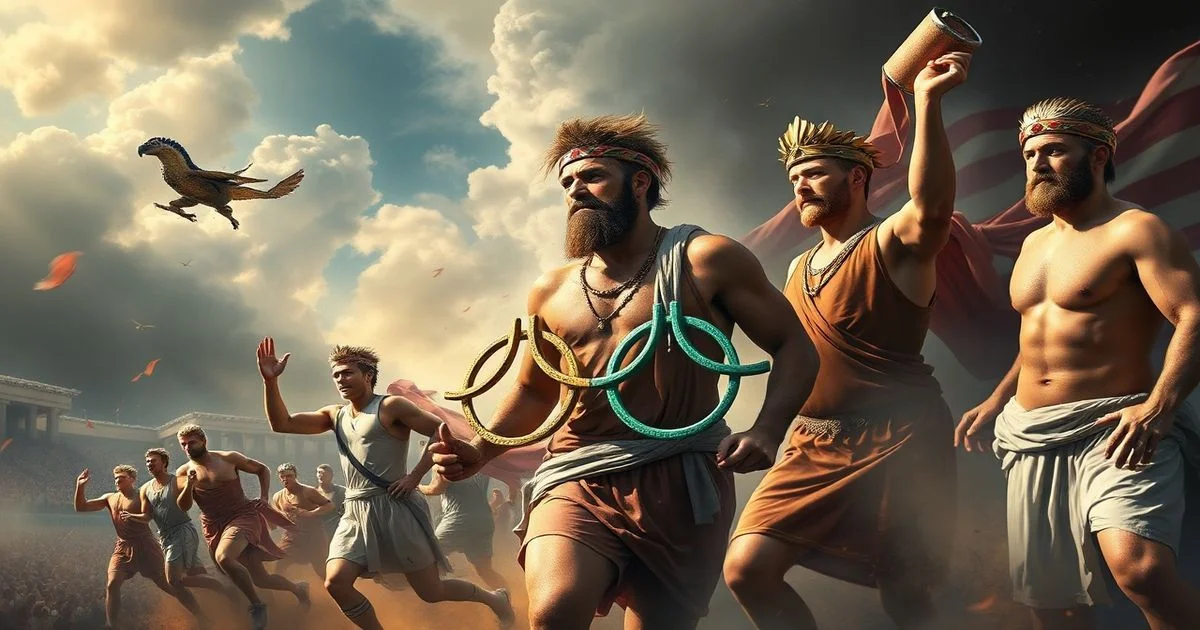
While the marathon is now a standardized distance of 26.2 miles, its origins are rooted in a blend of history and folklore. The legend of Pheidippides, a Greek messenger who allegedly ran from the Battle of Marathon to Athens in 490 BCE to announce victory over the Persians, serves as the cultural cornerstone. According to the myth, he collapsed and died after shouting "Nike!" (Victory).
While historical accounts from Herodotus suggest Pheidippides actually ran 150 miles from Athens to Sparta to seek help, the 25-mile journey from the battlefield to the capital captured the imagination of the organizers of the first modern Olympics. This transition from myth to sport is a key pillar in understanding the History of the Olympic Games: A Deep Dive, where the marathon was established as the ultimate test of human grit.
In 1896, the inaugural Olympic Games in Athens featured a marathon of approximately 40 kilometers (24.8 miles). This race was won by Spyridon Louis, a Greek water carrier, whose victory solidified the marathon as the centerpiece of the Olympic movement. This era was defined by "pedestrianism," where endurance was viewed through a lens of raw survival rather than scientific optimization.
The 1904 St. Louis Anomaly
To fully grasp the evolution of the race, one must look at the chaotic 1904 Olympic Marathon in St. Louis. This event was arguably the most bizarre in the history of the sport. The course was run on dusty, unpaved roads in 90-degree heat, with only two water stops available for the entire 24.8-mile distance.
The winner, Thomas Hicks, was essentially poisoned by his trainers to keep him moving, as they administered doses of strychnine (then used as a stimulant) mixed with brandy. Another competitor, Fred Lorz, famously hitched a ride in a car for 11 miles of the race before being caught. These early races lacked the standardization and safety protocols we see today, serving as a cautionary tale that eventually led to more rigorous governing bodies.
The Standardization Crisis: Why 26.2 Miles?
One of the most frequent questions regarding the history and evolution of major marathon races is the specific distance: 42.195 kilometers or 26.219 miles. For the first several years of the modern era, the distance was approximate and varied from race to race.
The 1908 London Influence
The shift to the current standardized distance occurred during the 1908 London Olympics. Originally, the course was planned to be exactly 26 miles, starting at Windsor Castle and ending at the Olympic Stadium. However, Queen Alexandra requested that the race finish directly in front of the Royal Box. This required an extra 385 yards to be added to the end of the track.
This specific distance—26.2 miles—was not immediately adopted as the universal standard. It took until 1921 for the International Amateur Athletic Federation (IAAF) to formally codify 42.195 kilometers as the official marathon distance, citing the 1908 London race as the definitive template.
The Impact of Standardization
Standardization was the first major "technical" hurdle the marathon had to clear. Without a fixed distance, comparisons of world records were impossible. The 1921 decision allowed for:
- The creation of a global leaderboard for elite athletes.
- The development of accurate training regimens based on pace-per-mile.
- The rise of the "personal best" culture among amateur runners.
- Consistency in course certification and record-keeping.
The Birth of the Big Six: The Abbott World Marathon Majors
The evolution of the marathon reached a new plateau with the formation of the World Marathon Majors (WMM) in 2006. This collective established a championship-style points system for the world’s most elite runners, effectively creating a "Grand Slam" of running.
1. The Boston Marathon (Est. 1897)
Boston is the oldest annual marathon in the world. Its evolution is characterized by its strict qualifying standards, making it the "Mecca" for amateur runners. Unlike other majors, Boston’s course is point-to-point and notoriously hilly, particularly at the infamous "Heartbreak Hill." Interestingly, because the course is a net downhill, world records set in Boston are not officially recognized by World Athletics.
2. The New York City Marathon (Est. 1970)
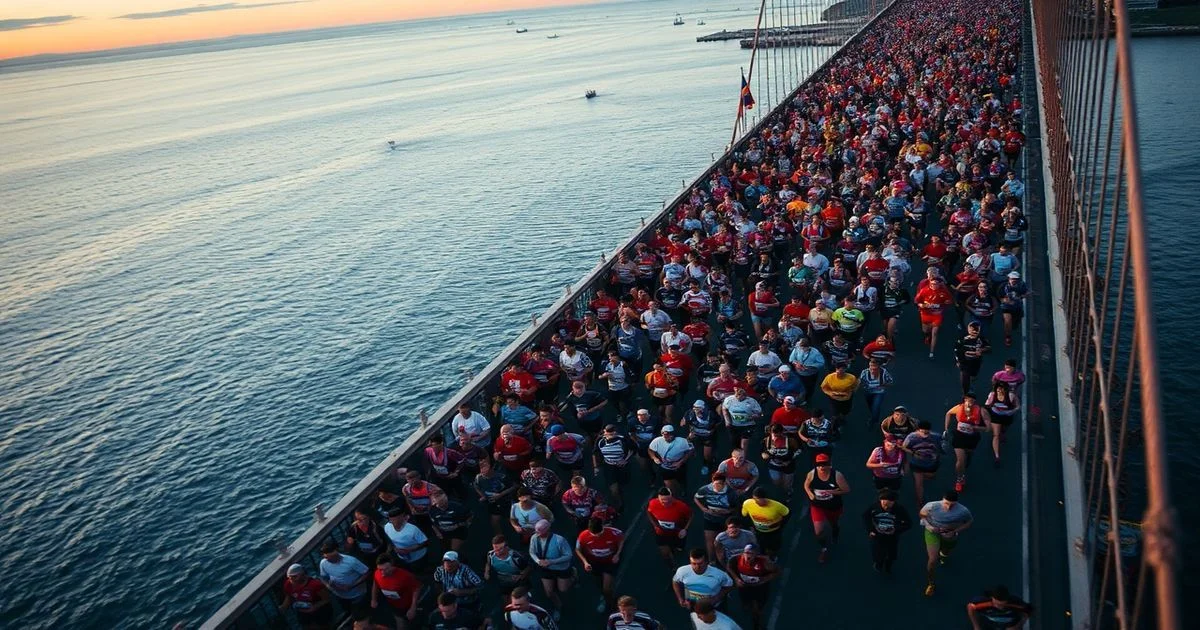
NYC transformed the marathon from a park-based event into a five-borough urban spectacle. In its early years, the race consisted of loops around Central Park. In 1976, to celebrate the U.S. Bicentennial, race director Fred Lebow moved the course through all five boroughs, creating the blueprint for the "Big City Marathon" that focuses on spectator engagement and civic pride. Today, the race sees over 50,000 finishers annually.
3. The Chicago Marathon (Est. 1977)
Chicago is known for its flat, fast "pancake" course. It has been the site of multiple world records, utilizing a grid-system layout that minimizes sharp turns and elevation changes. This race highlights the "engineering" of a course to maximize human speed, proving that the environment is just as important as the athlete.
4. The London Marathon (Est. 1981)
Inspired by the New York City Marathon, Chris Brasher and John Disley founded the London Marathon to showcase the city's landmarks. It has evolved into a massive fundraising engine, consistently breaking records for the amount of money raised for charity in a single-day event. It also serves as the premier stage for the "Elite Women’s Only" world record.
5. The Berlin Marathon (Est. 1974)
Berlin is the undisputed capital of world records. Since 2003, the men's world record has been broken exclusively on Berlin’s asphalt. The evolution of the Berlin course focuses on optimal thermodynamics (cool weather) and a perfectly flat profile, making it a masterclass in event logistics.
6. The Tokyo Marathon (Est. 2007)
The newest member of the Majors, Tokyo represents the sport’s expansion into Asia. Its inclusion in 2013 marked the transition of the marathon into a truly globalized commercial product, with high-tech organization and a massive cultural emphasis on the "Ekiden" tradition of distance running.
Technical Evolution: From Leather Boots to Carbon Fiber
When discussing the history and evolution of major marathon races, one cannot ignore the mechanical advantages introduced by footwear and gear. In modern times, athletes often utilize Master Your Golf Swing: Tips for Better Play & Biomechanics style analysis for their gait, applying the same level of biomechanical scrutiny to running as one would to a high-end golf swing.
The Early Era:
- Footwear: Early runners wore thin leather shoes or heavy rubber plimsolls that provided almost no energy return. Blisters and stress fractures were considered inevitable.
- Nutrition: Hydration was misunderstood. In the early 1900s, it was common for runners to drink alcohol or even tea, believing that water would cause cramps.
- Tracking: Timing was done via manual stopwatches, leading to significant margins of error and disputes over results.
The Synthetic Revolution (1970s-1990s):
The introduction of EVA (ethylene-vinyl acetate) foam changed the game. It allowed for lightweight cushioning that protected the joints, enabling athletes to train at higher volumes without injury. This period also saw the introduction of synthetic "wicking" fabrics, which prevented runners from becoming weighed down by sweat-soaked cotton shirts.
The "Super Shoe" Era (2017-Present):
The most radical shift in the history and evolution of major marathon races occurred with the release of the Nike Vaporfly 4%. These shoes utilized a combination of PEBA foam (highly resilient) and a full-length carbon fiber plate.
Performance Metrics of Modern Super Shoes:
- Energy Return (PEBA Foam): ~85-87%
- Running Economy Improvement: 4-5%
- Midsole Thickness: Standardized at 40mm max by World Athletics
- Weight: Usually under 200 grams for a size 9
This technological leap sparked a massive debate about "technological doping." However, it fundamentally changed how marathons are run, allowing athletes to maintain a faster pace for longer by reducing muscular fatigue. The evolution has moved from "protecting the foot" to "propelling the body."
The Digitization of the Race: RFID and Real-Time Data
The logistical evolution of major marathons is a marvel of modern data science. Managing 50,000 runners simultaneously requires a level of synchronization that was impossible thirty years ago.
RFID Timing Chips
In the past, runners were timed based on "Gun Time"—the moment the starting pistol fired. This was unfair to those at the back of the pack. The introduction of Radio Frequency Identification (RFID) tags, usually embedded in the race bib, allowed for "Chip Time." As a runner crosses a series of timing mats, their unique ID is logged.
This data is transmitted to central servers in real-time, allowing for:
- Instant tracking: Family members can track a runner's progress via mobile apps.
- Cheat detection: Systems can identify if a runner missed a segment of the course by analyzing split times.
- Predictive Analytics: Algorithms can predict a runner’s finish time based on their 5k, 10k, and half-marathon splits.
Broadcast Technology
The way we consume major marathons has also evolved. Using GPS trackers on lead vehicles and drones, broadcasters can now provide real-time pacing data (e.g., "Projected Finish: 2:01:04") and biometric data of the elites, such as heart rate and cadence, directly on the screen. This level of transparency has made the marathon a more engaging "spectator sport" for those watching at home.
The Sub-Two Hour Quest: Breaking the Barrier
A pivotal chapter in the history and evolution of major marathon races is the pursuit of the "Sub-2" marathon. For decades, scientists believed the two-hour barrier was the limit of human performance, similar to the four-minute mile in the 1950s.
The INEOS 1:59 Challenge
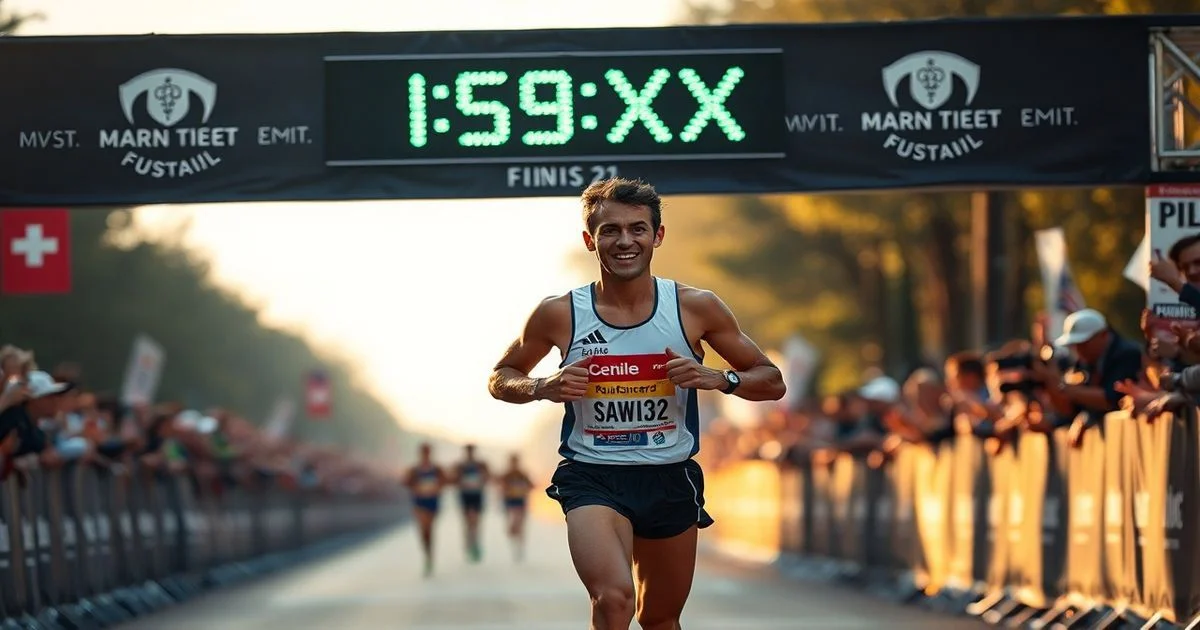
In 2019, Eliud Kipchoge became the first human to run the marathon distance in under two hours (1:59:40). While this was not an "official" world record because it didn't take place in an open race, it was a showcase of marathon evolution:
- Drafting Formations: Kipchoge used a rotating team of "pacers" in a V-formation to minimize wind resistance (aerodynamic drafting).
- Laser Pacing: A lead car projected a green laser on the road to show the exact position required to stay on pace.
- Optimized Environment: The race took place in the Prater park in Vienna, chosen for its flat surface, lack of sharp turns, and specific oxygen-rich tree density.
- Fueling: Kipchoge used advanced hydrogel-based carbohydrate solutions that allowed for higher intake without gastrointestinal distress.
This event proved that the marathon had moved beyond a mere race; it was now a feat of multi-disciplinary engineering involving meteorologists, aerodynamicists, and nutritionists. To maintain the strength required for such feats, many elites are now incorporating foundational strength training exercises for injury prevention as a core part of their high-mileage blocks.
Social and Cultural Evolution
Beyond the tech and the times, the demographic of the marathon has shifted significantly.
The Inclusion of Women
Historically, women were barred from marathons under the false medical assumption that long-distance running was dangerous for their health. In 1967, Kathrine Switzer famously challenged this by registering for the Boston Marathon under the name "K.V. Switzer."
Despite race officials attempting to physically remove her from the course, she finished. It wasn't until 1972 that women were officially allowed to compete in Boston, and not until 1984 that the women's marathon became an Olympic event. Today, women make up nearly 45% of participants in major U.S. marathons.
The Rise of the "Charity Runner"
The late 20th century saw the marathon evolve from an elite-only pursuit to a populist movement. Today, the majority of participants in major marathons are "bucket-list" runners. This shift has changed the economics of the sport. Major races now generate hundreds of millions of dollars in local economic impact and serve as the world's largest single-day fundraising platforms.
Frequently Asked Questions
Q: Why is the marathon exactly 26.2 miles long?
A: The distance was standardized at 26 miles and 385 yards (42.195 km) during the 1908 London Olympics. The extra 385 yards were added so the race could start at Windsor Castle and finish right in front of the Royal Box at the Olympic Stadium.
Q: Are the shoes used by modern marathoners considered "unfair"?
A: This is a subject of debate. While "Super Shoes" significantly improve running economy through carbon plates and advanced foam, they are currently legal as long as they meet World Athletics regulations regarding sole thickness (maximum 40mm).
Q: Which major marathon is the fastest in the world?
A: The Berlin Marathon is widely considered the fastest. Its course is extremely flat, it has very few sharp turns, and the late-September weather in Berlin typically provides the cool, crisp conditions ideal for marathon running.
Conclusion
The history and evolution of major marathon races is a testament to the human desire to push against perceived limits. What began as a desperate run by a Greek messenger has evolved into a high-tech, data-driven global phenomenon. We have moved from leather soles to carbon fiber, from manual stopwatches to RFID tracking, and from a 25-mile myth to a standardized 26.2-mile science.
Whether you are an elite athlete chasing a world record in Berlin or a first-timer crossing the finish line in Central Park, you are part of a historical lineage that values endurance, innovation, and the relentless pursuit of progress. As technology continues to integrate with physiology, the marathon will remain the ultimate benchmark of how far—and how fast—humanity can go.