Cancer Breakthrough: New AML Target for CAR-NK Unleashes Hope
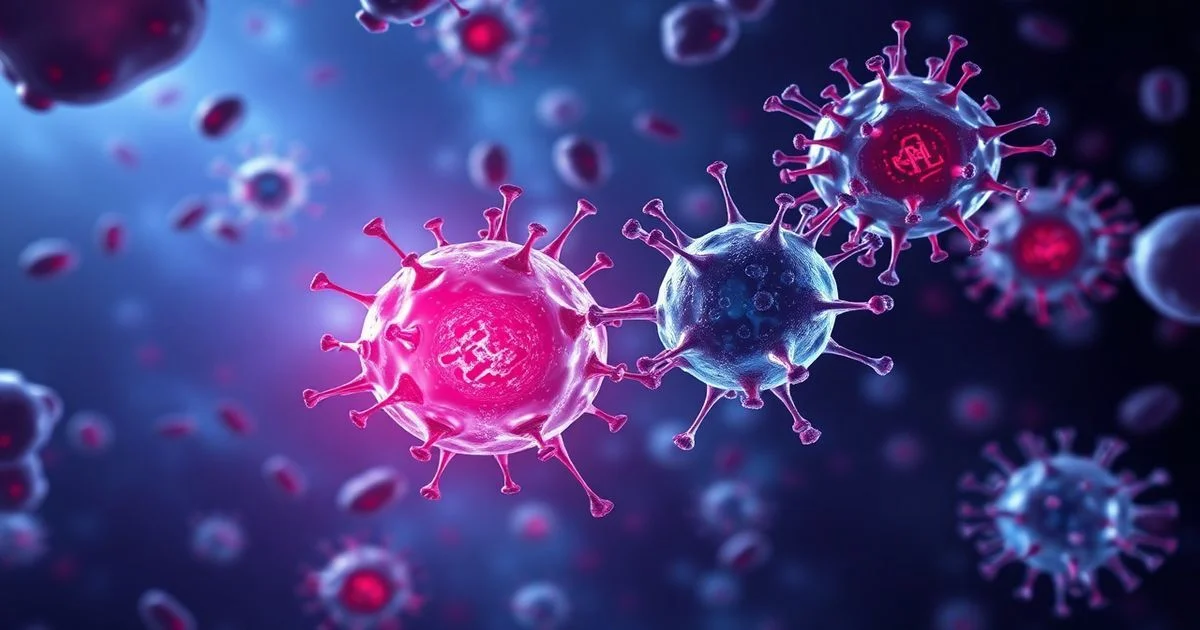
A groundbreaking Cancer Breakthrough: New AML Target for CAR-NK cell therapy has emerged, signaling a pivotal advancement in the relentless fight against acute myeloid leukemia (AML). This discovery offers profound hope for patients grappling with this aggressive blood cancer, especially those with relapsed or refractory disease who often face limited treatment options. The new research, set to be presented at a major scientific conference, highlights a novel strategy to precisely target AML cells while minimizing harm to healthy cells, addressing a long-standing challenge in immunotherapy.
- Acute Myeloid Leukemia: A Persistent Challenge
- The Promise of CAR-NK Cell Therapy
- Cancer Breakthrough: New AML Target for CAR-NK Discovered
- How CAR-NK Cells Target AML
- Clinical Advancements and Promising Early Results
- Overcoming Challenges and Future Directions
- Conclusion
- Frequently Asked Questions
- Further Reading & Resources
Acute Myeloid Leukemia: A Persistent Challenge
Acute myeloid leukemia (AML) stands as one of the most aggressive and challenging blood cancers to treat, particularly in adults. It is characterized by the rapid growth of abnormal myeloid cells in the bone marrow, interfering with the production of normal blood cells. Despite advancements in chemotherapy and allogeneic hematopoietic stem cell transplantation (HSCT), a significant number of patients experience relapse or do not respond to initial treatments, leading to dismal long-term survival rates. The "3+7" regimen of anthracycline and cytarabine remains a standard induction therapy, but for many, a more targeted and durable approach is desperately needed.
The complexity of AML arises from its inherent heterogeneity, meaning that cancer cells within a single patient can exhibit diverse molecular characteristics. This variability makes it difficult to find a single, consistent target for therapeutic intervention that is present on all AML cells but absent from healthy hematopoietic stem cells. The lack of such tumor-specific targets has historically complicated the development of effective immunotherapies for AML, often leading to on-target/off-tumor toxicities like bone marrow aplasia.
The Promise of CAR-NK Cell Therapy
Chimeric Antigen Receptor (CAR) T-cell therapy has revolutionized the treatment of several lymphoid cancers, demonstrating remarkable success in diseases like B-cell lymphomas and certain leukemias. However, its efficacy in AML has been limited due to the aforementioned challenges of antigen overlap, disease heterogeneity, and severe adverse events such as cytokine release syndrome (CRS) and neurotoxicity.
Enter CAR-Natural Killer (CAR-NK) cell therapy, an exciting alternative that leverages the innate power of the immune system. Natural Killer (NK) cells are a crucial component of the innate immune system, capable of identifying and destroying cancerous or virally infected cells without prior sensitization. They possess intrinsic antitumor properties and a favorable safety profile compared to CAR-T cells, significantly reducing the risks of graft-versus-host disease (GVHD), CRS, and neurotoxicity.
CAR-NK cells are engineered to combine the innate ability of NK cells to recognize malignant cells with the antigen specificity provided by CARs. This dual mechanism allows for targeted cytotoxicity while minimizing systemic side effects. Furthermore, CAR-NK cells offer significant practical advantages, including the potential for "off-the-shelf" availability from allogeneic (donor) sources like umbilical cord blood or induced pluripotent stem cells. This scalability and ready availability can dramatically reduce manufacturing delays and treatment costs, making them more accessible to patients in urgent need. The efficient scale-up of such complex biological therapies presents challenges similar to those found in building scalable microservices architecture in software development.
Cancer Breakthrough: New AML Target for CAR-NK Discovered
A major advancement in CAR-NK therapy for AML has been announced by US-based Precision Biologics, a clinical-stage biotechnology company. New preclinical findings have identified a potential therapeutic target: truncated Core 1 O-glycans. These findings will be presented at the American Association for Cancer Research (AACR) Annual Meeting in San Diego, California, on April 19, 2026.
This discovery is particularly significant because these truncated Core 1 O-glycans appear to be widely expressed across multiple AML disease subtypes. Crucially, they are largely absent from early hematopoietic stem and progenitor cells, which are the healthy precursors to blood cells. This distinction is vital, as it addresses a longstanding limitation in AML immunotherapy: the challenge of finding tumor-specific targets that minimize on-target/off-tumor toxicity and preserve healthy hematopoietic function.
Precision Biologics' investigational approach leverages their antibody, NEO-201, which was previously studied in solid tumors, to recognize these specific glycan structures. Preclinical data indicate that CAR-NK cells engineered with this targeting mechanism demonstrate potent antileukemic activity in experimental systems. This suggests a promising path toward more selective cellular therapies for AML, where antigen overlap with normal tissues has historically complicated development. The identification of these glycan-based antigens reflects an underexploited area in oncology, where malignancy-associated glycosylation changes could diversify immunotherapy targets and reshape biopharma antigen-selection strategies. This scientific discovery pushes the boundaries of biological understanding, much like exploring the fundamental principles in understanding the lifecycle of stars: from nebula to supernova.
How CAR-NK Cells Target AML
The mechanism by which CAR-NK cells target AML involves several intricate steps, leveraging both the engineered CAR and the NK cells' intrinsic capabilities.
Chimeric Antigen Receptor (CAR) Design
At the core of CAR-NK therapy is the chimeric antigen receptor itself. A CAR is a synthetic receptor that is genetically engineered into NK cells, allowing them to specifically recognize and bind to antigens expressed on cancer cells. A typical CAR structure consists of three key components:
- Extracellular Domain: This is the antigen-recognition domain, often derived from a single-chain variable fragment (scFv) of an antibody. In the case of Precision Biologics' breakthrough, this domain would be designed to specifically recognize the truncated Core 1 O-glycans.
- Transmembrane Domain: This anchors the CAR to the NK cell membrane.
- Intracellular Signaling Domain: This activates the NK cell upon antigen binding, triggering a cascade of events that lead to cancer cell killing. This domain often includes co-stimulatory molecules (e.g., 4-1BB or CD28) and a CD3-zeta signaling domain to enhance NK cell activation, proliferation, and persistence.
Dual Targeting and Logic-Gating for Enhanced Specificity
Beyond a single target, researchers are also exploring advanced CAR designs to overcome AML heterogeneity and improve safety. Dual-targeting CARs or "logic-gated" CAR-NK cells are designed to recognize two different targets on AML cells, broadening their reach while minimizing off-target effects.
An example of this innovation is SENTI-202, a CAR-NK cell therapy currently in clinical trials. SENTI-202 targets both CD33 and FLT3, two antigens often expressed on AML cells. To further enhance specificity and spare healthy cells, these CAR-NK cells incorporate an inhibitory receptor that prevents them from attacking healthy hematopoietic stem cells that express certain protective proteins, such as EMCN, even if they also express CD33 or FLT3. This sophisticated "logic gate" allows the CAR-NK cells to distinguish between malignant and healthy cells, enabling precise tumor eradication without widespread healthy cell depletion. This level of therapeutic optimization is akin to the precision required to optimize database query performance for beginners in database management.
Innate NK Cell Activity
In addition to CAR-directed targeting, NK cells retain their intrinsic ability to recognize and kill malignant cells through "missing-self" recognition (sensing reduced MHC-I expression) and through stress-induced ligands. This inherent cytotoxicity complements the CAR-directed targeting, providing multiple layers of defense against cancer.
Clinical Advancements and Promising Early Results
The field of CAR-NK cell therapy for AML is rapidly progressing, with numerous clinical trials underway. Many are in Phase 1, evaluating safety and preliminary efficacy, with some moving into Phase 2.
One notable example is the SENTI-202 trial, which has shown encouraging results. In a Phase 1 study, several patients with relapsed or refractory (R/R) AML who received SENTI-202 achieved complete remission after not responding to or having relapsed following prior treatments. Interim results from the SENTI-202-101 clinical trial, presented at the AACR Annual Meeting 2025, indicated that seven of nine evaluable patients experienced disease reduction, with four achieving complete remission and a fifth a morphologic leukemia-free state. Importantly, no dose-limiting toxicities were observed, and the therapy demonstrated a favorable safety profile with minimal cytokine release syndrome and no significant neurotoxicity.
Another Phase 1 trial involving anti-CD33 CAR-NK cells reported a 60% complete response rate in 10 R/R AML patients 28 days post-infusion. These early findings support CAR-NK therapy as a promising immunotherapeutic approach for AML.
Overcoming Challenges and Future Directions
Despite the immense promise, CAR-NK therapy for AML still faces several challenges that researchers are actively working to address:
-
NK Cell Persistence and Expansion: One hurdle is enhancing the in vivo persistence and expansion of NK cells within the patient's body to ensure durable responses.
-
Immunosuppressive Microenvironment: The AML tumor microenvironment can suppress NK cell function through various mechanisms, including overexpression of inhibitory receptors and downregulation of activating ligands. Strategies combining CAR therapies with checkpoint inhibitors or metabolic modulators are being explored to overcome this.
-
Manufacturing and Scalability: While CAR-NK cells offer "off-the-shelf" advantages, optimizing manufacturing processes for scalability and cost-effectiveness remains important for broader clinical availability.
To address these challenges, several innovative strategies are being developed:
-
Cytokine-Armored CAR-NK Cells: Engineering CAR-NK cells to secrete cytokines like IL-12 can enhance NK cell proliferation, survival, and cytotoxic potential, even activating bystander NK cells to boost antitumor activity.
-
CRISPR-Edited Universal Cells: Advanced gene-editing techniques, such as CRISPR-Cas9, are being used to optimize CAR-NK cells. For example, researchers at Nationwide Children's Hospital are using CRISPR to knock out the CD38 gene and insert an anti-CD33 CAR into the CD38 locus, aiming to increase potency and safety. Another approach involves knocking out KLRC1 (which encodes the inhibitory receptor NKG2A) and inserting an anti-CD33 CAR into its locus, providing a "2-in-1" platform that eliminates an inhibitory pathway and limits CAR expression to activated, tumor-recognizing cells.
-
Memory-Like NK Cells: Research is also focusing on harnessing cytokine-induced memory-like (CIML) NK cells as a CAR platform. These cells exhibit enhanced antitumor activity and longer persistence.
Leading institutions like the University of Minnesota, MD Anderson Cancer Center, Nationwide Children's Hospital, and Precision Biologics are at the forefront of this research, contributing significantly to the understanding and development of CAR-NK therapies for AML.
Conclusion
The identification of truncated Core 1 O-glycans as a novel Cancer Breakthrough: New AML Target for CAR-NK cell therapy represents a significant stride forward in the treatment of acute myeloid leukemia. This innovative approach promises to enhance the specificity and efficacy of CAR-NK cells, paving the way for more selective cellular immunotherapies that can address the complex challenges posed by AML. With ongoing research focusing on advanced CAR designs, genetic engineering, and strategies to overcome inherent limitations, the future looks increasingly hopeful for patients battling this formidable disease. The collaborative efforts of scientists and clinicians worldwide continue to push the boundaries of cancer treatment, bringing us closer to a future where AML is a treatable, and potentially curable, condition.
Frequently Asked Questions
Q: What is the significance of truncated Core 1 O-glycans as a new target for AML?
A: Truncated Core 1 O-glycans are significant because they are widely expressed on acute myeloid leukemia (AML) cells but largely absent from healthy blood stem cells. This provides a specific target for CAR-NK therapy, reducing the risk of harming healthy tissues, which has been a major challenge in AML immunotherapy.
Q: How does CAR-NK cell therapy differ from CAR-T cell therapy?
A: CAR-NK therapy uses Natural Killer (NK) cells, which are part of the innate immune system, offering intrinsic antitumor properties and a safer profile with less risk of severe side effects like cytokine release syndrome or graft-versus-host disease compared to CAR-T cells. NK cells also have potential for "off-the-shelf" use.
Q: What are the current challenges in developing CAR-NK therapy for AML?
A: Key challenges include enhancing CAR-NK cell persistence and expansion in the body, overcoming the immunosuppressive tumor microenvironment, and optimizing manufacturing for scalability and cost-effectiveness. Researchers are addressing these with cytokine-armored cells, CRISPR-editing, and memory-like NK cells.