Voyager 1 Extends Mission: Instrument Shutdown
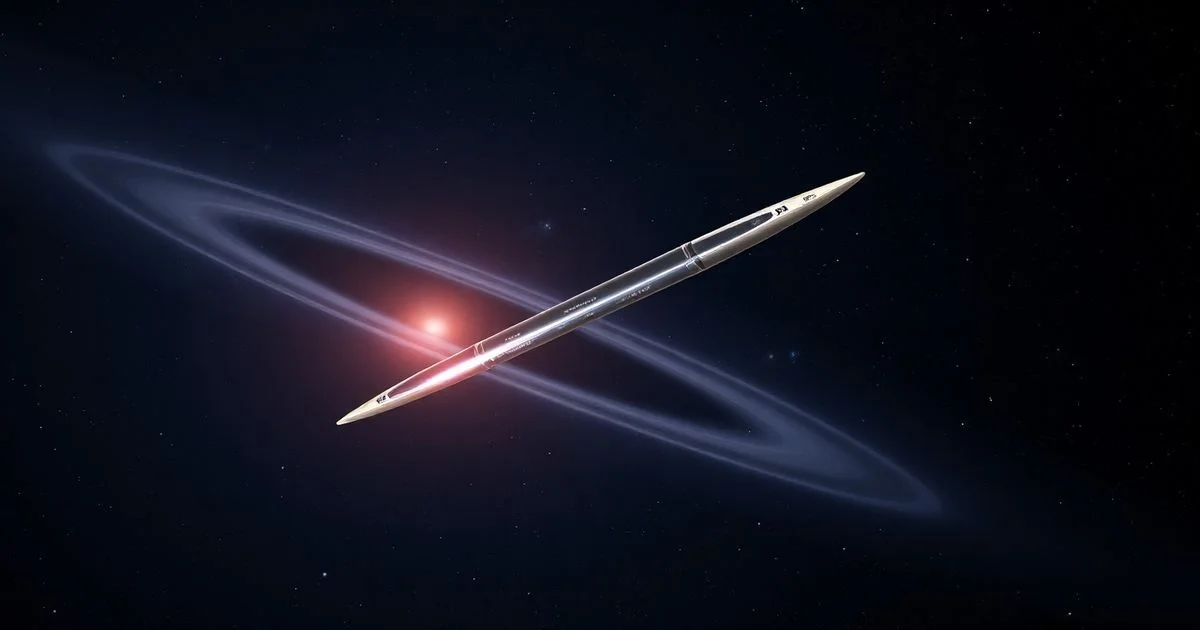
The legendary Voyager 1 spacecraft recently reached a new milestone as NASA extends its historic interstellar mission through a necessary instrument shutdown. This strategic move, officially titled "Voyager 1 Extends Mission: Instrument Shutdown," represents the latest effort by engineers at the Jet Propulsion Laboratory (JPL) to eke out every possible bit of utility from a probe that was originally intended to last only five years. Launched in 1977, the spacecraft has exceeded its lifespan by more than four decades, becoming the most distant human-made object in existence. By powering down non-essential equipment, NASA ensures that the heart of the mission continues to beat as it traverses the silent void of interstellar space.
- The Current State of the Voyager 1 Interstellar Mission
- Voyager 1 Extends Mission: Instrument Shutdown and Power Management
- The Plasma Science (PLS) Instrument: A Legacy of Discovery
- Communicating Across the Abyss: The Deep Space Network
- Overcoming Technical Hurdles: The 2024 Glitch
- Future Timeline: What Lies Ahead for Voyager 1?
- Frequently Asked Questions
- Conclusion
- Further Reading & Resources
The Current State of the Voyager 1 Interstellar Mission
As of early 2024, Voyager 1 is located at a staggering distance of approximately 15 billion miles from Earth. To put this into perspective, the spacecraft is over 160 times further from the Sun than Earth is. At this distance, light and radio signals take over 22.5 hours to travel one way. This means that every command sent by NASA engineers requires nearly two full days to receive a confirmation of receipt and execution.
The spacecraft is currently traveling through the interstellar medium—the region of space between stars that exists outside the influence of our Sun's solar wind. This region was once a mystery to scientists, but thanks to Voyager 1, we now have direct measurements of the plasma density and magnetic fields that exist beyond our solar system's "bubble," known as the heliosphere.
Voyager 1 Extends Mission: Instrument Shutdown and Power Management
The primary challenge facing the aging probe is not the cold or the radiation of space, but the inevitable decline of its power source. Voyager 1 is powered by three Radioisotope Thermoelectric Generators (RTGs). These devices convert the heat released by the decay of plutonium-238 into electricity. When the mission began, these RTGs provided about 470 watts of power.
However, because the plutonium decays over time and the thermocouples that convert the heat to electricity degrade, the power output drops by about 4 watts every year. Consequently, NASA has been forced to make difficult decisions regarding which systems to keep online and which to sacrifice.
The Strategic Shutdown Process:
NASA engineers have developed a tiered priority list for the remaining scientific instruments. To extend the mission further into the 2030s, the decision was made to shut down the Plasma Science (PLS) instrument.
- Conserving Volts: By turning off the heater for the PLS and the instrument itself, engineers can divert several watts of power to the primary transmitters and the flight data system.
- Thermal Management: Every instrument shutdown changes the thermal profile of the spacecraft. Engineers must ensure that the remaining instruments do not freeze in the absolute zero environment of space.
- Data Prioritization: By reducing the number of active instruments, the spacecraft reduces the complexity of the data packets it must send back, which is critical given the weakening signal strength over 15 billion miles.
The Plasma Science (PLS) Instrument: A Legacy of Discovery
The Plasma Science instrument was a vital component of the Voyager 1 scientific suite. Its job was to detect the speed, density, temperature, and pressure of the plasma (ionized gas) flowing past the spacecraft. During the primary mission, this was essential for understanding the solar wind as Voyager 1 flew past Jupiter and Saturn.
Interestingly, the PLS instrument on Voyager 1 had already seen limited use since 1980. After the Saturn flyby, the instrument’s orientation prevented it from effectively "seeing" the solar wind. While its twin, Voyager 2, continues to use its PLS instrument effectively because of its different trajectory, Voyager 1’s PLS had become less scientifically relevant in the interstellar medium compared to other sensors like the Magnetometer (MAG) or the Cosmic Ray Subsystem (CRS).
The shutdown of the PLS is not a sign of failure, but rather a calculated trade-off. The data collected by the PLS during the crossing of the heliopause in 2012 remains some of the most important data in the history of astrophysics, as it confirmed for the first time that a human object had entered interstellar space.
Communicating Across the Abyss: The Deep Space Network
Maintaining contact with a spacecraft that is nearly 15 billion miles away is a monumental task. This is handled by the Deep Space Network (DSN), a global array of massive radio antennas.
The signal from Voyager 1 is incredibly faint—so faint, in fact, that the power reaching the DSN antennas is billions of times weaker than the battery in a common digital watch. To capture this signal, NASA often "arrays" multiple antennas, combining their collecting power to listen for the probe's whisper.
Communication Challenges Include:
- Signal Latency: As mentioned, the 45-hour round-trip communication time makes troubleshooting extremely slow.
- Antenna Availability: The DSN is a shared resource. Other missions like the James Webb Space Telescope and the Mars rovers also need time on these antennas.
- Aging Ground Hardware: The transmitters on Earth used to talk to Voyager are also aging and require significant maintenance, particularly the 70-meter dish at the Canberra station in Australia, which is the only one capable of sending certain commands to Voyager 2.
Overcoming Technical Hurdles: The 2024 Glitch
The decision to extend the mission follows a harrowing period in late 2023 and early 2024 when Voyager 1 began sending back unintelligible "gibberish" instead of its usual binary data. This was traced to a malfunction in the Flight Data System (FDS), specifically a single corrupted chip containing about 3% of the FDS memory.
NASA’s engineers demonstrated remarkable ingenuity by relocating the affected code to different parts of the FDS memory. Since the code was too large to fit in any single new location, they had to break it into sections and adjust the memory addresses to ensure the system still functioned as a whole. The successful "patch" from billions of miles away allowed the science data to flow once again, prompting the current strategy to extend the mission even further.
Future Timeline: What Lies Ahead for Voyager 1?
NASA's goal is to keep at least one scientific instrument operating until 2027, the 50th anniversary of the launch. However, with the current power-saving measures, there is a cautious optimism that the mission could continue into the early 2030s.
Once the power levels drop below the threshold required to run any scientific instruments, Voyager 1 will become a silent ambassador. It will continue its journey through the Milky Way, carrying the Golden Record—a copper phonograph record containing sounds, images, and greetings from Earth, intended for any extraterrestrial intelligence that might find it in the distant future.
Frequently Asked Questions
Q: Why was the instrument shut down?
A: The shutdown was a necessary step to conserve the declining electrical power generated by the spacecraft's radioisotope generators. By turning off the Plasma Science instrument, NASA can keep the remaining sensors and the transmitter running for several more years.
Q: Can Voyager 1 still send pictures back to Earth?
A: No, the cameras on Voyager 1 were turned off shortly after the "Pale Blue Dot" photo was taken in 1990. This was done to save power and memory for the instruments focused on studying the interstellar medium, which do not require visual imaging.
Q: What happens when Voyager 1 runs out of power completely?
A: When the power drops too low, the spacecraft will cease all communications with Earth. It will continue to orbit the center of the Milky Way galaxy for millions of years, essentially acting as a time capsule of 1970s human technology and culture.
Conclusion
The announcement that Voyager 1 extends its mission through an instrument shutdown is a testament to human curiosity and engineering excellence. By sacrificing the Plasma Science instrument, NASA has prioritized the longevity of a mission that has already rewritten the textbooks of planetary science and astrophysics. As Voyager 1 continues to drift further into the dark, cold expanse of the interstellar medium, it remains a symbol of our desire to reach beyond our horizons and understand our place in the cosmos. Through the "Voyager 1 Extends Mission: Instrument Shutdown" strategy, the probe will remain our most distant sentinel for years to come.