A Guide to the History of Jazz Music: From Roots to Digital Age
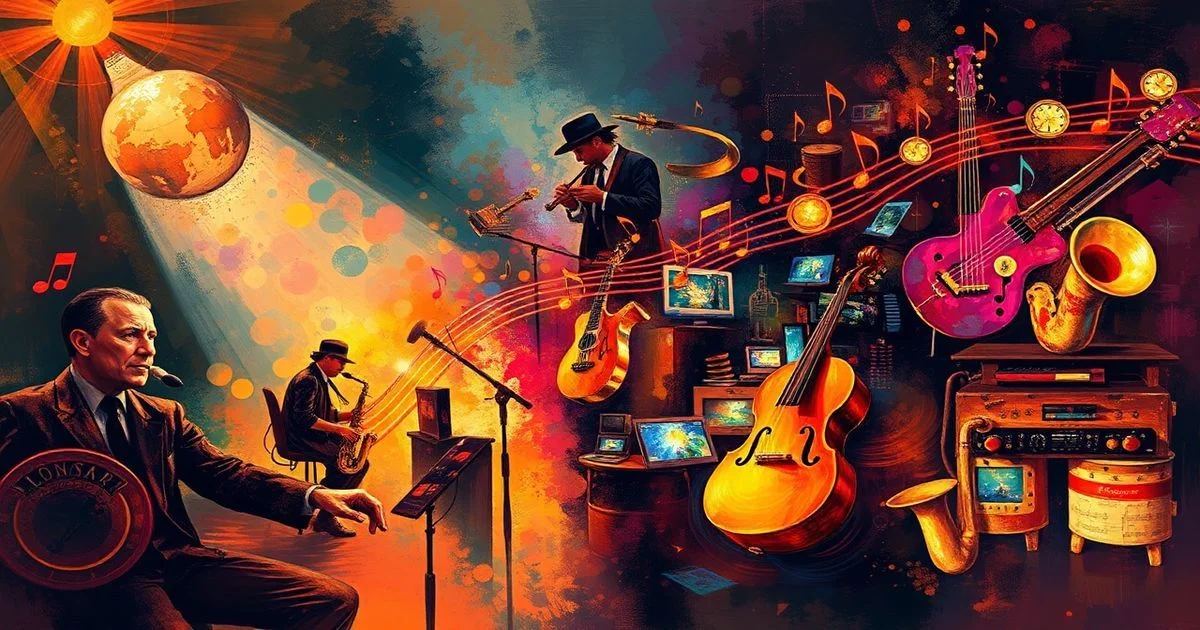
Developing a comprehensive guide to the history of jazz music requires examining its deep roots and its shift into the modern digital age, much like mapping a legacy tech stack's evolution into a cloud-native architecture. Music, like technology, is a constantly evolving system, shaped by innovation, social dynamics, and the relentless pursuit of new forms of expression. Among the most complex and revolutionary musical genres is jazz, a dynamic art form that mirrors the intricate development curves seen in software and hardware alike. This guide delves into its origins, tracing its transformation from nascent improvisational styles in the American South to a globally recognized, technologically influenced genre. Understanding jazz's journey offers profound insights into cultural evolution, artistic disruption, and the enduring power of human creativity.
- What is Jazz Music? Deconstructing a Dynamic Art Form
- A Guide to the History of Jazz Music Through the Eras
- The Genesis: Early Jazz and New Orleans (Late 19th Century – 1920s)
- The Jazz Age and Chicago (1920s – 1930s)
- The Swing Era and Big Bands (1930s – 1940s)
- Bebop: The Modern Jazz Revolution (Mid-1940s – 1950s)
- Cool Jazz and West Coast Jazz (1950s)
- Hard Bop and Soul Jazz (Mid-1950s – 1960s)
- Modal Jazz and Avant-Garde/Free Jazz (Late 1950s – 1970s)
- Jazz Fusion and Crossover (Late 1960s – 1980s)
- Contemporary Jazz and the Digital Age (1980s – Present)
- Jazz as a Cultural Nexus: Real-World Applications and Impact
- Frequently Asked Questions
- Further Reading & Resources
- Conclusion
What is Jazz Music? Deconstructing a Dynamic Art Form
At its core, jazz is a genre characterized by improvisation, swing and syncopated rhythms, blue notes, and a polyphonic ensemble structure. It is often described as a conversation among musicians, where each instrument contributes to a spontaneous, unfolding narrative. Unlike many classical forms with rigid structures, jazz thrives on the unexpected, allowing individual musicians significant freedom within a collective framework.
Historically, jazz emerged from a complex tapestry of African and European musical traditions. African-American spirituals, work songs, field hollers, blues, and ragtime all contributed foundational elements. From Europe, jazz borrowed harmonic structures, instrumentation, and formal compositions, blending them with West African rhythmic sensibilities. This fusion created a new sound that was both deeply rooted in tradition and radically forward-looking.
Key Musical Elements of Jazz
Understanding jazz requires an appreciation of its unique components, which function much like the distinct modules in a complex software architecture. These elements give jazz its characteristic feel and allow for its incredible diversity.
-
Improvisation: Perhaps the most defining characteristic, improvisation involves musicians creating melodies, rhythms, and harmonies on the spot. This isn't random but rather an informed spontaneity, built upon a deep understanding of music theory and the underlying song structure. It is akin to a developer hot-patching code or a system adapting to real-time data inputs.
-
Swing Rhythm: This distinctive rhythmic feel gives jazz its infectious energy. It involves a slight alteration of eighth notes, where the first note in a pair is held longer than the second, creating a lilting, propulsive feel. This subtle rhythmic unevenness, often called a "shuffle," is fundamental to most traditional jazz styles.
-
Syncopation: Syncopation involves placing accents on typically unaccented beats. This rhythmic disruption creates tension and excitement, making the music feel lively and unpredictable. It is like deliberately offsetting data packets to optimize flow rather than simply following a rigid, linear transmission.
-
Blue Notes: These are notes played at a slightly flatter pitch than standard major or minor scales, typically the third, fifth, or seventh degree. Blue notes give jazz its soulful, expressive quality, directly linking back to its blues origins. They add a poignant, sometimes melancholic, flavor to melodies and harmonies.
-
Call and Response: A musical dialogue where one phrase (the call) is answered by another (the response). This pattern, rooted in African traditions, fosters interaction and dialogue within the ensemble, making the music feel conversational. It is a fundamental protocol for musical communication between nodes in the ensemble.
A Guide to the History of Jazz Music Through the Eras
The evolution of jazz is a narrative of continuous innovation, marked by distinct periods, geographical shifts, and revolutionary artists. Each era built upon the last, often challenging existing norms and pushing the boundaries of musical expression.
The Genesis: Early Jazz and New Orleans (Late 19th Century – 1920s)
Jazz found its birthplace in the melting pot of New Orleans, Louisiana. At the turn of the 20th century, this vibrant port city was a nexus of cultures – African, Caribbean, European, and American – each contributing to a rich musical landscape. Brass bands, ragtime pianists, blues singers, and spiritual hymns all coexisted, creating an environment ripe for musical synthesis.
Ragtime's Influence:
Scott Joplin's syncopated piano compositions, popular from the late 19th century, introduced the concept of "ragged" rhythms, laying foundational rhythmic ideas for early jazz. While primarily a composed music, its rhythmic vitality was a crucial precursor.
Blues as the Soul:
The raw, expressive vocal and instrumental traditions of the blues provided jazz with its emotional depth and harmonic framework, particularly the 12-bar blues structure and the use of blue notes. Early artists like Buddy Bolden, though unrecorded, are legendary figures in this formative period.
Storyville and Brass Bands:
The Storyville district provided countless venues for musicians to hone their craft, blending blues and ragtime with improvisational flair. Concurrently, brass bands adapted their instrumentation (cornets, trombones, clarinets, drums) to play dance music, paving the way for the jazz ensemble.
The Jazz Age and Chicago (1920s – 1930s)
The closure of Storyville in 1917 and the Great Migration saw many New Orleans musicians move north, primarily to Chicago. This period, often called the Roaring Twenties, became known as the "Jazz Age," as the music gained widespread popularity, becoming synonymous with cultural rebellion and modernity.
Migration and Urbanization:
The influx of musicians to urban centers like Chicago led to a more sophisticated, structured approach to jazz. The music adapted to larger venues and dance halls, necessitating larger ensembles and more elaborate arrangements.
Technological Advancement:
The proliferation of phonograph records and radio broadcasts became critical "distribution channels" for jazz. Record labels actively sought out jazz talent, allowing the music to reach audiences across the nation and beyond. This early form of media virality solidified jazz's place in popular culture, much like the first wave of the commercial internet.
The Swing Era and Big Bands (1930s – 1940s)
The Great Depression ironically fueled the rise of the Swing Era, as big bands offered a vibrant, accessible escape from economic hardship. Swing was the dominant popular music of its time, characterized by its danceable rhythms and meticulously arranged compositions for large ensembles of 12-20 musicians.
Arrangement and Sectional Play:
Big bands emphasized written arrangements, with sections of instruments playing in harmony. While improvisation remained, it often occurred within specific solo sections. This marked a shift towards a more organized, "engineered" approach to jazz, prioritizing the collective output over individual spontaneity.
Racial Integration:
While segregation was still rampant, some bands, notably Benny Goodman's, began to integrate, hiring Black musicians like Lionel Hampton and Teddy Wilson. This provided early examples of racial progress through the universal language of musical excellence.
Key Figures:
Duke Ellington, Count Basie, and Benny Goodman defined this era. Ellington, in particular, was a master "architect" of sound, composing complex pieces that utilized the unique "instrumental signatures" of his band members.
Bebop: The Modern Jazz Revolution (Mid-1940s – 1950s)
Bebop emerged as a reaction against the commercialism of swing. It was a more complex, virtuosic, and intellectually demanding style, often played at fast tempos with intricate melodic lines and advanced harmonic progressions. Bebop was primarily music for listening, not dancing.
Musical Complexity:
Bebop introduced new harmonic substitutions and dissonant intervals. Solos became longer, more technically challenging, and harmonically adventurous. This was akin to a paradigm shift in computing, moving from user-friendly interfaces to complex, low-level programming for enhanced performance.
Small Combos:
Bebop was typically played by small groups (quintets or quartets), allowing for greater improvisational freedom and interaction. This decentralization allowed for faster "iteration" of musical ideas between performers like Charlie Parker and Dizzy Gillespie.
Cool Jazz and West Coast Jazz (1950s)
Following the intensity of bebop, Cool Jazz emerged as a more relaxed, subdued, and often more arranged style. It emphasized lyricism, smoother tones, and sometimes counterpoint, drawing inspiration from classical music. West Coast Jazz was a regional variant associated with a lighter, more intellectual sound.
Lyrical Restraint:
Cool jazz often featured softer timbres and extended melodies. It was a move towards understated sophistication, a minimalist design approach compared to the high-frequency "bandwidth" of bebop.
Compositional Emphasis:
While improvisation remained central, cool jazz often incorporated more complex arrangements and compositional structures. Miles Davis's "Birth of the Cool" is the seminal work of this period, marking a significant "version update" to the jazz sound.
Hard Bop and Soul Jazz (Mid-1950s – 1960s)
Hard bop was a stylistic response to cool jazz, reasserting the fiery intensity and bluesy roots of jazz. It was an energetic style, emphasizing strong rhythmic drive and a return to the direct emotionalism sometimes perceived as absent in the cooler styles. Soul jazz integrated even more explicit R&B and gospel elements.
Return to Roots:
Hard bop brought back the raw power of earlier jazz styles, focusing on aggressive swing and soulful melodies. This was a "back to basics" movement, reinforcing core functionalities and ensuring the music remained connected to its foundational "source code."
Organ Trios:
Soul jazz saw the rise of the Hammond B3 organ trio, creating a distinctive, funky sound that crossed over into R&B and pop, expanding the "user base" of jazz listeners.
Modal Jazz and Avant-Garde/Free Jazz (Late 1950s – 1970s)
These movements represent significant departures in jazz, one exploring minimalist harmonic structures, the other seeking total liberation from them.
Modal Jazz
Modal jazz broke away from dense chord changes, instead basing improvisation on scales (modes) played over extended periods. This offered soloists more harmonic space and melodic freedom.
-
Simpler Harmony: By reducing harmonic movement, modal jazz encouraged deeper melodic exploration. It was like reducing the number of variables to optimize a specific set of parameters.
-
Impact: Miles Davis’s "Kind of Blue" remains the quintessential modal jazz recording and the highest-selling jazz album in history, proving that "minimalist architecture" could achieve massive scale.
Avant-Garde / Free Jazz
Free jazz sought to liberate musicians from all traditional constraints: harmony, melody, and rhythm. It was characterized by collective improvisation and a radical exploration of sound.
- Radical Freedom: Free jazz was a rebellion against convention, pushing the boundaries of what was considered "music." This was the equivalent of open-source, experimental software development without a strict version control.
Jazz Fusion and Crossover (Late 1960s – 1980s)
As rock and funk gained dominance, jazz musicians began to incorporate elements from these genres, creating "fusion." This involved electric instruments, heavier backbeats, and more structured funk grooves.
Electrification:
Fusion embraced electric guitars, bass, and synthesizers, bringing a new sonic palette to jazz. It blended jazz improvisation with rock's energy. This was a powerful "integration" of disparate musical "APIs," allowing jazz to interface with the emerging sounds of the electronic era.
Commercial Success:
Bands like Weather Report and artists like Herbie Hancock achieved significant commercial success, proving that jazz could adapt to the changing tastes of a "digital-adjacent" generation.
Contemporary Jazz and the Digital Age (1980s – Present)
From the 1980s onwards, jazz entered a period of extreme diversification. The digital revolution has profoundly impacted how jazz is created, distributed, and consumed, leading to a "hyper-fragmentation" of the genre.
Neoclassicism and Mainstream Jazz
The 1980s saw a resurgence of interest in traditional acoustic jazz. This "neoclassical" movement, championed by Wynton Marsalis, sought to reaffirm jazz's core values—swing and the blues—after the experimentalism of fusion. It was essentially a "long-term support" (LTS) version of the jazz tradition, ensuring the classical techniques were preserved for future generations.
The Impact of Technology and Digital Production
The digital age has fundamentally transformed jazz, from composition to performance and global distribution.
DAWs and Sampling:
Digital Audio Workstations (DAWs) like Ableton Live allow musicians to compose and produce jazz with unprecedented flexibility. Sampling and electronic manipulation have opened new avenues for sonic exploration. Modern jazz artists often "remix" history, using digital tools to layer acoustic recordings with synthetic textures.
Online Collaboration:
Global collaborations are now common, with musicians recording tracks remotely and assembling them digitally. This mirrors distributed computing, where components are developed independently and integrated virtually across the network.
Algorithmic Curation:
AI-driven recommendation engines influence discovery, exposing listeners to new artists. Furthermore, AI is now being used to generate improvisational patterns, leading to fascinating human-machine collaborations that challenge our definition of creativity.
Jazz as a Cultural Nexus: Real-World Applications and Impact
Beyond its musical innovations, jazz has played a profound role in shaping culture and society. Its influence extends far beyond the stage, permeating film, fashion, and social movements.
Social Commentary and Civil Rights
From its earliest days, jazz was a voice for African Americans, expressing joy, struggle, and resilience. During the Civil Rights Movement, jazz became a powerful medium for protest. Musicians like Max Roach and Charles Mingus used their art to confront racial injustice directly, proving that music is a potent "social operating system."
Global Diplomacy and "Jazz Ambassadors"
During the Cold War, the U.S. State Department sponsored "Jazz Ambassadors" like Louis Armstrong and Dizzy Gillespie to tour the world. These tours were vital in promoting American culture and fostering international understanding, proving jazz's power as a universal language. Jazz became a powerful tool of "soft power diplomacy."
Influence on Other Genres
Jazz's harmonic complexity and rhythmic sophistication have influenced nearly every other popular music genre. Rock, R&B, funk, and hip-hop all owe a massive debt to jazz. Producers in hip-hop, for instance, frequently sample jazz records, treating the history of jazz as a vast "library of modules" to be repurposed for modern beats.
Frequently Asked Questions
Q: Where did jazz music originate?
A: Jazz originated in New Orleans around the late 19th and early 20th centuries, emerging as a fusion of African rhythms, European harmonies, and American blues.
Q: What makes jazz different from other musical genres?
A: The primary differentiator is the heavy emphasis on improvisation, swing rhythms, and the unique "conversational" interaction between ensemble members.
Q: Is jazz still popular in the digital age?
A: While no longer the dominant pop music, jazz remains highly influential and has a massive global following through streaming, specialized festivals, and its integration into modern genres like lo-fi and hip-hop.
Further Reading & Resources
- Jazz at Lincoln Center
- National Museum of American History: Jazz
- Ken Burns: Jazz - The Film
- All About Jazz
- The Smithsonian Jazz Oral History Program
Conclusion
From its humble beginnings in the bustling streets of New Orleans to its current status as a global art form embracing digital innovation, a guide to the history of jazz music reveals a journey of constant evolution and profound cultural impact. Each era, from the Swing Age to the modern digital frontier, has contributed to a rich tapestry of sound that continues to inspire and adapt. Jazz remains a testament to human creativity—a complex system of expression that, much like the best technologies, balances structured principles with boundless innovation. As we look forward, the dynamic interplay of tradition and modernity promises an exciting, unpredictable future for this essential musical genre.