ASEAN Meeting: Navigating Regional Challenges & Future Growth
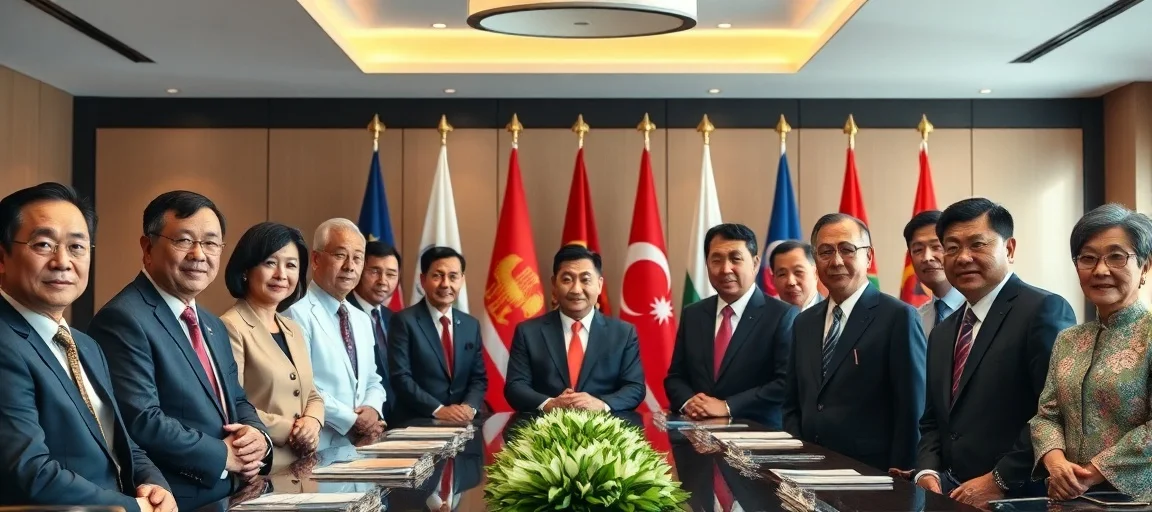
The Association of Southeast Asian Nations (ASEAN) recently convened its 48th Summit in Lapu-Lapu City, Mactan, Cebu, Philippines, from May 6 to 8, 2026. This significant ASEAN Meeting brought together leaders from its eleven member states to address the region's pressing issues, foster deeper cooperation, and strategically navigate complex global challenges. Under the chairmanship of the Philippines, themed "Navigating Our Future, Together," the summit underscored a collective commitment to enhancing regional stability, promoting economic resilience, and empowering its diverse populace amidst an increasingly uncertain world. Discussions at this pivotal gathering focused on crucial areas such as economic growth, maritime security, energy and food security, digital innovation, and sustainable development, aiming to solidify ASEAN's role as a central and unified force in Southeast Asia.
- The Enduring Significance of the ASEAN Meeting
- Philippines' 2026 Chairmanship: "Navigating Our Future, Together"
- Addressing Critical Regional and Global Challenges
- Expert Opinion and Future Outlook
- Frequently Asked Questions
- Further Reading & Resources
- Conclusion
The Enduring Significance of the ASEAN Meeting
The Association of Southeast Asian Nations, established on August 8, 1967, in Bangkok, Thailand, has grown from its five founding members—Indonesia, Malaysia, Philippines, Singapore, and Thailand—to an eleven-member bloc with the recent accession of Timor-Leste on October 26, 2025. ASEAN represents a region of nearly 700 million people and currently stands as the world's fifth-largest economy, with projections indicating it will become the fourth largest by 2030. These biannual ASEAN Summits, along with numerous related ministerial and senior official meetings, are crucial platforms where leaders address economic, political, security, and socio-cultural development. They also engage with key dialogue partners, including China, Japan, South Korea, Australia, New Zealand, the United States, and the European Union, to strengthen cooperation on a myriad of global issues. The very existence of such a robust and regular ASEAN Meeting highlights the region's dedication to multilateralism and shared progress.
Philippines' 2026 Chairmanship: "Navigating Our Future, Together"
The Philippines assumed the ASEAN Chairmanship on January 1, 2026, setting a comprehensive agenda guided by the theme "Navigating Our Future, Together." This theme encapsulates the region's ambition to deepen integration, strengthen economic cooperation, and collectively address evolving global challenges with unity and cohesion. Philippine President Ferdinand Marcos Jr. presided over the 48th ASEAN Summit, bringing together leaders such as Sultan Hassanal Bolkiah of Brunei Darussalam, Cambodian Prime Minister Hun Manet, Indonesian President Prabowo Subianto, Lao Prime Minister Sonexay Siphandone, Malaysian Prime Minister Anwar Ibrahim, Singaporean Prime Minister Lawrence Wong, Thai Prime Minister Anutin Charnvirakul, Timor-Leste Prime Minister Xanana Gusmão, and Vietnamese Prime Minister Le Minh Hung.
The Philippines outlined its strategic priorities for 2026 across three pillars: Peace and Security Anchors, Prosperity Corridors, and People Empowerment. These pillars form the compass for ASEAN's initiatives, aiming to establish enduring foundations of peace, prosperity, and a people-centered community. The chairmanship also coincides with the 50th anniversary of the Treaty of Amity and Cooperation in Southeast Asia (TAC), providing an opportune moment to reaffirm ASEAN's founding principles and collective vision.
Addressing Critical Regional and Global Challenges
The 48th ASEAN Summit in Cebu tackled a broad spectrum of issues, both internal and external, that significantly impact Southeast Asia. A primary focus was the ongoing Middle East crisis, which poses considerable challenges for the region's fuel import-dependent economies. Leaders recognized the urgent need for enhanced energy security and food security, with discussions exploring strategies to mitigate the spillover effects of global conflicts.
Peace and Security Anchors
A crucial aspect of the 48th ASEAN Meeting agenda was bolstering peace and security in the region. This included championing peace and regional stability through dialogue, adherence to international law, and strengthened cooperation on emerging and non-traditional security threats.
Maritime Security and the South China Sea
Maritime security, particularly in the South China Sea, remained a high-priority discussion point. Many ASEAN member states have direct interests in these disputed waters, and the region seeks to finalize a legally binding Code of Conduct (COC) between ASEAN and China. These negotiations have been ongoing for decades, and achieving a meaningful, binding agreement is seen as a complex but vital step towards regional stability and preventing potential escalation, reflecting ASEAN's commitment to a rules-based order.
The Myanmar Crisis
The political crisis in Myanmar, following the military takeover in 2021, continues to be a significant concern for ASEAN, testing its unity and effectiveness. Despite sustained commitment to the Five-Point Consensus, limited progress has been made. The summit reaffirmed that a cessation of violence and inclusive dialogue must precede elections in Myanmar, and leaders agreed to explore the appointment of a longer-term ASEAN Special Envoy to ensure continuity in engagement and humanitarian access, underscoring the bloc's persistent, albeit challenging, diplomatic efforts.
Thailand-Cambodia Border Dispute
Another sensitive issue addressed was the long-running border dispute between Cambodia and Thailand, which had escalated into armed clashes in 2025. This historical dispute, often centered around contested temple sites and resource-rich border areas, highlights the complexities of intra-regional relations. President Marcos Jr. facilitated a trilateral meeting between Thai Prime Minister Anutin Charnvirakul and Cambodian Prime Minister Hun Manet on the sidelines of the summit, aiming to create a "meaningful space for dialogue" and prevent further escalation. This demonstrated ASEAN's role in employing soft diplomacy and mediation to foster reconciliation among its members.
Prosperity Corridors
The economic dimension of the ASEAN Meeting centered on building systemic connections for shared prosperity through economic integration, digital transformation, and inclusive and sustainable development.
Economic Resilience and Digital Transformation
Leaders emphasized strengthening economic resilience amidst global economic uncertainties and shifting geopolitical alignments. A significant outcome of discussions from previous summits, solidified at the 47th ASEAN Summit in 2025, was the agreement to adopt the ASEAN Digital Economy Framework Agreement (DEFA) in 2026. DEFA is envisioned as a "game changer," promoting the harmonization of regulatory frameworks for digital trade, data flows, e-commerce, and digital identities, with the ambition of creating a US$2 trillion unified digital market by 2030. This initiative is seen as crucial for closing developmental gaps within member states and positioning ASEAN as an autonomous actor in setting global digital norms, fostering innovation and economic opportunity across the region.
Energy and Food Security
The energy crisis, exacerbated by the Middle East situation, underscored the vulnerability of fuel import-dependent economies within ASEAN. Discussions at the summit explored diversifying energy sources, accelerating energy transition, and expanding access to green finance and advanced technologies. Leaders considered proposals for establishing a dedicated fuel reservoir in the region and strategically reducing dependency on volatile fossil fuels by investing in renewables like solar, hydro, and geothermal energy. Simultaneously, strengthening existing food security frameworks, enhancing strategic reserves, and establishing emergency reserve mechanisms for essential commodities like rice were prioritized to ensure regional food stability, acknowledging the profound impact of climate change on agricultural yields.
Supply Chain Resilience
The summit also addressed the need for strengthening supply chains for critical goods, particularly semiconductors, rare earths, and essential medical supplies. The global trade order has become more conditional, with supply chain resilience now extending beyond incremental diversification to managing strategic whiplash from policy-induced scarcity and price shocks. ASEAN aims to enhance its regional manufacturing capabilities and foster greater self-reliance, mitigating risks from geopolitical tensions, such as the US-China strategic rivalry which often creates disruptions and prompts calls for "friend-shoring." This includes efforts to prevent transshipment disputes and enforce rules-of-origin credibly, ensuring fair trade practices across the bloc.
People Empowerment
The third pillar focused on empowering ASEAN's people by fostering social inclusion, protecting vulnerable groups, and promoting a sense of shared identity and community.
Social Inclusion and AI Governance
The ASEAN Community Vision 2045 identifies future megatrends such as aging societies, the impact of Artificial Intelligence (AI), and the future of work. Consequently, the People Empowerment agenda promotes AI governance and integration, emphasizing a human-centric approach, digital upskilling, and literacy to ensure that the benefits of technological advancement are inclusive and address the digital divide within the region. Discussions included developing ethical guidelines for AI deployment and preparing the workforce for an AI-driven economy, ensuring no segment of the population is left behind.
Health Security and Climate Resilience
Health security, in the wake of global pandemics and the health-related impacts of climate change, remains a key concern. The ASEAN Socio-Cultural Community (ASCC) 2045 strategic plan aims to strengthen collective resilience for future health crises through initiatives like the One Health Initiative. This initiative recognizes the interconnectedness of human, animal, and environmental health, promoting a holistic approach to disease prevention and response. Climate resilience and disaster preparedness were also high on the agenda, with commitments to collaborative frameworks for early warning systems, rapid humanitarian response, and investments in sustainable infrastructure to mitigate the severe effects of rising sea levels, extreme weather events, and resource scarcity prevalent in Southeast Asia.
Expert Opinion and Future Outlook
The prevailing sentiment among experts is that while ASEAN remains an indispensable convener and normative anchor for regional diplomacy, its effectiveness can be constrained by structural limitations and intensifying geopolitical pressures. The "ASEAN Way" of consensus-based decision-making, while fostering unity, can sometimes hinder swift and decisive action, particularly in sensitive internal matters like the Myanmar crisis. The region is seen as a crucial battleground in the US-China rivalry, benefiting economically in the short term from increased investment and market access, but facing challenges in maintaining cohesion amid competing trade pressures and internal divergences. The ability of the Philippines' chairmanship to coordinate regional responses to the energy crisis while simultaneously addressing internal conflicts like the Myanmar situation and the Thailand-Cambodia border dispute will be a true test of ASEAN's diplomatic agility and its capacity to manage complex, multi-faceted challenges.
However, many analysts also point to ASEAN's significant opportunities. Its young and growing population, expanding middle class, and strategic location continue to attract global investment. The bloc's increasing focus on digital transformation and green economy initiatives positions it for future leadership in sustainable development. The consistent effort at each ASEAN Meeting to strengthen internal cooperation mechanisms, deepen regional integration, and diversify economic and political partnerships underscores the bloc's commitment to "ASEAN Centrality"—the principle that ASEAN itself should be the central actor in regional cooperation. The adoption of frameworks like the ASEAN Digital Economy Framework Agreement (DEFA) and the continued focus on the ASEAN Community Vision 2045 demonstrate a forward-looking approach to shaping the region's future trajectory.
Frequently Asked Questions
Q: What is the primary purpose of an ASEAN Meeting?
A: ASEAN Meetings, particularly the biannual Summits, serve as crucial platforms for leaders from member states to address regional challenges, foster economic integration, enhance political and security cooperation, and promote socio-cultural development. They aim to strengthen ASEAN's centrality in Southeast Asia.
Q: Which countries are members of ASEAN?
A: ASEAN comprises eleven member states: Brunei Darussalam, Cambodia, Indonesia, Laos, Malaysia, Myanmar, Philippines, Singapore, Thailand, Timor-Leste, and Vietnam. Timor-Leste was the latest to accede on October 26, 2025.
Q: What are some key challenges ASEAN addresses?
A: ASEAN tackles diverse challenges including maritime security disputes (e.g., South China Sea), regional conflicts (e.g., Myanmar crisis), economic resilience amidst global uncertainties, energy and food security, digital transformation, and climate change impacts.
Further Reading & Resources
- Official ASEAN Website
- ASEAN Economic Community Blueprint 2025
- The Diplomat: ASEAN News & Analysis
- Council on Foreign Relations: The Future of ASEAN
- Brookings: ASEAN in the Indo-Pacific
Conclusion
The 48th ASEAN Meeting in Cebu served as a vital forum for leaders to reaffirm their collective commitment to regional peace, prosperity, and stability. From navigating geopolitical complexities and securing critical resources to harnessing digital transformation and empowering its citizens, ASEAN continues to demonstrate its resolve to address multifaceted challenges. The outcomes and ongoing discussions from this summit highlight the dynamic nature of cooperation within Southeast Asia, as member states work towards an integrated and resilient future. As the region moves forward, the principles of unity, dialogue, and sustained cooperation will remain paramount in shaping ASEAN's trajectory and its central role on the global stage.