Unveiling Future Exploration: The Next NASA Mission Frontiers
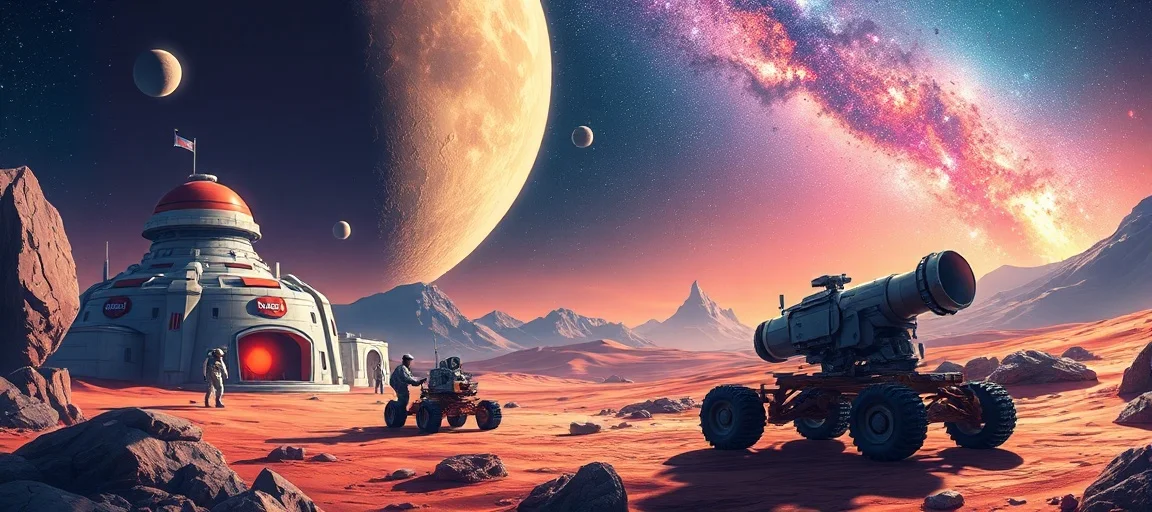
The upcoming era of NASA Missions is poised to unveil the future of space exploration, pushing humanity's frontiers further than ever before. For decades, the National Aeronautics and Space Administration (NASA) has been at the forefront of this cosmic quest, consistently pushing the boundaries of what's possible in space. As we look towards the horizon, the next NASA Mission endeavors promise to usher in an exciting era of discovery, expanding our understanding of the universe, our planet, and perhaps even ourselves. From ambitious lunar returns to daring journeys to distant icy moons, NASA's commitment to unraveling the cosmos continues to inspire and innovate. These future exploration frontiers represent humanity's collective aspiration to understand our place in the vastness of space.
- The Enduring Legacy of Space Exploration
- Current Frontiers: Key NASA Missions Underway
- Shaping Tomorrow: Future NASA Mission Concepts
- Expert Perspectives on Space Exploration
- The Broader Impact of NASA's Endeavors
- Conclusion: The Horizon of a New NASA Mission Era
- Frequently Asked Questions
- Further Reading & Resources
The Enduring Legacy of Space Exploration
NASA's history is a testament to human ingenuity and perseverance, marked by iconic achievements that have redefined our perception of space. From the pioneering Mercury and Gemini programs to the Apollo missions that landed humans on the Moon, the agency has consistently delivered groundbreaking results. The Space Shuttle program facilitated the construction of the International Space Station (ISS), a cornerstone of international collaboration and a vital laboratory in low Earth orbit. Robotic explorers, such as the Voyager probes, have ventured to the far reaches of our solar system, sending back invaluable data from planets beyond our visual reach. Telescopes like Hubble have offered breathtaking views of distant galaxies, revolutionizing astrophysics and our understanding of cosmic evolution. This rich legacy forms the bedrock upon which the next generation of NASA missions is being built, leveraging decades of experience and technological advancements to tackle even grander challenges.
Current Frontiers: Key NASA Missions Underway
Today, NASA continues to operate a diverse portfolio of missions, each contributing crucial data and insights across various scientific disciplines. These ongoing endeavors lay the groundwork for future breakthroughs and exemplify the agency's multifaceted approach to space exploration. A core aspect of any NASA Mission involves continuous innovation and adaptation.
Artemis Program: Returning Humanity to the Moon
The Artemis program stands as one of NASA's most ambitious current undertakings, aiming to return humans to the lunar surface by the late 2020s and establish a long-term lunar presence there. Building on the success of the uncrewed Artemis I mission in late 2022, which saw the Orion spacecraft successfully orbit the Moon and return to Earth, the program is moving forward with crewed flights. Artemis II is slated to carry astronauts on a lunar flyby, paving the way for Artemis III, which will land the first woman and the first person of color on the Moon. This program is not just about a return; it's about establishing a long-term lunar presence, including the Gateway lunar orbiting outpost, which will serve as a staging point for deep space missions and provide critical support for lunar surface activities. The ultimate goal is to use the Moon as a proving ground for technologies and procedures necessary for future human missions to Mars.
Mars Exploration: Perseverance and the Search for Life
Mars remains a primary target in NASA's quest to understand the potential for life beyond Earth. The Perseverance rover, which landed in Jezero Crater in February 2021, continues its mission to search for signs of ancient microbial life and collect Martian rock and regolith samples. These samples are intended for a future Mars Sample Return campaign, which will bring them back to Earth for detailed analysis, providing unprecedented insights into the planet's geological and astrobiological history. Accompanying Perseverance, the Ingenuity Mars Helicopter successfully demonstrated powered flight on another planet, proving a new capability for aerial exploration and scouting. Future Mars missions include continued robotic exploration and eventual human missions, building on the knowledge gained from current rovers and orbiters.
Unveiling the Cosmos: James Webb Space Telescope's Discoveries
The James Webb Space Telescope (JWST), a marvel of modern engineering, has been delivering stunning images and groundbreaking scientific data since its first operational images were released in July 2022. Operating at the L2 Lagrange point, JWST's infrared capabilities allow it to peer through dust clouds and observe the universe's earliest galaxies, star formation regions, and exoplanet atmospheres with unprecedented detail. Its discoveries have included the detection of water vapor and various organic molecules in the atmospheres of exoplanets, offering clues about their potential habitability. The JWST continues to revolutionize astronomy and cosmology, providing insights into the origins of the universe and the potential for life beyond Earth.
Probing Icy Worlds: Europa Clipper and Beyond
Among the most exciting prospects for discovering extraterrestrial life within our solar system are the "ocean worlds" – moons like Jupiter's Europa and Saturn's Enceladus, which are believed to harbor vast subsurface oceans beneath their icy shells. NASA's Europa Clipper mission, currently under construction and targeting a launch in October 2024, is designed to conduct detailed reconnaissance of Europa. The spacecraft will perform numerous close flybys of the moon, gathering data to determine if it possesses the conditions necessary for life, including the presence of liquid water, suitable chemistry, and energy sources. Data from Europa Clipper will be crucial for informing potential future missions, such as landers that could directly sample Europa's ocean.
Shaping Tomorrow: Future NASA Mission Concepts
Beyond the immediate horizon, NASA is actively developing and planning a suite of next-generation missions that promise to expand our reach and understanding even further. These future concepts represent the cutting edge of space science and technology, addressing fundamental questions about our universe and our place within it.
Lunar Gateway and Sustainable Presence
The Gateway will be a critical component of the Artemis program, serving as a multi-purpose outpost orbiting the Moon. It will provide a rendezvous point for astronauts traveling to the lunar surface, a research laboratory, and a testing ground for technologies required for deep-space travel. This orbital platform will allow for longer duration missions to the Moon and facilitate easier access to different lunar regions than direct landings from Earth. Its modules will be launched incrementally, with international partners contributing to its construction and operation, underscoring the collaborative nature of future space exploration. The Gateway's sustained presence around the Moon is a stepping stone towards human missions to Mars and beyond, providing a reliable infrastructure for exploration.
Advancing Planetary Defense
The threat of asteroid impacts, while rare, remains a significant concern for Earth. NASA is at the forefront of developing planetary defense strategies, most notably through missions like the Double Asteroid Redirection Test (DART), which successfully demonstrated kinetic impact as a method to alter an asteroid's trajectory in late 2022. Future missions will continue to survey near-Earth objects (NEOs) to identify potential threats and refine techniques for deflection or mitigation. This critical work ensures the safety of our planet by providing early warning systems and developing the capabilities to protect Earth from potential cosmic impacts. The agency's commitment to planetary defense highlights its role not only in exploration but also in safeguarding our world.
Climate Science and Earth Observation
While famous for its cosmic endeavors, NASA also plays a pivotal role in understanding and monitoring our home planet. A continuous stream of Earth observation missions provides invaluable data on climate change, weather patterns, natural disasters, and ecological health. Future missions include advanced satellites designed to measure sea-level rise with unprecedented accuracy, track changes in ice sheets, monitor atmospheric composition, and improve our understanding of the Earth's energy budget. These missions contribute critical scientific data to international climate research and inform policy decisions aimed at addressing environmental challenges. NASA's commitment to Earth science underscores its holistic approach to understanding complex systems, from the smallest microbes to the largest galaxies.
Expert Perspectives on Space Exploration
The ongoing and future endeavors of NASA are frequently discussed by experts in the field, who emphasize the profound implications of these missions. Dr. Anya Sharma, a leading astrophysicist, notes, "Each new image from JWST or sample from Mars not only expands our scientific understanding but also profoundly shifts our perspective on humanity's place in the universe. We are witnessing a golden age of discovery."
Similarly, Dr. Ben Carter, a planetary geologist specializing in lunar environments, highlights the strategic importance of the Artemis program. "Returning to the Moon isn't just about planting a flag; it's about establishing a sustainable economic and scientific outpost. The resources and lessons learned there will be absolutely vital for any long-term human presence beyond Earth." He further elaborates on the importance of international collaboration, stating, "The complexity and cost of these missions necessitate global partnerships, fostering a sense of shared human endeavor that transcends national boundaries."
These expert insights reinforce the multifaceted value of NASA's work, encompassing not just scientific advancement but also technological innovation, inspiration for future generations, and the promotion of global cooperation. The challenges are immense, but the potential rewards – from fundamental scientific truths to the expansion of human presence in space – are even greater.
The Broader Impact of NASA's Endeavors
The impact of NASA's missions extends far beyond the realm of scientific discovery and space exploration. Historically, the pursuit of space has driven incredible technological advancements that have found applications in everyday life. For instance, technologies developed for the Apollo program led to innovations in memory foam for bedding and medical devices, while advanced water filtration systems designed for spacecraft now benefit communities on Earth. From satellite communication and GPS to medical imaging techniques (like MRI and CT scan improvements) and stronger, lighter materials, these "spin-off" technologies originating from space programs have profoundly benefited society, improving quality of life and driving economic growth in unexpected sectors.
Moreover, NASA's work serves as a powerful source of inspiration for countless individuals, particularly young people. Images of distant galaxies, videos of rovers exploring alien landscapes, and stories of astronauts pushing the limits of human endurance ignite curiosity and encourage engagement in STEM (Science, Technology, Engineering, and Mathematics) fields. This fostering of future innovators is crucial for addressing the complex challenges facing humanity, both on Earth and in space, ensuring a pipeline of talent for future breakthroughs.
Internationally, NASA often acts as a convener for global cooperation. Projects like the International Space Station (ISS), involving partners such as the European Space Agency (ESA), Japan Aerospace Exploration Agency (JAXA), and Canadian Space Agency (CSA), showcase how nations can collaborate on complex scientific and engineering feats. Similarly, the Artemis program is built on an international framework, fostering diplomatic ties and shared goals among nations. By working together on ambitious endeavors, countries can pool resources, share expertise, and build bridges that might otherwise remain unbuilt. This collaborative spirit is essential for tackling the grand challenges of space exploration, which often exceed the capabilities of any single nation.
Conclusion: The Horizon of a New NASA Mission Era
As we chart a course through the 21st century, the ambition and scope of future space endeavors continue to expand. Each upcoming NASA Mission represents another step in humanity's enduring journey to understand our place in the cosmos. From the return of humans to the Moon and the persistent search for ancient life on Mars to the breathtaking views provided by the James Webb Space Telescope and the detailed reconnaissance of ocean worlds like Europa, NASA is leading the charge into an unprecedented era of discovery. These missions are not merely scientific expeditions; they are catalysts for technological innovation, sources of global inspiration, and powerful symbols of human ingenuity. The insights gained will not only reshape our understanding of the universe but also provide critical knowledge to protect our home planet and inspire generations to come. The horizon is bright, and the next chapter of space exploration promises to be the most exciting yet.
Frequently Asked Questions
Q: What is the primary goal of the Artemis program?
A: The Artemis program aims to return humans to the Moon, including the first woman and person of color, and establish a sustainable lunar presence. This presence will serve as a proving ground for future human missions to Mars.
Q: How is the James Webb Space Telescope contributing to our understanding of the universe?
A: JWST observes the universe in infrared, allowing it to peer through dust and study the earliest galaxies, star formation, and exoplanet atmospheres with unprecedented detail. Its discoveries are revolutionizing astronomy and cosmology, providing insights into the origins of the universe and the potential for life beyond Earth.
Q: What is NASA doing to protect Earth from asteroid impacts?
A: NASA conducts planetary defense missions, like the Double Asteroid Redirection Test (DART), to test methods for altering asteroid trajectories. It also continuously surveys Near-Earth Objects (NEOs) to identify potential threats and refine techniques for deflection or mitigation.