Amazon Cargo Plane Overshoots Runway in Miami: Latest Details

A dramatic incident involving an Amazon Cargo Plane Overshoots Runway in Miami recently sparked an immediate and extensive emergency response at Miami International Airport (MIA). The incident, involving a Boeing 767-300 freighter, sent shockwaves through the aviation community and raised critical questions about air safety protocols and airport infrastructure. Reports indicate that the aircraft, operating for Amazon Prime Air, veered off the diagonal runway shortly after 2 p.m. EDT, impacting several vehicles and igniting a blaze. At least five people were killed, and five others were injured, with three in critical condition. The pilots and co-pilots were initially trapped in the plane, and some occupants were also trapped in their vehicles.
- Background Context: A Troubling Runway Excursion
- Key Details of the Incident
- Investigation into the Amazon Cargo Plane Overshoot in Miami
- Impact on Operations
- Historical Context of Similar Incidents
- Expert Analysis and Safety Protocols
- Conclusion
- Frequently Asked Questions
- Further Reading & Resources
Background Context: A Troubling Runway Excursion
The event unfolded as the Amazon cargo plane, operating as Prime Air Flight 7598, arrived from San Juan, Puerto Rico. Overrunning the runway, the Boeing 767-300 ultimately came to rest beside a roadway near two semi-trucks, appearing largely intact despite the fire that ensued. This type of incident, known as a runway excursion, involves an aircraft departing the paved surface of a runway during takeoff or landing. While investigations are ongoing, the immediate aftermath revealed a chaotic scene with thick black smoke billowing into the sky and a significant emergency response effort underway.
The closure of all runways and taxiways at Miami International Airport in the immediate hours following the crash led to substantial flight disruptions, delaying approximately 250 flights. The Federal Aviation Administration (FAA) issued a ground stop, which was later extended, highlighting the severe operational impact on one of the nation's busiest air travel hubs.
Key Details of the Incident
The cargo plane, operated by 21 Air on behalf of Amazon, experienced the runway overrun on Sunday afternoon. Emergency crews, numbering over 60 Miami-Dade Fire Rescue units and approximately 200 personnel, rapidly responded to the scene, working to extinguish the flames and attend to the injured. The crash location at the northwest end of the airport, adjacent to a road used by warehouse workers and other businesses, intensified concerns regarding ground safety.
Flight Information
The aircraft involved was a 32-year-old Boeing 767-300, originally built for passenger transport before its conversion to a cargo plane in 2015. Flightradar24, a flight-tracking site, provided this information, indicating the age and previous life of the airframe. The flight originated from Luis Muñoz Marín International Airport in San Juan, Puerto Rico, before its ill-fated landing in Miami.
Emergency Response and Casualties
Upon arrival, fire crews found the aircraft engulfed in flames, specifically dealing with a complex engine compartment fire. Despite the intensive efforts, at least five fatalities were confirmed, with another five individuals sustaining injuries, some critical. Miami-Dade County officials reported that three people were critically injured and two others were hospitalized with less severe injuries. The pilot and co-pilot were trapped in the cockpit, and several people in vehicles struck by the plane were also trapped. Fire crews battled a fuel leak for several hours after the initial impact.
Aircraft Damage and Condition
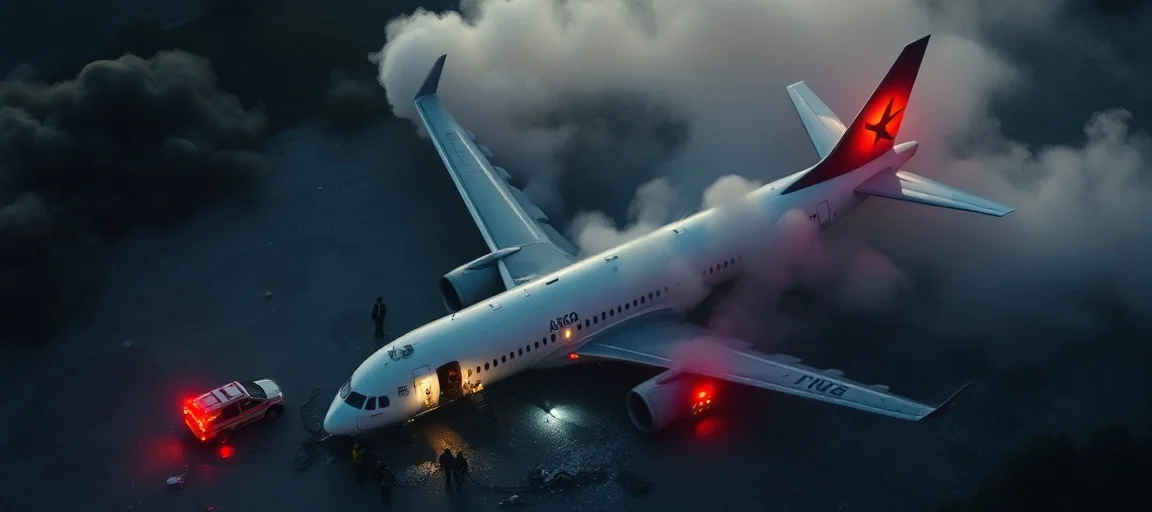
Images from the scene depicted the Prime Air plane resting on its belly near a roadway, with its tail raised and visible scorch marks on the right side. Despite the significant fire and impact, the aircraft appeared largely intact, suggesting that the primary damage might be localized to the underside and right engine area. The extent of structural damage will be a major focus for investigators in the coming days.
Investigation into the Amazon Cargo Plane Overshoot in Miami
The National Transportation Safety Board (NTSB) has swiftly launched a full investigation into the Amazon cargo plane overshooting the runway in Miami. A "Go Team" led by NTSB Chairwoman Jennifer Homendy was dispatched to the scene to gather evidence and begin the arduous process of determining the cause of the accident. Such investigations are typically exhaustive, involving meticulous analysis of flight data recorders (FDR) and cockpit voice recorders (CVR), witness testimonies, and aircraft maintenance records.
Regulatory Bodies Involved
Both the Federal Aviation Administration (FAA) and the National Transportation Safety Board (NTSB) are actively involved in the inquiry. The FAA's role often includes examining air traffic control communications, airport operational procedures, and ensuring compliance with aviation regulations. The NTSB, as the primary accident investigation agency, will delve into all aspects of the incident, from pilot actions to mechanical failures and environmental factors. Boeing, the manufacturer of the 767, has also stated its intention to support the NTSB investigation.
Potential Causes
While it is too early to determine a definitive cause, aviation safety experts typically consider several factors in runway excursion incidents. These can include:
- Pilot Error: Factors such as improper landing techniques, misjudgment of runway conditions, or delayed braking. Aviation safety expert Steve Arroyo, a retired United Airlines pilot, has questioned whether the Amazon plane landed in the touchdown zone of the runway and why it didn't abort the landing if it was beyond that area.
- Mechanical Failure: Issues with the aircraft's braking system, landing gear, thrust reversers, or engine performance.
- Weather Conditions: While not immediately clear if weather played a role, severe weather such as heavy rain, strong crosswinds, or thunderstorms can significantly complicate landings. Wind gusts up to 30 mph were reported around the time of the incident.
- Runway Conditions: Factors like standing water, rubber deposits, or foreign object debris (FOD) affecting braking performance.
- Air Traffic Control (ATC) Directives: Although less common, ATC instructions or miscommunications could be a contributing factor.
The NTSB's investigation aims to uncover the precise sequence of events leading to the runway overrun, offering crucial insights to prevent similar occurrences in the future. Their final report, which can take 12 to 18 months, will provide comprehensive findings and safety recommendations.
Impact on Operations
The runway excursion of the Amazon cargo plane has had immediate and far-reaching consequences for Miami International Airport and Amazon's logistics network.
Airport Operations
Miami International Airport, a critical hub for both passenger and cargo flights, experienced significant disruption. All runways and taxiways were initially closed, leading to a cascade of delays and cancellations. The closure was necessary not only for emergency response but also for the subsequent investigation and cleanup efforts. While some runways reopened later in the day, the incident created a substantial backlog, affecting hundreds of flights and thousands of travelers and cargo shipments. The airport's communication director confirmed passengers were bussed to terminals following an earlier incident where a passenger jet landed and caught fire. This highlights the airport's robust emergency response but also its vulnerability to such disruptions.
Amazon Logistics and Supply Chain
Amazon's Prime Air operation relies heavily on its fleet of cargo planes for rapid delivery services. An incident of this magnitude can lead to temporary logistical challenges for the e-commerce giant. While Amazon maintains a diversified network of carriers, the loss or temporary grounding of an aircraft, especially a Boeing 767 freighter, can impact delivery schedules and overall operational efficiency. Amazon spokesperson Kelly Nantel stated that the company is "working closely with local authorities and officials to understand exactly what happened" and that their "absolute priority is the safety, well-being, and care of everyone involved".
Historical Context of Similar Incidents
Runway excursions, while relatively rare given the volume of air traffic, are a known risk in aviation. Miami International Airport itself has been the site of various aviation incidents over the years, though not always involving runway overruns of this severity with an Amazon-branded aircraft.
It's important to distinguish this incident from other aviation events that have occurred in or around Miami:
- Atlas Air Flight 3591 (February 2019): An Atlas Air Boeing 767-300 freighter, also operating for Amazon Air, crashed into Trinity Bay near Houston, Texas, during approach. This fatal crash killed all three occupants and was attributed to pilot error, spatial disorientation, and an inadvertent activation of the go-around mode. The NTSB highlighted the first officer's history of flight performance issues, which he concealed from Atlas Air.
- Atlas Air Engine Malfunctions (January 2024): Several incidents involving Atlas Air Boeing 747s experiencing engine malfunctions and making emergency landings in Miami have been reported. One such event involved a 747-8F with an engine fire shortly after departure, resulting in a "softball-size hole" above the engine, though it landed safely with no injuries. These incidents, while serious, did not involve a runway overrun during landing.
- Other Runway Excursions: While not involving Amazon or as severe, runway excursions have occurred at various airports due to factors like hydraulic failure or tire damage. For instance, an Atlas Air 747 returned to Seoul due to hydraulic failure and tire damage upon landing, leaving the aircraft stuck on the runway. Another Atlas Air 747 had a tire burst on landing at Hong Kong International Airport, causing a runway closure.
These past events underscore the complexities and potential hazards of air cargo operations and highlight the critical importance of rigorous safety protocols, thorough pilot training, and robust aircraft maintenance.
Expert Analysis and Safety Protocols
Aviation safety experts emphasize the multi-faceted nature of aircraft incidents. They highlight that such events are rarely attributable to a single cause but rather a chain of contributing factors. In the case of an Amazon cargo plane overshooting the runway in Miami, investigators will meticulously reconstruct the flight's final moments.
Experts like Steve Arroyo often stress the importance of appropriate landing procedures, including assessing touchdown zone precision and the decision to execute a "go-around" if a landing is unstable. The Federal Aviation Administration (FAA) also provides guidelines and regulations for runway safety areas designed to mitigate damage in case of an overrun. However, the severity of this incident suggests that the aircraft traveled beyond typical safety margins, impacting ground vehicles and structures.
The incident also draws attention to the intense scrutiny currently faced by aircraft manufacturers like Boeing, following several high-profile issues with their planes. While the immediate cause of this Miami incident is unknown, any findings related to aircraft systems or design could further intensify this scrutiny.
Aviation safety is an evolving field, with continuous improvements in technology, training, and regulations. Incidents like the Amazon Cargo Plane Overshoots Runway in Miami serve as stark reminders of the inherent risks in air travel and the continuous need for vigilance, thorough investigation, and proactive safety enhancements across the entire aviation ecosystem. Regulatory bodies like the NTSB often issue safety recommendations after such events, pushing for industry-wide changes to enhance safety margins and prevent future tragedies. These can range from improvements in pilot training and certification to mandates for advanced cockpit recording equipment or enhancements in airport infrastructure.
Conclusion
The recent incident involving an Amazon Cargo Plane Overshoots Runway in Miami has underscored the inherent complexities and risks in air cargo operations, resulting in tragic fatalities and significant operational disruption. As investigators from the NTSB and FAA meticulously piece together the events leading to the runway excursion, the aviation community awaits answers that will be crucial for enhancing safety protocols and preventing future occurrences. The incident serves as a somber reminder of the unforgiving nature of aviation and the critical importance of every detail in ensuring safe flight operations. The full report from the NTSB is anticipated to provide a comprehensive understanding of the causes and contributing factors, guiding future safety improvements within the industry.
Frequently Asked Questions
Q: What happened to the Amazon cargo plane?
A: An Amazon cargo plane, operating as Prime Air Flight 7598, overshot a runway at Miami International Airport, resulting in a runway excursion. The Boeing 767-300 freighter veered off, impacted ground vehicles, and ignited a fire, leading to multiple fatalities and injuries.
Q: Who is investigating the incident?
A: The National Transportation Safety Board (NTSB) has launched a full investigation, dispatching a "Go Team" to the scene. The Federal Aviation Administration (FAA) is also actively involved, examining air traffic control and operational procedures.
Q: What was the impact on Miami International Airport operations?
A: The incident caused significant disruption, leading to the immediate closure of all runways and taxiways. This resulted in substantial flight delays and cancellations, affecting hundreds of flights and Amazon's logistics network.