US-Iran Tensions Escalate: Cargo Ship Seized & Oil Jumps Intensify Global Concerns
The global geopolitical landscape has been significantly rattled by a recent escalation in long-standing US-Iran Tensions Escalate: Cargo Ship Seized & Oil Jumps as a direct consequence. The seizure of a commercial cargo vessel in a strategically vital waterway has sent immediate shockwaves through international shipping lanes and global energy markets. These intensifying global concerns are further underscored by a notable surge in crude oil prices, signaling potential economic instability and prompting urgent calls for de-escalation from world leaders. The incident highlights the delicate balance of power in the region and the far-reaching implications of maritime security breaches.
- Recent Flashpoint: The Cargo Ship Seizure
- The Economic Ripple: Oil Prices React
- Historical Context of US-Iran Tensions
- US-Iran Tensions Escalate: Cargo Ship Seized & Oil Jumps Amidst Broader Geopolitical Landscape
- Expert Perspectives and Analysis
- Conclusion
- Frequently Asked Questions
- Further Reading & Resources
Recent Flashpoint: The Cargo Ship Seizure
The latest incident, which saw a commercial cargo ship taken into custody by Iranian forces, marks a critical new chapter in the ongoing US-Iran tensions. This act has immediately heightened anxieties about the safety of international maritime trade routes, particularly those crucial for global energy supplies. The implications extend beyond regional stability, touching upon international law and the freedom of navigation.
Details of the Incident
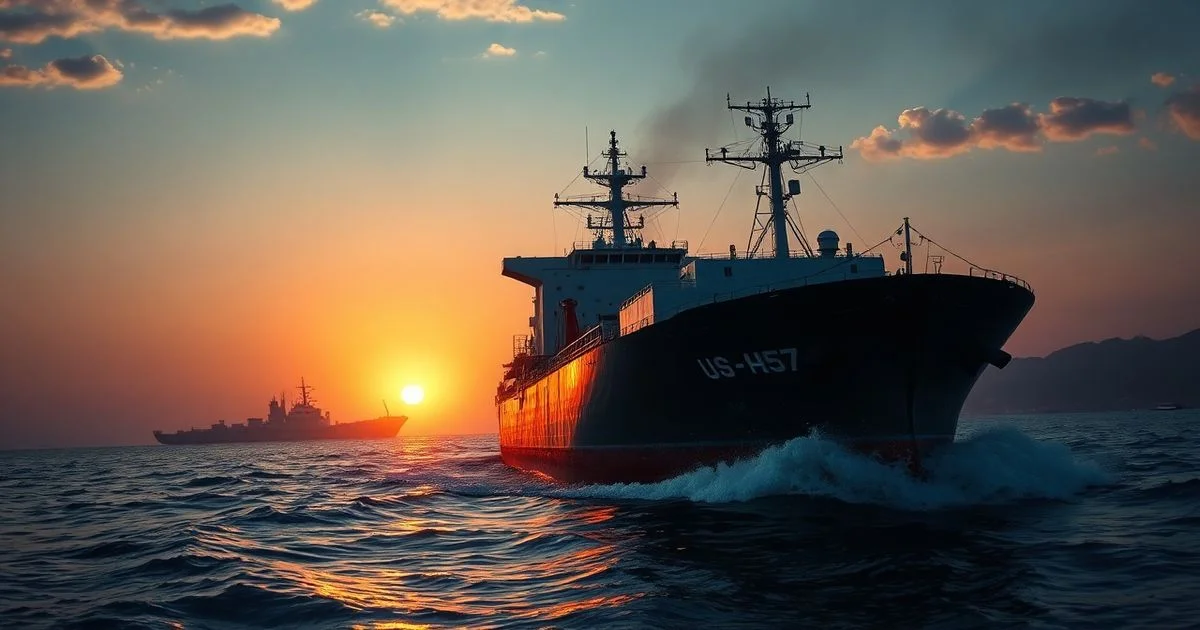
On April 20, 2026, the Liberian-flagged commercial cargo vessel, MV Perseus, was reportedly intercepted and seized by units of the Islamic Revolutionary Guard Corps (IRGC) Navy in the Strait of Hormuz. Initial reports indicate the IRGC cited unspecified "maritime violations" as the justification for the seizure, though specific details remain contentious and unconfirmed by international observers. The vessel, carrying a diverse general cargo, was en route to a European port when it was boarded. All crew members are reported to be safe, though their current status and the vessel's precise location remain under Iranian control. The United States Fifth Fleet, responsible for naval operations in the Middle East, condemned the action, calling it a "provocative and unjustified act" that threatens regional stability.
Strategic Importance of the Strait
The Strait of Hormuz is one of the world's most critical chokepoints for oil transit, with approximately one-fifth of the world's total petroleum consumption passing through it daily. Its narrow waters, connecting the Persian Gulf to the open ocean, make it a flashpoint for geopolitical friction. Any disruption to shipping in this strait has immediate and profound global economic repercussions, primarily affecting energy prices and supply chains. The seizure of the MV Perseus underscores the vulnerability of this vital maritime corridor to regional conflicts and unilateral actions. Navigational freedom through international waters is a principle upheld by numerous international treaties, and any perceived violation can draw swift international condemnation and potential retaliatory measures.
The Economic Ripple: Oil Prices React
The news of the cargo ship seizure almost immediately triggered a significant reaction in global commodity markets, particularly impacting crude oil prices. This swift economic ripple effect highlights the interconnectedness of geopolitical events and global financial stability. Investors and analysts alike are now closely monitoring the situation for further developments that could exacerbate market volatility.
Global Oil Market Volatility
Following the announcement of the MV Perseus's seizure, benchmark crude oil prices, including Brent and West Texas Intermediate (WTI), saw sharp increases. Brent crude futures jumped by over 3% within hours of the news, reaching levels not seen in several months. WTI crude followed a similar trajectory, reflecting widespread market apprehension about potential supply disruptions. This sudden volatility is a direct consequence of the Strait of Hormuz's strategic importance, as any threat to its passage fuels fears of restricted oil flows from major producers in the Persian Gulf. Energy analysts are predicting sustained upward pressure on prices if the situation is not swiftly de-escalated, with some forecasting prices could breach higher thresholds should further incidents occur.
Impact on Consumers and Businesses
The immediate rise in oil prices directly translates into higher costs for consumers and businesses globally. Increased fuel prices affect transportation costs, impacting everything from airline tickets and shipping fees to the price of goods in stores. Industries reliant on energy-intensive processes, such as manufacturing and agriculture, will face increased operational expenses, potentially leading to inflationary pressures across various economies. For individual consumers, the impact is felt at the gas pump and through a general increase in the cost of living. Governments worldwide are now facing the challenge of mitigating these economic shocks while navigating the diplomatic complexities of the escalating tensions.
Historical Context of US-Iran Tensions
The current escalation is not an isolated event but rather the latest manifestation of a decades-long, complex, and often fraught relationship between the United States and Iran. Understanding the historical underpinnings is crucial to grasping the gravity of the present situation. The ebb and flow of diplomacy, sanctions, and regional rivalries have shaped a deeply mistrustful dynamic.
Nuclear Deal and Sanctions
A significant turning point in recent US-Iran relations was the 2015 Joint Comprehensive Plan of Action (JCPOA), commonly known as the Iran nuclear deal. This agreement aimed to limit Iran's nuclear program in exchange for sanctions relief. However, the US withdrawal from the deal in 2018 under the previous administration, and the subsequent re-imposition of stringent sanctions, significantly exacerbated tensions. Iran responded by gradually rolling back its commitments to the deal, leading to concerns about its nuclear ambitions. The sanctions have crippled Iran's economy, particularly its oil exports, and have been a constant source of friction, with Iran often viewing them as economic warfare. For a deeper dive into the economic ramifications, explore our article on The Impact of Sanctions on Iran's Economy. Attempts to revive the JCPOA have faced numerous setbacks, leaving a diplomatic void that contributes to ongoing instability.
Regional Proxies and Maritime Incidents
Beyond the nuclear issue, the US and Iran have been engaged in a broader struggle for influence in the Middle East, often through proxy conflicts. Iran's support for various non-state actors in Iraq, Syria, Lebanon, and Yemen is viewed by the US and its allies as destabilizing to the region. This proxy warfare extends to maritime activities, where there have been a series of incidents involving commercial shipping in recent years. These have included limpet mine attacks, drone strikes, and previous vessel seizures, all contributing to a climate of heightened risk in vital shipping lanes. Readers interested in broader Maritime Security Threats can find more analysis here. Each incident, while distinct, adds to the cumulative tension and increases the likelihood of miscalculation, making the latest cargo ship seizure particularly alarming. The pattern suggests a deliberate strategy by both sides to exert pressure and demonstrate resolve in a contested arena.
US-Iran Tensions Escalate: Cargo Ship Seized & Oil Jumps Amidst Broader Geopolitical Landscape
The seizure of the MV Perseus and the subsequent oil market reaction cannot be viewed in isolation; they are deeply intertwined with a broader and increasingly complex geopolitical landscape. This incident has reignited concerns about a potential regional conflagration and prompted urgent responses from international bodies and individual nations. The ripple effects of such a confrontation would undoubtedly extend far beyond the Middle East, impacting global trade, security, and economic stability. The current situation demands careful diplomatic navigation to prevent further escalation.
International Reactions and Diplomacy
The international community has largely condemned the seizure of the MV Perseus, with many nations calling for its immediate release and urging restraint from all parties. The United Nations Secretary-General issued a statement emphasizing the importance of adherence to international law and the freedom of navigation. European Union leaders expressed "grave concern" and called for diplomatic channels to be utilized to de-escalate the situation. Meanwhile, several countries with significant maritime trade interests have called for increased naval presence in the Strait of Hormuz to safeguard shipping. The challenge for diplomats now is to find a pathway to de-escalation that addresses underlying grievances without legitimizing actions that violate international maritime norms. The risk of miscalculation is high, and a concerted international effort is required to prevent the crisis from spiraling further.
Future Implications and Potential Scenarios
The future implications of this escalation are multifaceted and could range from prolonged periods of market instability to a more direct military confrontation. Analysts are weighing several potential scenarios:
- Diplomatic Resolution: Intensive back-channel negotiations could lead to the release of the vessel and a return to some form of status quo, potentially involving a prisoner exchange or a reduction in sanctions.
- Continued Maritime Harassment: Iran might continue sporadic seizures or harassment of commercial shipping as a tactic to exert pressure, leading to persistent volatility in oil markets and increased shipping insurance premiums.
- Increased Military Presence: The US and its allies could significantly bolster their naval presence in the region, leading to a higher risk of accidental encounters or direct confrontations.
- Broader Regional Conflict: In a worst-case scenario, a miscalculation or aggressive act could trigger a wider conflict involving regional powers and potentially drawing in global actors, with devastating economic and human costs.
The immediate focus will be on the diplomatic efforts to secure the release of the MV Perseus and its crew, while simultaneously ensuring the safety of other commercial vessels traversing the critical waterways. The international community is bracing for the potential fallout, keenly aware of the interconnected nature of global security and economic stability.
Expert Perspectives and Analysis
To fully comprehend the gravity of the current situation, it is essential to consider the insights of leading experts in both security and economic analysis. Their perspectives offer valuable context and potential outlooks on the unfolding crisis, emphasizing the complex challenges ahead.
Security Analysts' Views
Security analysts largely agree that the seizure of the MV Perseus is a clear signal from Iran aimed at demonstrating its capabilities and resolve in the face of ongoing international pressure. Dr. Anya Sharma, a senior fellow at the Institute for Global Security Studies, stated, "This is a tactical move by Iran to gain leverage, likely in response to perceived slights or to exert pressure regarding sanction relief. It also tests the international community's response limits". Retired Admiral James Peterson added, "Such actions, while seemingly isolated, are part of a broader pattern of hybrid warfare. They aim to disrupt, intimidate, and signal power without necessarily initiating full-scale conflict, though the risk of escalation remains ever-present". These experts highlight the calculated nature of such acts and the inherent dangers in a region already rife with tensions. The consensus is that while a full-blown military conflict may not be immediate, the risk of miscalculation has dramatically increased.
Economic Analysts' Forecasts
Economic analysts are universally concerned about the impact on global markets. Dr. Lena Rodriguez, chief economist at Global Financial Insights, warned, "The Strait of Hormuz is a non-negotiable chokepoint for oil. Any perceived threat there, such as this cargo ship seizure, immediately prices in a geopolitical risk premium into crude. This isn't just a short-term blip; sustained tensions will lead to higher energy costs, impacting inflation and potentially slowing global economic recovery". For insights into market predictions, see our forecast on The Future of Oil Prices. She further noted that shipping insurance premiums for vessels operating in the Persian Gulf will likely soar, increasing operational costs for all companies using the route, ultimately passed on to consumers. Mark Jenkins, a senior energy market analyst, underscored the unpredictability: "While strategic petroleum reserves can offer some buffer, the sheer volume of oil passing through Hormuz means that a prolonged disruption is simply not sustainable for the global economy without significant pain at the pump and across supply chains". The economic forecasts paint a picture of continued volatility and potential inflationary pressures if the US-Iran relationship continues to deteriorate.
Conclusion
The recent seizure of the MV Perseus in the Strait of Hormuz and the subsequent sharp rise in global oil prices underscore a significant escalation in US-Iran tensions, threatening the stability of a crucial global waterway and impacting the world economy. This incident serves as a stark reminder of the intricate connections between geopolitical events and economic realities. The immediate concerns revolve around the safe release of the vessel and its crew, along with preventing further destabilizing actions. However, the broader challenge lies in addressing the deep-seated mistrust and unresolved issues that continue to fuel the animosity between the United States and Iran. As US-Iran Tensions Escalate: Cargo Ship Seized & Oil Jumps, the international community faces the critical task of fostering dialogue and finding diplomatic solutions to avert a wider crisis and ensure the freedom of navigation and global energy security. Continued vigilance and concerted diplomatic efforts will be paramount in navigating this perilous period.
Frequently Asked Questions
Q: What prompted the recent cargo ship seizure by Iran?
A: Iran's Islamic Revolutionary Guard Corps (IRGC) cited unspecified "maritime violations" for seizing the MV Perseus in the Strait of Hormuz. This act is widely seen as a tactical move to exert pressure amidst ongoing US-Iran tensions and sanctions.
Q: How has the seizure impacted global oil prices?
A: Following the seizure, benchmark crude oil prices like Brent and WTI saw significant jumps, reflecting market apprehension over potential supply disruptions from the critical Strait of Hormuz. This volatility directly impacts global energy costs.
Q: What are the broader geopolitical implications of this escalation?
A: The incident heightens concerns about international maritime trade safety and regional stability. It could lead to increased military presence, diplomatic impasses, and further economic shocks if not de-escalated through concerted international efforts.