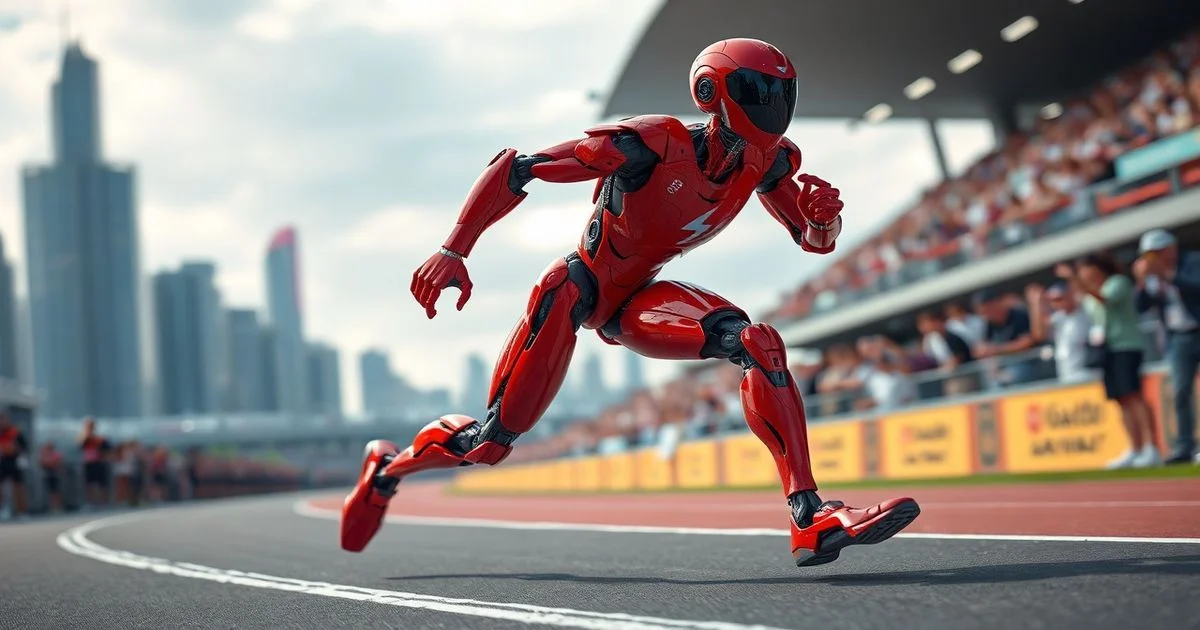
Chinese Robots Set New Record in Beijing Half-Marathon
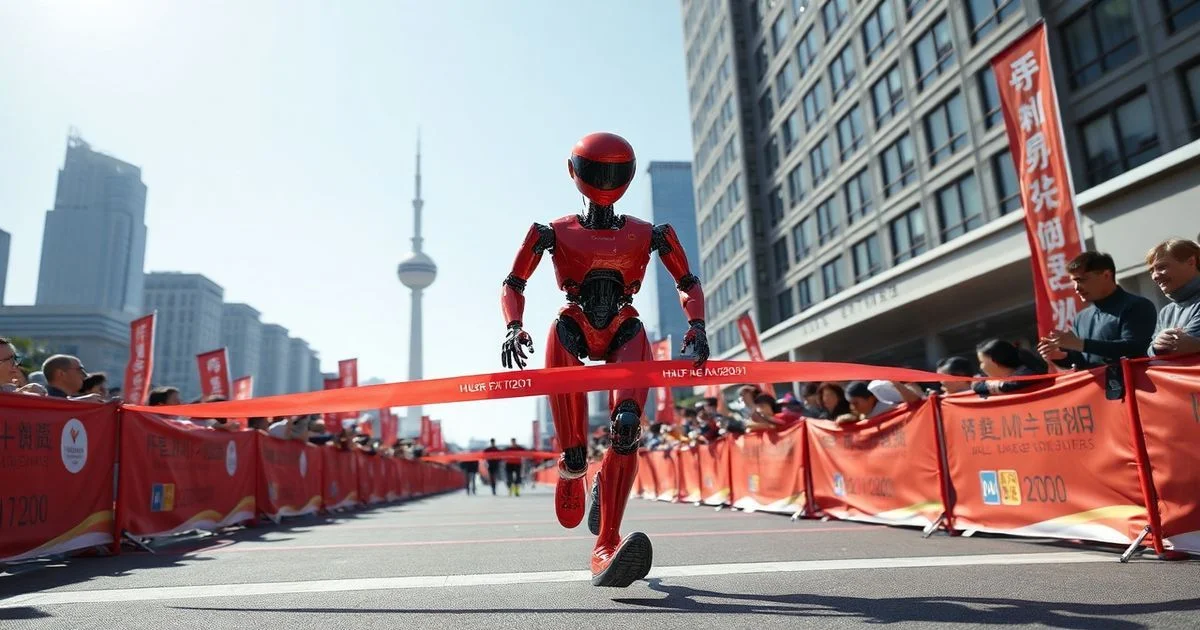
The world of athletics witnessed a groundbreaking moment this past Sunday as Chinese Robots Set New Record in Beijing Half-Marathon, dramatically reshaping our understanding of robotic capabilities. In an unprecedented display of speed and endurance, a humanoid robot named "Lightning" completed the 21.1-kilometer course in an astonishing 50 minutes and 26 seconds, beating the established human half-marathon world record by nearly seven minutes. This monumental achievement at the second Beijing E-Town Half Marathon marks a significant leap forward in robotics, challenging the long-held boundaries between human and artificial performance. The record-breaking run underscores the rapid advancements in AI and mechanical engineering, signaling a new era for competitive sports and highlighting Beijing's pivotal role in pushing technological frontiers.
- A New Era of Athleticism: Chinese Robots Set New Record in Beijing Half-Marathon
- The Rise of Robotic Runners: From Lab to Track
- Expert Perspectives on the Robotic Leap
- Impact on Sports and Society
- The Future of Human-Robot Interaction
- Conclusion
- Frequently Asked Questions
- Further Reading & Resources
A New Era of Athleticism: Chinese Robots Set New Record in Beijing Half-Marathon
The second Beijing E-Town Half Marathon, held on April 19, 2026, was no ordinary race. It was a spectacle of human and machine prowess, featuring a dedicated category for humanoid robots designed to test the limits of artificial locomotion in real-world conditions. While thousands of human athletes pushed their physical boundaries, it was a sleek, red humanoid named Lightning, developed by Chinese smartphone company Honor, that stole the global spotlight. This autonomous machine not only won its category but shattered the overall half-marathon speed record previously held by a human.
Lightning’s finish time of 50 minutes and 26 seconds stands in stark contrast to the human world record of 57 minutes and 20 seconds, set by Uganda's Jacob Kiplimo. This performance gap of 6 minutes and 54 seconds highlights the immense progress made in robotic engineering and artificial intelligence within a remarkably short period. The event saw over 100 robots from 112 teams, totaling more than 300 individual machines, competing on a course parallel to their human counterparts, ensuring safety and a clear track for these mechanical runners.
The Rise of Robotic Runners: From Lab to Track
The journey of humanoid robots from experimental prototypes to competitive athletes has been swift and remarkable. Just a year prior, at the inaugural Beijing Humanoid Robot Half Marathon in 2025, the robotic competition was a different story. Only six out of 21 participating robots managed to complete the course, with the fastest taking a leisurely 2 hours, 40 minutes, and 42 seconds to finish. This year's dramatic improvement, with Lightning finishing nearly three times faster than the previous robotic winner, showcases an unprecedented acceleration in the field of robotics.
This rapid advancement is a testament to dedicated research and development, particularly by companies like Honor, which are leveraging their expertise in related tech sectors. Honor, primarily known for its smartphones and consumer electronics, has successfully adapted advanced technologies like liquid cooling systems into its robotics division, a crucial element for sustained high-performance operation. The Beijing E-Town Half Marathon serves as a high-stakes proving ground, accelerating the transition of humanoid robots from controlled laboratory environments to large-scale, real-world applications.
Engineering Marvels: What Makes Lightning So Fast?
Lightning’s exceptional performance is the result of cutting-edge engineering and biomimetic design. Honor engineers explicitly stated that the robot's design was modeled after elite human athletes, focusing on features that optimize running efficiency. Key to its speed and endurance are its elongated legs, measuring approximately 0.95 meters (37.4 inches), designed to mimic the powerful strides of professional runners.
Beyond structural design, internal innovations play a critical role. Lightning is equipped with a proprietary liquid-cooling system, a technology refined from Honor’s smartphone division. This system features cooling channels that penetrate deep into the motor's interior, effectively dissipating heat and allowing for sustained high-power output without overheating—a common challenge for high-performance robots. The robot also boasts a formidable peak torque of 400 newton-meters, providing the raw power needed for its blistering pace. The ability to manage temperature and maintain operational efficiency throughout the entire 21.1-kilometer race was a significant hurdle overcome by Lightning’s creators.
Autonomous Navigation Versus Remote Control
An interesting facet of the robot half-marathon was the dual approach to control: autonomous navigation and remote control. While a second, remotely controlled Lightning unit actually recorded an even faster time of 48 minutes and 19 seconds, the focus and official record-breaking achievement were attributed to the autonomous Lightning, which navigated the course entirely on its own. This distinction is crucial, as autonomous operation represents a more technically impressive feat, requiring sophisticated multi-sensor fusion and real-time decision-making algorithms to perceive its environment and execute complex movements without human intervention.
Approximately 40% of the participating robots in the E-Town Half Marathon competed autonomously, signifying a growing confidence in AI-driven mobility. The remaining 60% were remotely controlled, showcasing different development philosophies and technological readiness levels within the burgeoning robotics industry. The success of autonomous robots like Lightning demonstrates a maturity in AI navigation systems, proving they can handle dynamic, extended environments outside of controlled lab settings.
Expert Perspectives on the Robotic Leap
The record-breaking performance has sparked widespread discussion among experts in robotics, sports science, and artificial intelligence. Du Xiaodi, a development engineer at Honor, expressed immense pride in Lightning’s achievement and highlighted its broader implications. "Looking ahead, some of these technologies might be transferred to other areas," said Du, drawing parallels with how advancements in the automotive industry were initially spurred by competitive racing. This sentiment underscores the belief that breakthroughs in robotic sports can serve as a catalyst for innovation across various industrial and daily applications.
The Beijing Municipal People's Government and China Media Group, co-hosts of the event, echoed this perspective, hailing Sunday's race as "a major step forward for the robotics industry—accelerating the transition of humanoid robots from lab to large-scale, real-world application". Spectators also shared in the excitement, with one, Sun Zhigang, stating, "I'm very excited. First of all, it's the first time robots have surpassed humans, and that's something I never imagined". This public enthusiasm is indicative of a shifting perception of robots, from mere tools to potential partners or even competitors in human endeavors.
Impact on Sports and Society
The implications of robots setting new athletic records extend far beyond the finish line. This event forces a reevaluation of what "athleticism" truly means and whether performance benchmarks, once thought to be exclusively human, are now open to mechanical interpretation. For professional athletes, the rapid ascent of robotic performance could introduce new training methodologies, insights into biomechanics, or even inspire new forms of human-robot collaborative sports.
On a societal level, the visibility of humanoid robots excelling in traditionally human domains could accelerate public acceptance and integration of advanced robotics into everyday life. Imagine robots capable of performing strenuous or repetitive physical tasks in logistics, construction, or even healthcare, drawing directly from the lessons learned on the marathon course. The liquid-cooling systems and advanced gait algorithms developed for Lightning could find applications in robotic assistants, delivery services, or even search and rescue operations where endurance and efficient movement are paramount.
Challenges and Ethical Considerations
Despite the triumphs, the Beijing Half-Marathon also highlighted the existing challenges in robotics. Not all robots performed flawlessly; some stumbled, veered off course, or even broke apart, requiring human intervention or removal from the track. One robot reportedly "crashed after the finish line," requiring staff to carry it away on a stretcher. These incidents underscore the complexity of real-world deployment and the need for further refinement in robot robustness and adaptability.
The emergence of super-fast robotic athletes also raises important ethical questions. As robots surpass human capabilities in various physical domains, discussions around fairness in competition, the definition of "sport," and the potential impact on human endeavor will become increasingly pertinent. While the robots ran on a separate track, the very act of comparing their times to human records ignites a debate about the future of sports. Will we see entirely new robotic sports leagues, or will there be mixed competitions with carefully defined handicaps? These questions will undoubtedly shape the future landscape of athletic competition.
The Future of Human-Robot Interaction
The success of Lightning at the Beijing Half-Marathon is more than just a sports story; it's a window into our future. It demonstrates that the boundaries of what is possible are constantly being redrawn by technological innovation. The pace of development in humanoid robotics, evidenced by the year-over-year improvement in Beijing, suggests that these machines will continue to integrate into our lives in increasingly sophisticated ways.
As these intelligent machines become more capable, the focus will shift from simply observing their performance to understanding how they can augment human potential and create new opportunities. Whether it's in competitive sports, industrial applications, or personal assistance, the synergy between human ingenuity and robotic precision promises to unlock new levels of achievement. The Beijing Half-Marathon has undeniably carved out a significant milestone in this ongoing evolution.
Conclusion
The recent Beijing Half-Marathon provided a stunning glimpse into the future, as Chinese Robots Set New Record in Beijing Half-Marathon, with Honor's humanoid robot Lightning completing the race in an unparalleled 50 minutes and 26 seconds. This remarkable feat, significantly faster than any human has ever run the distance, underscores the breathtaking pace of innovation in robotics and artificial intelligence. From sophisticated biomimetic design to advanced cooling systems and autonomous navigation, the technologies enabling this record-breaking performance have far-reaching implications beyond the athletic arena. As these capabilities continue to evolve, the distinction between human and machine performance will blur, prompting important conversations about the future of sports, industry, and our broader society. The race in Beijing was not just about speed; it was a powerful statement on the relentless march of technological progress.
Frequently Asked Questions
Q: What is Lightning's record-breaking time?
A: The autonomous humanoid robot "Lightning" completed the Beijing Half-Marathon in 50 minutes and 26 seconds. This time surpasses the human world record by nearly seven minutes, marking a significant milestone in robotic athletic performance.
Q: How was Lightning able to achieve such speed and endurance?
A: Lightning's design features elongated legs, biomimetic engineering, and a proprietary liquid-cooling system adapted from smartphone technology. These elements allow for sustained high-power output and efficient heat dissipation throughout the 21.1-kilometer race.
Q: What are the broader implications of robots setting athletic records?
A: Robotic athletic achievements like Lightning's push the boundaries of AI and mechanical engineering, accelerating their transition from labs to real-world applications. They also spark discussions about the future of competitive sports, human-robot interaction, and societal integration of advanced robotics.