Chinese Humanoid Robot Breaks Half-Marathon Record, Stuns World
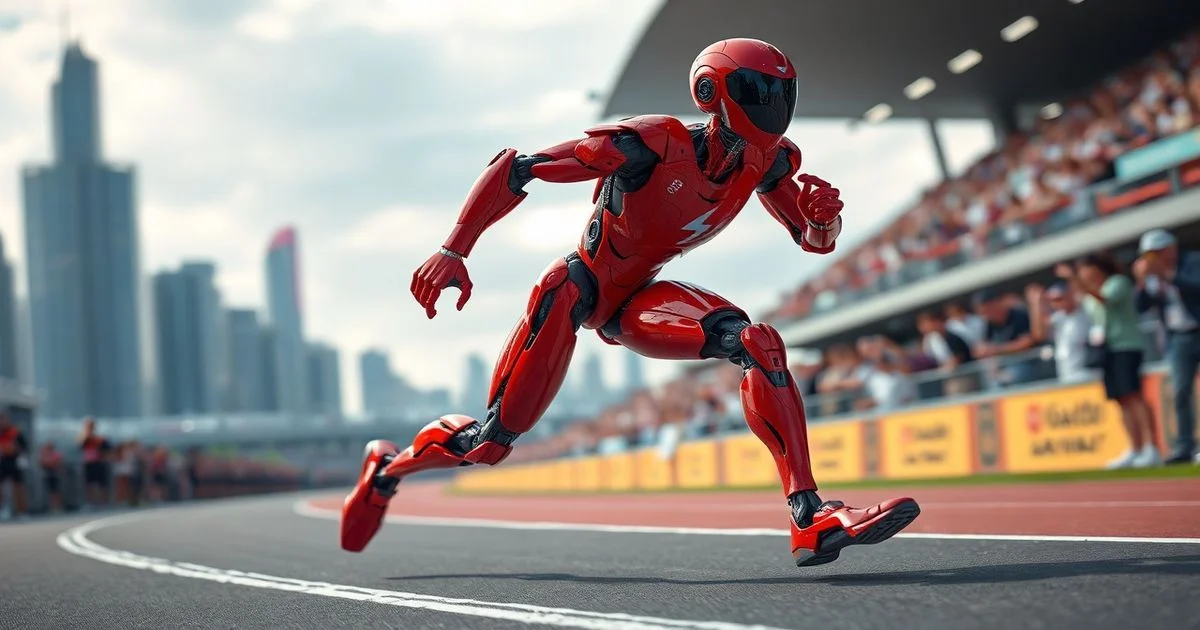
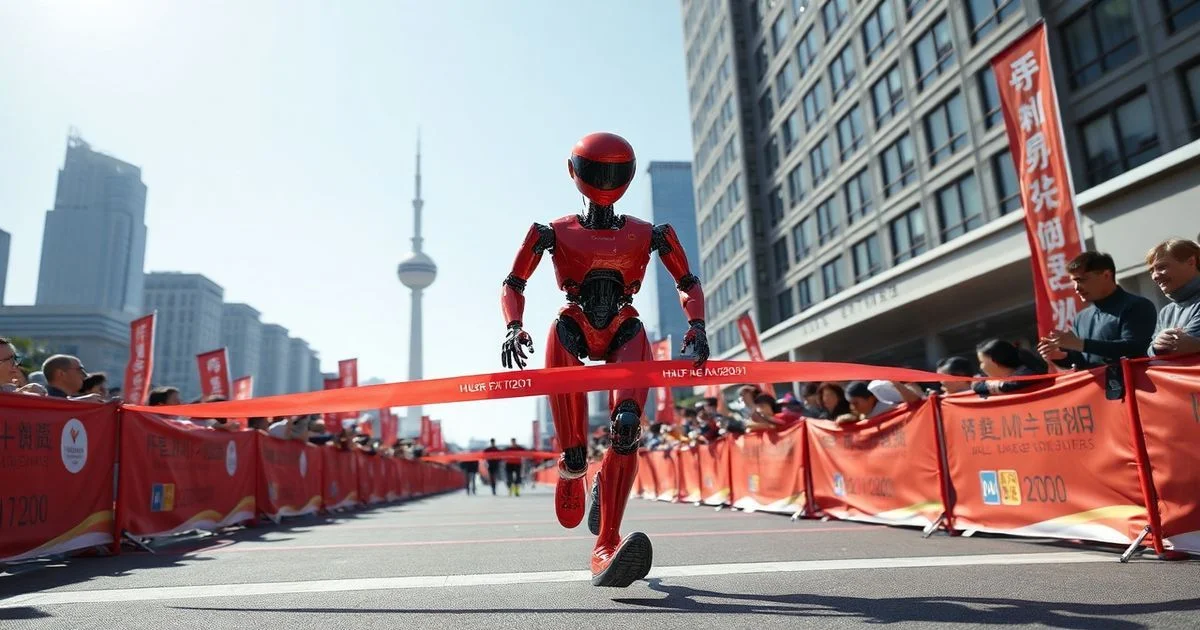
The world of athletics and technological innovation collided spectacularly last Sunday in Beijing, as a Chinese humanoid robot breaks half-marathon record, achieving a feat that has undoubtedly stunned the world. The robot, named "Lightning" and developed by Chinese smartphone brand Honor, completed the 21.0975-kilometer (13.1-mile) race in an astonishing 50 minutes and 26 seconds. This remarkable performance not only showcased a monumental leap in robotic capabilities but also significantly surpassed the current human half-marathon world record of 57 minutes and 20 seconds, held by Uganda's Jacob Kiplimo. The event, part of the second annual Beijing E-Town Half Marathon, signals a pivotal moment in the advancement of embodied artificial intelligence and autonomous systems, demonstrating a speed and endurance once thought impossible for non-biological entities.
- A Stride Towards the Future: Chinese Humanoid Robot Breaks Half-Marathon Record
- Engineering the Unstoppable: The Technology Behind the Triumph
- Redefining Limits: Implications for Humanoid Robotics
- Expert Voices and the Road Ahead
- Conclusion: A New Era for Humanoid Robotics
- Frequently Asked Questions
- Further Reading & Resources
A Stride Towards the Future: Chinese Humanoid Robot Breaks Half-Marathon Record
The atmosphere at the Beijing Economic-Technological Development Area (Beijing E-Town) was electric as over 100 humanoid robots lined up alongside approximately 12,000 human runners for the second annual half-marathon event. While humans and robots competed in separate, parallel lanes for safety, it was the mechanical athletes that truly captured the headlines. Among them, "Lightning," a 5-foot-5, bright red humanoid robot, became the star, navigating the demanding course with unprecedented efficiency and speed. The robot's finishing time of 50 minutes and 26 seconds was not merely a new robotic record, but a definitive statement on the accelerating pace of technological progress.
This year's race marked a dramatic improvement from its inaugural edition in 2025, where many mechanical competitors struggled with overheating, collisions, and often failed to complete the course. Last year, only six of 21 robots managed to finish, with the fastest time a comparatively sluggish 2 hours, 40 minutes, and 42 seconds. The stark contrast in performance this year highlights the rapid advancements in humanoid robotics, transforming what was once a spectacle of awkward stumbles into a demonstration of athletic prowess. The winning robot, Lightning, was almost three times faster than the previous year's champion, illustrating an exponential growth in robotic endurance and control.
The Lightning-Fast Contender
"Lightning" was developed by Chinese smartphone giant Honor, a company that has surprisingly only been involved in humanoid robot development for about a year. This rapid ascension to a world-record-breaking performance underscores Honor's strategic approach to leveraging its existing expertise in electronics and mobile device technology to propel its robotics division. The robot's design featured three-foot-long legs, specifically engineered to mimic the gait and stride of elite human runners, and integrated liquid cooling technology adapted directly from Honor's smartphone lines to manage heat dissipation during the intense exertion of the race.
The success of "Lightning" and the other top-performing robots, which also came from Honor and took all three podium spots, was largely attributed to their use of autonomous navigation. This meant the robots operated independently, making real-time decisions about their path and movement, a significant upgrade from the primarily remote-controlled robots of the previous year. While a remotely-controlled robot from Honor technically crossed the finish line first with an even faster time of 48 minutes and 19 seconds, the autonomous "Lightning" was awarded the championship due to weighted scoring rules that favored self-navigation. This emphasis on autonomy by the organizers further highlights the industry's focus on developing truly intelligent and independent robotic systems.
Engineering the Unstoppable: The Technology Behind the Triumph
The breakthrough performance of "Lightning" is a testament to significant advancements in several key areas of robotics technology. The robot's ability to maintain high speeds over an extended distance without human intervention speaks volumes about its sophisticated control systems, advanced perception capabilities, and robust power management. A critical component in its autonomous navigation system appears to be the integration of LiDAR (Light Detection and Ranging) technology, traditionally used in autonomous vehicles. This technology allows the robot to create continuously updating, highly accurate scans of its surrounding environment, enabling precise pathfinding and obstacle avoidance.
The physical design of "Lightning" also played a crucial role. The development team at Honor focused on optimizing the robot's biomechanics to simulate efficient human running. The careful engineering of its long legs and the responsive gait control system allowed it to achieve an average pace of approximately 3:50 minutes per mile (around 25 km/h). This level of kinetic precision, combined with the power to sustain such output for over 50 minutes, represents a formidable engineering challenge overcome. The use of advanced materials for lightweight yet durable construction would also have been essential, minimizing energy expenditure and maximizing speed.
From Smartphone Tech to Robotic Athletics
Honor's journey into humanoid robotics, though brief, has been intensely focused on adapting and transferring technologies developed for its core smartphone business into the emerging field of embodied AI. This cross-pollination of innovation is a powerful accelerator. For instance, the liquid cooling systems, vital for preventing overheating in high-performance smartphones, were directly applied to "Lightning" to manage the thermal demands of continuous, high-intensity running. Similarly, the sophisticated sensor arrays and processing power inherent in modern smartphones likely provided a foundation for the robot's perception and decision-making capabilities.
This strategic transfer of knowledge and technology from one high-tech sector to another illustrates a broader trend in China's rapidly developing tech landscape. Companies are increasingly leveraging their established strengths in consumer electronics and AI software to push the boundaries of robotics. This approach not only speeds up development but also makes the endeavor more cost-effective by building upon existing research and manufacturing infrastructures. The success of "Lightning" underscores the potential for rapid innovation when diverse technological domains converge, proving that breakthroughs can emerge from unexpected places.
Redefining Limits: Implications for Humanoid Robotics
The achievement of "Lightning" in the half-marathon is far more than just a sporting curiosity; it carries profound implications for the future of humanoid robotics. This demonstration of sustained high-speed locomotion and autonomous navigation pushes the boundaries of what robots are capable of, accelerating their transition from controlled lab environments to large-scale, real-world applications. The ability of a humanoid robot to cover significant distances at a human-beating pace suggests that many tasks currently requiring human mobility could eventually be performed or augmented by robots.
The improved endurance and dynamic stability showcased by "Lightning" will undoubtedly fuel further research and development in areas such as emergency response, logistics, exploration, and even caregiving. Imagine robots capable of rapidly traversing challenging terrain to deliver aid, or efficiently performing inspections across vast industrial complexes. The successful integration of autonomous decision-making with physical dexterity opens up a myriad of possibilities for robots to operate effectively in unpredictable human environments. This event serves as a powerful proof-of-concept for the next generation of highly mobile and intelligent robotic assistants.
Beyond the Track: A Glimpse into Everyday Applications
While setting a half-marathon record is impressive, the true value of this technological leap lies in its potential to transcend competitive sports and impact daily life. The enhanced gait, balance, and endurance demonstrated by "Lightning" are foundational capabilities for robots intended to work alongside humans. For example, in disaster recovery scenarios, robots with such mobility could navigate unstable environments to search for survivors or deliver supplies more effectively than current drone or wheeled robot solutions. In industrial settings, they could perform repetitive or hazardous inspection tasks across large factory floors or construction sites, reducing human risk and increasing efficiency.
Furthermore, advancements in robot locomotion directly contribute to the development of more sophisticated prosthetics and exoskeletons, which could greatly enhance human mobility and quality of life. The insights gained from perfecting a robot's running gait could inform the design of devices that help people with mobility impairments walk and run more naturally. This race is not just about robots beating humans; it's about pushing the engineering envelope in ways that could ultimately benefit humanity in numerous practical and compassionate applications.
Expert Voices and the Road Ahead
Experts in robotics and artificial intelligence have reacted to "Lightning's" achievement with a mixture of awe and contemplation. Wang Peng, an associate research fellow at the Beijing Academy of Social Sciences specializing in the tech sector, highlighted that the marked improvement in finishing times reflects systemic breakthroughs in China's humanoid robot technologies, encompassing power systems, control, perception, and decision-making. He suggests that the technology has moved "beyond barely functional" and implies that such capabilities may signal "the arrival of sort of a new era" for robotics. This sentiment is widely shared across the scientific community, recognizing the significant engineering challenges overcome in achieving such sustained, autonomous performance.
The progress seen in just one year, from stumbling robots to record-breakers, underscores the rapid iterative development cycles prevalent in the robotics industry, particularly in China. The competition itself, with awards for best endurance, gait, design, and perception, incentivizes holistic development rather than just raw speed. This comprehensive approach fosters innovation across various sub-disciplines of robotics, leading to more robust and versatile designs. The involvement of global teams from countries like Germany, France, and Brazil in the Beijing E-Town event further signifies the international collaborative yet competitive nature of this technological race.
Navigating Challenges and Ethical Pathways
Despite the celebratory nature of this achievement, the rapid advancement of humanoid robots also brings to the forefront important discussions regarding challenges and ethical considerations. While "Lightning" performed exceptionally, not all robots were as successful; some crashed or veered into barriers, highlighting the remaining complexities in achieving universal reliability in unpredictable real-world conditions. Ensuring robust safety protocols for robots operating alongside humans in public spaces will be paramount as these technologies become more commonplace.
Moreover, the increasing capability of robots to outperform humans in physical tasks inevitably raises questions about the future of work and the definition of human achievement. While the immediate goal is typically augmentation and assistance rather than replacement, the long-term societal impacts need careful consideration. The Beijing E-Town Half Marathon, by deliberately placing humans and robots on parallel courses, inadvertently sparked a public discourse on these very topics, prompting reflection on the evolving relationship between humanity and intelligent machines.
Conclusion: A New Era for Humanoid Robotics
The unprecedented performance of "Lightning" at the Beijing E-Town Half Marathon marks a defining moment in the history of artificial intelligence and robotics. By demonstrating that a Chinese humanoid robot breaks half-marathon record with remarkable speed and endurance, Honor and China have showcased a significant leap forward in embodied AI. This achievement is not merely a record broken but a powerful indicator of the potential for future robotic applications across various sectors, from industry and logistics to emergency response and personal assistance. As technology continues its relentless march forward, events like this remind us that the future of humanoid robotics is arriving faster than many anticipate, promising a world where the lines between human and machine capabilities are continually redefined.
Frequently Asked Questions
Q: What robot broke the half-marathon record?
A: The Chinese humanoid robot "Lightning," developed by smartphone brand Honor, achieved this feat. It completed the 21.0975-kilometer race in 50 minutes and 26 seconds.
Q: How fast was "Lightning" compared to human records?
A: "Lightning" finished in 50 minutes and 26 seconds, significantly faster than the current human half-marathon world record of 57 minutes and 20 seconds.
Q: What technologies enabled this robotic achievement?
A: Key technologies include sophisticated autonomous navigation systems, LiDAR, advanced biomechanical design, and integrated liquid cooling systems adapted from smartphone technology.