Graham's Viral Bubble Wand Photo Sparks Backlash
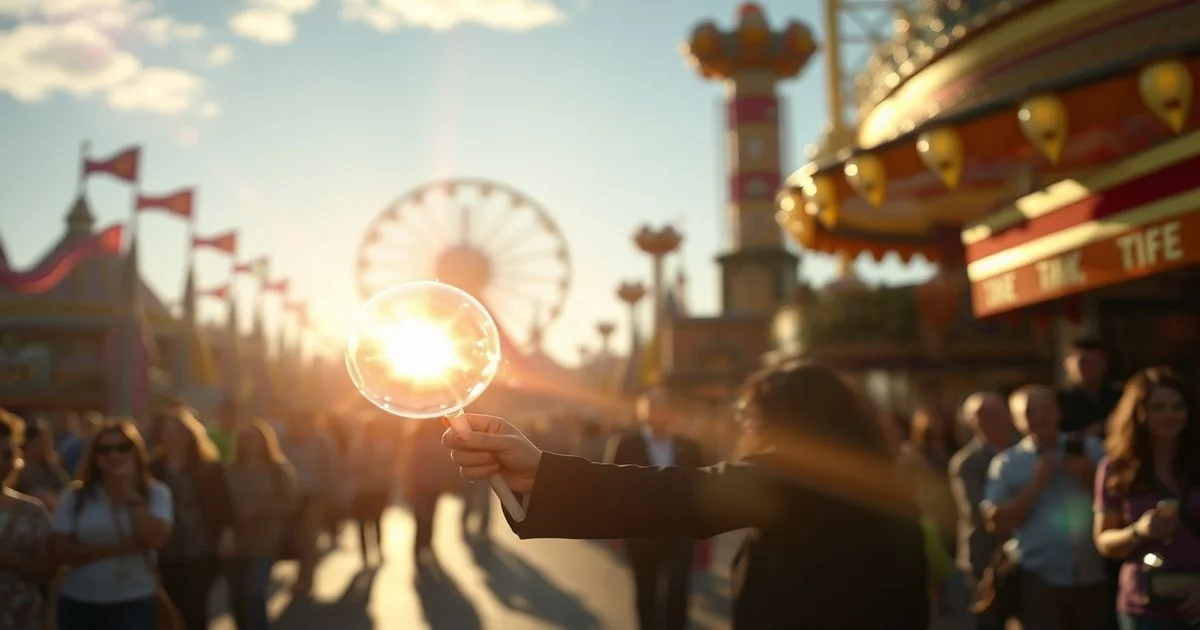
The political landscape recently found itself in a whirlwind of public opinion and social media scrutiny following the emergence of a seemingly innocuous photograph. Senator Lindsey Graham, a prominent Republican figure, became the unexpected center of a viral sensation when images surfaced depicting him enjoying a leisurely time at Walt Disney World, notably holding a bubble wand, amidst a contentious partial government shutdown. This seemingly lighthearted moment quickly escalated into a full-blown public relations crisis, as Graham's Viral Bubble Wand Photo Sparks Backlash, igniting a firestorm of criticism from across the political spectrum and fueling broader discussions about political accountability and public perception. The juxtaposition of a lawmaker enjoying a theme park while federal employees faced unpaid furloughs struck a raw nerve with a public already frustrated by the ongoing legislative impasse.
- The Political Context of the 2026 Shutdown
- Anatomy of a Viral Crisis: The TMZ Disclosure
- Impact of Graham's Viral Bubble Wand Photo Sparks Backlash on Public Relations
- Public Perception and the "Disney Adult" Stigma in Politics
- Comparing the Incident to Historical Political Gaffes
- Social Media's Role in Amplifying Polarization
- Aftermath and the Shotgun Counter-Response
- Frequently Asked Questions
- Conclusion
- Further Reading & Resources
The Political Context of the 2026 Shutdown
The controversy unfolded in late March 2026, against the backdrop of a significant partial government shutdown that had left tens of thousands of federal employees unpaid and caused considerable disruption, including extensive delays at airports nationwide due to understaffing in the Transportation Security Administration (TSA). The shutdown was a result of a political impasse in Washington, with both Republican and Democratic lawmakers failing to reach a compromise on crucial legislation to fund the Department of Homeland Security (DHS) and its various agencies.
Amidst this critical period, members of Congress were on a scheduled two-week recess, a decision that itself drew public ire given the unresolved issues facing the nation. It was during this recess that Senator Graham's visit to Disney World came to light, setting the stage for the ensuing controversy. The timing of Senator Graham's trip to the theme park became a central point of contention. Many critics argued that it displayed a significant disconnect between lawmakers and the struggles of ordinary citizens affected by the shutdown.
The image of a senator enjoying a vacation while federal workers went without pay became a potent symbol for those frustrated with the political elite. The public's exasperation was palpable, manifesting in widespread criticism across social media platforms and traditional news outlets. This situation mirrors the intensity seen in other geopolitical crises, such as Trump's Hormuz Blockade Threat, where the actions of high-ranking officials are scrutinized for their global and domestic impact.
Anatomy of a Viral Crisis: The TMZ Disclosure
On March 30, 2026, entertainment news outlet TMZ published a series of photos depicting Senator Lindsey Graham at Walt Disney World in Orlando, Florida. One particular image quickly went viral: Graham was seen strolling through the "Tangled" area of Magic Kingdom, conspicuously holding a "Little Mermaid"-themed bubble wand. The senator appeared to be dressed in business attire in some of the photos, further highlighting the incongruity for many observers.
Eyewitnesses also reported seeing him dining at Chef Mickey's and even waiting in line for the Space Mountain rollercoaster, indicating a comprehensive theme park experience. The photos were reportedly obtained by TMZ after the tabloid encouraged readers to submit pictures and videos of members of Congress enjoying their time off during the shutdown. The authenticity of the photos was later confirmed by Graham's spokesperson, who stated that the senator had returned to South Carolina before the images were published.
This confirmation only served to amplify the public's reaction, validating the visual evidence that had already begun to circulate widely. Viral sensations often lack the context of reality, much like the Viral Ocean Trash Video which was eventually exposed as a hoax; however, in Graham's case, the physical evidence was undeniable.
Graham's Explanation and Justification
In response to the growing backlash, Senator Graham offered an explanation for his presence at Disney World. He told TMZ that he had been invited to a meeting in South Florida on Friday with Trump official Steve Witkoff and others to discuss the possibility of normalization between Saudi Arabia and Israel.
The Official Stance:
Following this alleged business meeting, Graham stated, "I went to Orlando to meet friends after. I'm already back in South Carolina." Regarding the bubble wand itself, an eyewitness reportedly told TMZ that Graham was holding the toy for a "little girl while she was in the bathroom." This detail, while offered as an explanation, did little to quell the mounting criticism, as the primary concern remained his leisurely activities during a period of national governmental crisis.
Critics pointed out that even if he was in the area for a meeting, choosing to spend time at a theme park amidst the shutdown was a poor display of judgment. The contrast between the gravity of international diplomacy and the whimsy of a "Little Mermaid" toy was too stark for many to ignore.
Impact of Graham's Viral Bubble Wand Photo Sparks Backlash on Public Relations
The images of Senator Graham at Disney World, particularly with the bubble wand, immediately drew significant condemnation, much of it from unexpected corners. Conservative commentators, often aligned with Graham on various political stances, were among the most vocal critics. This internal party friction highlighted a growing divide regarding how leaders should present themselves during domestic crises.
-
Matt Walsh, a prominent conservative pundit, wrote on X (formerly Twitter):
"While our country is at war, our airports are a mess, DHS is not funded, and our elections are not secure, Lindsey Graham is wandering around Disney World with a bubble wand. This is an image that should live in infamy."
-
Paul Dans, a Republican candidate challenging Graham in South Carolina, issued a scathing rebuke:
"The Government is shut down, and the SAVE act isn't passed, while Peter Pan Lady Graham plays at Disney but even more insulting is American Soldiers are dying in a war he is the face of while he does whatever the hell this is."
The outrage extended beyond conservative media personalities, resonating deeply with the general public. Many expressed frustration that lawmakers were taking a two-week recess from their jobs despite their failure to pass legislation to fund DHS, leading to long lines at airports and thousands of federal workers operating without pay. The optics of a lawmaker enjoying a luxury vacation while civil servants faced financial hardship became a potent symbol of perceived government dysfunction and elitism.
Public Perception and the "Disney Adult" Stigma in Politics
The phrase "optics" frequently appeared in discussions surrounding Graham's Disney trip. The perception that a high-ranking senator was disengaged from the nation's pressing issues, particularly during a government shutdown, proved damaging to his public image. The photos, depicting him as a "full-blown tourist," contrasted sharply with the serious responsibilities of his office.
Further complicating matters were personal details about Graham, such as being childless and unmarried, which some critics brought up to question why he would be involved in "Disney Adult" culture—a term often used disparagingly for adults who frequent theme parks without children. While his spokesperson's explanation about holding the wand for a child aimed to mitigate this, the initial viral impact had already been made.
The incident fueled long-standing rumors and speculation about Graham's personal life, with some commentators suggesting the photo was a "mask-slip moment" for a politician known for a "war-hawk" image. This highlights how a seemingly minor incident can become intertwined with deeper public narratives and perceptions of a public figure. Much like how the Key to Heaven Challah Trend swept social media with a mix of genuine interest and cynical mockery, Graham's photo became a canvas for the public's existing biases and frustrations.
Comparing the Incident to Historical Political Gaffes
Political history is littered with moments where a single image or choice of recreation derailed a career or significantly damaged a reputation. Senator Graham's bubble wand incident shares DNA with several historical "unforced errors":
-
Michael Dukakis in the Tank (1988): The Democratic nominee's attempt to look "tough" on defense backfired when he was photographed in an oversized helmet inside an M1 Abrams tank, looking out of place and unconvincing.
-
Ted Cruz in Cancun (2021): During a historic and deadly winter storm in Texas that left millions without power and water, Senator Cruz was spotted flying to a luxury resort in Cancun. The backlash was swift, forcing him to return immediately and issue a public apology.
-
Lindsey Graham's Bubble Wand (2026): The whimsical nature of the toy during a shutdown created a dissonance between the "war-hawk" Senator and the "Disney Tourist," a gap that critics found impossible to bridge.
These incidents highlight a recurring theme: the public demands that their leaders suffer—or at least appear to suffer—alongside them during times of crisis. When that facade of shared struggle is broken by a photograph of leisure, the political price is often high.
Social Media's Role in Amplifying Polarization
The rapid spread and intense reaction to Graham's photo serve as a prime example of how social media acts as an "outrage machine," quickly amplifying divisive content and contributing to political polarization. Platforms like X became the primary battleground where the image was shared, dissected, and debated, generating countless memes and scathing commentary.
Social media algorithms are designed to maximize engagement, often by prioritizing emotionally charged content. The image of a senator with a bubble wand during a shutdown naturally triggered strong emotional responses—frustration, anger, ridicule—which then propelled the photo into viral status.
Key Takeaways on Digital Outrage:
-
Filter Bubbles: Individuals are primarily exposed to content that reinforces their existing views, making the mockery of Graham a bonding experience for his detractors.
-
Echo Chambers: The constant feedback loop of likes and shares intensified the public's emotional response, turning a single photograph into a significant cultural and political event.
-
The Velocity of Information: In the digital age, a politician's private weekend can become a global news story in under an hour, leaving little time for traditional PR "damage control" to take effect.
Aftermath and the Shotgun Counter-Response
In the days following the initial viral explosion, Senator Graham reportedly attempted to counter the negative publicity. One notable response involved posting a photograph of himself aiming a shotgun at a shooting range. This attempt to project a more "masculine" or "serious" image was widely seen as a "warning shot" to his critics.
However, this move backfired for many observers. Instead of erasing the memory of the bubble wand, it invited further ridicule. Critics quickly created "Disnified" versions of the shotgun photo, placing the senator back into the "Tangled" area of the park with the firearm. The attempt at image repair only served to deepen the narrative that Graham was scrambling to control a situation that had already spiraled beyond his reach.
The sustained discussion surrounding the photo underscored the enduring power of visual media in shaping public opinion. The image became a shorthand for perceived political hypocrisy and a symbol of the broader frustrations with government inaction. Even weeks after the initial photo surfaced, the memory of the incident continued to be invoked in political commentary, illustrating its lasting impact on his public image and the ongoing debate about legislative conduct.
Frequently Asked Questions
Q: Why was Senator Graham at Disney World during a shutdown?
A: Graham claimed he was in Florida for a diplomatic meeting regarding Saudi Arabia and Israel, and visited the theme park afterward to meet friends during the scheduled congressional recess.
Q: Did Senator Graham actually buy a "Little Mermaid" bubble wand?
A: While photos show him holding the wand, an eyewitness account suggested he was merely holding the toy for a child whose parent was in the restroom, though this has not been independently verified.
Q: What was the main criticism from the Republican party?
A: Many conservatives felt the imagery of a senator at a theme park during a national funding crisis and airport delays was "tone-deaf" and represented a disconnect from the working class.
Conclusion
The incident surrounding Senator Lindsey Graham's Disney World visit and the now-infamous bubble wand photo serves as a potent reminder of the intersection between personal conduct, public perception, and political accountability in the modern era. The widespread and intense backlash highlights a public increasingly intolerant of perceived disconnects between elected officials and the realities faced by their constituents, especially during periods of national hardship like a government shutdown.
The power of social media to amplify such moments, turning a single photograph into a national talking point, underscores its critical role in shaping contemporary political narratives. Ultimately, Graham's Viral Bubble Wand Photo Sparks Backlash stands as a clear illustration of how seemingly trivial images can ignite significant public discourse, hold politicians to account, and reflect the deeper anxieties and expectations of a digitally-connected citizenry.