China Blocks Taiwan Leader's Africa Trip Amid Rising Tensions
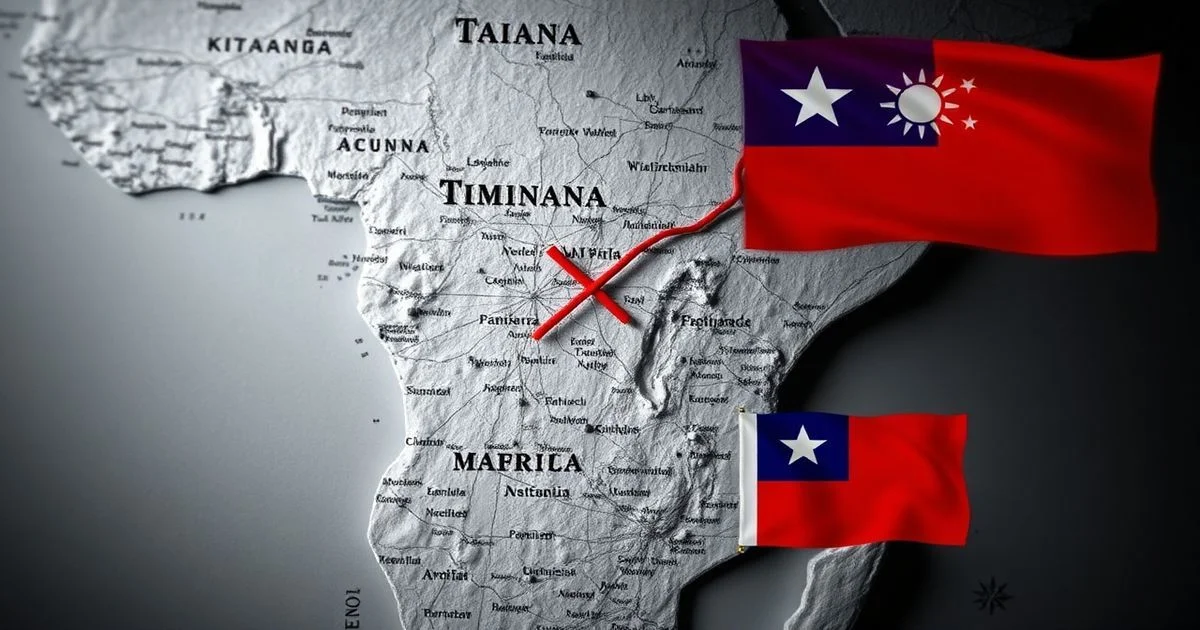
In a significant diplomatic development that underscores the escalating competition between Beijing and Taipei, reports indicate that China Blocks Taiwan Leader's Africa Trip, effectively preventing a planned visit by Taiwanese President Lai Ching-te to an unnamed African nation. This incident highlights Beijing's unwavering commitment to its "One China" principle and its extensive diplomatic leverage on the global stage, particularly in regions where its economic and political influence is rapidly expanding. The blocking of the trip by the Taiwanese leader, coming amid rising cross-strait tensions, signals a clear message from Beijing regarding Taiwan's international space and sovereign claims.
- Background to Cross-Strait Relations
- China Blocks Taiwan Leader's Africa Trip: The Incident
- Geopolitical Implications in Africa
- International Reactions and Perspectives
- The Broader Context of Cross-Strait Tensions
- Conclusion: The Enduring Challenge of China Blocks Taiwan Leader's Africa Trip
- Frequently Asked Questions
- Further Reading & Resources
Background to Cross-Strait Relations
The intricate and often volatile relationship between mainland China and Taiwan, often referred to as cross-strait relations, is one of the most enduring geopolitical flashpoints of the modern era. At its core lies the People's Republic of China's (PRC) assertion that Taiwan, officially the Republic of China (ROC), is an inseparable part of "one China" and that eventual reunification is inevitable, by force if necessary. Taiwan, meanwhile, maintains that it is a sovereign, self-governing entity with its own democratically elected government. This fundamental disagreement forms the bedrock of nearly all diplomatic interactions concerning Taiwan.
The "One China" Principle
The "One China" principle is a cornerstone of Beijing's foreign policy, dictating that there is only one sovereign state under the name China, and the PRC represents that state. This principle asserts that Taiwan is a part of the PRC and not an independent sovereign state. Most countries around the world, including the United States, acknowledge—but do not necessarily endorse—this policy, often referred to as the "One China Policy" (distinct from Beijing's "One China Principle"). This acknowledgement typically means countries do not maintain official diplomatic relations with Taiwan, recognizing the PRC instead. China routinely pressures international organizations, foreign governments, and multinational corporations to adhere strictly to this principle, leading to Taiwan's increasing diplomatic isolation and showcasing China's diplomatic influence on the world stage.
Taiwan's Diplomatic Isolation
Over the decades, Taiwan's official diplomatic allies have dwindled significantly due to consistent pressure from Beijing. As of early 2026, Taiwan maintains official diplomatic ties with only a handful of countries, predominantly smaller nations in the Pacific, Latin America, and the Caribbean. Africa once represented a more fertile ground for Taiwan's diplomacy, but many African nations have shifted their recognition from Taipei to Beijing over time, drawn by China's immense economic aid, infrastructure investment, and growing political influence. This systematic erosion of Taiwan's diplomatic space is a direct result of Beijing's robust "checkbook diplomacy" and political maneuvering, making every international engagement a critical, and often challenging, endeavor for Taipei.
China Blocks Taiwan Leader's Africa Trip: The Incident
The recent incident concerning Taiwanese President Lai Ching-te's thwarted visit to Africa underscores the relentless nature of China's campaign to isolate Taiwan. While specifics remain somewhat shrouded in diplomatic opacity, multiple sources indicate that an African nation, which had tentatively extended an invitation or was considering hosting President Lai, withdrew or postponed the engagement at the eleventh hour due to immense pressure from Beijing. This alleged blocking operation by China sent clear signals about its determination to control Taiwan's international movements.
Specifics of the Alleged Blocking
Details emerging from diplomatic circles suggest that the African nation in question was facing significant economic incentives and potential punitive measures from China should it proceed with President Lai's visit. These pressures reportedly included threats to review existing bilateral agreements, curtail development aid, or even impose trade restrictions. Such tactics are not new; Beijing has a long history of employing its economic might to enforce its political agenda, especially concerning Taiwan. The target African nation, highly reliant on Chinese investment for its development projects and trade, found itself in an untenable position, ultimately succumbing to the pressure. The planned visit was intended to bolster Taiwan's diplomatic presence on the continent and cultivate new partnerships outside of Beijing's shadow.
Taiwan's Reaction and Denials
Taiwan's Ministry of Foreign Affairs (MOFA) has, as expected, condemned the alleged interference, accusing Beijing of undermining international diplomacy and violating principles of sovereign interaction. While MOFA has not explicitly confirmed the name of the African country or the precise itinerary, it has strongly implied that external pressure played a decisive role in the cancellation or indefinite postponement of a high-level visit. President Lai's office reiterated Taiwan's commitment to democratic values and its desire to contribute to global development, stressing that such diplomatic setbacks would not deter its efforts to seek international recognition and build meaningful partnerships. This incident serves as a stark reminder of the uphill battle Taiwan faces in its pursuit of global engagement.
Geopolitical Implications in Africa
The blocking of the Taiwanese leader's trip carries significant geopolitical implications for the African continent, highlighting the delicate balancing act many African nations must perform in their foreign policy. China's growing footprint in Africa, characterized by massive infrastructure projects, extensive trade, and significant lending, often comes with political strings attached, notably the strict adherence to the "One China" principle.
Shifting Alliances and Influence
For many years, some African nations maintained official diplomatic relations with Taiwan, benefiting from its aid and expertise, particularly in agriculture and medicine. However, Beijing's "One China" policy has steadily reshaped the diplomatic landscape. As China's economic power has surged, it has systematically peeled away Taiwan's remaining allies on the continent. This recent incident serves as a fresh indicator of how China leverages its economic leverage to dictate the foreign policy choices of African states, forcing them to choose between economic benefits from Beijing and diplomatic engagement with Taipei. This trend further consolidates China's influence across Africa, often seen through initiatives like China's Belt and Road Initiative in Africa, creating an environment where Taiwan finds it increasingly difficult to establish or maintain even informal relationships.
Economic and Diplomatic Ramifications
The economic ramifications for African nations that dare to defy Beijing on the Taiwan issue can be substantial. China is Africa's largest trading partner and a major source of foreign direct investment. Retaliatory measures could include the cancellation of loans, withdrawal of investment, or imposition of tariffs, which can have devastating effects on developing economies. Diplomatically, supporting Taiwan can lead to a cooling of relations with Beijing, impacting a nation's standing in international forums where China wields considerable power. This creates a challenging dilemma for African governments, many of whom wish to maintain an independent foreign policy but cannot afford to alienate a key economic partner like China. The incident serves as a stark warning to other nations considering engagement with Taiwan.
International Reactions and Perspectives
The news of China blocking Taiwan leader's Africa trip has inevitably drawn attention from the international community, albeit with varying degrees of public condemnation or nuanced statements. The global implications of such an act resonate beyond the immediate parties involved, touching upon principles of national sovereignty, diplomatic freedom, and the broader geopolitical rivalry between democracies and authoritarian regimes.
US and European Stances
The United States, a staunch informal ally of Taiwan and a vocal critic of Beijing's aggressive diplomatic tactics, often reiterates its commitment to Taiwan's ability to participate meaningfully in the international community. While the U.S. also adheres to its own "One China Policy" – acknowledging but not endorsing Beijing's claim over Taiwan – it advocates for peaceful resolution of cross-strait issues and opposes any coercive actions that limit Taiwan's international space. U.S. officials typically condemn such blocking maneuvers as undermining democratic principles and stability. European nations, while generally more cautious in their direct engagement with Taiwan due to economic ties with China, often express concerns over Beijing's increasing assertiveness and its impact on international norms. Their statements tend to emphasize the importance of dialogue and de-escalation in the Taiwan Strait, implicitly criticizing actions that heighten tensions.
African Nations' Dilemma
For African nations, the incident highlights a profound diplomatic dilemma. On one hand, there is a desire to assert sovereign independence and forge relationships based on mutual benefit. On the other, the economic reality of China's overwhelming presence as an investor, lender, and trading partner makes defiance a costly proposition. Many African leaders privately express frustration over being caught in the crossfire of the China-Taiwan rivalry, yet publicly maintain a position aligned with Beijing's "One China" principle to safeguard vital economic interests. This creates a complex landscape where African foreign policy decisions are heavily influenced by the gravitational pull of Chinese economic power, limiting their flexibility in pursuing diverse diplomatic engagements.
The Broader Context of Cross-Strait Tensions
This diplomatic skirmish in Africa is not an isolated incident but rather a microcosm of the larger, intensifying cross-strait tensions that define the relationship between China and Taiwan. The incident comes at a time when Beijing's rhetoric towards Taiwan has become increasingly strident, and its military activities near the island have grown in frequency and scale.
Recent Escalations
Over the past few years, there has been a notable escalation in military posturing from Beijing, including frequent incursions of People's Liberation Army (PLA) aircraft and naval vessels into Taiwan's air defense identification zone (ADIZ). These actions are widely seen as attempts to intimidate Taiwan and deter any moves towards formal independence. Simultaneously, Beijing has continued its campaign of diplomatic isolation, economic coercion, and information warfare against Taiwan. The election of President Lai Ching-te, whom Beijing views as a "separatist," has further intensified these pressures, leading to a period of heightened sensitivity and increased risk in the Taiwan Strait. This forms part of the ongoing escalating tensions in the Taiwan Strait, making any international interaction involving Taiwan's leadership viewed through a magnified lens of geopolitical competition.
Future Outlook
The outlook for cross-strait relations remains precarious. Beijing's unwavering commitment to its "One China" principle, coupled with Taiwan's democratic aspirations and desire for international recognition, sets the stage for continued friction. Incidents like China Blocks Taiwan Leader's Africa Trip will likely become more common as Beijing intensifies its efforts to squeeze Taiwan out of the international arena. The international community will continue to grapple with how to navigate this sensitive issue, balancing strategic interests with adherence to international law and democratic values. The future trajectory of cross-strait relations will heavily depend on diplomatic efforts to de-escalate tensions, the stances of major global powers, and the resilience of Taiwan's own diplomatic outreach.
Conclusion: The Enduring Challenge of China Blocks Taiwan Leader's Africa Trip
The recent incident where China Blocks Taiwan Leader's Africa Trip serves as a stark reminder of the persistent and multifaceted challenges Taiwan faces in asserting its international identity. This event is not merely a diplomatic spat but a significant demonstration of Beijing's formidable influence and its relentless pursuit of the "One China" principle on the global stage. It highlights the difficult choices confronting African nations, caught between economic opportunity and diplomatic autonomy, and underscores the broader, intensifying geopolitical rivalry that continues to shape cross-strait relations. As long as the fundamental disagreements over Taiwan's status persist, such diplomatic contests will remain a recurring feature of international politics, necessitating careful navigation and principled stands from the global community.
Frequently Asked Questions
Q: Why does China block Taiwan's diplomatic activities?
A: China adheres to its "One China" principle, viewing Taiwan as a breakaway province. It uses its significant diplomatic and economic power to prevent Taiwan from gaining international recognition or engaging in official state-to-state relations with other countries, considering such interactions a challenge to its sovereignty.
Q: What is the "One China" principle?
A: The "One China" principle is Beijing's core foreign policy assertion that there is only one sovereign state under the name China, and the People's Republic of China (PRC) is its sole legitimate government. It explicitly states that Taiwan is an inseparable part of China and not an independent sovereign entity.
Q: How does this incident impact African nations?
A: African nations often find themselves in a challenging diplomatic position, facing immense pressure from Beijing to comply with the "One China" principle. Defying this can lead to severe economic penalties, such as the withdrawal of crucial Chinese investment, aid, or trade opportunities, making it difficult for them to pursue an independent foreign policy regarding Taiwan.