Blue Origin Rocket Explodes in Florida Test, Halting Lunar Ambitions
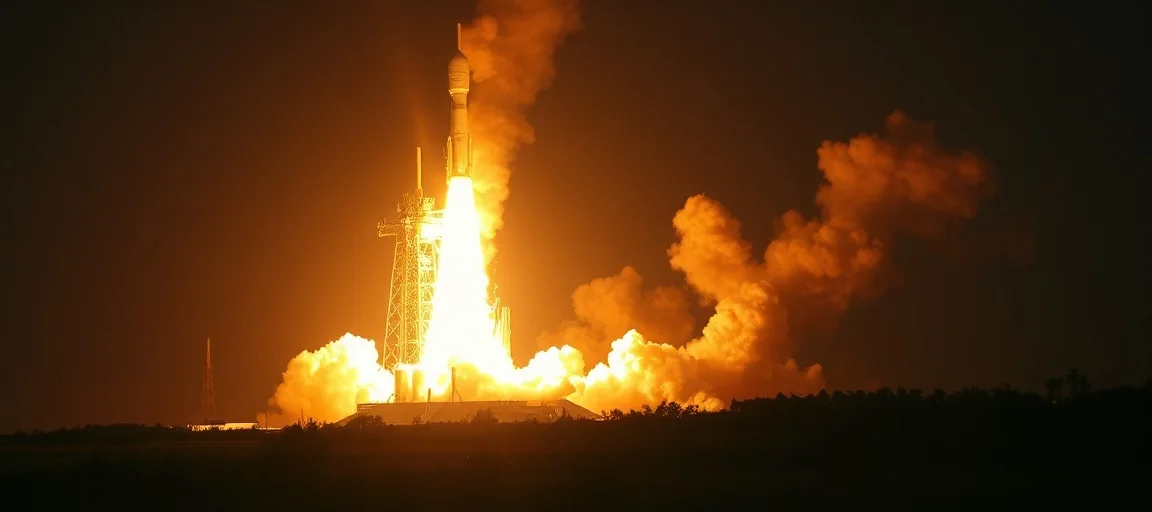
A dramatic setback struck the burgeoning private space industry this week when a Blue Origin rocket explodes in Florida test, sending shockwaves through the Cape Canaveral region and casting a shadow over future space missions. The incident involved the company's New Glenn heavy-lift rocket, which erupted in a massive fireball during a routine pre-launch engine "hotfire" test at Cape Canaveral Space Force Station on Thursday night. This significant anomaly has not only destroyed the towering rocket but also inflicted extensive damage on its sole operational launchpad, Launch Complex 36 (LC-36), raising immediate questions about Blue Origin's ambitious launch schedule and its critical role in NASA's lunar exploration initiatives. While authorities have confirmed no injuries, the incident represents a substantial hurdle for Jeff Bezos's space venture as it strives to compete in the increasingly competitive landscape of commercial spaceflight.
- The Incident: A Blue Origin Rocket Explodes in Florida Test
- Blue Origin's Safety Record and Previous Missions
- Investigating the Anomaly: What Comes Next?
- Impact on Commercial Spaceflight and Blue Origin's Future
- Conclusion: The Path Ahead for Blue Origin After Rocket Test Anomaly
- Frequently Asked Questions
- Further Reading & Resources
The Incident: A Blue Origin Rocket Explodes in Florida Test
The tranquil evening sky over Florida's Space Coast was shattered on Thursday, May 28, 2026, as Blue Origin's New Glenn rocket suffered a catastrophic failure. During what was intended to be a routine pre-launch "hotfire" test, where the rocket's engines are ignited while it remains bolted to the launchpad, an "anomaly" occurred, culminating in a spectacular explosion around 9 p.m. ET. The resulting fireball lit up the dark sky, visible for hundreds of miles, and its concussive force rattled homes in nearby Cape Canaveral and Cocoa Beach. The static fire test is a critical safety measure, allowing engineers to evaluate the full performance of the engines and integrated systems under simulated launch conditions without the rocket actually leaving the ground. This particular test involved the New Glenn's seven BE-4 engines, which collectively generate over 3.8 million pounds of thrust.
This powerful heavy-lift vehicle, standing 321 feet (98 meters) tall and named after astronaut John Glenn, was engulfed in flames, leading to its complete destruction. The incident also caused significant damage to Launch Complex 36 (LC-36), the only launch facility currently configured to support New Glenn operations. Immediately following the explosion, Blue Origin confirmed the anomaly, stating that all personnel had been accounted for and were safe, with no injuries reported. Jeff Bezos, the billionaire founder of Blue Origin, took to social media to acknowledge the "very rough day," pledging to "rebuild whatever needs rebuilding and get back to flying."
What Happened?
The New Glenn rocket was undergoing a critical static fire test, a standard procedure designed to verify the performance of its engines and integrated systems before flight. This particular test was in preparation for the rocket's fourth mission, designated NG-4, which was scheduled for June 4. The mission aimed to deploy 48 internet satellites for Amazon's nascent Kuiper constellation. Crucially, the Amazon satellites were not on board the rocket at the time of the explosion, preventing their loss. This proactive measure mitigated some of the potential financial damage, though the loss of the rocket itself and the launch infrastructure is substantial.
While the exact cause remains under investigation, early observations suggested the anomaly originated at or near the base of the rocket's first stage as its seven methane-burning BE-4 engines were igniting. The scale of the explosion was immense, with debris scattered widely across the launch complex and into the surrounding ocean. Space Launch Delta 45 issued a warning to the public that hazardous debris could wash ashore along Florida's coastline in the coming days and weeks, urging individuals not to touch, move, or attempt to recover any suspected wreckage, and to report sightings to 911. Blue Origin has also established a Wreckage Management Hotline and an email address for reporting such discoveries, emphasizing the potential danger posed by unspent propellants or composite materials. The clean-up operation and environmental assessment of the debris field will be a considerable undertaking.
Timeline of Events
The New Glenn program, a cornerstone of Blue Origin's long-term strategy for heavy-lift orbital launches, has faced several challenges since its inception.
- Before 2013: Development of the New Glenn rocket began.
- 2016: Blue Origin officially announced the New Glenn rocket.
- January 2025: New Glenn made its debut flight.
- November 2025: The second flight (NG-2) was successful, including the first successful landing of its reusable first stage on a barge at sea.
- April 19, 2026: New Glenn's third flight experienced an upper-stage malfunction, leading to the deployment of AST SpaceMobile's BlueBird 7 satellite into an incorrect orbit. This incident prompted the Federal Aviation Administration (FAA) to ground the rocket.
- May 25, 2026: Blue Origin received clearance from the FAA to resume New Glenn flights following an investigation and corrective actions.
- May 28, 2026: The catastrophic explosion occurred during a hotfire test for the upcoming NG-4 mission.
This recent explosion marks the most severe setback in the New Glenn program's history, coming just days after the FAA had cleared the rocket for flight following its previous anomaly. The rapid succession of incidents underscores the inherent challenges and extreme complexities involved in advanced rocket development and operation.
Blue Origin's Safety Record and Previous Missions
Blue Origin, founded by Amazon CEO Jeff Bezos, has positioned itself as a key player in the commercial space sector, focusing on both suborbital space tourism with its New Shepard rocket and heavy-lift orbital launches with New Glenn. The company emphasizes safety as its highest value, designing redundancy into its systems. However, like many pioneering aerospace companies, Blue Origin has experienced its share of "anomalies" or "mishaps" during testing and operational flights. These events, while unfortunate, are often crucial learning experiences that ultimately contribute to the robustness and reliability of future systems.
New Shepard's History
Blue Origin's New Shepard suborbital vehicle, designed for space tourism and research payloads, has had a largely successful track record, but not without incident.
- April 2015: The uncrewed debut mission of a New Shepard booster suffered a failure during landing, resulting in the loss of the vehicle. This early failure provided valuable data on recovery system performance.
- September 2022: An uncrewed New Shepard mission (NS-23) experienced an in-flight anomaly about a minute after liftoff, presumed to be due to a failure of its BE-3PM main engine. Critically, the capsule's emergency escape system functioned as designed, safely jettisoning the capsule and its payloads away from the booster, which was subsequently lost. This incident demonstrated the effectiveness of the crew escape system, a vital safety feature for human spaceflight.
- March 2023: Following a six-month investigation under FAA oversight, Blue Origin identified the direct cause of the NS-23 mishap as a "thermo-structural fatigue failure" of the BE-3PM engine nozzle. This fatigue was attributed to operational temperatures exceeding expected values. Blue Origin implemented design changes to the engine's combustion chamber and adjusted operating parameters to prevent recurrence.
These past incidents highlight the inherent risks and complexities involved in rocket development and operation. Each anomaly serves as a critical learning opportunity for the company and the wider space industry, fostering continuous improvement in design, manufacturing, and operational protocols.
Other Blue Origin Projects
Beyond New Shepard and New Glenn, Blue Origin is involved in several other significant space initiatives. The company is developing the powerful BE-4 engine, which powers both the New Glenn rocket and United Launch Alliance's new Vulcan Centaur rocket. Any issues with the BE-4 engines, as potentially implicated in the recent New Glenn explosion, could have broader implications for other launch providers relying on this propulsion system, potentially impacting the wider U.S. national security space launch capabilities.
Furthermore, Blue Origin is a key partner in NASA's Artemis program, developing the Blue Moon lunar lander. This lander is intended to carry cargo and eventually astronauts to the lunar surface as part of America's efforts to return humans to the Moon and establish a sustained lunar presence. Just days before the New Glenn explosion, NASA announced Blue Origin had won a contract to launch the first of three planned missions this year to begin construction of a lunar base. The New Glenn rocket is central to these lunar aspirations, making the recent setback particularly impactful, as it directly affects the timelines for critical components of the Artemis architecture.
Investigating the Anomaly: What Comes Next?
The immediate aftermath of the explosion has triggered a comprehensive investigation, a standard procedure for such events in the space industry. The goal is to determine the root cause of the anomaly and implement corrective actions to ensure future flight safety. This process is often meticulous and lengthy, involving multiple stakeholders and a vast amount of data analysis.
Regulatory Oversight
While the specific hotfire test that led to the explosion was reportedly "not within the scope of FAA licensed activities" for a flight, the Federal Aviation Administration (FAA) plays a crucial oversight role in commercial spaceflight safety. Historically, the FAA has authorized launch operators to lead investigations into their own mishaps, with the agency providing supervision. The FAA has stated it will oversee Blue Origin's investigation, be involved "in every step of the process," and must approve the company's final report and any proposed corrective actions before New Glenn can return to licensed flight operations. This rigorous process ensures that public safety is not compromised and that lessons learned from the incident are thoroughly integrated into future operations across the industry.
NASA Administrator Jared Isaacman has also emphasized NASA's commitment to supporting a thorough investigation alongside its partners and assessing near-term mission impacts. The involvement of multiple agencies underscores the gravity of the event and the collaborative effort required to ensure the safety and reliability of space operations, especially given Blue Origin's deep integration into critical government programs.
Potential Causes
It is too early to definitively state the cause of the New Glenn explosion. Mishap investigations in the aerospace industry are complex and can take many months, often over a year. However, based on the nature of hotfire tests and previous rocket failures, several areas will likely be scrutinized:
- Engine Malfunction: Given that the explosion occurred during an engine hotfire test, a failure within one or more of the BE-4 engines is a primary suspect. This could involve issues such as structural fatigue, as seen in the New Shepard anomaly, problems with fuel delivery (e.g., clogged lines, incorrect pressure), ignition system failures, or anomalous combustion behavior within the engine bells. Even a single engine's catastrophic failure can cascade into the destruction of an entire vehicle.
- Structural Failure: A weakness in the rocket's airframe or propellant tanks, possibly exacerbated by the immense stresses of engine ignition and the rapid loading of cryogenic propellants, could lead to a breach and subsequent explosion. This might involve a material defect, a manufacturing flaw, or an unexpected aerodynamic load during the pre-ignition sequence.
- Ground Support Equipment Failure: Issues with the launchpad infrastructure, propellant fueling systems, electrical connections, or control mechanisms could also initiate an anomaly. The extensive damage to LC-36 suggests either the explosion originated there or the pad itself was not designed to withstand such a catastrophic event, meaning the investigation will also examine the interaction between the rocket and its ground systems.
- Software or Command Error: While less common in a static fire, an incorrect command from the ground control software or a glitch in the rocket's onboard flight computer could theoretically lead to an unplanned sequence of events that destabilizes the engines or the rocket's structure, leading to catastrophic failure.
Investigators will meticulously analyze telemetry data streamed from thousands of sensors on the rocket and launchpad, high-speed video footage from multiple angles, and any recovered debris to reconstruct the events leading to the explosion. The findings from this investigation will be crucial for Blue Origin to implement necessary design changes, operational adjustments, and safety protocols for New Glenn's eventual return to flight.
Impact on Commercial Spaceflight and Blue Origin's Future
The New Glenn explosion has far-reaching implications, not just for Blue Origin but for the broader commercial space industry and critical government programs. The incident highlights the inherent risks in pushing the boundaries of space exploration and the unforgiving nature of rocketry, where even minor failures can have catastrophic consequences.
Industry Implications
The loss of a heavy-lift rocket like New Glenn and the extensive damage to its launch infrastructure will inevitably cause significant delays. Blue Origin's only currently configured New Glenn launchpad, LC-36A, has been extensively damaged, necessitating a substantial rebuilding effort. Such a reconstruction project, involving complex cryogenics, ground support systems, and structural repairs, can cost hundreds of millions of dollars and take years. For context, a SpaceX pad failure in 2016 led to over a year of delays for that company's Falcon 9 program. While Blue Origin is reportedly building a second complex at Cape Canaveral (LC-49) and has a lease for a pad at Vandenberg Space Force Base, these facilities are still years away from full operational capability. This means Blue Origin's ability to conduct New Glenn launches will be severely constrained for an extended period, impacting its competitive standing against rivals like SpaceX and United Launch Alliance.
The incident also directly impacts NASA's ambitious Artemis program, which aims to return humans to the Moon. Blue Origin's New Glenn was slated to launch critical lunar landers and rovers, including components for a planned lunar base. NASA Administrator Jared Isaacman has acknowledged that the agency will need to "assess near-term mission impacts" and will provide information on any impacts to the Artemis and Moon Base programs as it becomes available. Depending on the length of the grounding, Artemis missions could face delays into 2028 or even 2029, particularly if other launch providers cannot absorb Blue Origin's contracted payloads. This situation is further complicated by the fact that SpaceX's Starship rocket, another key component of NASA's lunar plans, has also experienced recent engine failures during test flights and remains grounded, leaving NASA with limited heavy-lift options for its immediate lunar ambitions and potentially forcing a re-evaluation of its manifest.
Moreover, the explosion severely affects Blue Origin's commercial commitments, particularly its plans to launch Amazon's Kuiper satellites. The June 4 mission, which was to carry 48 satellites, is now postponed indefinitely. This delay could significantly impact Amazon's timeline for deploying its broadband constellation, a direct competitor to SpaceX's Starlink, potentially costing Amazon valuable market share and slowing its ability to provide global internet services.
Blue Origin's Response and Way Forward
In the immediate aftermath, Blue Origin's leadership, including Jeff Bezos, has reiterated the company's commitment to overcoming this setback. Bezos's statement, "Very rough day, but we'll rebuild whatever needs rebuilding and get back to flying. It's worth it," signals a resilient approach and a long-term vision. The company will now shift its full attention to the mishap investigation, working closely with the FAA and other stakeholders to understand the failure and implement robust corrective measures. This will be a critical period for Blue Origin to demonstrate its engineering rigor and commitment to safety.
The path forward will involve several critical stages:
- Thorough Investigation: A detailed, transparent, and comprehensive investigation to identify the root cause of the "anomaly" with absolute certainty. This involves forensic analysis of recovered debris, telemetry data, and structural components.
- Launchpad Reconstruction: Repairing and rebuilding Launch Complex 36, a potentially multi-year and expensive undertaking that will require significant capital investment and engineering expertise.
- System Redesign/Enhancement: Implementing any necessary design changes to the New Glenn rocket, its engines (specifically the BE-4), or ground systems based on investigation findings to prevent recurrence. This could range from minor component upgrades to major structural modifications.
- Regulatory Approval: Securing FAA approval for New Glenn's return to flight, which will require demonstrating that all safety concerns have been thoroughly addressed and verified through rigorous testing.
- Customer Communication: Managing expectations and communicating transparently with commercial partners like Amazon and government agencies like NASA regarding revised timelines and mitigation strategies. This is crucial for maintaining confidence and managing contractual obligations.
While this incident is undoubtedly a major blow, the history of spaceflight is replete with setbacks that ultimately led to stronger, safer programs. Blue Origin's ability to swiftly and effectively address this challenge will be a testament to its engineering prowess, corporate resilience, and commitment to its long-term vision of enabling millions of people to live and work in space. The lessons learned from this failure will undoubtedly contribute to the overall safety and reliability of space launch systems for years to come.
Conclusion: The Path Ahead for Blue Origin After Rocket Test Anomaly
The dramatic explosion of the Blue Origin rocket explodes in Florida test marks a significant, albeit challenging, chapter in the company's journey towards establishing a robust presence in orbital spaceflight. The destruction of the New Glenn rocket and its dedicated launchpad at Cape Canaveral represents a considerable financial and logistical setback, likely resulting in months, if not years, of delays for Blue Origin's heavy-lift launch capabilities. This incident not only tests the company's engineering resolve but also its financial endurance and strategic planning in a highly competitive and capital-intensive industry.
The incident has immediate ramifications for critical missions, particularly NASA's ambitious Artemis program and Amazon's Kuiper satellite constellation, forcing a reassessment of timelines and potentially impacting national space objectives. The space community will be closely watching as Blue Origin, under stringent FAA oversight, conducts its investigation to pinpoint the exact cause of the anomaly. The commitment from Jeff Bezos to rebuild and resume operations underscores the company's determination to overcome this hurdle, reinforcing the notion that setbacks, while painful, are often integral to the iterative process of space exploration. While the road ahead will be challenging, such incidents often serve as catalysts for profound innovation, enhanced safety protocols, and ultimately, contribute to the long-term reliability and maturity of commercial spaceflight. The resilience shown in the face of such adversity will be key to Blue Origin's eventual return to flight and its continued pursuit of pioneering space exploration.
Frequently Asked Questions
Q: What caused the Blue Origin New Glenn rocket explosion?
A: The exact cause of the New Glenn explosion is currently under comprehensive investigation by Blue Origin, with oversight from the Federal Aviation Administration (FAA). While preliminary observations suggest an anomaly occurred near the base of the rocket's first stage during a static fire test, the specific root cause is yet to be determined and could involve engine, structural, or ground support equipment failure.
Q: How will this incident affect Blue Origin's future missions and NASA's Artemis program?
A: The explosion of the New Glenn rocket and significant damage to its sole launchpad, LC-36, will cause substantial delays for Blue Origin's launch schedule, including Amazon's Kuiper satellite deployments. It also has critical implications for NASA's Artemis lunar program, as New Glenn was slated to launch key lunar landers. NASA is currently assessing the near-term mission impacts, which could push back some lunar timelines.
Q: What is the timeline for Blue Origin's New Glenn rocket to return to flight?
A: A definitive timeline for New Glenn's return to flight is uncertain. Blue Origin must first complete a thorough investigation, implement all necessary corrective actions, and repair its extensively damaged launch complex. The Federal Aviation Administration (FAA) must then approve Blue Origin's findings and proposed solutions before any new launch licenses are granted. This process is expected to take many months, potentially even years.