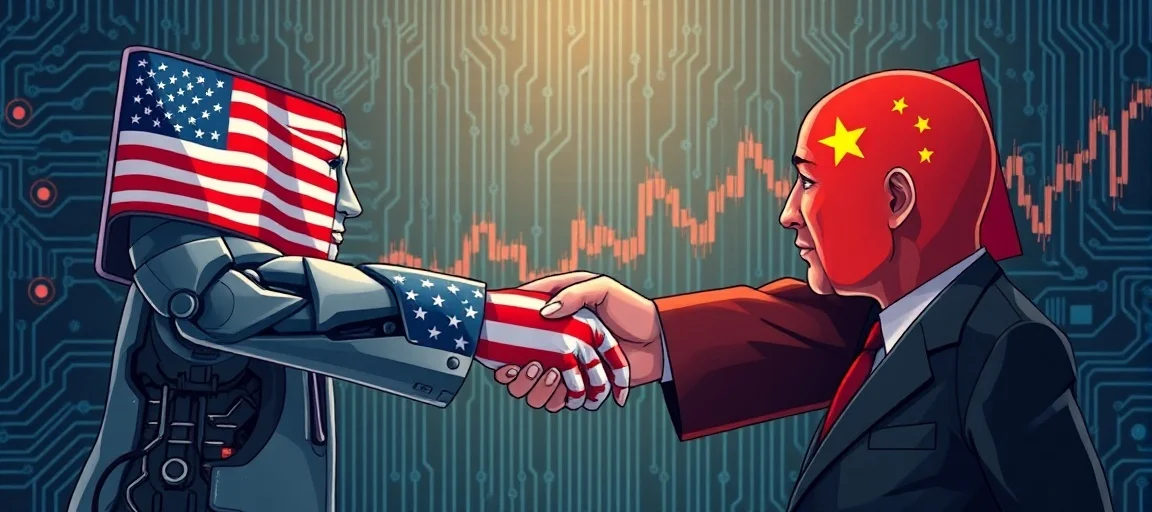
Trump Signs Executive Order on AI Security: A New Era for National Defense

During his tenure, former President Donald Trump signed an Executive Order on AI Security, a pivotal move aimed at bolstering American technological supremacy and national security. This directive was designed to establish a comprehensive framework, ensuring the United States maintains its competitive edge while safeguarding against potential threats in the rapidly evolving landscape of artificial intelligence, thereby fortifying national defense and marking a new era for national defense against evolving AI threats.
- The Imperative of AI Security: Why Now?
- Unpacking the Executive Order on AI Security
- Historical Context: Previous Administrations and AI
- Global Implications and International Collaboration
- Expert Opinions and Industry Reactions
- Challenges and Future Outlook for AI Security
- Conclusion
- Frequently Asked Questions
- Further Reading & Resources
The Imperative of AI Security: Why Now?
The rapid proliferation and advancement of artificial intelligence technologies have ushered in a new era of both immense potential and unprecedented risks. AI's capabilities, from enhancing defense systems to optimizing critical infrastructure, are transformative. However, the very power that makes AI so promising also renders it a potential vector for sophisticated threats, ranging from cyberattacks to autonomous weapon systems. Nations across the globe are recognizing the strategic importance of AI, leading to a technological arms race where leadership in AI development and security is paramount for future geopolitical influence and national safety. For deeper insights into AI's societal implications, consider exploring our article on AI ethics and governance.
The threats posed by AI are multifaceted. For instance, sophisticated deepfake technology, while having benign applications, can be weaponized for disinformation campaigns, undermining public trust and democratic processes. Autonomous weapon systems, controlled by AI, raise profound ethical questions regarding accountability and the potential for rapid escalation in conflict. Furthermore, AI-powered reconnaissance and targeting systems can grant adversaries unprecedented surveillance capabilities, while AI-enhanced cyberattacks can penetrate defenses with speed and precision far exceeding human capabilities. These scenarios highlight the critical need for proactive security frameworks.
The urgency to formalize AI security protocols stems from several factors. The increasing sophistication of AI-powered cyber tools could be leveraged by adversarial nations or non-state actors to disrupt essential services or compromise sensitive data. Moreover, the development of autonomous AI systems raises complex ethical and safety questions that demand proactive governance. Without robust security measures, the integrity and reliability of AI applications critical to national defense, economic stability, and public safety could be jeopardized. Thus, securing AI is not merely a technological challenge but a fundamental national security imperative in the 21st century.
Unpacking the Executive Order on AI Security
The Executive Order signed by former President Trump on AI Security aimed to establish a comprehensive national strategy for protecting the United States from malicious uses of artificial intelligence. While the Trump administration issued multiple executive orders related to AI, a foundational one, Executive Order 13859, titled "Maintaining American Leadership in Artificial Intelligence," signed on February 11, 2019, laid the groundwork for many subsequent actions, including those with direct security implications. This broader order emphasized fostering AI innovation while implicitly recognizing the need for responsible development and the protection of critical infrastructure from AI-enabled threats. Another key directive, Executive Order 13873, "Securing the Information and Communications Technology and Services Supply Chain," signed on May 15, 2019, further reinforced the administration's focus on national security by addressing risks in technology supply chains, which are crucial for secure AI development and deployment. These orders collectively represented the administration's multi-faceted approach to AI, intertwining leadership, development, and security.
Specifically, the directives within these executive orders sought to:
- Prioritize AI Research and Development: Allocate significant federal resources to advanced AI research to maintain American technological superiority.
- Protect Critical AI Technologies: Safeguard sensitive AI algorithms, data, and intellectual property from theft or sabotage by foreign adversaries.
- Develop Technical Standards for Trustworthy AI: Mandate the creation of robust technical standards to ensure the reliability, security, and safety of AI systems used by the government and critical infrastructure.
- Prepare the American Workforce: Invest in education and training programs to equip the U.S. workforce with the skills needed for the AI era, including cybersecurity and AI ethics.
- Promote Public Trust in AI: Foster public understanding and confidence in AI technologies through transparent and responsible development practices.
These measures underscore the strategic vision to not only accelerate AI innovation but also to construct formidable defenses around it, reflecting a proactive stance against emerging digital threats.
Defining Critical AI Infrastructure
A crucial aspect of any AI security strategy is the identification and protection of what constitutes "critical AI infrastructure." This extends beyond mere hardware and software to encompass a vast ecosystem essential for the development, deployment, and operation of AI systems. Critical AI infrastructure includes high-performance computing centers, specialized semiconductor foundries that produce AI chips, and extensive data repositories that train AI models. The security of these components is paramount, as their compromise could have cascading effects on national defense, economic stability, and public safety.
The Executive Order emphasized the need to develop clear guidelines for identifying and protecting these assets. This involves assessing vulnerabilities in the AI supply chain, from the origin of components to the integrity of data used for training. Furthermore, the intellectual property associated with advanced AI algorithms, often developed in academic institutions and private companies, is also considered critical infrastructure. Protecting this intellectual property from espionage and theft is vital for maintaining the nation's technological edge. Efforts include strengthening cybersecurity protocols for research institutions and fostering public-private partnerships to share threat intelligence, crucial steps for strengthening cybersecurity measures.
Safeguarding Against Malicious AI Use
Beyond protecting the infrastructure, the Executive Order also placed a strong emphasis on safeguarding against the malicious use of AI by adversaries. This involves a multi-pronged approach that includes identifying potential threats, developing defensive countermeasures, and establishing frameworks for responsible AI development. Malicious AI use could manifest in various forms, such as highly sophisticated cyberattacks that can adapt and learn, autonomous disinformation campaigns, or even the weaponization of AI in military contexts. The order aimed to prevent adversaries from gaining an advantage through such capabilities.
Key initiatives included:
- Threat Intelligence and Analysis: Enhancing the capacity of intelligence agencies to monitor and analyze foreign AI developments, specifically focusing on offensive AI capabilities and strategies employed by rival nations.
- Defensive AI Tools: Investing in research and development of AI systems designed to detect, deter, and respond to AI-enabled attacks. This includes AI-powered intrusion detection systems, anomaly detection, and automated threat response mechanisms.
- Vulnerability Assessments: Conducting regular, comprehensive assessments of AI systems within critical sectors to identify and mitigate potential weaknesses that could be exploited.
- International Cooperation: Engaging with allied nations to share best practices, intelligence, and develop collective defenses against the weaponization of AI, fostering a unified front against global threats.
These measures aim to create a resilient defense posture, ensuring that the U.S. can effectively counter evolving threats posed by advanced AI technologies.
Promoting Responsible AI Development
While security is a paramount concern, the Executive Order also recognized the importance of fostering responsible AI development. Innovation cannot be stifled by excessive regulation, but it must proceed within an ethical and secure framework. Promoting responsible AI development involves balancing the rapid pace of technological advancement with the need for safety, transparency, and accountability. This includes addressing biases in algorithms, ensuring data privacy, and establishing ethical guidelines for the use of AI in sensitive applications. For a broader perspective on the trajectory of AI, delve into our piece on the future of AI development.
The order encouraged federal agencies to prioritize AI research that integrates ethical considerations from the outset. This "ethics-by-design" approach aims to bake principles like fairness, interpretability, and robustness into AI systems from their initial conception. Additionally, it called for the development of AI governance models that can adapt to new technological capabilities and societal impacts. The goal is to cultivate an environment where American AI innovation flourishes while adhering to high standards of responsibility, thereby building public trust and ensuring that AI serves humanity beneficially.
Historical Context: Previous Administrations and AI
The Trump administration's focus on AI security did not emerge in a vacuum but built upon a growing recognition across previous administrations regarding the strategic importance of emerging technologies. While earlier efforts might not have explicitly detailed "AI security" as a standalone imperative, they laid foundational groundwork. For instance, the Obama administration placed a significant emphasis on cybersecurity and investments in fundamental research and development across various scientific and technological domains. Reports and initiatives from that era began to highlight the potential societal and economic impacts of AI, though perhaps with less direct emphasis on its national security implications than seen later.
However, the Trump administration distinguished itself by issuing a dedicated national strategy and executive orders specifically targeting AI leadership and, by extension, its security dimensions. This marked a shift towards a more overt and coordinated federal approach to AI. The direct articulation of the need to maintain American leadership in AI and to protect its associated technologies represented a more formalized and urgent response to perceived geopolitical challenges and technological rivalries. This proactive stance aimed to ensure that the U.S. remained at the forefront of AI innovation while simultaneously establishing safeguards against potential misuse by state and non-state actors.
Global Implications and International Collaboration
The Executive Order on AI Security also has significant global implications, influencing how other nations perceive and respond to the evolving AI landscape. The U.S. stance often sets precedents, prompting allies and rivals alike to review their own national AI strategies. Countries such as China, which has its own ambitious AI development plans, and the European Union, which focuses heavily on ethical AI frameworks, are keenly observing and reacting to U.S. policy shifts. The heightened emphasis on AI security by a major global power underscores the universal recognition of AI's dual-use nature and the potential for technological competition.
International collaboration is a critical component of a comprehensive AI security strategy. No single nation can unilaterally address the complex and transnational challenges posed by advanced AI. The Executive Order implicitly or explicitly encourages alliances with like-minded nations to:
- Share Threat Intelligence: Establish mechanisms for rapid exchange of information regarding AI-enabled threats and vulnerabilities.
- Harmonize Standards: Work towards common international standards for AI security, ethics, and interoperability to facilitate secure global development.
- Coordinate Research Efforts: Collaborate on fundamental AI security research, pooling resources and expertise to accelerate defensive capabilities.
- Develop Norms for Responsible AI Use: Engage in diplomatic efforts to establish international norms and agreements regarding the responsible development and use of AI, particularly concerning autonomous weapons systems and surveillance technologies.
Such collaboration is essential to create a unified global front against malicious AI actors and to ensure that AI development benefits humanity as a whole, rather than becoming a source of conflict.
Expert Opinions and Industry Reactions
The announcement of the Executive Order on AI Security was met with a spectrum of reactions from experts in the field of artificial intelligence, national security, and the technology industry. Many cybersecurity experts applauded the administration's focus on securing critical AI infrastructure and developing defenses against AI-enabled attacks. Dr. Eleanor Vance, a leading cybersecurity researcher at the Institute for Digital Policy, stated, "This executive order signals a vital recognition at the highest levels of government that AI security is not just a technical challenge, but a cornerstone of future national stability." She highlighted the importance of a coordinated national effort to protect the algorithms and data that underpin modern society.
However, some in the AI development community expressed concerns about potential unintended consequences. Critics worried that overly broad or stringent security measures could stifle innovation, particularly for smaller startups or academic researchers who might lack the resources to comply with complex new regulations. Mr. Alex Chen, CEO of a prominent AI startup, commented, "While security is paramount, we must ensure that regulations are agile and don't inadvertently create barriers to entry for new innovations." He advocated for a balanced approach that supports both robust security and a vibrant research and development ecosystem.
There was also a consensus among many experts that the true impact of the Executive Order would depend heavily on its implementation. Effective execution would require significant inter-agency cooperation, sustained funding for research, and ongoing dialogue with industry and academia. The order prompted vigorous discussions about the delicate balance between fostering innovation and implementing necessary safeguards, a debate that continues to shape AI policy today.
Challenges and Future Outlook for AI Security
Implementing a comprehensive national strategy for AI security, as outlined by the Executive Order, presents numerous challenges. One primary hurdle is the sheer pace of AI development. New algorithms, models, and applications emerge constantly, making it difficult for regulations and security protocols to keep pace. What is considered cutting-edge today may be obsolete tomorrow, requiring an agile and adaptable approach to policy-making. Another significant challenge lies in the dual-use nature of AI; technologies developed for benevolent purposes can often be repurposed for malicious ones. This inherent characteristic makes it difficult to draw clear lines between permissible and impermissible AI development.
Furthermore, securing the AI supply chain is an incredibly complex undertaking. It involves scrutinizing hardware components from various international sources, validating the integrity of software libraries, and ensuring the trustworthiness of data used for training AI models. The globalized nature of the technology industry means that complete control over every aspect of the supply chain is practically impossible. This necessitates a strategy that focuses on risk mitigation, redundancy, and continuous monitoring.
Looking ahead, the future of AI security will likely involve several key trends:
- Increased Focus on AI Assurance: Developing robust methods to verify that AI systems behave as intended, are free from vulnerabilities, and resistant to adversarial attacks.
- Growth of explainable AI (XAI): Research into making AI decisions more transparent and understandable will be crucial for identifying biases and security flaws.
- Deepening Public-Private Partnerships: Enhanced collaboration between government, industry, and academia will be essential to leverage collective expertise and resources against evolving threats.
- International Governance Frameworks: Continued efforts to establish international norms, treaties, and cooperation mechanisms to manage the global risks associated with AI, particularly concerning autonomous weapons and surveillance.
The Executive Order laid a critical foundation, but the journey toward comprehensive AI security is ongoing and will require continuous adaptation, investment, and collaboration to meet the dynamic challenges of the AI era.
Conclusion
The decision by former President Trump to sign an Executive Order on AI Security marked a pivotal moment in the nation's approach to artificial intelligence. By explicitly prioritizing national security in the context of AI development, the administration underscored the transformative, yet potentially perilous, nature of this technology. The order initiated a structured effort to protect critical AI infrastructure, defend against malicious AI applications, and promote responsible innovation. This comprehensive strategy aimed to solidify America's leadership in AI while simultaneously building robust safeguards against future threats. The ongoing implementation and evolution of these directives will continue to shape the United States' capacity to harness the power of AI safely and securely for years to come.
Frequently Asked Questions
Q: What was the primary goal of Trump's Executive Order on AI Security?
A: The primary goal was to establish a comprehensive national strategy for protecting the United States from malicious uses of artificial intelligence, ensuring American leadership in AI while safeguarding against threats to national defense and critical infrastructure.
Q: Which specific Executive Orders addressed AI security under the Trump administration?
A: While Executive Order 13859 ("Maintaining American Leadership in Artificial Intelligence") laid foundational groundwork, Executive Order 13873 ("Securing the Information and Communications Technology and Services Supply Chain") more directly addressed security implications, particularly in protecting critical AI infrastructure and supply chains.
Q: How did the Executive Order aim to promote responsible AI development?
A: The order encouraged federal agencies to integrate ethical considerations into AI research, foster an "ethics-by-design" approach, and develop adaptable AI governance models. This balanced innovation with the need for safety, transparency, and accountability.