Russia Warns EU After Drone Crash in Romania: Escalation Feared
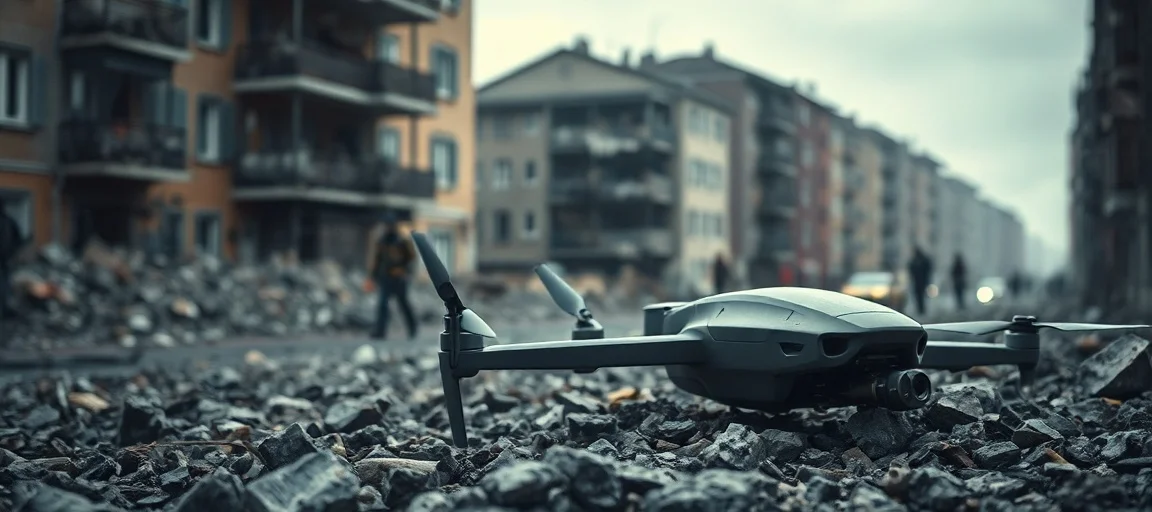
The recent incident involving a Russian drone crashing into a residential building in Galați, Romania, on May 29, 2026, has ignited a fresh wave of international alarm and condemnation. This perilous event, which injured two civilians, prompted a swift and unified response from the European Union and NATO, both of whom accused Moscow of reckless behavior and a grave violation of sovereignty. In a sharp counter-response, Russia warns EU after drone crash in Romania, signaling that such incidents may continue, further heightening the fears of an escalating conflict on the continent. The crashing drone and the subsequent warnings underscore the escalating risks as the war in Ukraine continues to spill over into neighboring NATO and EU member states.
- A Pattern of Dangerous Incursions: Escalating Risks on Europe's Eastern Flank
- The Galați Incident: Civilian Impact and Immediate Reactions
- EU and NATO Condemnations: A Unified Front Against Reckless Aggression
- Russia Warns EU After Drone Crash in Romania: Moscow's Defiant Stance
- Implications for Regional Security and Deterrence
- The Challenge to International Law and Sovereignty
- Diplomatic Fallout and Future Responses
- Conclusion
- Frequently Asked Questions
- Further Reading & Resources
A Pattern of Dangerous Incursions: Escalating Risks on Europe's Eastern Flank
The recent drone crash in Romania is not an isolated event but rather the latest and arguably most serious in a series of airspace violations and drone incursions that have plagued NATO and EU member states since Russia launched its full-scale invasion of Ukraine in February 2022. Countries like Poland, Latvia, Estonia, and Lithuania have all reported fragments of drones or airspace breaches, often attributed to the ongoing conflict in Ukraine. These incidents have consistently raised concerns about the potential for unintended escalation and the robustness of NATO's collective defense. While fragments have been found in Romanian territory on multiple occasions, the Galați incident marks the first time a stray drone has struck a residential building and caused civilian injuries. This alarming development signals a worrying intensification of the security challenges faced by countries bordering the conflict zone. For a deeper dive into how the alliance is adapting, read about NATO's evolving defense strategies.
Previous incidents, such as multiple Russian drones entering Polish airspace in September 2025, also triggered strong reactions and calls for enhanced air defense capabilities. NATO Secretary-General Mark Rutte had previously affirmed that member states have the right to shoot down Russian jets and drones crossing into their airspace, if necessary. The recurring nature of these events underscores a critical and evolving threat landscape, pushing European leaders to re-evaluate their defense readiness and deterrence strategies. The constant encroachment of unmanned aerial vehicles, whether accidental or intentional, highlights the volatile geopolitical environment and the urgent need for robust security measures.
The Galați Incident: Civilian Impact and Immediate Reactions
In the early hours of Friday, May 29, 2026, a Russian Geran-2 type drone, an Iranian-designed Shahed variant, crashed into a 10-story residential building in Galați, a city in eastern Romania located near the border with Ukraine and Moldova. The impact caused a fire and resulted in injuries to two people, a woman and her 14-year-old son, who were subsequently hospitalized. Approximately 70 residents were evacuated from the affected building. Romanian authorities stated that the drone had entered Romanian airspace during an overnight Russian attack on Ukrainian infrastructure near the Danube frontier.
The Romanian military scrambled two F-16 fighter jets and a helicopter after detecting the drone, and alert messages were sent to residents. However, the drone was not intercepted due to "time constraints and operational limitations". Romanian President Nicușor Dan convened the country's Supreme Council of National Defense, describing the event as "the worst incident to hit the national territory" since the 2022 invasion of Ukraine and directly blaming Russia. He emphasized that the "entire responsibility for this incident lies with Russia". The Romanian Foreign Ministry subsequently summoned Russia's ambassador and declared a Russian consul in Constanța "persona non grata," ordering the closure of the Russian consulate in the city.
EU and NATO Condemnations: A Unified Front Against Reckless Aggression
The drone crash in Galați drew immediate and strong condemnation from across the European Union and NATO, highlighting a unified stance against Russia's actions. European Commission President Ursula von der Leyen stated that "Russia's war of aggression has crossed yet another line," emphasizing that a Russian drone incursion struck a densely populated area on EU territory, injuring civilians. She stressed that the EU would continue strengthening its security and deterrence capabilities, particularly along its eastern border, and would increase pressure on Russia. The EU is also actively drafting its 21st set of sanctions against Russia in response to the incident. For more insights on the broader impact of such economic measures, see our analysis of EU sanctions against Russia.
President of the European Council António Costa echoed these sentiments, expressing full solidarity with Romania and condemning Russia's "reckless and irresponsible escalation on EU territory." He further denounced the violation of Romania's national airspace and international law, affirming the EU's unity in stepping up pressure on Russia.
NATO Secretary-General Mark Rutte spoke with Romanian President Nicușor Dan, pledging the alliance's "absolute solidarity" with Romania. Rutte asserted that "NATO stands ready to defend every inch of Allied territory" and condemned Russia's "reckless behaviour" as a "danger to us all". He also indicated that NATO would continue to enhance its readiness to deter and defend against any threat, including those from drones. While Article 4 of the NATO treaty, which allows for consultations among allies when a member's territory or security is threatened, was last invoked in September 2025 after Russian drones entered Polish airspace, it remains unclear if Romania will formally invoke it in this instance. However, Romanian Foreign Minister Oana Țoiu suggested that the crash could justify such an invocation.
Other NATO allies offered their support, with some, like Estonia's Foreign Minister Margus Tsahkna, attributing the increased risk of such incidents to "Putin's increasing nervousness, driven by military setbacks". The UK Prime Minister Keir Starmer also condemned the "extremely dangerous and reckless" violation of NATO airspace, affirming solidarity with Romania.
Russia Warns EU After Drone Crash in Romania: Moscow's Defiant Stance
In a significant escalation of rhetoric, Russia warns EU after drone crash in Romania of further potential incidents. Dmitry Medvedev, deputy chair of Russia's powerful Security Council, issued a stark warning to European leaders that drones would continue to stray into their countries, preventing their populations from "sleeping peacefully". Medvedev asserted that European leaders, whom he described as "impotent," were directly participating in a war against Russia and should therefore "get ready" for such events to "continue to happen". He claimed that European drones, spare parts, and intelligence were being used daily in attacks on Russian territory, leading to damage to residential buildings and civilian casualties there. Medvedev specifically suggested that incidents were more likely in places where drones for Ukraine were being manufactured.
Russian President Vladimir Putin, while informed of the incident, questioned the drone's origin and called for objective evidence, suggesting it could have been a Ukrainian drone. He demanded that Romania provide the drone wreckage for Moscow to conduct its own independent investigation. The Russian Foreign Ministry also vowed a swift response to Romania's decision to close the Russian consulate in Constanța. These statements highlight Russia's defiant posture and its attempt to shift blame while implicitly threatening further destabilization in the region.
Implications for Regional Security and Deterrence
The Galați drone crash and Russia's subsequent warnings carry profound implications for regional security and NATO's deterrence posture. The incident underscores the inherent risks of a major conflict unfolding so close to NATO's eastern flank, with the potential for miscalculation or accidental escalation. Romania, along with other frontline states, faces increasing pressure to bolster its air defense capabilities against unmanned aerial threats. The Romanian Foreign Ministry has already requested accelerated transfer of anti-drone capabilities from NATO. Discover more about advancements in anti-drone technology and their crucial role in modern defense.
This event also highlights the ongoing debate within NATO regarding rules of engagement and the appropriate response to such incursions. While the Romanian military scrambled jets, operational limitations prevented an interception. This raises questions about whether existing protocols are sufficient to address the evolving nature of drone warfare, where small, fast-moving targets can pose a significant challenge to traditional air defense systems. The incident could further galvanize NATO allies to invest more heavily in integrated air and missile defense systems, particularly short-range air defense (SHORAD) capabilities.
Moreover, Russia's aggressive rhetoric, linking future drone incidents to Europe's support for Ukraine, aims to sow disunity among allies and test the resolve of the EU and NATO. By portraying European nations as "belligerent countries" directly involved in the conflict, Moscow seeks to legitimize its actions and undermine the perceived moral high ground of the Western alliance. This "hybrid warfare" approach, involving conventional military actions alongside disinformation and psychological operations, presents a complex challenge for the targeted countries.
The Challenge to International Law and Sovereignty
The drone crash represents a clear violation of Romania's national airspace and international law. Such incursions, regardless of intent, undermine the principles of state sovereignty and territorial integrity, which are cornerstones of the international system. The EU and NATO's strong condemnations reflect a collective commitment to upholding these principles and sending a clear message that such violations will not be tolerated. The incident also puts a spotlight on the legal frameworks governing drone operations in wartime, particularly when they inadvertently or deliberately cross into neutral or allied airspace.
The fact that civilians were injured and a residential building was hit elevates the seriousness of this violation. It transforms a mere airspace breach into an act with tangible human cost, further fueling calls for accountability and stricter measures against Russia. The international community faces the challenge of ensuring that the rules of engagement for drone warfare are clear and that states are held responsible for the consequences of their military operations, especially those that spill over borders.
Diplomatic Fallout and Future Responses
The diplomatic fallout from the Galați incident has been immediate and robust. Romania's expulsion of a Russian consul and the closure of its consulate in Constanța are significant diplomatic actions, indicating a serious deterioration of bilateral relations. Russia's swift promise of retaliation suggests a tit-for-tat escalation in diplomatic tensions, further isolating Moscow on the international stage. Such diplomatic maneuvers, while symbolic, underscore the gravity with which Romania and its allies view Russia's actions.
Looking ahead, both the EU and NATO are expected to pursue multi-pronged responses. This includes continued and potentially intensified economic sanctions against Russia, aimed at crippling its war machine and deterring further aggression. Simultaneously, there will be an accelerated focus on strengthening defense capabilities along the eastern flank, including investments in advanced anti-drone technologies, integrated air defense systems, and enhanced intelligence sharing among allies. The emphasis will be on deterring future incursions and ensuring a rapid and effective response should they occur. The alliance is also likely to review and potentially revise its doctrines for dealing with such "grey zone" incidents, where the line between accidental spillover and deliberate provocation can be blurred.
Conclusion
The incident where a Russian drone crashed in Romania, injuring civilians, represents a dangerous escalation in the ongoing geopolitical tensions. The unified condemnation from the EU and NATO underscores the seriousness with which the international community views such violations of sovereignty and international law. However, as Russia Warns EU After Drone Crash in Romania, the defiant stance from Moscow suggests that these perilous incidents may continue, challenging the resolve and defensive capabilities of European nations. The imperative now is for sustained diplomatic pressure, robust defense enhancements, and a clear, coordinated strategy to prevent further escalation and protect the security of NATO and EU member states in the face of persistent aggression.
Frequently Asked Questions
Q: What happened in Galați, Romania, with the Russian drone?
A: On May 29, 2026, a Russian Geran-2 type drone crashed into a residential building in Galați, Romania. It injured two civilians, caused a fire, and led to 70 evacuations, marking a severe escalation of the Ukraine conflict's spillover.
Q: How have the EU and NATO reacted to this drone crash?
A: Both the EU and NATO strongly condemned Russia's actions as a reckless violation of sovereignty and international law. They expressed solidarity with Romania, pledged stronger defense capabilities, and discussed increased pressure and sanctions on Russia.
Q: What is Russia's official stance on the drone incident and the possibility of future events?
A: Dmitry Medvedev warned the EU of more drone incidents, linking them to European support for Ukraine. President Putin questioned the drone's origin, demanding objective evidence. The Russian Foreign Ministry also vowed retaliation for Romania's diplomatic actions.