Russian Drone Crash Exposes Europe's Defense Gap: A Wake-Up Call
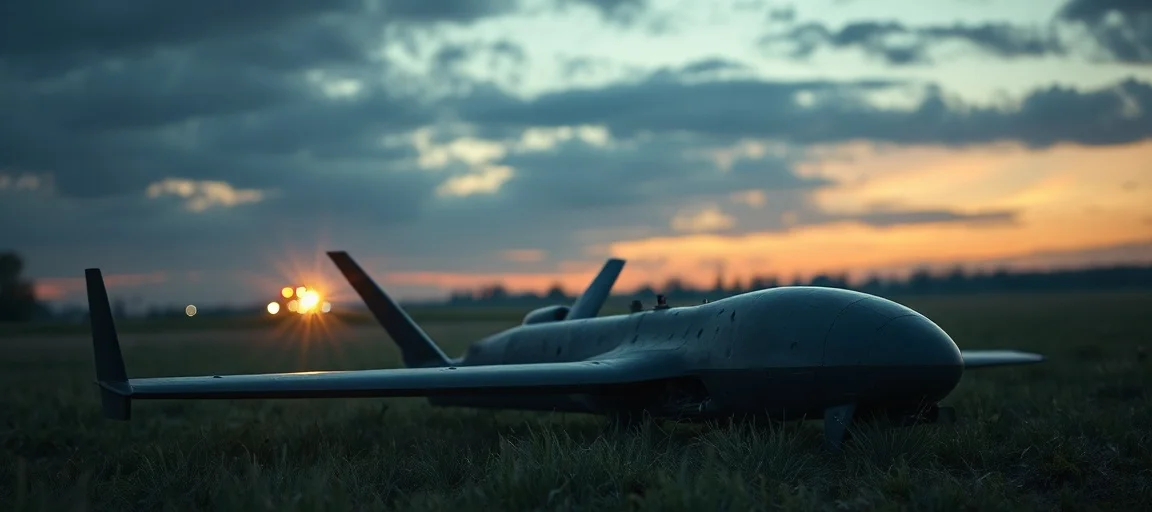
A recent, unsettling incident involving a Russian drone crash deep within the territory of a NATO member state has sent ripples of concern across the continent, bringing into sharp focus Europe's existing air defense vulnerabilities. This event has dramatically exposed Europe's defense gap, prompting urgent discussions among policymakers and military strategists about the readiness and interoperability of the continent's protective systems. The drone, believed to be an unmanned aerial vehicle (UAV) from the ongoing conflict in Ukraine, traversed significant swathes of European airspace undetected before its unexpected descent, underscoring critical shortcomings in aerial surveillance and interception capabilities that many believed were robust.
The Incident: An Unseen Threat
The drone, identified by authorities as a Soviet-era Tu-141 "Strizh" reconnaissance UAV, crashed in a suburb of Zagreb, Croatia, in the early hours of March 10, 2022, though the incident's implications continue to resonate years later, serving as a stark reminder of persistent vulnerabilities. Despite its origins and intended purpose, its uncontrolled flight across several European nations—including Romania and Hungary—before impact revealed a startling lack of immediate response from the sophisticated air defense networks presumed to be guarding the skies. Croatian officials expressed dismay over the failure to detect or intercept the object earlier, highlighting a palpable sense of insecurity among citizens and leaders alike.
Drone's Path and Failure to Intercept
The Tu-141 drone, weighing over six tons and carrying what authorities initially suspected to be an explosive device (later identified as a damaged aerial bomb), flew for approximately 40 minutes over Hungarian airspace and then for several minutes over Croatian airspace. Its trajectory, originating from the conflict zone in Ukraine, should have triggered immediate alerts and coordinated responses from NATO's integrated air and missile defense (IAMD) system. The fact that it did not, until moments before its crash, points to significant operational and communication deficiencies within the European defense architecture. This event forced a reconsideration of the effectiveness of existing radar systems and rapid reaction protocols designed to counter such threats.
Initial Reactions and Investigations
Following the crash, Croatian President Zoran Milanović and Prime Minister Andrej Plenković publicly voiced their dissatisfaction with NATO's response, calling for a thorough investigation into why the drone remained undetected for so long. NATO officials acknowledged the incident and initiated a review, emphasizing that the drone was a "flight accident" rather than a deliberate attack, but the underlying concern remained: how could an object of that size and speed penetrate so deeply without intervention? The investigation revealed crucial insights into the complexities of identifying, tracking, and responding to aerial threats in a highly dynamic geopolitical environment.
Background Context: Europe's Evolving Defense Landscape
Europe's defense strategy has historically been a complex tapestry of national capabilities, bilateral agreements, and the overarching framework of NATO. While NATO provides a collective security guarantee, the individual contributions and readiness of member states vary significantly. For a deeper dive into the alliance's foundational principles, consider our article on Understanding NATO's Collective Defense Principles. The post-Cold War era saw a reduction in defense spending and a shift in priorities, leading to a potential degradation of certain capabilities, particularly in conventional air defense systems.
Legacy Systems vs. Modern Threats
Many European nations still rely on a mix of older, Cold War-era air defense systems alongside newer, more advanced technologies. While these legacy systems can be effective against traditional aircraft, their ability to detect and counter smaller, faster, or stealthier modern drones and cruise missiles is often limited. The integration of diverse national systems, each with its own operational protocols and data formats, creates inherent friction points and potential gaps in a continent-wide defense umbrella. The Russian drone crash, involving an older model UAV, nevertheless underscored these systemic weaknesses.
The Rise of Asymmetric Warfare and Drones
The proliferation of unmanned aerial vehicles (UAVs) has fundamentally altered the nature of modern warfare. Drones, from small commercial quadcopters adapted for reconnaissance or payload delivery, to larger military-grade platforms, present a unique set of challenges. They can be difficult to detect, especially at low altitudes or against cluttered backgrounds, and their relatively low cost makes them an attractive tool for both state and non-state actors. For a broader analysis of this paradigm shift, read our special report on The Evolution of Drone Warfare in Modern Conflict. Europe's air defense strategy, largely designed to counter manned aircraft and ballistic missiles, has struggled to adapt comprehensively to this asymmetric threat. This specific incident served as a potent, real-world demonstration of this evolving threat landscape.
The Russian Drone Crash Exposes Europe's Defense Gap
The Zagreb drone crash was not an isolated anomaly; rather, it functioned as a stark symptom of deeper, systemic issues within Europe's integrated air and missile defense (IAMD) capabilities. The incident clearly illuminated crucial shortcomings in intelligence sharing, command and control, and rapid response mechanisms across the continent. This failure represents a significant vulnerability that could be exploited by adversaries, not just in times of declared conflict, but also through accidental incursions or deliberate provocations.
Interoperability and Communication Failures
A core challenge identified by experts is the lack of seamless interoperability among different national air defense systems. While NATO strives for standardization, the reality on the ground often involves disparate radar technologies, communication protocols, and data interpretation methods. This can lead to delays in threat identification, assessment, and the issuance of interception orders. In the case of the Tu-141, the drone's relatively slow speed and predictable trajectory should have made it an easier target, yet the system failed to connect the dots in real-time across national borders. Ensuring that all member states' systems can "talk" to each other effectively and instantly is paramount for a truly integrated defense.
Gaps in Radar Coverage and Sensor Fusion
Even with advanced radar systems, geographical and technological gaps can exist, particularly at lower altitudes or in complex terrain. The incident suggested that there might be blind spots in the collective radar coverage, especially for objects that aren't emitting standard transponder signals. Furthermore, effective air defense relies on sensor fusion – combining data from various sources (radar, electro-optical, infrared, electronic intelligence) to create a comprehensive air picture. Deficiencies in this fusion process can lead to delayed or inaccurate threat assessments, contributing to the "defense gap" exposed by the drone crash. Investment in more robust, multi-layered sensor networks and advanced AI-driven data analysis is essential.
Decision-Making and Response Protocols
Beyond technological issues, the human element and established protocols play a critical role. Rapid decision-making is crucial when an unknown aerial object crosses sovereign airspace. Questions arose about the chain of command, the speed at which information was escalated, and the authority granted to national air defense units to act decisively. The delay in response indicated that existing protocols might be too cumbersome or lack the necessary pre-authorization for immediate action against ambiguous threats, particularly those not immediately identifiable as hostile or potentially armed. Streamlining these processes while maintaining appropriate oversight is a delicate but necessary balance.
Expert Opinion and Strategic Implications
Military strategists and geopolitical analysts have widely commented on the implications of the drone crash, universally agreeing that it serves as a critical wake-up call for European defense planners. The consensus is that while the incident was likely accidental, it highlighted vulnerabilities that adversaries could deliberately exploit.
Calls for Enhanced Integrated Air and Missile Defense (IAMD)
"This drone incident unequivocally underscores the urgent need for a truly integrated, multi-layered air and missile defense system across Europe," stated Dr. Lena Petrova, a senior fellow at the European Council on Foreign Relations. "Fragmented national approaches are no longer sufficient against the contemporary threat landscape, which includes everything from hypersonic missiles to swarms of small UAVs." Experts advocate for increased investment in joint surveillance capabilities, shared intelligence platforms, and harmonized command and control structures that transcend national borders. The goal is to move beyond mere coordination to genuine integration, where systems operate as a single, cohesive unit.
The Role of NATO and EU Defense Initiatives
NATO's role as the primary guarantor of European security means it bears significant responsibility for addressing these gaps. The alliance has long emphasized the importance of IAMD, but the incident suggests that implementation efforts need to be accelerated and deepened. Concurrently, European Union defense initiatives, such as Permanent Structured Cooperation (PESCO), are also exploring ways to enhance member states' defense capabilities through collaborative projects. Learn more about these efforts in our piece on Strengthening EU Defense Through PESCO Initiatives. The drone crash could provide fresh impetus for these initiatives, fostering greater cooperation in procurement, training, and operational readiness. Developing a common European air defense doctrine, harmonizing equipment, and conducting more joint exercises are seen as crucial steps forward.
Implications for Eastern Flank Security
The incident also highlighted the particular vulnerabilities of NATO's Eastern Flank, bordering Russia and Ukraine. Countries in this region, such as Poland, Romania, and the Baltic states, are at the forefront of potential threats and have consistently advocated for stronger air defenses. The drone's trajectory through Romania and Hungary before crashing in Croatia underscores that any breach in the Eastern Flank's air defense immediately impacts the security of the entire continent. Strengthening air defense assets, increasing troop presence, and enhancing readiness in these frontline states are paramount to deterring aggression and reassuring allies.
Impact and Future Outlook
The Russian drone crash, while not directly causing widespread damage or casualties, has had a profound impact on European defense thinking. It has catalyzed a renewed sense of urgency regarding air defense modernization and integration. The immediate aftermath saw increased calls for a re-evaluation of national defense budgets and a push for greater collaboration among allies.
Increased Defense Spending and Modernization Efforts
Several European nations, already grappling with heightened geopolitical tensions, have committed to increasing their defense spending and accelerating modernization programs. This includes investments in advanced radar systems, anti-drone technologies, and missile defense interceptors. The focus is shifting towards acquiring capabilities that can counter a broader spectrum of aerial threats, from low-flying drones to high-altitude ballistic missiles. The incident has provided concrete justification for these expenditures, demonstrating that abstract threats can quickly become tangible realities.
Collaborative Projects and Technological Innovation
The emphasis on collaboration is growing, with nations exploring joint procurement programs for air defense systems to achieve economies of scale and ensure greater interoperability. There is also a strong push for technological innovation, including the development of AI-powered detection systems, electronic warfare capabilities to jam or spoof hostile drones, and directed energy weapons for non-kinetic interceptions. European defense industries are likely to see significant investment in these areas, fostering a more robust and responsive defense ecosystem. The incident has effectively created a test case for future defense innovation.
Rethinking European Airspace Management
The crash also prompted discussions about better European airspace management, particularly in times of crisis. This includes establishing clearer protocols for identifying unknown objects, sharing real-time flight data, and coordinating responses across national air traffic control and military command centers. The goal is to create a more resilient and unified airspace surveillance and response system that can protect both civilian air traffic and national security interests. This holistic approach ensures that potential threats are identified and neutralized before they become a danger to populated areas.
Conclusion: Bridging the Divide
The Russian drone crash exposes Europe's defense gap with undeniable clarity, serving as a critical stress test for the continent's air defense capabilities. It highlights that even seemingly minor incursions can reveal profound systemic vulnerabilities in a rapidly evolving threat landscape. The incident has acted as a catalyst, compelling European nations and NATO allies to confront long-standing issues of interoperability, investment, and strategic coordination. Addressing these challenges requires a sustained commitment to modernizing existing systems, fostering deeper technological collaboration, and establishing truly integrated command and control structures that can operate seamlessly across national borders. Only through a unified and proactive approach can Europe effectively bridge its defense gap and ensure the security of its skies against the increasingly complex aerial threats of the 21st century. The lessons learned from this unintentional breach must translate into decisive action to fortify the continent's collective security.
Frequently Asked Questions
Q: Why was the drone not intercepted?
A: The drone's trajectory across multiple nations, combined with potential gaps in radar coverage and interoperability issues between national air defense systems, led to a failure in timely detection and interception. Decision-making protocols also played a role in the delayed response.
Q: What kind of drone crashed in Zagreb?
A: It was identified as a Soviet-era Tu-141 "Strizh" reconnaissance UAV. Despite its age and known specifications, its uncontrolled flight highlighted persistent modern defense vulnerabilities across European airspace.
Q: What are the main defense gaps exposed by this incident?
A: The incident exposed critical shortcomings in intelligence sharing, communication interoperability, radar coverage, sensor fusion, and rapid response decision-making across Europe's integrated air and missile defense systems, underscoring systemic weaknesses.