Italy Train Strike Causes Widespread Disruption for Travelers
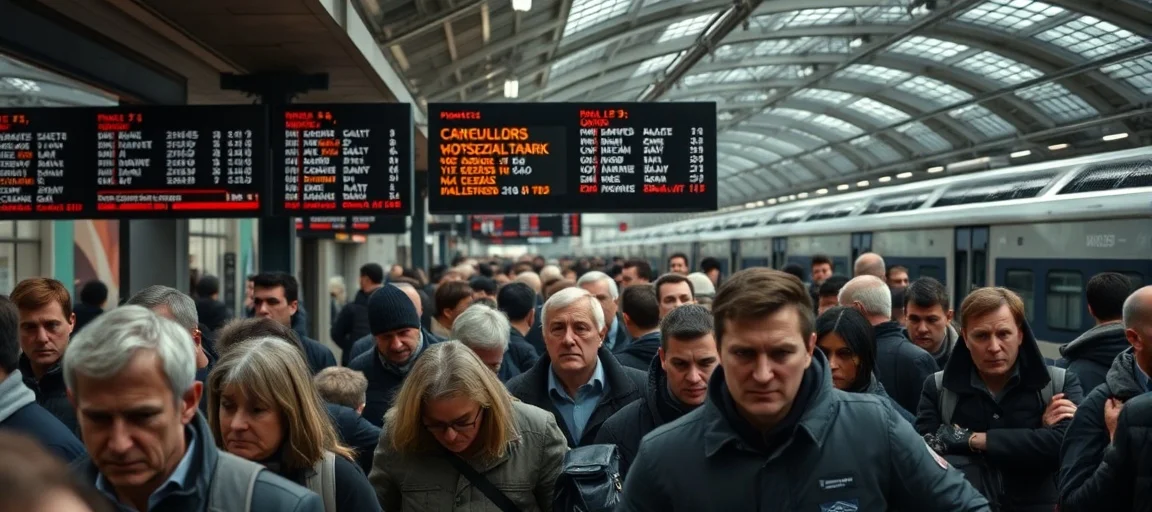
A significant Italy train strike causes widespread disruption today, grinding much of the nation's rail network to a halt and leaving millions of travelers stranded. This latest industrial action, impacting both regional and long-distance services, highlights ongoing tensions between railway unions and transport authorities, leading to considerable challenges for daily commuters and tourists alike. The nationwide walkout has led to extensive disruption, raising concerns about its broader economic impact and the immediate inconveniences for those relying on public transport.
- Nationwide Rail Stoppage: A Closer Look at the Italy Train Strike Causes Widespread Disruption
- Understanding the Roots of Labor Disputes in Italian Rail
- Economic Repercussions of the Rail Stoppage
- Government and Union Responses
- Expert Opinion / Analysis
- Looking Ahead: Potential Resolutions and Future Implications
- Navigating Disruption: Advice for Travelers
- Frequently Asked Questions
- Conclusion: Italy Train Strike Causes Widespread Disruption
- Further Reading & Resources
Nationwide Rail Stoppage: A Closer Look at the Italy Train Strike Causes Widespread Disruption
The current nationwide rail stoppage in Italy has once again brought the country's vital transportation infrastructure to a standstill, affecting countless individuals and businesses. This industrial action, supported by labor unions such as CUB Trasporti, SGB, ORSA Ferrovie, and Assemblea nazionale del Personale di Macchina e di Bordo, typically stems from deep-seated disagreements between major railway unions and the state-owned rail operator, Trenitalia, or the national infrastructure manager, Rete Ferroviaria Italiana (RFI). While specific demands can vary, common grievances often revolve around contractual disputes, salary increases, working conditions, and safety protocols.
The unions argue that their members are facing increasing workloads, stagnant wages amidst rising inflation, and insufficient investment in personnel training and safety measures. Conversely, transport authorities often emphasize the need for operational efficiency, budgetary constraints, and the immense public inconvenience caused by such strikes. The delicate balance between workers' rights and public service provision is frequently at the heart of these contentious negotiations, leading to periodic but impactful stoppages across the Italian rail network.
The Immediate Impact on Daily Commuters
For millions of Italians, trains are an indispensable mode of transport for daily commutes to work, school, and other essential activities. The sudden cessation of services leaves many scrambling for alternative options, often leading to overcrowded buses, increased traffic congestion on roads, and significant delays in reaching their destinations. Many commuters depend on predictable train schedules, and the disruption can cascade through their daily routines, affecting punctuality, productivity, and overall quality of life. Small businesses reliant on timely deliveries and employee attendance also feel the ripple effects acutely.
Significant Challenges for Tourists and International Travelers
Italy is a global tourism powerhouse, attracting millions of visitors who frequently rely on its extensive rail network to traverse the country, connecting major cities like Rome, Florence, Venice, and Milan. A major train strike poses significant challenges for these tourists, disrupting meticulously planned itineraries, forcing last-minute and often expensive changes to travel arrangements, and potentially leading to missed flights or hotel bookings. International travelers, often unfamiliar with local alternatives, find themselves in particularly difficult situations, searching for taxis, private transfers, or intercity buses, which quickly become overwhelmed or fully booked during strike periods.
Understanding the Roots of Labor Disputes in Italian Rail
Italian labor relations in the transport sector have a history of being complex, marked by both periods of negotiation and frequent industrial action. Rail and public transport strikes occur with some frequency in Italy, accounting for a large share of all industrial actions in a typical year. Train strikes, while disruptive, are a recognized tool for unions to exert pressure and bring attention to their members' concerns.
Key Union Demands and Government Responses
Typical demands from major unions like Filt Cgil, Fit Cisl, Uiltrasporti, Orsa Ferrovie, Ugl Ferrovieri, CUB Trasporti, SGB, and Assemblea nazionale del Personale di Macchina e di Bordo often include:
- Wage Increases: Adjusting salaries to keep pace with inflation and improve living standards for railway workers.
- Improved Working Conditions: Addressing issues such as shift patterns, rest periods, and overall work-life balance.
- Enhanced Safety Protocols: Calling for greater investment in infrastructure maintenance, new rolling stock, and staff training to ensure the safety of both employees and passengers.
- Contractual Renewals: Negotiating new collective bargaining agreements that reflect current economic realities and worker needs.
The Italian government and transport ministries often respond by attempting to mediate between the unions and rail companies. While acknowledging workers' rights, authorities typically emphasize the severe economic and social costs of strikes. They may issue "guarantee services" decrees, which mandate a minimum level of service to be maintained during strike periods, particularly during peak hours, to mitigate the worst of the disruption. These "guaranteed time bands" (fasce di garanzia) for regional trains are typically from 6:00 to 9:00 AM and from 6:00 to 9:00 PM on weekdays. Even with these guaranteed services, significant cancellations and delays remain unavoidable, impacting millions.
Historical Context of Rail Strikes
Historically, Italy has experienced numerous rail strikes, often tied to broader national economic conditions or specific governmental policies affecting public services. Strikes are a "fact of life in Italy," and locals are generally unfazed, learning to "figure it out" (arrangiarsi). These strikes serve as a powerful bargaining chip for unions, demonstrating their collective strength and the essential nature of their work. While some strikes are brief and targeted, others can extend for longer durations, creating substantial public and political pressure for resolution. Understanding this historical pattern helps contextualize the current Italy Train Strike Causes Widespread Disruption and the recurring nature of such events.
Economic Repercussions of the Rail Stoppage
Beyond the immediate inconvenience to individuals, a nationwide train strike has far-reaching economic repercussions that can affect various sectors of the Italian economy. The Italian railway system is a critical part of the country's infrastructure, with active lines totaling over 16,800 km, and carrying approximately 2 million passengers daily across 10,000 trains.
Impact on Logistics and Supply Chains
The rail network is a critical component of Italy's logistics and supply chain infrastructure, especially for freight transport. Delays in cargo movement can affect industries ranging from manufacturing to agriculture, leading to production slowdowns, increased transport costs due to reliance on alternative shipping methods (like road transport), and potential shortages of goods in retail. Perishable goods are particularly vulnerable, risking spoilage and financial losses for producers and distributors.
Hit to Tourism and Hospitality Sector
The tourism and hospitality sector, a cornerstone of the Italian economy, suffers directly from train strikes. Cancellations and delays deter both domestic and international tourists, leading to:
- Lost Revenue: Hotels, restaurants, tour operators, and local businesses experience a downturn in patronage.
- Reputational Damage: Frequent disruptions can make Italy appear less reliable as a travel destination, potentially impacting future bookings.
- Increased Costs for Tourists: Travelers forced to seek alternative transport often incur unexpected expenses for taxis, car rentals, or private coaches, diminishing their overall travel experience.
Broader Economic Activity
The cumulative effect of disrupted commutes, impeded supply chains, and reduced tourism activity can lead to a measurable dip in overall economic activity. Businesses face reduced productivity, increased operational costs, and potential losses in revenue, contributing to a sense of economic uncertainty, particularly for small and medium-sized enterprises (SMEs) that form the backbone of the Italian economy. High-speed rail in Italy has contributed to an extra growth of per capita GDP of +2.6–5.6% over 10 years, demonstrating the significant economic impact of rail services when they are fully operational.
Government and Union Responses
The government's role in mitigating the impact of train strikes is crucial, as is the ongoing dialogue with unions. Italy has regulations in place to manage strikes, ensuring that certain essential services are maintained.
Legal Framework for Strikes
Italian law, specifically Law 146/1990, regulates strikes in public essential services, including public transport. This law mandates "guaranteed minimum transport services" during certain hours, even on strike days, to prevent a complete shutdown. These guaranteed services are typically for regional trains during morning (6:00 to 9:00 AM) and evening (6:00 to 9:00 PM) commuter peaks on weekdays. For long-distance and high-speed (Alta Velocità) trains, operators like Trenitalia and Italo publish specific lists of guaranteed trains.
Ministry of Infrastructure and Transport's Role
The Ministry of Infrastructure and Transport (MIT) maintains an official register of planned strikes, listing involved sectors, regions, and timings. This advance notification allows both the public and transport companies to prepare. The MIT, along with Rete Ferroviaria Italiana (RFI), is also involved in significant investments in the rail network, allocating billions of Euros to modernize and expand Italy's railway infrastructure, aiming to improve reliability and efficiency.
Expert Opinion / Analysis
Experts view Italian train strikes as a symptom of deeper, often long-standing, issues within the public transport sector.
Analyzing the Recurrence of Disputes
The recurrence of strikes points to a persistent struggle over collective bargaining agreements, wage adjustments, and the modernization of an aging infrastructure. While Italy has invested significantly in its high-speed rail network, with it being recognized as one of Europe's best, regional services and working conditions across the board often remain points of contention. Analysts suggest that simply reducing strike duration, as occasionally ordered by the Transport Minister, may not address the underlying causes, potentially leading to continued cycles of industrial action.
Long-Term Solutions and International Context
Long-term solutions would require a holistic approach, including transparent negotiations, sustained investment in both infrastructure and human capital, and possibly the establishment of independent arbitration mechanisms. Considering European contexts, other countries like Germany and the Netherlands have also faced rail disruptions due to technical failures, heatwaves, or strikes, highlighting a broader challenge in maintaining robust railway services across the continent. This underscores the need for resilience and adaptability in national rail systems.
Looking Ahead: Potential Resolutions and Future Implications
The immediate resolution of the current strike will likely involve renewed negotiations, possibly facilitated by government mediators, aimed at finding common ground on key demands such as wages and working conditions. Short-term resolutions often involve compromises on both sides, allowing services to resume. However, the long-term implications of recurrent strikes are significant.
They underscore the need for sustainable solutions that foster a more stable and cooperative relationship between rail operators, unions, and the government. This could involve:
- Multi-year Collective Bargaining Agreements: Establishing longer-term contracts to provide greater stability and predictability for workers and operators alike.
- Independent Arbitration Bodies: Creating neutral bodies to help resolve disputes before they escalate to strikes, promoting constructive dialogue.
- Increased Investment: Strategically allocating funds for infrastructure upgrades, technological advancements (like the gradual removal of older SCMT systems and expansion of ERTMS on conventional lines), and workforce development to improve efficiency and conditions.
- Enhanced Communication: Fostering transparent and regular dialogue between all stakeholders to address concerns proactively and prevent disputes from escalating.
Without such comprehensive approaches, the cycle of disruptions could continue, posing a persistent challenge to Italy's economy and its reputation as a reliable European destination.
Navigating Disruption: Advice for Travelers
For those caught in the midst of an Italian train strike, proactive planning and flexibility are key.
- Stay Informed: Regularly check official Trenitalia and Italo websites, as well as local news outlets, for the latest updates on strike schedules and guaranteed services.
- Consider Alternatives: Research alternative transport options such as intercity buses (operated by companies like FlixBus or Itabus), car rentals, or ride-sharing services. Be aware that these options can also experience increased demand and higher prices during strikes.
- Flexibility is Key: If possible, adjust your travel dates or times to avoid the strike period. For essential travel, consider booking a day before or after the announced strike dates.
- Document Everything: Keep records of tickets, bookings, and any additional expenses incurred due to the strike for potential refunds or insurance claims.
Many train companies offer refunds or the option to change tickets without penalty during strike periods, so it is always advisable to check their specific policies.
Frequently Asked Questions
Q: How can I check for current train strikes in Italy?
A: Always consult the official websites of Trenitalia and Italo, which publish details of planned strikes and guaranteed services. You can also check the Ministry of Infrastructure and Transport's official strike register.
Q: What are "guaranteed services" during an Italian train strike?
A: Italian law mandates minimum essential services during strikes, typically for regional trains during peak commuter hours (6-9 AM and 6-9 PM on weekdays). Long-distance operators also publish lists of guaranteed trains.
Q: What should tourists do if their train is cancelled due to an Italian strike?
A: Check if your train is among the guaranteed services. If not, research alternative transport like intercity buses, car rentals, or taxis. Contact your rail operator for refund or rebooking options.
Conclusion: Italy Train Strike Causes Widespread Disruption
The ongoing Italy train strike causes widespread disruption across the nation, serving as a stark reminder of the intricate balance between labor rights and public service provision. While the immediate focus remains on alleviating the travel chaos for millions, the deeper implications for Italy's economy, particularly its vital tourism sector and logistical networks, cannot be overlooked. As stakeholders navigate these complex negotiations, the long-term goal must be to establish sustainable solutions that ensure the stability and efficiency of Italy's essential rail infrastructure, benefiting both its dedicated workforce and the public it serves.