Croatia's Waste Crisis: Mass Protests Demand Cleanup Action
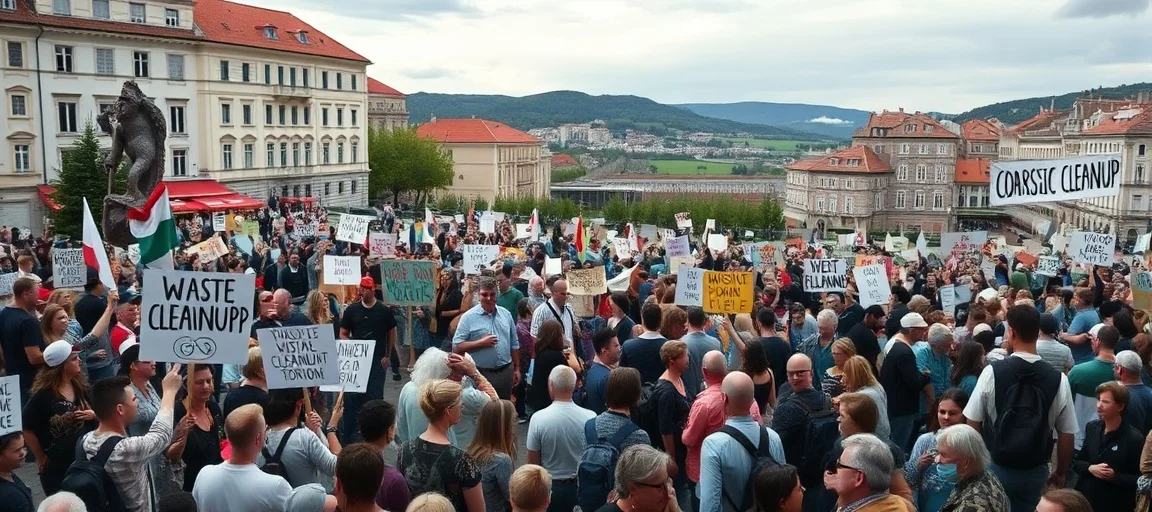
Croatia is currently witnessing a surge of public anger as mass protests demand waste cleanup across various cities and regions. This widespread civic mobilization underscores a deepening environmental crisis and growing dissatisfaction with long-standing issues in waste management, pushing the government for immediate and decisive action. Citizens, fed up with overflowing landfills, illegal dumps, and perceived government inaction, are taking to the streets to voice their profound concerns over public health and environmental degradation.
- Background to the Crisis: Croatia's Mounting Waste Problem
- Unprecedented Mobilization: Mass Protests in Croatia Demand Waste Cleanup
- Environmental and Health Implications of the Waste Crisis
- Official Response and Government Challenges
- Broader Context: Waste Management Across Europe
- Expert Analysis on Sustainable Waste Solutions
- Conclusion: The Future of Waste Management in Croatia
- Frequently Asked Questions
- Further Reading & Resources
Background to the Crisis: Croatia's Mounting Waste Problem
Croatia, a country renowned for its pristine coastline and natural beauty, has grappled with significant waste management challenges for decades. Despite its accession to the European Union in 2013, which brought stricter environmental regulations, the nation has struggled to modernize its waste infrastructure and practices. Historically, the reliance on landfills has been pervasive, with many sites operating beyond capacity or lacking proper environmental safeguards. The problem is exacerbated by insufficient recycling rates, which, while showing some improvement, still lag behind many EU averages. A 2022 report highlighted that Croatia's municipal waste generation per capita was increasing, while recycling efforts remained suboptimal, putting immense pressure on existing waste disposal facilities. This creates a cycle where more waste is produced than can be sustainably managed, leading to a critical buildup.
The lack of comprehensive, long-term waste management strategies at both national and local levels has been a recurring critique from environmental organizations and the public alike. Many municipalities still lack adequate waste separation programs, and investments in modern recycling and waste-to-energy facilities have been slow. This has resulted in a proliferation of illegal dumpsites, particularly in rural and protected areas, further contaminating soil and water resources. The visible impacts of this mismanagement, from unsightly waste heaps to foul odors, have become increasingly intolerable for local communities.
Unprecedented Mobilization: Mass Protests in Croatia Demand Waste Cleanup
The current wave of mass protests in Croatia demanding waste cleanup represents an unprecedented level of public mobilization against environmental negligence. What began as localized grievances has coalesced into a national movement, demonstrating a collective frustration that transcends regional boundaries. Thousands have gathered in prominent urban centers like Zagreb, Split, Rijeka, and Dubrovnik, as well as in smaller towns directly impacted by hazardous waste sites. These demonstrations are characterized by a diverse cross-section of society, including environmental activists, local residents, families, students, and concerned professionals, all united by a common demand for a cleaner and healthier environment.
Organizers have leveraged social media extensively to coordinate efforts, share information, and amplify their message, transforming individual complaints into a powerful, unified voice. The protests are not merely about the aesthetics of a clean environment; they are deeply rooted in fundamental concerns about human health, the economic impact on tourism, and the long-term sustainability of Croatia's natural heritage. This widespread public outcry signals a turning point, where citizens are no longer willing to accept the status quo and are actively pushing for accountability and tangible solutions from their elected representatives.
The Drivers Behind Public Outcry
Several interconnected factors are fueling the intensity of the ongoing protests. At the forefront are the direct impacts of inadequate waste management on daily life and public health. Residents living near landfills, particularly the infamous Jakusevec landfill in Zagreb, have long complained of unbearable odors, rodent infestations, and potential health risks from air and water pollution. Studies have indicated elevated levels of certain pollutants in areas surrounding these sites, raising serious concerns about respiratory illnesses, skin conditions, and other long-term health complications among the affected populations.
Furthermore, the perceived lack of political will and transparent action by successive governments has deepened public cynicism. Promises of modernizing waste infrastructure and closing problematic landfills have often materialized slowly or not at all, leading to a sense of betrayal among citizens. The economic implications are also significant, especially for a country heavily reliant on tourism. Images of polluted landscapes and beaches deter visitors, threatening the livelihoods of countless individuals and the national economy. Environmental groups have also highlighted the destructive impact on Croatia's rich biodiversity, with plastics and other waste polluting sensitive ecosystems.
Key Demands and Public Sentiment
The protestors' demands are clear, articulate, and non-negotiable. Primarily, they call for the immediate closure and rehabilitation of illegal and environmentally hazardous landfills, especially those situated near residential areas or protected natural sites. A central demand is for the swift implementation of modern, sustainable waste management systems that prioritize recycling, composting, and waste reduction over landfilling. This includes significant investment in new sorting facilities, collection infrastructure, and public education campaigns to encourage responsible waste disposal practices.
Another crucial demand is for greater transparency and accountability from local and national authorities regarding waste management policies and project funding. Citizens want to see concrete timelines for action, regular updates on progress, and mechanisms for public participation in decision-making processes. There is a strong sentiment that waste management should be treated as a national priority, with sufficient financial and human resources allocated to address the crisis comprehensively. The public is also demanding legal reforms to introduce harsher penalties for environmental polluters and stronger enforcement of existing regulations. The overarching sentiment is one of urgency and a firm belief that a clean environment is a fundamental right, not a privilege.
Environmental and Health Implications of the Waste Crisis
The long-standing waste crisis in Croatia has profound and far-reaching environmental and health implications, impacting ecosystems, biodiversity, and human well-being. The reliance on outdated landfill practices and the prevalence of illegal dumpsites contribute significantly to various forms of pollution, creating a cascade of negative effects that ripple through the country's natural and social fabric. Addressing these consequences is at the heart of the current protests.
Ecological Damage and Biodiversity Threats
Croatia boasts a remarkable array of natural landscapes, from its pristine Adriatic coast and numerous islands to its lush forests, karstic rivers, and national parks. This rich biodiversity is increasingly under threat from unchecked waste pollution. Landfills, particularly those not properly engineered, leach toxic substances such as heavy metals, dioxins, and furans into the soil and groundwater. This contamination can poison fertile lands, disrupt agricultural productivity, and render water sources unsafe for consumption, directly affecting local ecosystems and the species that depend on them.
Plastic pollution is another major concern. Mismanaged plastics often end up in rivers and eventually the Adriatic Sea, where they pose a grave danger to marine life. Fish, birds, and other animals can ingest plastic fragments, leading to injury, starvation, and death. Microplastics, resulting from the breakdown of larger plastic items, infiltrate the food chain, with unknown but potentially serious consequences for all organisms, including humans. The destruction of natural habitats due to illegal dumping, alongside the direct toxicity of waste, leads to a decline in species populations and overall ecosystem health, threatening Croatia's unique natural heritage.
Public Health Concerns and Risks
The health risks associated with inadequate waste management are a primary driver of public concern and protest. Communities living near poorly managed landfills or illegal dump sites are exposed to a cocktail of pollutants through air, water, and soil. The decomposition of organic waste generates methane, a potent greenhouse gas, but also hydrogen sulfide and ammonia, which cause noxious odors and can lead to respiratory problems, headaches, and nausea. For instance, residents around the Jakusevec landfill have reported chronic respiratory issues and other ailments attributed to the landfill's emissions.
Contaminated drinking water due to landfill leachate infiltration is another severe threat. The presence of pathogens, heavy metals, and persistent organic pollutants in water supplies can lead to gastrointestinal diseases, kidney damage, developmental problems in children, and an increased risk of various cancers. Furthermore, the proliferation of pests like rodents and insects in unmanaged waste sites contributes to the spread of infectious diseases. The long-term exposure to these environmental stressors can significantly diminish the quality of life and life expectancy of affected populations, making the demand for cleaner environments a matter of fundamental human rights.
Official Response and Government Challenges
In the face of escalating public pressure, the Croatian government and local authorities have begun to respond, though critics argue that these responses have often been reactive rather than proactive, and insufficient to address the systemic nature of the crisis. The challenges are considerable, encompassing not only financial constraints but also complex bureaucratic hurdles and the difficulty of implementing widespread behavioral change.
Initial Reactions and Pledges
Initially, the government's response to the growing public discontent varied, with some officials downplaying the severity of the crisis while others acknowledged the need for action. As the protests gained momentum and national attention, pledges for accelerated action became more prominent. Authorities in Zagreb, for example, have reiterated plans for the gradual closure and remediation of the Jakusevec landfill, setting new, albeit often postponed, deadlines for its complete shutdown. Similar commitments have been made for other problematic sites across the country, often accompanied by promises of increased funding for new waste management infrastructure.
The Ministry of Economy and Sustainable Development has emphasized its commitment to align Croatia's waste management practices with EU directives, pointing to ongoing projects aimed at improving recycling rates and establishing regional waste management centers. Public statements have also highlighted efforts to enhance waste separation at source and to invest in modern technologies for waste processing. However, many of these pledges are seen by protestors and environmental groups as too little, too late, or lacking concrete, verifiable timelines and actionable plans.
Long-Term Solutions and Hurdles
Developing and implementing long-term solutions for Croatia's waste crisis presents numerous hurdles. Financially, the overhaul of a nation's entire waste management system requires substantial investment, often relying on a combination of national funds, EU structural funds, and private partnerships. Bureaucratic inertia and complex permitting processes can significantly delay the construction of new facilities like sorting plants, composting sites, and modern landfills or waste-to-energy plants. Public acceptance is another critical factor; local communities often resist the establishment of new waste facilities in their vicinity, a phenomenon known as NIMBY ("Not In My Backyard").
Educational campaigns are also vital to shift public behavior towards more responsible waste generation and separation. Current recycling rates, while improving, still indicate a need for greater public engagement and understanding of the benefits of waste reduction. Furthermore, there is a need for robust enforcement mechanisms to crack down on illegal dumping and ensure compliance with environmental regulations. Overcoming these challenges requires sustained political will, transparent governance, multi-stakeholder collaboration, and a long-term vision that transcends electoral cycles.
Broader Context: Waste Management Across Europe
Croatia's struggle with waste management is not unique, but its current challenges highlight a disparity in progress compared to many other European Union member states. The EU has set ambitious targets for waste reduction, recycling, and landfill diversion, encapsulated in directives like the Waste Framework Directive and targets for circular economy. Many Western and Northern European countries have successfully transitioned to highly efficient waste management systems, boasting high recycling rates (often exceeding 50-60% for municipal waste) and minimal reliance on landfills, instead utilizing waste-to-energy plants and extensive composting programs.
For instance, countries like Germany, Austria, and Sweden have virtually eliminated landfilling of municipal waste, viewing waste as a resource rather than merely something to dispose of. They have invested heavily in advanced sorting technologies, robust collection systems, and public awareness campaigns that have fostered a culture of environmental responsibility. In contrast, many Central and Eastern European countries, including Croatia, inherited outdated infrastructure and practices from pre-EU accession periods. While significant improvements have been made, these nations often still face the legacy of over-reliance on landfills, lower recycling rates, and a slower pace of adopting comprehensive circular economy principles. Croatia's recycling rate for municipal waste, while improving, still significantly lags behind the EU average of 49.6% reported in 2021. This gap underscores the urgency of the demands voiced by the ongoing mass protests in Croatia demand waste cleanup.
Expert Analysis on Sustainable Waste Solutions
Environmental experts and waste management specialists largely concur that Croatia needs a radical shift in its approach to waste, moving decisively towards a circular economy model. Dr. Ana Marić, a prominent environmental scientist specializing in waste management, states, "Croatia possesses the natural beauty and the potential, but it needs to pivot from a linear 'take-make-dispose' model to one that maximizes resource efficiency. This means prioritizing prevention, reuse, and high-quality recycling." She emphasizes the importance of investment in decentralized waste processing facilities, arguing that relying solely on large regional centers might not be the most efficient or environmentally sound solution for a country with diverse geographical challenges.
Another expert, Professor Marko Petrović, an urban planner with a focus on sustainable development, points to the need for stronger local governance and public-private partnerships. "Effective waste management requires not just infrastructure, but smart urban planning and community engagement. Local municipalities must be empowered and adequately funded to implement tailor-made solutions, while partnerships with the private sector can bring in much-needed innovation and efficiency," he explains. Both experts highlight the critical role of public education. Without a significant shift in citizen behavior, even the most advanced infrastructure will struggle to achieve optimal results. They suggest that government communication should focus on the economic benefits of a circular economy, such as job creation and reduced reliance on raw materials, in addition to environmental preservation. The consensus is clear: a multi-faceted approach, encompassing policy reform, technological investment, public education, and robust enforcement, is essential for Croatia to overcome its waste crisis.
Conclusion: The Future of Waste Management in Croatia
The ongoing mass protests in Croatia demand waste cleanup are a powerful testament to the growing environmental consciousness of its citizens and their unwavering commitment to a sustainable future. These demonstrations have brought the nation's long-standing waste management challenges to the forefront of the public and political agenda, making it clear that the status quo is no longer acceptable. The sheer scale and persistence of the protests signal a critical juncture for Croatia, where the demands for immediate action and systemic change cannot be ignored. The government faces immense pressure to not only address the immediate crises of overflowing landfills and illegal dumps but also to lay down a robust, long-term strategy for modern, sustainable waste management that aligns with European Union standards and truly protects Croatia's invaluable natural environment and the health of its people. The success of these movements will ultimately be measured by tangible improvements in waste infrastructure, recycling rates, and a significant reduction in environmental pollution, paving the way for a cleaner, healthier, and more sustainable Croatia.
Frequently Asked Questions
Q: What are the main causes of Croatia's waste crisis?
A: The crisis stems from decades of reliance on outdated landfills, insufficient recycling infrastructure, and a lack of comprehensive, long-term national waste management strategies. Despite EU regulations, modernization efforts have been slow.
Q: What are the key demands of the protestors?
A: Protestors demand the immediate closure and rehabilitation of hazardous landfills, investment in modern recycling and composting facilities, greater transparency from authorities, and stricter enforcement of environmental laws.
Q: How does Croatia's waste management compare to other EU countries?
A: Croatia lags behind many Western and Northern European EU members in recycling rates and landfill diversion. While improvements are being made, it faces the legacy of outdated practices and slower adoption of circular economy principles.