Brazilian Independence Day Celebrations Underway Across the Nation
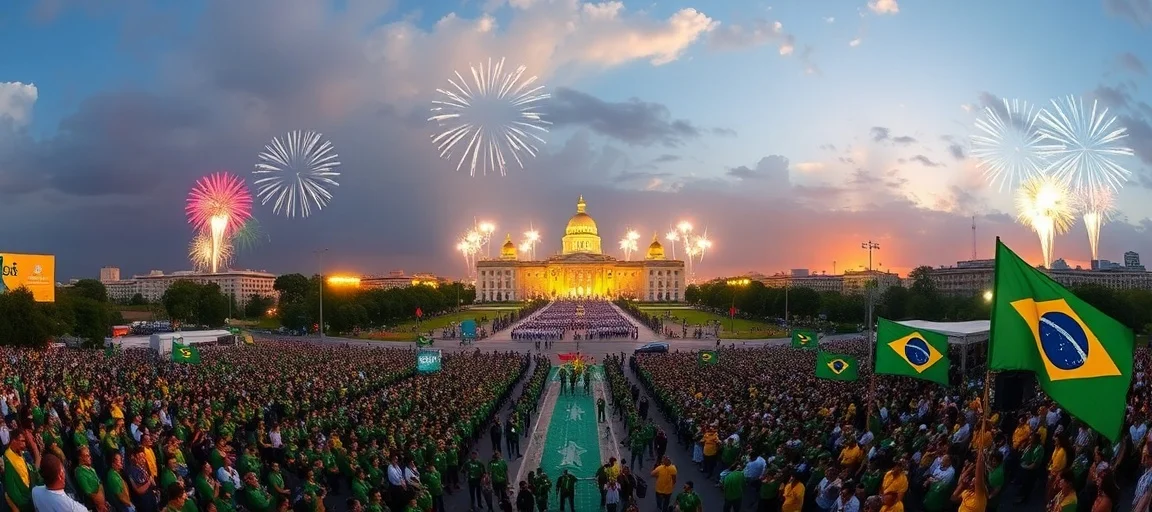
As September 7th dawns, Brazil is enveloped in a vibrant display of national pride and historical reflection, with Brazilian Independence Day Celebrations Underway across its vast landscape. This annual holiday, known locally as "Sete de Setembro" or "Dia da Independência," commemorates the pivotal moment in 1822 when Prince Pedro I famously declared the nation's independence from Portuguese colonial rule on the banks of the Ipiranga River. The ongoing celebrations, marking 204 years of sovereignty, see cities, towns, and communities unite in patriotic fervor, showcasing a rich tapestry of cultural heritage and national identity.
The Historical Tapestry of Brazilian Independence
Brazil's journey to independence is unique among its Latin American counterparts, characterized by a relatively peaceful transition from colonial rule to a monarchy. Unlike many Spanish colonies that endured violent wars for liberation, Brazil's path was significantly influenced by the presence of the Portuguese royal family within its borders.
The Portuguese Royal Court's Relocation
In 1807, the French army, led by Emperor Napoleon Bonaparte, invaded Portugal, prompting the Portuguese royal family and government to flee Lisbon and establish their court in Rio de Janeiro, then the capital of Colonial Brazil. This unprecedented move elevated Brazil's status within the Portuguese Empire, transforming it from a mere colony into the seat of an empire and fostering significant political, economic, and cultural development. In 1815, Prince Regent John VI (later King John VI) further solidified Brazil's importance by elevating it to the rank of a kingdom, united with Portugal and the Algarves. This period saw the establishment of Brazil's first bank, printing press, and universities, laying crucial groundwork for its future autonomy.
The "Dia do Fico" and the Cry of Ipiranga
After Napoleon's defeat, political turmoil in Portugal led to demands for the royal family's return and for Brazil to revert to its former colonial status. However, King John VI's heir, Prince Pedro, who had remained in Brazil as Prince Regent, refused to comply. On January 9, 1822, in a defiant act known as "Dia do Fico" ("I Will Stay Day"), Pedro publicly declared his intention to remain in Brazil, garnering significant local support. This move was a critical turning point, signaling a clear break from Portugal's attempts to reassert its absolute authority.
The ultimate declaration of independence arrived on September 7, 1822. While in São Paulo, Prince Pedro received a decree from Lisbon demanding his return and threatening to restore Brazil's colonial subservience. Influenced by his wife, Princess Maria Leopoldina, and the Council of Ministers, Pedro famously proclaimed "Independência ou Morte!" ("Independence or Death!") by the Ipiranga River. This iconic moment, though sometimes mythologized in its depiction, marked the formal break from Portugal after 322 years of colonial dominance. Pedro was subsequently acclaimed Emperor of Brazil on October 12, 1822, and crowned on December 1, establishing the Empire of Brazil. Portugal officially recognized Brazil's independence in 1825 with the signing of the Treaty of Rio de Janeiro, which also involved a substantial payment from Brazil to Portugal to compensate for its former colony.
Unveiling Brazilian Independence Day Celebrations Underway
This year, the Brazilian Independence Day Celebrations Underway on September 7, 2026, continue a long-standing tradition of patriotic displays and community gatherings. The holiday, which falls on a Monday in 2026, often results in a three-day weekend, allowing Brazilians ample opportunity to partake in the festivities.
National Parades and Official Ceremonies
The centerpiece of the national celebration is the grand civil-military parade held in Brasília, the federal capital. The Ministries Esplanade transforms into a spectacle of national pride, featuring all branches of the Brazilian Armed Forces, honor guards, ceremonial units, and military vehicles. The President of Brazil, as Commander-in-Chief of the Armed Forces, traditionally attends the event, often reviewing the troops and delivering a speech to the nation. Thousands of spectators, estimated around 30,000 annually, gather to witness this impressive display of national strength and unity. In 2026, approximately 6,600 military personnel are expected to participate in the parade in Rio de Janeiro alone, marching along Avenida Presidente Vargas despite potential rain or cold weather, demonstrating the unwavering commitment to this national observance.
Similar military and civil parades are held in state capitals and many major cities throughout the country, including São Paulo and Rio de Janeiro. Schools often participate, with students marching and performing in special programs and educational activities, fostering a sense of belonging and historical awareness among younger generations. These school parades often feature children dressed in historical costumes or national colors, singing patriotic songs.
Cultural Festivities and Community Gatherings
Beyond the formal parades, Independence Day is a nationwide celebration brimming with cultural events, music, and concerts. Cities come alive with street parties and fireworks displays, reflecting Brazil's rich cultural diversity, which draws from Afro-Brazilian, Indigenous, and European heritage. These celebrations are a vibrant testament to the nation's ability to blend its complex history into a modern, festive identity.
Key aspects of cultural celebrations include:
-
Music and Dance: The rhythmic beats of samba often fill the air, accompanied by various musical performances. In cities like Recife, the day can feel like a vibrant street festival with traditional drums and capoeira circles, showcasing the deep African roots of Brazilian culture. Folkloric dance groups also perform regional dances, adding to the mosaic of cultural expression.
-
National Colors: Green and gold, the colors of the Brazilian flag, are ubiquitous. The flag itself, with its green representing the Royal House of Braganza, yellow for the Habsburgs, and the blue celestial globe mirroring the sky over Rio, becomes a prominent symbol. Citizens often wear these colors, and handmade banners and artisanal flags showcasing regional flair are common. This visual patriotism extends to decorations on homes, businesses, and public spaces, creating a unified atmosphere.
-
Family Gatherings: Many Brazilians use the public holiday for long family lunches and cherished recipes. Traditional dishes such as feijoada (black bean and pork stew) and churrasco (barbecue) are popular, often paired with caipirinhas, the national cocktail. In some northeastern regions, there's a tradition of lighting a candle during dinner to honor past generations and invite prosperity, reflecting the spiritual dimension of these gatherings.
Global Celebrations: Brazilian Day
The patriotic spirit of "Sete de Setembro" extends beyond Brazil's borders. "Brazilian Day" festivals are held annually in various cities worldwide, including New York City, Deerfield Beach (Florida), San Diego, Toronto, London, Tokyo, and Luanda (Angola). These international events feature Brazilian music concerts, dance exhibitions, martial arts demonstrations, and stalls selling Brazilian food and products, allowing the Brazilian diaspora and international admirers to partake in the festivities. The New York City event, for instance, has grown into a major festival, attracting over a million people and featuring famous Brazilian musicians, serving as a cultural bridge between Brazil and the world.
The Significance of Independence Day in Modern Brazil
Brazilian Independence Day is not merely a historical commemoration; it is a living narrative that continues to shape the nation's identity and provoke contemporary discussions. It serves as a potent reminder of the country's founding principles and its ongoing evolution.
A Symbol of National Pride and Unity
For many, Independence Day is the ultimate expression of national pride, symbolizing the definitive transition from colonial subjugation to sovereign statehood. It reinforces a sense of unity and shared heritage, encouraging Brazilians to reflect on their country's journey towards democracy, multiculturalism, and development. Political leaders often use the occasion to emphasize themes of national sovereignty and the country's role on the global stage, articulating visions for Brazil's future. This annual ritual helps to solidify a collective identity, especially in a nation as vast and diverse as Brazil.
Economic Resilience and Global Standing
In recent years, Independence Day celebrations have also coincided with discussions about Brazil's economic standing and international partnerships. In 2025, Brazil marked its 203rd National Day with renewed economic strength, demonstrating robust GDP growth. As the largest economy in Latin America, Brazil remains a significant global exporter of commodities like soybeans, beef, and coffee, while also pioneering renewable energy solutions. The inclusion of the G20 theme in some independence day festivities, showcasing flags of G20 countries, highlights Brazil's ambition to be a key player in global economic policies. International leaders, such as Belarusian President Alexander Lukashenko and Russian President Vladimir Putin, have also extended greetings on Independence Day, acknowledging Brazil's growing global influence and its role in multilateral associations like BRICS and the G20, underscoring its importance on the world stage.
A Platform for Reflection and Dialogue
While traditionally a day of unity, Independence Day has also become a platform for critical reflection on societal challenges. In previous years, the holiday has sometimes highlighted divisions, with discussions around systemic inequality, the legacy of colonialism, and the ongoing struggles of indigenous communities. For instance, in 2023, some demonstrations on September 7th, known as the "Cry of the Excluded," focused on issues like hunger and demands for social rights, running parallel to official celebrations. These counter-demonstrations provide a crucial counterpoint to the official narrative, reminding the nation of its unfulfilled promises and the persistent need for social justice.
President Luiz Inácio Lula da Silva, in his addresses, has called for national unity and sought to reclaim the celebrations as a unifying event for all Brazilians, contrasting with past administrations that sometimes used the day for political campaigning. He has emphasized that "true independence means democracy, food on the table, and Brazil's wealth serving the people—never foreign interests," underscoring the importance of internal social and economic development for achieving genuine national sovereignty.
Monuments and Historical Sites
Across Brazil, numerous sites stand as enduring testaments to the nation's independence, inviting visitors and locals alike to delve deeper into its rich history. These landmarks serve as tangible links to the past, preserving the memory of the struggle and triumph of nationhood.
- Independence Park, São Paulo: This emblematic park is situated on the banks of the Ipiranga River, the very spot where Dom Pedro I proclaimed independence. It houses the Independence Museum (also known as the Museu Paulista or Ipiranga Museum), which, after a decade-long restoration, reopened with over 3,000 historical artifacts, including the famous painting "Independência ou Morte" by Pedro Américo. The park itself is a popular recreational area, beautifully landscaped and often filled with families.
- Imperial Museum, Petrópolis: Located in the mountainous region outside Rio de Janeiro, this museum offers insights into the royal family's life in Brazil, particularly Dom Pedro I's reign as emperor. The former summer palace of the Brazilian emperors, it showcases opulent furniture, jewelry, and documents, providing a glimpse into the imperial era that followed independence.
- Inconfidência Museum, Ouro Preto: This museum explores 18th-century historical events in Minas Gerais, such as the Inconfidência Mineira, an early rebellion against Portuguese rule in 1789, which directly influenced the later independence movement and made Tiradentes a national hero. The museum is housed in a magnificent colonial building, once the town hall and prison, further enhancing its historical resonance.
- Historic Center of Porto Seguro, Bahia: Considered the "cradle of the nation," this was where Pedro Álvares Cabral first landed in 1500, marking the beginning of Portuguese colonization. The area contains some of Brazil's oldest buildings, including the Church of Nossa Senhora da Pena and the Marco do Descobrimento, symbolizing the very origins of the land that would one day declare its independence.
Conclusion
As the vibrant sights and sounds of the Brazilian Independence Day Celebrations Underway resonate throughout Brazil and beyond, the nation pauses to commemorate its 204th anniversary of freedom from Portugal. From the grand military parades in Brasília and other major cities to the lively street festivals, family gatherings, and international "Brazilian Day" events, the holiday is a profound expression of national identity and cultural heritage. While acknowledging its complex past and ongoing societal discussions, Brazil leverages this significant day to reinforce its sovereignty, celebrate its economic resilience, and reflect on its journey as a multicultural democracy. This annual observance continues to weave together historical remembrance with contemporary aspirations, uniting Brazilians in a shared sense of pride and a forward-looking spirit for the future.
Frequently Asked Questions
Q: What does Brazilian Independence Day commemorate?
A: Brazilian Independence Day, celebrated on September 7th, commemorates Brazil's declaration of independence from Portuguese colonial rule on September 7, 1822. Prince Pedro I famously proclaimed "Independência ou Morte!" near the Ipiranga River, marking the nation's break from over three centuries of Portuguese dominance.
Q: How do Brazilians typically celebrate Independence Day?
A: Celebrations usually involve grand civil-military parades in Brasília and other major cities, featuring armed forces and official ceremonies. Beyond formal events, communities enjoy cultural festivities with music, dance, street parties, fireworks, and family gatherings with traditional Brazilian food and drinks. National colors are widely worn and displayed.
Q: Is Brazilian Independence Day only celebrated in Brazil?
A: No, the patriotic spirit extends globally through "Brazilian Day" festivals in cities like New York, London, and Tokyo. These events allow the Brazilian diaspora and international admirers to celebrate with concerts, dance, martial arts, and traditional food, fostering a sense of global community and cultural exchange.