Gunman Shot Dead Near White House Checkpoint: A Detailed Report
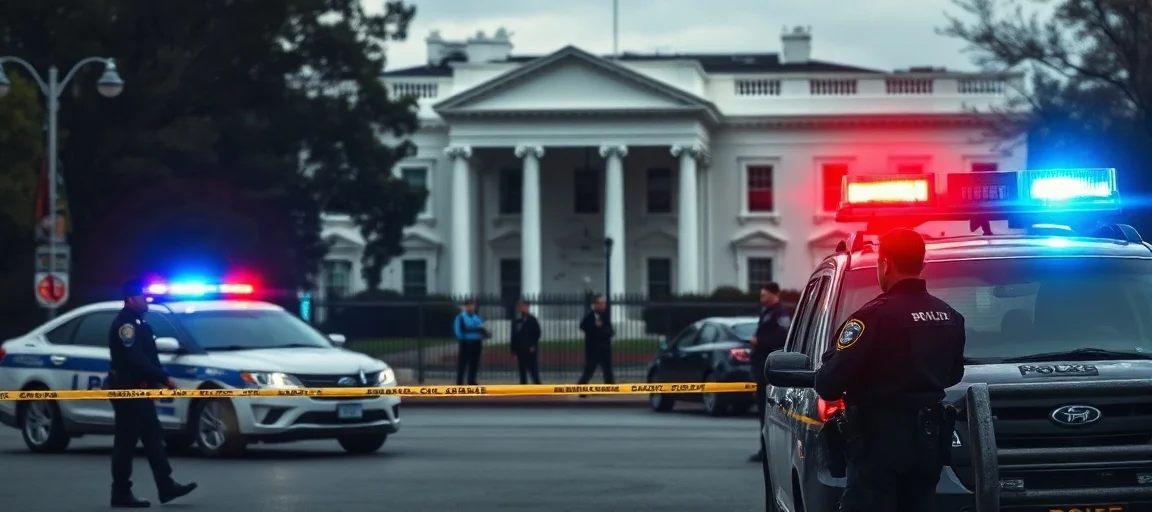
A tense situation unfolded in Washington, D.C. today when a gunman shot dead near White House checkpoint after opening fire on U.S. Secret Service officers. The incident, which occurred near 17th Street and Pennsylvania Avenue NW, triggered an immediate lockdown of the executive mansion and surrounding areas, drawing swift and professional action from law enforcement. Initial reports indicate a suspect approached a security checkpoint, pulled a weapon from a bag, and began firing at the posted officers, prompting a decisive response from the Secret Service. President Donald Trump was reportedly at the White House during the incident but was not impacted.
- Gunman Shot Dead Near White House Checkpoint: The Incident Details
- Broader Implications for White House Security
- Public Reaction and Political Commentary
- Historical Context of Incidents Near the White House
- The Aftermath: Investigations and Future Steps
- Conclusion
- Frequently Asked Questions
- Further Reading & Resources
Gunman Shot Dead Near White House Checkpoint: The Incident Details
The dramatic events began shortly after 6 p.m. ET, when a male individual approached a critical security checkpoint situated at 17th Street and Pennsylvania Avenue NW, a mere block from the White House complex. According to preliminary investigations by the U.S. Secret Service, the suspect, later identified as 21-year-old Nasire Best, removed a weapon from a bag and immediately began firing at the Secret Service officers stationed there. This sudden act of aggression prompted an immediate and robust response from the federal agents.
Secret Service officers quickly returned fire, striking the suspect. Emergency medical personnel were dispatched to the scene, and the injured suspect was transported to an area hospital, where he later succumbed to his injuries. Disturbingly, a bystander was also struck during the exchange of gunfire, though it remains unclear whether the injury was caused by the suspect's initial shots or those fired by officers. Fortunately, no Secret Service personnel were reported injured in the intense exchange.
Initial Reports and Eyewitness Accounts
The rapid succession of events sent shockwaves through the typically busy area of downtown Washington, D.C. Journalists and other individuals present on the White House North Lawn at the time reported hearing a sustained volley of gunshots, estimated by some to be between 15 and 30 rounds. The sudden eruption of gunfire caused widespread panic, with footage showing people running from the area as Secret Service agents swiftly ushered media personnel into the White House briefing room for safety. One reporter was even in the midst of a live broadcast when the shots rang out, capturing the immediate chaos and the urgent commands from security personnel to seek cover. The quick actions of the Secret Service in evacuating and securing individuals underscored the gravity of the situation. Yellow crime scene tape quickly sectioned off the area, with dozens of orange evidence markers dotting the pavement where the shooting occurred. Medical materials, including surgical gloves, were also visible, indicating the urgent response efforts.
Law Enforcement Response and Protocols
The response to the shooting was a coordinated effort involving multiple law enforcement agencies. The U.S. Secret Service Uniformed Division, responsible for the physical security of the White House and its grounds, was at the forefront of neutralizing the immediate threat. Following the incident, the Metropolitan Police Department's (MPD) Internal Affairs Bureau's Force Investigation Team initiated an investigation, a standard protocol for all officer-involved shootings in the District of Columbia. The facts and evidence gathered will undergo independent review by the United States Attorney's Office. This rigorous investigative process ensures transparency and adherence to established legal procedures in such critical incidents. The FBI also quickly responded to the scene, providing support to the Secret Service as the investigation commenced.
Identification of the Suspect
Authorities have identified the gunman as Nasire Best, a 21-year-old individual. Public records and law enforcement sources have revealed that Best had a history of encounters with the Secret Service and a known history of mental illness. Just months prior, in July 2025, Best was reportedly arrested for attempting to enter a different White House checkpoint without authorization. During that incident, he allegedly failed to heed officers' commands, claimed he was "Jesus Christ," and expressed a desire to be arrested. A pretrial stay-away order was subsequently issued, barring him from the vicinity of the White House, but a bench warrant was issued in August after he failed to appear for a subsequent hearing. These previous interactions highlight potential warning signs that are likely to be a significant focus of the ongoing investigation, examining how and why Best was able to approach the checkpoint again despite prior security measures.
Broader Implications for White House Security
The shooting near the White House checkpoint serves as a stark reminder of the persistent security challenges faced by the nation's most iconic and protected complex. The White House, serving as both the official residence and workplace of the President, is safeguarded by an intricate, multi-layered security system primarily overseen by the United States Secret Service. This incident will undoubtedly prompt a thorough review of existing protocols and potential enhancements to an already robust security apparatus.
Previous Security Breaches and Enhancements
The White House has a long and documented history of security incidents and breaches, dating back to the War of 1812 when it was set ablaze by the British. Throughout the 19th and 20th centuries, various individuals managed to gain unauthorized access to the grounds, with motivations ranging from seeking an audience with the President to expressing grievances or suffering from mental health issues. Notable incidents include a man climbing onto the South Portico in 1891, individuals forcing their way in to see presidents like William Howard Taft in 1912, and more recent events such as the 1994 plane crash on the South Lawn or fence jumpers in 2014 and 2016. For a deeper dive into these events, read our article on the History of White House Security Incidents.
Each breach has historically led to a re-evaluation and strengthening of security measures. For instance, after a truck-bomb attack in Lebanon in 1983, low concrete walls were installed around the White House, followed by bollards a few years later. Streets around the White House were closed to traffic in 1995 after the Oklahoma City bombing, and in response to a 2014 intrusion where an individual made it inside the White House, metal barricades were erected. More recently, a 13-foot tall steel fence with built-in pressure sensors was installed, replacing the previous 6.5-foot fence, and an invisible infrared perimeter detects human heat signatures. The White House complex now encompasses a larger controlled security zone, with several surrounding streets permanently closed. Despite these extensive measures, "security incidents occur frequently," according to a 2015 House of Representatives report, which documented 104 breaches or attempted breaches between April 2005 and April 2015.
The Role of the Secret Service
The United States Secret Service plays a paramount role in presidential protection and securing the White House complex. Its protection division for the White House is the largest single unit within the agency. This includes a highly trained Uniformed Division, counter-sniper teams on the roof, emergency response units that patrol the grounds, and a vast array of unseen surveillance technologies such as pressure pads and infrared sensors. Snipers are required to qualify monthly with targets out to 1,000 yards, and teams work in shifts, constantly monitoring the 18 acres of White House grounds, providing real-time intelligence to ground teams. The airspace above the White House, designated P-56, is a strictly enforced no-fly zone, patrolled by fighter jets on five-minute standby.
However, recent incidents have also highlighted potential vulnerabilities. A summary of a mission assurance investigation released in September 2024 into an attempted assassination of former President Donald Trump in July 2024 revealed "communications gaps" and a "lack of diligence" by Secret Service personnel, leading to operational and communication failures. This report prompted a call for a "shift in paradigm" to enhance the agency's agility and ability to escalate protection in today's "hyperdynamic threat environment".
Training and Readiness
The effectiveness of White House security hinges not only on physical barriers and advanced technology but also on the rigorous training and readiness of Secret Service agents. Their protocols dictate immediate and decisive action when confronted with a direct threat. The swift neutralization of the gunman in this latest incident demonstrates a critical aspect of their training: to protect the protected at all costs. Agents are trained to assess threats rapidly and respond with appropriate force to prevent harm to the President, staff, and the White House itself. Continuous training drills, intelligence gathering, and adapting to evolving threat landscapes are integral to maintaining this high level of readiness. The recent shooting near the checkpoint will undoubtedly lead to an internal review to identify any potential gaps or areas for further improvement in training, particularly concerning threat recognition and engagement protocols at sensitive access points.
Public Reaction and Political Commentary
The shooting near the White House checkpoint inevitably sparked immediate public concern and drew swift reactions from political figures. Such incidents, especially those occurring at the symbolic heart of American power, resonate deeply with citizens and often lead to calls for increased security measures while also raising questions about the balance between security and public accessibility.
Statements from Officials
Following the incident, President Donald Trump issued a statement via social media, expressing gratitude to the Secret Service and other law enforcement agencies for their "swift and professional action". He also alluded to the suspect's alleged "violent history and possible obsession with our Country's most cherished structure," and noted that the incident occurred approximately one month after another shooting disrupted the White House Correspondents' Association dinner venue. This previous incident, where a gunman breached a security checkpoint at a Washington, D.C., hotel ballroom, had already heightened concerns over security around high-profile events in the capital.
Other officials echoed the President's sentiments, praising the quick response of the Secret Service. The FBI Director, Kash Patel, confirmed the bureau's presence on the scene and support for the Secret Service investigation. These statements aim to reassure the public that protective measures are effective and that authorities are in control of the situation.
Calls for Increased Security Measures
Predictably, this latest security incident has reignited debates surrounding the adequacy of White House security. While existing measures are extensive, including a 13-foot steel fence, pressure sensors, infrared detectors, and armed response teams, each new breach prompts a renewed examination. There are likely to be renewed calls from some quarters for even tighter restrictions around the White House perimeter, possibly including expanded no-go zones or more visible security personnel. The proximity of the shooting to a public access point underscores the inherent challenge of securing such a prominent landmark in a bustling urban environment. The White House had already begun considering revisions to Secret Service protocols for large events involving the President, even prior to this incident, following the shooting at the Correspondents' Dinner. Discussions on potential updates to Secret Service plans were reportedly set to begin, led by the White House Chief of Staff.
Balancing Security and Public Access
A perpetual challenge for White House security is striking a balance between ensuring the safety of the President and maintaining some degree of public accessibility to a national symbol. For decades, portions of the White House grounds and nearby areas were accessible to the public, with an "open door policy" prevailing until the late 19th century. However, after World War II, public access became increasingly restricted due to security concerns. The closing of Pennsylvania Avenue in front of the White House to vehicular traffic in 1995, a response to evolving threats like vehicle bombs, significantly altered the public's interaction with the executive mansion.
Further restrictions have transformed the area into a larger controlled security zone, impacting the surrounding city's landscape. While security is paramount, there is an ongoing discussion about how to achieve the highest level of protection without completely isolating the White House from the American people, who view it as a symbol of democracy. The current incident will likely add intensity to this complex and often contentious discussion.
Historical Context of Incidents Near the White House
The recent shooting is not an isolated event but rather another chapter in a long history of security challenges at the White House. Understanding this historical context is crucial for appreciating the evolution of protective measures and the enduring nature of threats to the presidency.
Notable Past Events
The White House has been the target of various forms of aggression and intrusion throughout its existence. Incidents range from mobs gathering and firing guns during President John Tyler's time in the 1840s to a man crashing a stolen Cessna plane onto the South Lawn in 1994, killing only himself. In 1976, a local taxi driver, Chester Plummer, scaled the fence with a metal pipe and was shot and killed by an officer as he moved toward the White House. Another significant event occurred in 2001 when Robert Pickett, a former IRS accountant, fired shots outside the White House, leading to a standoff with the Secret Service before he was shot in the leg.
These incidents underscore the diverse motivations and methods employed by individuals seeking to breach White House security, including those with mental health issues. The sheer volume of attempts is noteworthy; a 2015 report indicated over 100 breaches or attempted breaches in a single decade. Each event has contributed to the layered security measures now in place, from reinforced gates to advanced surveillance technologies.
Evolving Threat Landscape
The nature of threats to the White House and its occupants has evolved significantly over time. Early threats often involved individuals acting alone, sometimes driven by personal grievances or mental instability. However, in the modern era, the threat landscape has expanded to include more organized and sophisticated dangers, such as terrorism and targeted attacks. For insights into contemporary security concerns, explore our analysis of Modern Geopolitical Threats. The September 11 attacks, for instance, led to a significant expansion and stricter enforcement of restricted airspace above the White House.
The continuous adaptation of security measures reflects this evolving landscape. What began as simple fences in the early 19th century to keep out livestock and casual intruders has transformed into a highly fortified complex featuring advanced technology, specialized tactical teams, and intelligence gathering operations. The increasing prevalence of social media also means that even perceived threats or unusual behavior can be disseminated quickly, adding another layer of complexity to threat assessment and response. The Secret Service constantly analyzes intelligence and adapts its strategies to counter both traditional and emerging threats, ensuring the highest level of protection for the President and the White House.
The Aftermath: Investigations and Future Steps
The shooting at the White House checkpoint will undoubtedly lead to a comprehensive investigation and a review of existing security protocols. The immediate aftermath involves not only addressing the incident itself but also considering long-term implications for presidential protection and public safety.
Ongoing Investigations
As is standard practice in officer-involved shootings, multiple agencies are involved in the investigation. The Metropolitan Police Department's Internal Affairs Bureau's Force Investigation Team is leading the inquiry into the use of force by the Secret Service agents. Their findings, along with evidence collected at the scene, will be independently reviewed by the U.S. Attorney's Office. The FBI is also providing support to the Secret Service, indicating the serious nature of the incident.
The investigation will likely delve into several key areas:
- Suspect's Background and Motivation: A detailed examination of Nasire Best's history, including his mental health, previous encounters with law enforcement, and any potential connections or influences, will be crucial. Understanding his motivations could provide valuable intelligence for future threat assessments.
- Secret Service Response: The inquiry will scrutinize the actions of the Secret Service agents involved, ensuring their response adhered to established protocols and use-of-force guidelines. This includes reviewing eyewitness accounts, ballistic evidence, and any available surveillance footage.
- Security Protocol Effectiveness: The incident will prompt a review of the security checkpoint's design, staffing, and operational procedures to identify any vulnerabilities that may have allowed the suspect to approach and fire his weapon.
Review of Security Procedures
Every security incident at the White House, regardless of its outcome, prompts a reassessment of existing procedures. This shooting is no exception. The Secret Service will conduct an internal review to determine if any adjustments are needed to their protective strategies and tactics. This could include:
- Enhanced Surveillance: Evaluating the effectiveness of existing surveillance technologies and considering the deployment of new ones.
- Checkpoint Hardening: Assessing the physical security of checkpoints and exploring ways to further fortify them against aggressive approaches.
- Personnel Deployment: Reviewing staffing levels and deployment strategies at critical access points to ensure optimal coverage and response times.
- Intelligence Sharing: Examining how intelligence regarding individuals with a history of approaching the White House, like Nasire Best, is shared and acted upon across different law enforcement agencies.
Given the recent discussions around revising Secret Service protocols after the White House Correspondents' Dinner shooting, this latest incident will add urgency to those ongoing conversations. The goal will be to refine security measures to mitigate risks effectively while minimizing disruption to daily operations and public life in the nation's capital.
Reassurance to the Public
In the wake of such a high-profile incident, officials will also focus on reassuring the American public that the White House remains secure and that the safety of the President and those who work and visit the complex is paramount. Public statements from the President and other senior officials aim to convey control and confidence in the security apparatus. However, achieving this reassurance also involves transparency in the investigation where appropriate and demonstrating a commitment to continuous improvement in security. The constant evolution of White House security measures over decades reflects the ongoing effort to maintain a secure environment in the face of persistent and changing threats.
Conclusion
The fatal shooting of a gunman shot dead near White House checkpoint underscores the inherent and ongoing security challenges faced by the nation's most protected complex. The swift and decisive action by U.S. Secret Service officers, who returned fire after the suspect brandished a weapon and began shooting, successfully neutralized the immediate threat and prevented a potentially more catastrophic outcome. While President Trump was unharmed, and no Secret Service agents were injured, the incident, which also wounded a bystander, has initiated thorough investigations into the suspect's background and a critical review of existing security protocols. As authorities work to understand the full scope of the event and implement any necessary enhancements, the commitment to safeguarding the White House and its occupants remains an absolute priority, continuously adapting to an evolving threat landscape.
Frequently Asked Questions
Q: Who was the gunman shot dead near the White House?
A: The gunman was identified as Nasire Best, a 21-year-old individual. Authorities reported he had a history of mental illness and previous encounters with the Secret Service regarding unauthorized access attempts.
Q: Were any Secret Service officers injured in the incident?
A: Fortunately, no Secret Service personnel were reported injured during the intense exchange of gunfire. A bystander was also struck, though it remains unclear if the injury was from the suspect's weapon or an officer's return fire.
Q: What is being done to enhance White House security after this event?
A: The incident will lead to comprehensive investigations by multiple agencies and a thorough review of existing security protocols. This may include enhanced surveillance, checkpoint hardening, and revisions to personnel deployment strategies.