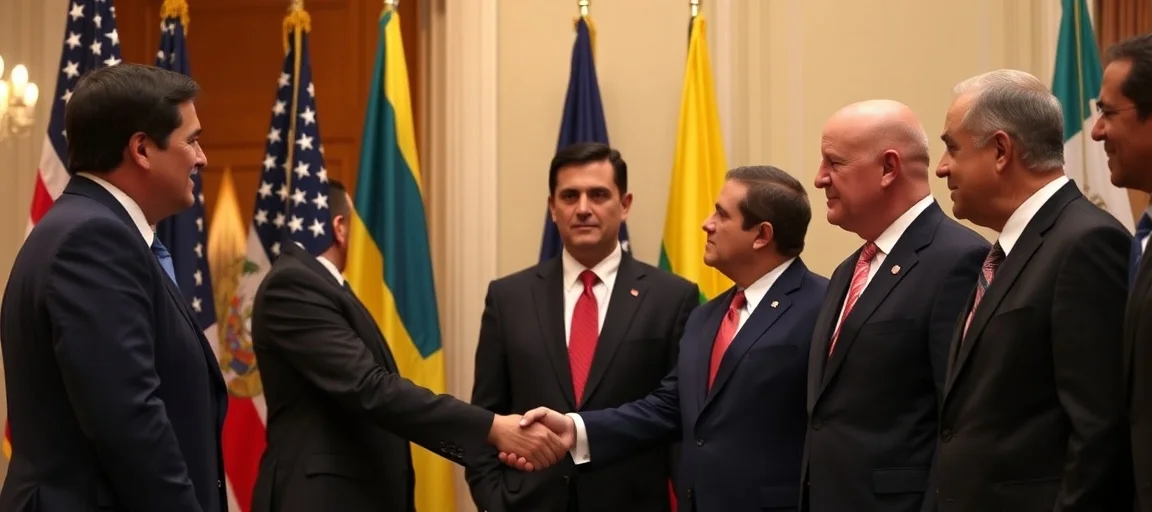
EU, US Reach Trade Deal to Avert Trump's Tariffs, Bolstering Transatlantic Ties

The EU and US have reached a significant trade deal, specifically targeting the steel and aluminum tariffs imposed by the Trump administration. This pivotal agreement aims to resolve long-standing trade tensions and enhance transatlantic cooperation. The deal is expected to provide economic stability for businesses in both blocs by replacing the existing Section 232 tariffs on EU steel and aluminum with a tariff-rate quota (TRQ) system. In return, the European Union will suspend its retaliatory tariffs on American goods.
- Averting Escalation: The Background of Tariff Tensions
- Key Details of the EU, US Reach Trade Deal to Avert Trump's Tariffs
- Expert Perspectives and Diplomatic Efforts
- Economic and Geopolitical Impact
- The Path Forward: Monitoring and Future Engagements
- Conclusion: A New Era for Transatlantic Trade
- Frequently Asked Questions
- Further Reading & Resources
Averting Escalation: The Background of Tariff Tensions
The trade dispute began in March 2018 when the Trump administration imposed 25% tariffs on steel and 10% on aluminum imports under Section 232 of the Trade Expansion Act of 1962, citing national security concerns. These tariffs affected imports from various countries, including EU member states, which considered them unjustified and a violation of World Trade Organization (WTO) rules. The European Union responded by implementing retaliatory tariffs on a range of American products, such as Harley-Davidson motorcycles, bourbon whiskey, and Levi's jeans. This escalation created uncertainty for businesses and threatened to undermine the strong economic ties between the two major trading blocs.
The Section 232 tariffs, which allowed for duties on imports deemed a threat to national security, were a point of significant contention. While the stated goal was to protect domestic industries, critics argued they were primarily protectionist. The EU consistently denied posing any national security threat and called for the removal of the tariffs and reciprocal lifting of countermeasures. The ongoing friction not only impacted specific industries but also cast a shadow over broader transatlantic cooperation on various global issues. The pressure to find a resolution grew as businesses faced increased costs and supply chain disruptions.
Key Details of the EU, US Reach Trade Deal to Avert Trump's Tariffs
The recently announced agreement represents a crucial breakthrough, ending the prolonged dispute. The deal replaces the Section 232 tariffs with a tariff-rate quota (TRQ) system for EU steel and aluminum. Under this system, a specified volume of EU steel and aluminum can enter the U.S. market duty-free, with imports exceeding this quota remaining subject to the tariffs. This approach aims to protect U.S. domestic producers while ensuring significant market access for European suppliers.
In exchange for this new tariff regime, the European Union has agreed to suspend its retaliatory tariffs on American goods. This is a critical aspect, as the removal of these countermeasures will offer relief to U.S. exporters. The TRQ system includes specific volume caps based on historical trade flows. For steel, the annual tariff-free quota is set at 3.3 million metric tons across 54 product categories. For aluminum, the quota is 18,000 metric tons for unwrought aluminum and 366,000 metric tons for semi-finished products, totaling 384,000 metric tons, across 16 product categories, with these figures based on 2018-2019 import levels. These quotas are administered quarterly for steel and semi-annually for aluminum on a first-come, first-served basis.
Beyond immediate tariff resolution, the agreement also includes provisions for enhanced cooperation between the EU and the U.S. to address global steel and aluminum overcapacity, particularly from non-market economies like China. Both parties have committed to forming a technical working group to monitor trade flows and consult on future actions. This collaboration aims to address broader global trade challenges and signals a renewed commitment to multilateralism and shared economic security. The deal also incorporates a "melted and poured" requirement for steel imports under the TRQ, ensuring that only steel entirely produced in the EU benefits from tariff-free access, preventing circumvention.
Expert Perspectives and Diplomatic Efforts
The successful conclusion of this trade deal is largely attributed to intensive diplomatic efforts and a shared understanding of the strategic importance of the transatlantic relationship. Trade officials and diplomats from both sides engaged in numerous high-level negotiations to bridge differences.
Negotiation Challenges:
- Balancing Domestic Protection with International Trade: U.S. negotiators faced the challenge of satisfying domestic steel and aluminum producers' demands for protection while simultaneously working to repair relations with key allies.
- EU Unity: The European Union, representing 27 diverse member states, had to maintain a cohesive stance to ensure the deal addressed the varied concerns of its national industries and trade interests.
- Defining "National Security": The fundamental disagreement over the national security justification for the original tariffs remained a philosophical hurdle, requiring creative solutions to bypass rather than directly resolve.
Statements from Key Figures:
U.S. Secretary of Commerce Gina Raimondo emphasized that the agreement is a significant step towards "strengthening our alliance, creating jobs, and ensuring a strong and resilient supply chain". European Commission Executive Vice-President Valdis Dombrovskis similarly stated that the deal "delivers a long-term solution to a dispute that has been a burden on our relationship". These statements reflect the mutual recognition of cooperation benefits and the desire to move past previous frictions. The dialogue leading to this agreement included high-level meetings between President Biden and EU leaders, showcasing the political will to prioritize transatlantic ties.
Many trade analysts view the deal as a pragmatic compromise, averting a further escalation of trade wars while setting the stage for future cooperation on critical economic issues. "This deal is not just about steel and aluminum; it's about restoring trust and rebuilding a partnership that is essential for tackling global challenges," commented one leading trade economist. "It shows that even complex trade disputes can be resolved through persistent dialogue and a willingness to find mutually beneficial outcomes."
Economic and Geopolitical Impact
The implications of the EU, US Reach Trade Deal to Avert Trump's Tariffs extend beyond immediate relief for steel and aluminum industries. Economically, the deal is expected to provide much-needed stability and predictability for transatlantic businesses.
Economic Benefits:
- Reduced Costs for Businesses: American and European companies that rely on cross-border trade in steel, aluminum, and the goods previously affected by retaliatory tariffs will experience reduced import duties and improved cost-efficiency. This benefits sectors like automotive, aerospace, and manufacturing.
- Boost to Trade Volumes: The removal of retaliatory tariffs is expected to stimulate trade flows, as previously penalized products become more competitive. U.S. exports of goods like bourbon and motorcycles to the EU are anticipated to recover.
- Supply Chain Stability: The agreement helps stabilize supply chains that were disrupted by the tariffs, allowing companies greater certainty in planning and potentially reducing inflationary pressures from higher import costs.
- Consumer Savings: Ultimately, reduced business costs and increased competition can lead to lower prices for consumers on a range of products.
Geopolitically, the deal signals renewed transatlantic unity and a shared commitment to a rules-based international trading system. A strong and cohesive alliance between the EU and the U.S. is crucial for navigating increasing geopolitical competition and challenges from authoritarian regimes. Cooperation on addressing global overcapacity, particularly concerning China, demonstrates a united front against practices that distort global markets and undermine fair competition. This strategic alignment is vital for asserting democratic values and economic principles on the global stage.
Geopolitical Significance:
- Strengthening Alliances: Resolving this dispute reinforces the strategic alliance between the U.S. and the EU, enabling both to focus on broader geopolitical concerns.
- United Front Against China: The agreement’s provision for cooperation on global overcapacity positions the EU and U.S. to jointly address challenges posed by China's industrial policies, strengthening their leverage in international trade forums.
- Precedent for Dispute Resolution: The successful negotiation provides a model for resolving future trade disagreements through dialogue rather than unilateral actions, thereby bolstering the credibility of multilateral institutions.
- Global Economic Leadership: A stable and cooperative transatlantic relationship is essential for global economic governance and leadership, especially in shaping new trade rules and standards.
The Path Forward: Monitoring and Future Engagements
While the immediate tariff crisis has been averted, the work of maintaining and strengthening transatlantic trade relations continues. The agreement includes mechanisms for continuous dialogue and monitoring to ensure adherence to terms and address new challenges.
Future Considerations:
- Monitoring the TRQ System: Both the U.S. and EU will need to closely monitor the implementation of the tariff-rate quota system to ensure its intended function and prevent unforeseen market distortions. Regular reviews are likely to assess its effectiveness.
- Addressing Global Overcapacity: The commitment to collaborate on global steel and aluminum overcapacity, particularly from non-market economies, will require sustained effort. This includes intelligence sharing, coordinated diplomatic pressure, and potentially joint measures to counter unfair trade practices.
- Other Trade Disputes: While this agreement resolves a major point of contention, other trade issues between the EU and the U.S. remain, such as the long-standing dispute over aircraft subsidies (Boeing-Airbus). The success of this deal may provide momentum for resolving these other areas of friction.
- Resilience of Supply Chains: The pandemic highlighted vulnerabilities in global supply chains. The EU and U.S. are likely to explore further cooperation on building more resilient and diversified supply networks, reducing dependence on single sources for critical materials.
- Environmental and Labor Standards: Discussions around integrating environmental and labor standards into trade agreements are also gaining prominence. Future dialogues may explore how to align trade policies with climate goals and fair labor practices.
The deal sets a positive precedent, demonstrating that even deeply entrenched trade disputes can be resolved through diplomacy and a willingness to compromise. It underscores the enduring importance of the transatlantic partnership as a cornerstone of global economic stability and geopolitical cooperation.
Conclusion: A New Era for Transatlantic Trade
The successful culmination of negotiations, resulting in the EU, US Reach Trade Deal to Avert Trump's Tariffs, marks a pivotal moment for transatlantic trade relations. By replacing punitive tariffs with a cooperative tariff-rate quota system and suspending retaliatory measures, both the European Union and the United States have demonstrated a clear commitment to de-escalation and the strengthening of their vital economic and strategic partnership. This agreement not only offers immediate relief to affected industries and consumers but also lays the groundwork for enhanced collaboration on pressing global trade challenges, particularly those posed by unfair practices from non-market economies. As the world navigates complex geopolitical and economic landscapes, the renewed unity between these two major powers is a testament to the enduring value of diplomacy and shared interests in fostering a stable and prosperous global trading environment.
Frequently Asked Questions
Q: What exactly were Trump's Section 232 tariffs?
A: These were 25% tariffs on steel and 10% on aluminum imports, imposed by the Trump administration in 2018. They cited national security under Section 232 of the Trade Expansion Act of 1962, though critics viewed them primarily as protectionist economic measures.
Q: How does the new EU-US trade deal resolve these tariffs?
A: The deal replaces the existing tariffs with a tariff-rate quota (TRQ) system. This allows a specified volume of EU steel and aluminum to enter the U.S. market tariff-free. In return, the European Union has agreed to suspend its retaliatory tariffs on various American goods.
Q: Beyond tariffs, what is a key benefit of this agreement?
A: A significant benefit is the renewed transatlantic cooperation on global steel and aluminum overcapacity, particularly from non-market economies like China. This strengthens the alliance, allowing both parties to present a united front against unfair trade practices and distortion of global markets.