Ethiopia Votes in General Election Amidst Democratic Concerns
Ethiopia, Africa's second most populous nation, held a pivotal general election amidst growing democratic concerns, as citizens cast their ballots against a complex backdrop of political reforms, ethnic tensions, and ongoing conflict. The landmark vote, initially delayed due to the COVID-19 pandemic and logistical challenges, represented a critical juncture for the country, with many observing the proceedings closely as Ethiopia votes in general election amidst democratic concerns. This election was intended to solidify Prime Minister Abiy Ahmed's mandate and advance his reform agenda, yet it unfolded against a landscape of significant skepticism regarding its freeness and fairness, particularly in light of the conflict in the Tigray region and widespread accusations of irregularities.
- Background Context: A Nation at a Crossroads
- Key Details of the Election: Parties, Candidates, and Issues
- Democratic Concerns: Challenges to Fairness and Credibility
- International Reaction and Regional Implications
- What's Next for Ethiopia: Post-Election Landscape
- Conclusion
- Frequently Asked Questions
- Further Reading & Resources
Background Context: A Nation at a Crossroads
Ethiopia has a long and often turbulent political history. For nearly three decades leading up to 2018, the country was governed by the Ethiopian People's Revolutionary Democratic Front (EPRDF), a coalition dominated by the Tigray People's Liberation Front (TPLF). This period, while marked by significant economic growth, was also characterized by a highly centralized political system, strict state control over the economy, and suppression of dissent, often targeting journalists, opposition activists, and human rights defenders. The appointment of Abiy Ahmed as Prime Minister in April 2018 ushered in a wave of optimism and rapid reforms. He released thousands of political prisoners, unbanned opposition parties that had previously been labeled terrorist organizations, and made historic peace with neighboring Eritrea, earning him the Nobel Peace Prize in 2019 for his efforts in promoting peace and international cooperation.
However, Abiy's reforms also inadvertently unleashed long-suppressed ethnic and regional grievances, as the loosening of centralized control allowed various groups to assert their identities and demands more forcefully. This led to increased instability and violence in various parts of the country, with inter-ethnic clashes displacing millions. The transition from an ethnically federal but politically centralized system to a more open, democratic one proved incredibly challenging, as the very concept of national unity clashed with strong regional and ethnic self-determination movements. This complex and volatile environment, marked by both hope for democratic change and fear of fragmentation, set the stage for the 2021 general election, originally scheduled for 2020.
The Road to the Polls: Preparations and Delays
The National Electoral Board of Ethiopia (NEBE) was tasked with organizing the election, a monumental undertaking given the country's vast geography, diverse population, and limited infrastructure. The initial delay from August 2020 to June 2021 was attributed to the global COVID-19 pandemic, a decision that was met with mixed reactions and further exacerbated political tensions. Opposition parties and some civil society organizations argued that the delay was unconstitutional and designed to illegally extend the ruling party's term without a popular mandate, deepening mistrust between the government and its critics.
Despite the challenges, the NEBE commenced voter registration in early 2021, aiming to register over 40 million eligible voters. The process itself was fraught with logistical hurdles, including difficulties in reaching remote areas, significant security concerns in restive regions, and surprisingly low registration turnout in some areas attributed to a combination of voter apathy, fear, and lack of information. Training of thousands of election officials and the distribution of sensitive election materials, including ballot papers and security equipment, across the country's diverse and often hard-to-reach constituencies also presented significant logistical complexities, pushing the NEBE to its operational limits.
Key Details of the Election: Parties, Candidates, and Issues
The 2021 general election saw a multitude of political parties and independent candidates vying for seats in the federal parliament (House of Peoples' Representatives) and regional councils. The Prosperity Party, led by Prime Minister Abiy Ahmed, was the dominant force, campaigning on a platform of national unity, economic development, and continuing reforms. The party, formed in 2019 from the remnants of the EPRDF coalition (excluding the TPLF), sought to move beyond the previous ethnically-based political structure towards a more unified national identity, promoting a "medemer" (synergy) philosophy.
Among the prominent opposition parties were the Ethiopian Citizens for Social Justice (Ezema), led by Berhanu Nega, which advocated for a unified, non-ethnic federal system, and the National Movement of Amhara (NAMA), which often focused on regional interests and rights of the Amhara people. Several Oromo-based opposition parties, such as the Oromo Federalist Congress (OFC) and the Oromo Liberation Front (OLF), initially expressed intentions to participate but later either boycotted or faced significant operational challenges, including the detention of key leaders and members, severely limiting their electoral presence.
The primary issues dominating the campaign included:
- National Unity vs. Ethnic Federalism: A fundamental debate on the future structure of the Ethiopian state, with the Prosperity Party advocating for a more unified nation and opposition parties often defending or seeking to reform the existing ethnic federal system.
- Economic Reform and Development: Promises of job creation, attracting foreign investment, privatizing state-owned enterprises, and poverty reduction, particularly for the youth struggling with high unemployment.
- Peace and Security: Addressing internal conflicts, particularly the conflict in Tigray, and ensuring stability across regions where ethnic clashes and insurgencies were prevalent. This was a critical issue for public trust.
- Democracy and Human Rights: Debates around expanding political space, guaranteeing freedom of expression, ensuring fair trials, and promoting accountability for past and present human rights abuses.
Electoral Process and Observer Missions
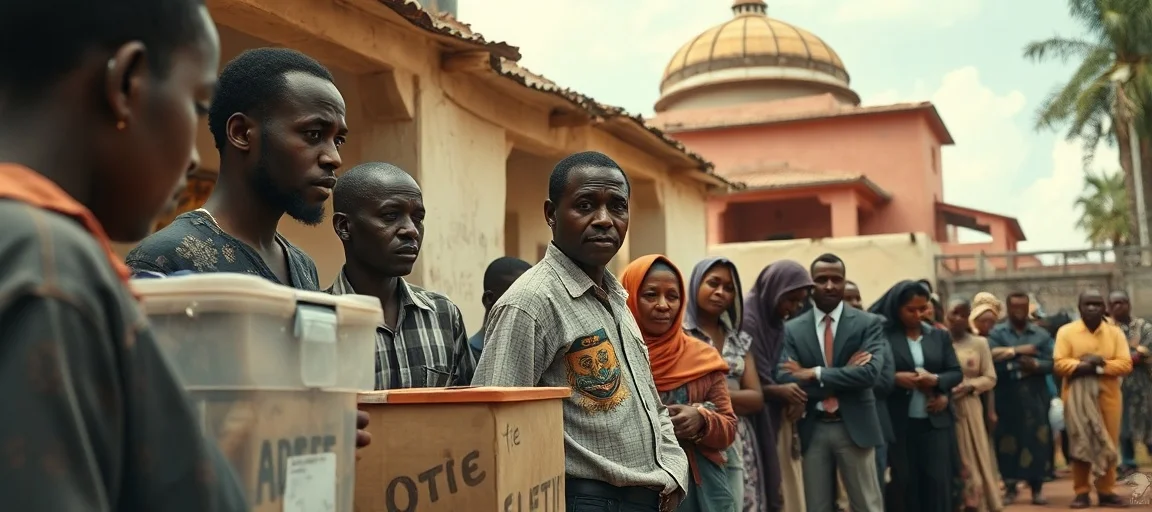
The actual voting took place across most of the country on June 21, 2021, though some areas had delayed polls. Millions of Ethiopians participated, lining up at polling stations from early morning, often enduring long waits. The NEBE implemented various measures to ensure the integrity of the process, including the use of transparent ballot boxes, detailed voter registration lists, and an electronic result transmission system where feasible.
Several international and domestic observer missions monitored the election. The African Union Election Observation Mission (AUEOM) deployed a significant number of observers, noting in its preliminary statement that the elections were conducted "in an orderly and peaceful manner" in the polling stations it visited, despite acknowledging some logistical and administrative challenges. The European Union, however, declined to send a full observation mission, citing a failure to agree with Ethiopian authorities on key parameters, including unrestricted access for its observers to all parts of the country and independence in its operational scope. This disagreement sparked diplomatic friction and raised questions about transparency. Domestic observers, including the Coalition of Ethiopian Civil Society Organizations for Election (CECOE), also played a crucial role, providing on-the-ground assessments and attempting to fill the void left by the scaled-back international presence.
Democratic Concerns: Challenges to Fairness and Credibility
Despite the efforts of the NEBE and the peaceful conduct observed in many areas, the 2021 Ethiopian general election was undeniably overshadowed by significant democratic concerns, raising questions about its overall fairness and credibility. A primary concern was the ongoing conflict in the Tigray region, where voting was postponed indefinitely due to the humanitarian crisis and active hostilities. This effectively disenfranchised millions of voters and cast a long shadow over the legitimacy of a national election that excluded a significant part of the country's population from participating in the democratic process.
Beyond Tigray, other regions also faced severe security issues, leading to the postponement of elections in dozens of constituencies in Somali and Harari regions, as well as parts of Oromia. This fragmented electoral process meant that the election was not truly national in scope on the initial polling day, with voters in some areas having to wait months for their turn, impacting the perceived synchronicity and unity of the national democratic exercise.
Concerns were also raised regarding the political environment leading up to the election:
- Shrinking Political Space: Reports from human rights organizations like Amnesty International and Human Rights Watch, alongside statements from opposition parties, highlighted a worrying trend of arrests of political opponents, restrictions on public gatherings and campaigning, and limitations on media freedom. Some prominent opposition figures, such as Jawar Mohammed and Bekele Gerba, remained incarcerated or faced legal challenges, hindering their ability to effectively participate or even endorse candidates.
- Media Access and Impartiality: State-affiliated media outlets were widely criticized for exhibiting a strong bias towards the ruling Prosperity Party, providing disproportionate coverage and a platform for government narratives while limiting fair representation for opposition voices. Access for independent journalists and international media was also reportedly challenging, making objective reporting difficult.
- Voter Registration Irregularities: While the NEBE reported high registration numbers, some opposition groups and civil society actors pointed to instances of alleged forced registration or difficulties for specific ethnic groups to register in certain regions, raising questions about the voluntary nature and inclusivity of the process.
Accusations of Irregularities and Opposition Boycotts
Numerous opposition parties, including the Oromo Federalist Congress (OFC) and the Oromo Liberation Front (OLF), ultimately decided to boycott the election, citing harassment, intimidation of their members, and a lack of a level playing field. Their absence significantly reduced competition in key regions, particularly Oromia, Ethiopia's most populous state, and raised questions about the representativeness of the elected bodies, diminishing the plurality of voices in the national parliament.
Following the voting, several smaller opposition parties and independent candidates lodged complaints of irregularities, including ballot stuffing, voter intimidation at polling stations, and issues with vote counting and tabulation processes. While the NEBE acknowledged some minor procedural issues, it largely dismissed widespread claims of fraud, asserting the overall integrity of the process. However, the cumulative effect of these concerns, coupled with the high-profile boycotts and the complete exclusion of Tigray, undeniably impacted international perceptions of the election's democratic legitimacy, leading many to view it as a partial rather than a truly national and inclusive exercise.
International Reaction and Regional Implications
The international community's reaction to the Ethiopian general election was varied and nuanced, reflecting the complex geopolitical interests at play. The African Union Election Observation Mission (AUEOM) concluded that the elections were "largely peaceful, orderly and credible," highlighting the improved organization by the NEBE compared to previous polls. However, it also judiciously recommended addressing issues related to inclusivity, participation, and the urgent need for a robust post-election dispute resolution mechanism to build confidence.
Western nations, including the United States, the United Kingdom, and member states of the European Union, expressed more explicit reservations. While acknowledging the efforts of the NEBE and the enthusiastic participation of voters, they often emphasized the limitations imposed by the severe security situation, the lack of a genuinely level playing field for all political parties, and crucially, the exclusion of Tigray. These concerns contributed to ongoing diplomatic pressure on Ethiopia regarding human rights, humanitarian access in conflict zones, and the imperative for comprehensive political reforms, with some countries advocating for sanctions or a re-evaluation of aid.
Regionally, the election's outcome had profound implications for stability in the Horn of Africa. A government with a perceived strong mandate could potentially better navigate regional challenges, such as the Grand Ethiopian Renaissance Dam (GERD) dispute with Egypt and Sudan, but one facing internal legitimacy questions might struggle to project authority and garner regional cooperation. Neighbors watched closely, particularly as the conflict in Tigray continued to spill over into regional dynamics and international relations, drawing in actors like Eritrea. The election was a critical test for Ethiopia's internal cohesion and its long-standing standing as a regional power and anchor of stability.
What's Next for Ethiopia: Post-Election Landscape
With the Prosperity Party securing a landslide victory, Prime Minister Abiy Ahmed began his new term with a significant parliamentary majority, granting him considerable power to implement his agenda. However, the challenges facing Ethiopia remained immense and deeply entrenched. The most pressing issue was, and continues to be, the resolution of the conflict in Tigray and the broader humanitarian crisis gripping the region, which has seen widespread displacement, famine, and human rights abuses. A post-election mandate, while strong on paper, needed to translate into tangible peace and reconciliation efforts across the deeply fractured nation, addressing the root causes of ethnic and regional tensions.
The government's immediate priorities included:
- National Reconciliation: Initiating genuine dialogue and reconciliation processes involving all political actors and ethnic groups to heal deep-seated divisions and foster a sense of national unity and shared purpose.
- Economic Recovery: Addressing soaring inflation, high youth unemployment, and promoting sustained economic growth to improve livelihoods, attract foreign investment, and reduce poverty, which remains a significant driver of instability.
- Security Sector Reform: Strengthening security institutions, professionalizing the military, and addressing various localized conflicts and insurgencies that continue to destabilize parts of the country, ensuring the protection of all citizens.
- Democratic Institution Building: Further strengthening independent institutions, including the judiciary, electoral bodies, and human rights commissions, and actively expanding political space for all voices, including those of the opposition and civil society.
The path forward for Ethiopia is complex and fraught with difficulties, demanding sustained political will and inclusive governance. The election, while a significant logistical undertaking, highlighted the deep-seated challenges the country faces in consolidating its democratic transition while simultaneously ensuring peace and stability across its diverse regions.
Conclusion
The 2021 general election in Ethiopia was a moment of profound significance, a testament to the aspirations of millions for a democratic future, yet one undeniably shaped by profound complexities and conflicts. As Ethiopia votes in general election amidst democratic concerns, the outcomes have set the stage for the next chapter in the nation's journey. While the Prosperity Party secured a decisive victory, the lingering questions about inclusivity, fairness, and the exclusion of key regions underscore the extensive work that remains to be done to build a truly stable and democratic Ethiopia. The path ahead requires concerted efforts towards dialogue, reconciliation, and the fostering of a political environment where all voices can be heard and participate freely.
Frequently Asked Questions
Q: Why was the 2021 Ethiopian general election delayed?
A: The election was initially delayed from August 2020 to June 2021 due to the global COVID-19 pandemic and associated logistical challenges in organizing a nationwide vote. This decision, however, also fueled political tensions and was criticized by some opposition groups.
Q: What were the primary democratic concerns surrounding the election?
A: Key concerns included the exclusion of the conflict-ridden Tigray region, security issues in other areas leading to postponements, a shrinking political space for opposition parties, and accusations of media bias and voter irregularities. These factors collectively impacted the election's perceived fairness.
Q: How did the international community react to the election results?
A: Reactions varied; the African Union found the election "largely peaceful, orderly and credible," while Western nations like the US and EU expressed more explicit reservations due to the security situation, lack of a level playing field for all parties, and Tigray's exclusion from the vote.