Ecuador's World Cup Dreams Amid Rising Violence: A Nation's Hope
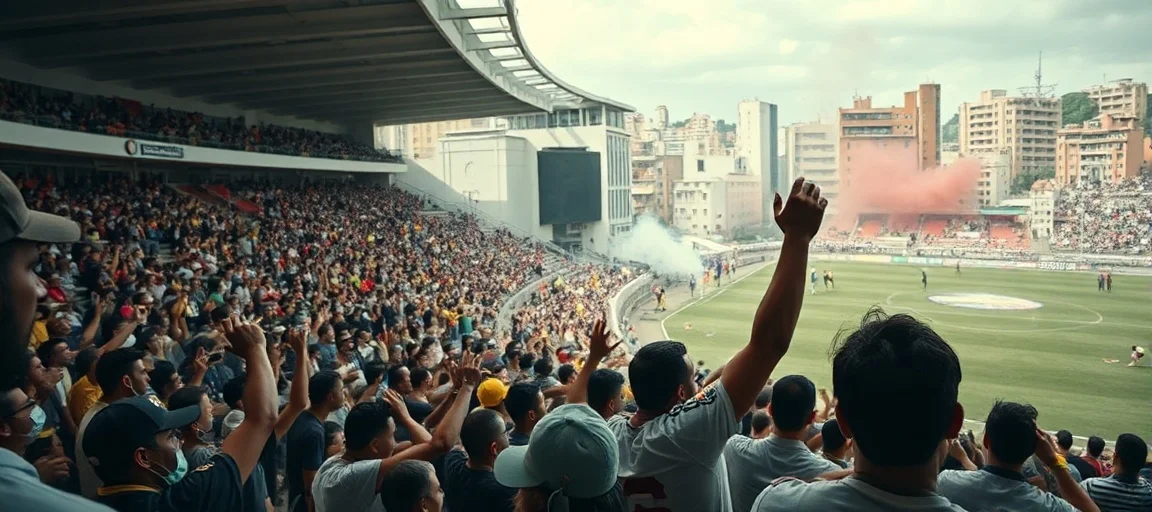
In a nation grappling with an escalating security crisis, Ecuador's World Cup Dreams Amid Rising Violence have emerged as a powerful beacon of hope and unity. As the 2026 FIFA World Cup approaches, the Ecuadorian national football team, "La Tri," prepares to compete on the global stage, carrying the aspirations of a populace deeply affected by internal conflict. This compelling narrative explores how the beautiful game continues to captivate and uplift a country facing profound challenges, from organized crime to daily insecurity. The dream of World Cup glory offers a vital, albeit temporary, respite from the harsh realities of life for many Ecuadorians.
- The Unprecedented Rise of Violence in Ecuador
- Impact on Daily Life and Society
- Ecuador's World Cup Journey: A Symbol of Hope Amid Rising Violence
- The Dark Shadow Over Local Football
- Government Response and Ongoing Challenges
- Conclusion: Football as a Respite and a Rallying Cry
- Frequently Asked Questions
- Further Reading & Resources
The Unprecedented Rise of Violence in Ecuador
Ecuador, once considered an "island of peace" in the Andes with a homicide rate of 6.7 per 100,000 inhabitants in 2020, has experienced a dramatic and alarming surge in violence in recent years. This deterioration is primarily attributed to drug trafficking and the fragmentation and territorial wars among organized criminal groups. Situated between the world's largest cocaine producers, Colombia and Peru, Ecuador's Pacific coast ports have become crucial logistical hubs for drug shipments to Europe and the United States.
The security crisis escalated significantly from 2022 through 2025. In January 2024, the situation reached a critical point when cartel members took television broadcasters hostage on live television, prisoners staged riots, and gang leaders orchestrated jailbreaks. In response, President Daniel Noboa declared a nationwide state of "internal armed conflict" and imposed states of emergency, deploying the military to combat designated criminal groups. These measures have been renewed repeatedly in the most affected provinces, including Guayas, Manabí, and Esmeraldas.
Despite government efforts, the violence has continued at historically high levels. The homicide rate soared to 44.5 per 100,000 inhabitants in 2023, making Ecuador the most violent country in Latin America, a record it has maintained since. By September 2025, homicides had increased sharply by about 40 percent compared to 2024, bringing the country close to its highest homicide rate ever. Ecuador recorded approximately 9,200 homicides in 2025, a national rate of about 51 per 100,000, placing it among the highest globally. This alarming trend also indicates a significant increase in child homicides, with a 640% rise since 2019.
This surge is not merely a quantitative increase but reflects a qualitative shift in criminal activity. Beyond homicides, the country has witnessed a dramatic rise in extortions, known locally as 'vacunas,' kidnappings, and car bombings, particularly targeting businesses, public officials, and even ordinary citizens. The nation's dollarized economy also makes it an attractive hub for money laundering, further entrenching criminal organizations. Weak state institutions, coupled with widespread corruption, have facilitated the infiltration of cartels into various sectors, from port operations to local governance, making the fight against them increasingly complex and systemic. The violence has become a daily reality, deeply affecting the psychological well-being and sense of safety for millions across the country, highlighting broader regional crime trends.
Impact on Daily Life and Society
The pervasive violence has fundamentally altered daily life for many Ecuadorians. Residents in cities like Guayaquil, which ranks among the most violent in the Americas, live in a constant state of anxiety, with gunfire, robberies, and extortion becoming routine occurrences. Fear has compelled families to take extreme precautions, with children no longer able to play freely in the streets, especially in sprawling slums, as they once did.
The government's repeated imposition of curfews and states of emergency, while intended to curb violence, has also disrupted daily routines and generated a sense of "normalization" of the crisis. Public transportation delays and unexpected expenses for taxis are common consequences for those trying to navigate life under these restrictions.
The crisis has also led to significant internal displacement, a phenomenon shared with other challenges in Latin America. Between 2022 and 2024, an estimated 316,000 people were displaced internally due to violence and loss of livelihoods, placing Ecuador with the region's third-highest number of people displaced by violence, after Haiti and Colombia. Women and girls are particularly vulnerable, facing increased risks of femicides, forced recruitment into criminal gangs, human trafficking, and sexual exploitation.
Ecuador's World Cup Journey: A Symbol of Hope Amid Rising Violence
Amidst this backdrop of turmoil, Ecuador's national football team, "La Tri," has achieved remarkable success, securing a direct spot in the FIFA World Cup 2026. Their qualification journey was impressive, finishing second in the South American preliminaries, just behind world champions Argentina. This achievement is particularly noteworthy given that the team started the campaign with a three-point deduction.
Under the leadership of Argentine coach Sebastian Beccacece, La Tri has transformed into a defensively solid team, conceding only five goals throughout the entire qualifying campaign and just twice in his 12 qualifiers. Key players like Chelsea midfielder Moisés Caicedo, Arsenal defender Piero Hincapié, and Paris Saint-Germain center-back Willian Pacho are central to the team's compact defensive base and overall strategy. While their attack has been less prolific, scoring only 14 goals in qualifiers, their defensive strength provides a strong foundation for tournament play.
Ecuador is set to appear in its fifth FIFA World Cup, and its second in a row, having featured in Qatar 2022. The team's group stage schedule includes matches against Côte d'Ivoire, Curaçao, and Germany.
The Dream of World Cup Success Amid Rising Violence
For many Ecuadorians, the national football team offers a potent symbol of hope, pride, and national unity that transcends the pervasive insecurity. The prospect of La Tri performing well in the World Cup provides a much-needed distraction and a collective dream that temporarily overshadows the daily struggle against violence. Fans express an "unbridled passion" and high expectations, with some dreaming of the team reaching the quarterfinals or even semifinals, surpassing their previous best of the Round of 16 in 2006.
The success of Ecuadorian players in top European leagues, such as Hincapié's Premier League win with Arsenal and Caicedo's impact at Chelsea, further fuels this national optimism. These players, many of whom started in local academies, represent a pathway to a better life, inspiring young talents even as local football grounds face security threats.
The Dark Shadow Over Local Football
While the national team provides a glimmer of hope, local football in Ecuador has not been immune to the country's spiraling violence. The local scene has been "stained with blood," with five players murdered in 2025 alone and three more falling victim to armed attacks.
Notable Incidents of Violence in Football:
-
Mario Pineida: In December 2025, Mario Pineida, a defender for Guayaquil Barcelona and a former national team player, was tragically shot and killed at a butcher shop in northern Guayaquil. Security camera footage captured the horrific attack, which also left his female partner dead and his mother wounded. Police arrested two individuals linked to the murder.
-
Miguel Nazareno: In November 2025, 16-year-old Miguel Nazareno, a promising youth academy player from Independiente del Valle, was fatally struck by a stray bullet at his home in Guayaquil. His death highlighted the vulnerability of young athletes to the widespread insecurity.
-
Jonathan Gonzalez, Maicol Valencia, Leandro Yépez: In September 2025, former Ecuadorian international midfielder Jonathan Gonzalez was found dead with gunshot wounds in Esmeraldas. Earlier that month, Maicol Valencia and Leandro Yépez, both players for Exapromo Costa, were also killed in a gun incident.
-
Match-fixing and Extortion: Organized criminal groups have infiltrated local football, using violence to intimidate players into match-fixing. A video reportedly emerged in late 2024 showing players threatened with firearms to lose matches. This criminal involvement extends to money laundering through some football teams, as warned by the US ambassador to Ecuador in December 2023.
The constant threat of hitmen, the pressure from sports betting, and corruption linked to match-fixing have transformed local football into a high-risk sport, where players can become victims. Football academies, like those that once nurtured current national stars, now require extensive security measures to protect aspiring young athletes.
Government Response and Ongoing Challenges
President Noboa's government has intensified its "iron-fisted approach" to tackling the security crisis, repeatedly declaring states of emergency and deploying military forces. These measures have, at times, led to a temporary decrease in violence in specific areas and a reported reduction in homicides during early morning curfew hours. The government has also designated 22 transnational criminal organizations as "terrorist organizations," allowing for broader military and police action.
However, the effectiveness of these responses has been mixed. Violence levels drastically rose again in coastal provinces in the latter half of 2024, and despite the increased military presence in prisons, contraband and violent incidents continued outside facilities. Critics argue that the government lacks a comprehensive national plan for security and that fear itself is being used as a tool of control, leading to a "normalization of violence." Longstanding structural problems, such as limited access to healthcare and employment, remain largely unaddressed, contributing to the underlying vulnerabilities that gangs exploit.
Critics argue that while immediate military action may provide temporary relief, it does not address the fundamental socio-economic drivers of crime. The long-term efficacy of a 'mano dura' approach is often debated, with concerns raised about potential human rights abuses, the over-militarization of civilian spaces, and the financial strain on the national budget required for sustained military presence. Furthermore, a holistic national security strategy is deemed essential, one that integrates robust intelligence gathering, judicial reform, and significant investment in social programs, education, and employment opportunities, particularly for vulnerable youth who are often susceptible to gang recruitment. Without these foundational changes, the cycles of violence risk perpetuating, adapting to each government crackdown with renewed ferocity. International assistance and collaboration, particularly in intelligence sharing and border control, are vital, yet the internal capacity building and political will for sustained reform remain the ultimate determinants of Ecuador's path to lasting peace.
Conclusion: Football as a Respite and a Rallying Cry
As Ecuador's World Cup Dreams Amid Rising Violence capture the nation's attention, the power of football to unite and inspire a populace facing immense hardship is undeniable. The success of "La Tri" on the international stage offers a vital source of national pride and a temporary escape from the grim realities of daily insecurity. While the government battles escalating crime rates and the profound impact on society, including the tragic loss of local football players, the national team remains a symbol of resilience and hope, illustrating football's role in national identity.
The upcoming World Cup represents more than just a series of football matches for Ecuador. It is an opportunity for collective joy, a moment to set aside fear, and a testament to the enduring spirit of a nation striving for peace and a better future, both on and off the pitch. The hopes pinned on La Tri underscore football's unique ability to transcend adversity and offer a rallying cry for unity in challenging times.
Frequently Asked Questions
Q: Why has violence escalated so dramatically in Ecuador?
A: Ecuador's strategic location between major cocaine producers, its dollarized economy, and weak institutions have made it a critical hub for drug trafficking. This has fueled territorial wars among organized criminal groups, leading to a surge in homicides, extortions, and other crimes across the nation.
Q: How does the World Cup qualification impact Ecuadorians amidst the violence?
A: The national football team's success offers a powerful symbol of hope, pride, and unity. It provides a vital, temporary distraction from daily insecurity, allowing citizens to collectively dream and rally behind a shared national aspiration for success on the global stage.
Q: What are the main challenges faced by Ecuador's government in addressing the security crisis?
A: While the government employs a "mano dura" approach with military deployments, critics argue it lacks a comprehensive long-term plan. Challenges include systemic corruption, the need for robust judicial reform, and significant investment in social programs to address root causes like poverty and lack of opportunities for youth.