Ebola Crisis Worsens in DRC, Kenya Builds US Quarantine
The Democratic Republic of Congo (DRC) is grappling with a rapidly escalating Ebola outbreak, prompting grave concerns across the African continent and among international health organizations. As the crisis worsens, neighboring Kenya has taken a significant, albeit controversial, step by approving plans for a specialized U.S. quarantine facility on its soil. This development highlights the urgent need for robust regional preparedness and global cooperation in the face of deadly infectious diseases. The intricate dance between containing the virus at its source and establishing preventative measures abroad underscores the complex challenges inherent in managing public health emergencies of international concern. The decision for Kenya to build a US quarantine facility has, however, sparked considerable public debate and legal challenges within the East African nation.
A Renewed Threat: Ebola's Resurgence in the DRC
The current Ebola outbreak in the Democratic Republic of Congo marks the 17th such incident since the virus was first identified in 1976. On May 15, 2026, the Ministry of Health officially confirmed a new outbreak in the Ituri Province, located in the northeastern part of the country. This region, already plagued by persistent conflict, population displacement, and limited access to healthcare, presents an exceptionally challenging environment for disease containment. Just two days later, on May 17, the World Health Organization (WHO) escalated its response, declaring the situation a Public Health Emergency of International Concern (PHEIC), its highest level of global health alert, signifying the potential for widespread international transmission.
This particular outbreak is caused by the Bundibugyo virus, a relatively rare species of Ebola. Unlike the more common Zaire strain, which has licensed vaccines and treatments, there are currently no approved vaccines or specific therapeutic options for the Bundibugyo virus. This absence of targeted medical countermeasures complicates containment efforts and increases the risk of severe illness and death. The lack of specific therapeutic interventions means that patients rely heavily on supportive care, which is often limited in conflict-affected regions. The Bundibugyo strain can have a fatality rate as high as 60-70%, making rapid identification and isolation paramount, yet incredibly challenging in the DRC's current environment. As of late May 2026, reports indicate a significant number of cases and fatalities. For instance, by May 26, the DRC had recorded over 1,198 suspected cases and 263 deaths, with updated figures on May 29 showing 125 confirmed cases, 906 suspected cases, and 223 deaths across Ituri, North Kivu, and South Kivu provinces. Health officials caution that these numbers likely underestimate the true scale of the outbreak due to insufficient testing capacity and difficulties in accessing affected areas.
The "Perfect Storm": Challenges in Containing the Outbreak
The ongoing Ebola crisis in the DRC is frequently described by various media outlets as a "perfect storm," a confluence of critical factors making it exceedingly difficult to control. These challenges are deeply rooted in the region's complex socio-political landscape and health infrastructure deficiencies.
Insecurity and Conflict
The eastern DRC has endured decades of conflict, intercommunal violence, and political instability. This pervasive insecurity, including ongoing fighting between government forces and rebel groups, severely hampers humanitarian and health response efforts. Health workers and responders face significant risks, with past outbreaks seeing attacks on treatment centers and disruptions to vital activities like contact tracing and vaccination. Such conditions foster an environment where infectious diseases thrive unnoticed, leading to late detection and rapid spread, further delaying critical aid delivery to affected populations.
Limited Healthcare Infrastructure and Misdiagnosis
The DRC's health system is chronically under-resourced and strained, a situation exacerbated by past epidemics and humanitarian crises. This weakness means that basic public health measures, which are the cornerstone of Ebola control, become incredibly difficult to implement effectively. Furthermore, the initial symptoms of Ebola, such as fever and generalized body pain, often mimic other prevalent infectious diseases like malaria or typhoid. This can lead to misdiagnosis, especially with a less common strain like Bundibugyo, delaying isolation and further fueling transmission. Patients often wait until their condition severely deteriorates before seeking specialized care, by which time they may have already exposed numerous individuals, putting additional strain on already overwhelmed healthcare workers.
Community Mistrust and Mobility
Deep-seated mistrust towards authorities and external responders, often stemming from historical conflict and perceived unequal access to resources, poses a significant barrier to effective community engagement. Misinformation and cultural factors also play a role, sometimes leading to resistance against public health interventions like safe burials or contact tracing, as witnessed in previous outbreaks where communities actively hid cases. High population mobility, including frequent cross-border travel for trade and livelihoods, further complicates surveillance and increases the risk of regional spread, as evidenced by cases reported in neighboring Uganda.
Global Health Underfunding
Despite the recurring threat of Ebola, global health funding often remains reactive, peaking during crises and declining once outbreaks recede. This inconsistent investment hinders sustained preparedness and the development of vaccines for less frequent strains like Bundibugyo. The lack of readily available stockpiles for even the Zaire strain highlights a broader systemic issue in epidemic preparedness, leaving countries like the DRC vulnerable. This cyclical pattern of funding prevents the establishment of robust, long-term public health infrastructure, research continuity, and the pre-positioning of critical supplies. A more proactive and sustained global health security strategy is desperately needed to break this cycle of crisis-response, ensuring that all nations, especially those repeatedly hit by outbreaks, can build enduring resilience.
Kenya's Proactive Defense: Building a US Quarantine Facility
In response to the escalating regional threat posed by the Ebola Crisis Worsens in DRC, Kenya Builds US Quarantine measures, Kenya has actively engaged in discussions and agreements with international partners, most notably the United States. This engagement reflects Kenya's strategic position as a regional hub and its commitment to bolstering its health security.
Long-Standing Health Partnership
Kenya and the United States share a robust and long-standing health partnership, spanning over 45 years. This collaboration has involved substantial U.S. investment in Kenya's health infrastructure, disease surveillance, and response capabilities for various threats, including HIV/AIDS, malaria, and COVID-19. In December 2025, a significant five-year, 1.6 billion to support priority health programs, including strengthening laboratories, stabilizing supply chains, and improving digital health systems.
The Proposed Quarantine Facility
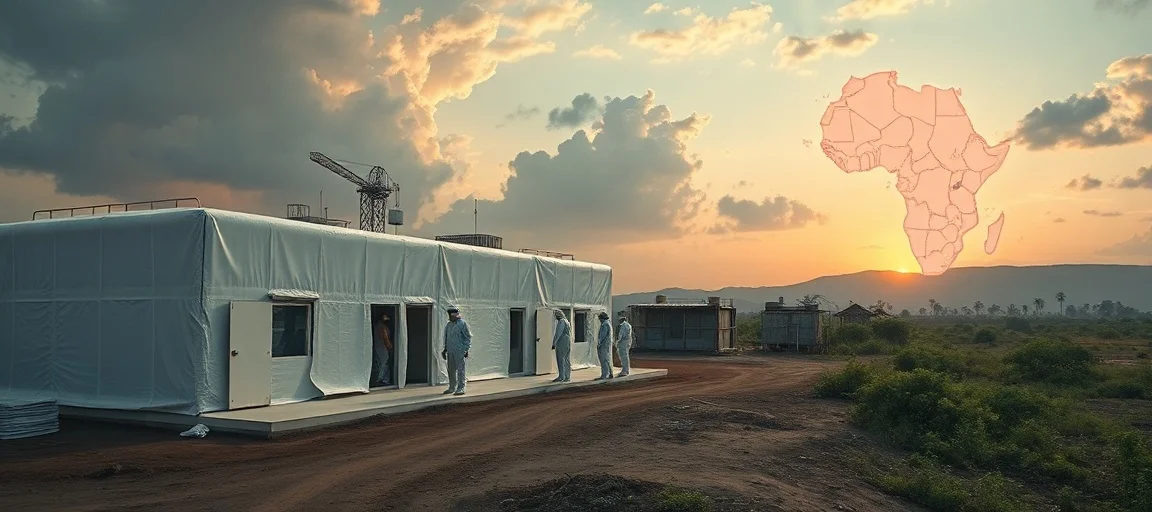
Amidst the current Ebola outbreak, reports emerged in May 2026 that the U.S. administration intended to establish a specialized quarantine and treatment center in Kenya. This facility, planned for an air force base in Laikipia, central Kenya, is primarily intended for American citizens exposed to the Ebola virus in the DRC. The rationale behind this decision, as stated by U.S. officials, is to allow Americans to be quarantined and treated within the region, thereby avoiding the risks and logistical challenges associated with lengthy repatriation to the U.S. The facility would be equipped with 50 quarantine beds and staffed by members of the U.S. Public Health Service. Beyond its 50-bed capacity, the proposed facility is designed as a high-containment biosafety level 4 (BSL-4) unit, capable of safely managing highly infectious agents. It would feature specialized ventilation systems, waste decontamination protocols, and dedicated isolation wards to prevent any potential spread, operating under strict international health regulations. This advanced infrastructure aims to provide state-of-the-art care while mitigating any risk to the local population. The U.S. government has pledged 112 million in bilateral assistance for the broader regional response.
Domestic Scrutiny and Legal Challenges
Despite the official approval from the Kenyan government, the plan to establish a U.S.-linked Ebola quarantine facility has faced considerable scrutiny and backlash within Kenya. Critics, including medical workers and civil society organizations, have raised serious concerns regarding the potential health risks to the Kenyan public and question whether the country's health infrastructure is adequately prepared to handle such a high-containment facility. There are sentiments that the arrangement might position Kenya as a "dumping ground" for other nations' health crises, prioritizing the safety of foreigners over local populations and potentially diverting local resources.
These concerns quickly escalated into legal action. On May 29, 2026, a Kenyan high court issued a temporary injunction, effectively suspending the establishment of the Ebola quarantine center. The court's order was a response to petitions filed by groups like the Katiba Institute and the Kenya Law Society, which argued that the plan violated constitutional safeguards related to health, administrative fairness, public participation, and legislative oversight. Specifically, petitioners highlighted a perceived lack of transparency and public consultation prior to the agreement. The legal challenge highlights the complex interplay between international health diplomacy and domestic legal and public accountability. The court will hear further petitions, determining whether the Kenyan government followed due process in agreeing to host such a facility.
Regional and Global Implications
The worsening Ebola crisis in the DRC and Kenya's efforts to enhance its preparedness, including the proposed U.S. quarantine facility, carry significant regional and global implications.
Enhancing Regional Preparedness
The current outbreak underscores the interconnectedness of public health in East and Central Africa. The spread of the Bundibugyo virus to Uganda, coupled with the high mobility across porous borders, demonstrates the urgent need for coordinated regional responses. Kenya's proactive stance, despite the domestic controversy, reflects a recognition that robust preparedness in one country can safeguard the entire region. Investments in surveillance, diagnostic capabilities, and rapid response teams in key transit hubs like Kenya are crucial to preventing wider international spread and protecting regional economic stability from the disruptive impact of health crises.
The Role of International Collaboration
The U.S.-Kenya health partnership exemplifies the critical role of international collaboration in global health security. While the specific nature of the quarantine facility has generated debate, the broader framework of support for strengthening health systems, research, and outbreak response is undeniably vital. However, the controversy also highlights the importance of transparency, equitable partnerships, and ensuring that agreements genuinely benefit the host nation and its citizens, not just foreign interests. The public's perception of such collaborations is paramount for their success, as mistrust can undermine even the most well-intentioned initiatives.
Lessons from Past Outbreaks
The challenges faced in the current DRC outbreak—insecurity, community mistrust, and the lack of specific treatments for the Bundibugyo strain—echo difficulties encountered in previous large-scale Ebola epidemics, particularly the 2014-2016 West Africa outbreak. These recurring issues underscore the need for sustained investment in local health systems, community engagement strategies that build trust over the long term, and accelerated research and development for vaccines and therapeutics across all Ebola virus species. The global health community must move beyond reactive crisis management towards proactive, equitable, and comprehensive epidemic preparedness, considering the socio-economic impact alongside purely medical factors.
Conclusion
The Ebola Crisis Worsens in DRC, Kenya Builds US Quarantine facility highlights a critical juncture in global health security. The ongoing outbreak in the Democratic Republic of Congo, fueled by the highly challenging Bundibugyo virus and complicated by insecurity and systemic health weaknesses, serves as a stark reminder of Ebola's persistent threat. Kenya's decision to facilitate a U.S.-supported quarantine facility, while demonstrating a commitment to regional defense and international partnership, has simultaneously ignited a vital conversation about national sovereignty, public health equity, and the transparent implementation of such initiatives. The unfolding events underscore the imperative for sustained global collaboration, robust local health infrastructure, and unwavering community trust to effectively combat infectious disease outbreaks and protect populations worldwide.
Frequently Asked Questions
Q: What is the current status of the Ebola outbreak in DRC?
A: The Democratic Republic of Congo is grappling with its 17th Ebola outbreak, which the WHO has declared a Public Health Emergency of International Concern. This outbreak involves the Bundibugyo strain, for which there are currently no specific vaccines or treatments, making containment challenging amidst persistent insecurity and a weak healthcare infrastructure.
Q: Why is Kenya building a US quarantine facility?
A: Kenya, a key regional hub, is partnering with the United States to establish a specialized quarantine and treatment facility on its soil. This facility is primarily intended for American citizens exposed to the Ebola virus in the DRC, allowing for regional care and avoiding the complex logistics of repatriation while enhancing Kenya's overall health security.
Q: What are the controversies surrounding Kenya's quarantine facility?
A: The proposed facility has faced significant domestic scrutiny and legal challenges in Kenya. Concerns include potential health risks to the Kenyan public, a perceived lack of transparency in the agreement process, and questions over whether the plan violated constitutional safeguards regarding public participation and oversight. A Kenyan high court has issued a temporary injunction suspending its establishment.