Bolivia Rocked by Protests Amid Economic Turmoil: Crisis Deepens
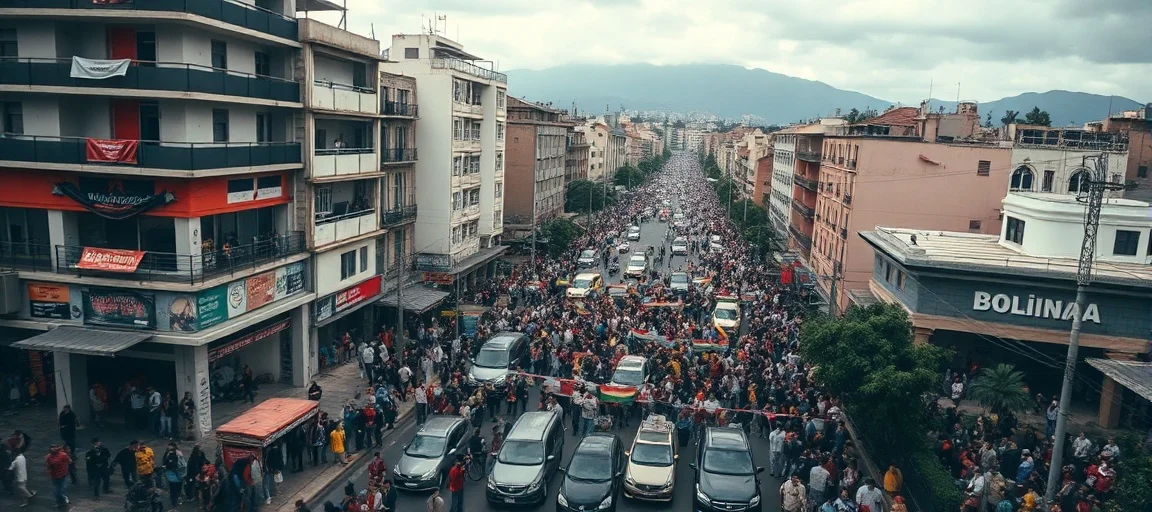
Bolivia is currently grappling with a severe economic crisis and widespread social unrest, as the nation faces growing protests amid economic turmoil across its cities. Citizens are taking to the streets to express their frustration over escalating fuel shortages, a scarcity of U.S. dollars, and a general increase in the cost of living. The South American country, once lauded for its relative economic stability, is now truly Bolivia Rocked by Protests Amid Economic Turmoil, as its government struggles to implement effective solutions amid a backdrop of depleting international reserves and a growing fiscal deficit. This deepening crisis poses significant challenges for President Luis Arce’s administration and highlights the fragile economic conditions in the region.
- Understanding the Deepening Economic Crisis: Bolivia Rocked by Protests Amid Economic Turmoil
- Key Drivers of the Protests
- Government Response and Public Perception
- Impact on Key Sectors
- Expert Opinions and Future Outlook
- Conclusion: Bolivia Rocked by Protests Amid Economic Turmoil
- Frequently Asked Questions
- Further Reading & Resources
Understanding the Deepening Economic Crisis: Bolivia Rocked by Protests Amid Economic Turmoil
Bolivia's current economic woes are multi-faceted, stemming from a combination of global factors and internal policy decisions. For years, the country benefited significantly from its vast natural gas reserves, which were a primary source of foreign exchange and government revenue. However, declining gas production and falling international prices have severely impacted this crucial sector, precipitating a downturn that is now acutely felt by the populace.
The End of the Gas Boom
Bolivia’s economic model has historically been heavily reliant on the export of natural gas, with revenues often financing social programs and subsidies. The peak of this boom allowed for significant poverty reduction and economic growth. However, the country's gas fields are maturing, and exploration efforts have not yielded sufficient new discoveries to compensate for the decline in existing wells. This reduction in production directly translates to lower export volumes and, consequently, a significant drop in foreign currency earnings, exacerbating the scarcity of dollars within the country. This challenge is common among many resource-dependent economies worldwide.
Escalating Fiscal Deficit and Depleting Reserves
The Bolivian government has maintained significant subsidies, particularly for fuel, to keep prices low for consumers and stabilize the domestic market. While intended to support the population, these subsidies have become increasingly costly, contributing to a widening fiscal deficit. To finance this deficit and support the fixed exchange rate of the Bolivian boliviano against the U.S. dollar, the Central Bank has drawn heavily on its international reserves. These reserves have dwindled dramatically in recent years, reaching critically low levels, further undermining confidence in the economy and the government's ability to manage the crisis.
Key Drivers of the Protests
The protests erupting across Bolivia are a direct response to the tangible impacts of this economic instability on daily life. Citizens are experiencing hardships that cut across various sectors, from transportation to basic food supplies.
Widespread Fuel Shortages
One of the most immediate and visible triggers for the protests has been the acute shortage of fuel, particularly diesel and gasoline, in various parts of the country. Farmers, transporters, and private citizens have faced long queues at gas stations, often waiting for hours or even days to refuel. This scarcity has not only disrupted daily routines but has also driven up transportation costs, affecting the prices of essential goods and services. The government attributes these shortages to logistical issues and increased demand, while critics point to insufficient foreign currency to import necessary volumes of fuel.
Scarcity of U.S. Dollars
The shortage of U.S. dollars in the official financial system is another critical factor fueling discontent. Bolivia operates a fixed exchange rate system, where the boliviano is pegged to the dollar. However, the dwindling international reserves mean that commercial banks and exchange houses have limited access to dollars, leading to a thriving parallel market where the dollar trades at a significantly higher rate. This disparity disproportionately affects importers, who need dollars to purchase goods, and ordinary citizens seeking to save or transact in a stable currency. The lack of dollars complicates imports, including that of essential goods and fuel, thus creating a vicious cycle of scarcity and inflation, reminiscent of historical currency crises in other nations.
Rising Cost of Living and Inflationary Pressures
The combination of fuel scarcity, dollar shortage, and government spending has inevitably led to an increase in the cost of living. While the official inflation rate might appear controlled due to subsidies, the reality on the ground is that prices for many essential goods have been creeping upwards. This erosion of purchasing power, coupled with the difficulty in accessing foreign currency, places immense pressure on households, particularly those with limited incomes. Small businesses are also struggling, facing higher operational costs and reduced consumer spending.
Government Response and Public Perception
President Luis Arce's administration has acknowledged the economic challenges but has faced criticism for its handling of the crisis and its communication strategy. The government has attempted to implement measures to alleviate the situation, but these have often been met with skepticism and further protests.
Measures Taken by the Government
The government has announced various strategies to address the dollar shortage, including encouraging the use of the boliviano for domestic transactions and promoting exports to generate foreign currency. Efforts are also underway to secure financing from international institutions to bolster reserves. Regarding fuel, the state-owned oil company, YPFB, has stated plans to increase imports and improve distribution logistics. However, the effectiveness and timeliness of these measures are constantly questioned by the public and opposition groups.
Dialogue and Repression
In some instances, the government has called for dialogue with protest leaders and various sectors of society to find common ground. However, clashes between protesters and security forces have also been reported, leading to concerns about the right to peaceful assembly and potential human rights abuses. The delicate balance between maintaining order and addressing legitimate grievances remains a significant challenge for the administration, and the dynamics of social unrest are closely watched.
Impact on Key Sectors
The ongoing crisis and protests are having a ripple effect across various vital sectors of the Bolivian economy and society.
Transportation and Logistics
The transport sector has been particularly hard hit by fuel shortages. Truck drivers, who are crucial for distributing goods across the geographically diverse country, have been among the most vocal protesters. Road blockades, a common form of protest in Bolivia, further exacerbate logistical bottlenecks, preventing essential supplies from reaching markets and industries. This disruption not only raises costs but also creates significant delays, impacting everything from food supply chains to industrial production.
Agriculture and Food Security
Bolivia's agricultural sector relies heavily on diesel for machinery and transportation. The fuel shortages directly threaten agricultural output, as farmers struggle to plant, cultivate, and harvest their crops. This could lead to reduced food production, further driving up food prices and potentially impacting national food security. The economic challenges also make it harder for farmers to access necessary inputs like fertilizers and seeds, many of which are imported.
Businesses and Investment
Both small and large businesses are feeling the strain of the economic turmoil. The scarcity of dollars makes it difficult for companies to import raw materials or finished goods, disrupting supply chains and increasing operational costs. Uncertainty surrounding the economy and the volatile social environment deter new investments, which are crucial for job creation and long-term economic growth. Many businesses are struggling to maintain profitability, leading to concerns about closures and job losses.
Social Cohesion and Political Stability
The persistent protests and economic hardships are testing the social fabric of Bolivia. Deep-seated political divisions, often along regional and ideological lines, are being exacerbated by the crisis. The government faces pressure from both its traditional base and opposition groups, making it challenging to forge a national consensus on how to navigate the current difficulties. The risk of further political instability and social fragmentation remains a significant concern.
Expert Opinions and Future Outlook
Economic analysts and international organizations have been closely monitoring the situation in Bolivia, offering insights into the potential trajectory of the crisis. Many experts emphasize the urgent need for structural reforms to address the underlying vulnerabilities of the Bolivian economy.
Calls for Economic Diversification
Several economists argue that Bolivia must diversify its economy away from its heavy reliance on natural gas. Investing in other productive sectors, such as agriculture, manufacturing, and renewable energy, could create new sources of revenue and foreign exchange, making the economy more resilient to commodity price fluctuations. However, such diversification requires significant long-term planning, investment, and a stable policy environment.
The Need for Fiscal Adjustments
Addressing the fiscal deficit and the depletion of international reserves is seen as paramount. This would likely involve a combination of reducing costly subsidies, particularly for fuel, and optimizing government spending. While politically challenging, reducing subsidies could free up government funds and lessen the strain on the national budget, though it would likely lead to higher domestic prices in the short term. The government may also need to consider attracting foreign investment and seeking concessional loans from multilateral institutions to rebuild its reserves and stabilize the currency.
Challenges to the Fixed Exchange Rate
The sustainability of Bolivia’s fixed exchange rate regime has come under increasing scrutiny given the dollar scarcity. While the government has vehemently defended the peg as a pillar of economic stability, the widening gap between the official and parallel market rates suggests growing pressure. Some analysts suggest that a managed floating exchange rate might eventually become necessary to reflect market realities and alleviate the dollar shortage, although this too carries risks of inflation and economic uncertainty.
Conclusion: Bolivia Rocked by Protests Amid Economic Turmoil
Bolivia stands at a critical juncture, facing formidable economic headwinds that have ignited widespread public discontent. The confluence of declining natural gas revenues, escalating fuel subsidies, dollar scarcity, and dwindling international reserves has created a challenging environment for President Arce's administration and the Bolivian people. The protests underscore the urgent need for comprehensive economic reforms, transparent governance, and a concerted effort to rebuild public trust. Addressing the deep-seated structural issues and fostering economic diversification will be crucial for Bolivia to navigate this period of instability and forge a path toward sustainable growth and prosperity. The challenges are immense, but the future of Bolivia hinges on effective policymaking and a collaborative approach to overcome the current crisis, which has truly left Bolivia Rocked by Protests Amid Economic Turmoil.
Frequently Asked Questions
Q: Why is Bolivia experiencing widespread protests?
A: Bolivia's protests stem from severe economic turmoil, including acute fuel and US dollar shortages, a depreciating currency, and a significant rise in the cost of living affecting daily existence across the nation.
Q: What are the main economic drivers behind Bolivia's crisis?
A: Key drivers include declining natural gas revenues, which have historically funded the economy, coupled with costly government subsidies, depleting international reserves, and a growing fiscal deficit, all contributing to dollar scarcity and inflation.
Q: How is the Bolivian government responding to the economic challenges?
A: The government is attempting to alleviate dollar shortages by encouraging boliviano use and seeking international financing. It also plans to increase fuel imports, but its responses have met with widespread public skepticism and continued unrest.