ASEAN Summit Tackles Iran War's Regional Impact: A Call for Stability
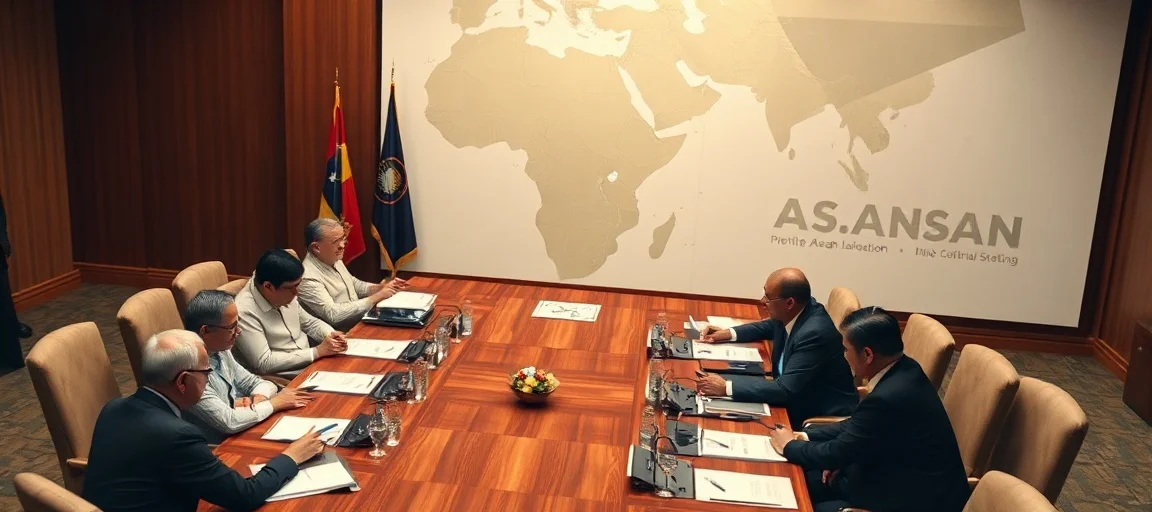
The Association of Southeast Asian Nations (ASEAN) recently convened a critical ASEAN Summit Tackles Iran War's Regional Impact, bringing together leaders from across the region to address the escalating crisis in the Middle East and its far-reaching consequences. This pivotal summit underscored ASEAN's commitment to maintaining peace and stability in its own sphere while grappling with the complex geopolitical ripple effects emanating from the ongoing conflict. The discussions highlighted shared concerns regarding potential economic disruptions, energy security, and humanitarian challenges, emphasizing the urgent need for diplomatic solutions to de-escalate tensions and mitigate broader instability.
- The Escalating Crisis and ASEAN's Concerns
- Key Areas of Discussion at the ASEAN Summit Tackles Iran War's Regional Impact
- The Role of Diplomacy and Regional Cohesion
- Expert Analysis and Future Outlook
- ASEAN's Preparedness for Global Instability
- Conclusion: A United Front for a Stable Future
- Frequently Asked Questions
- Further Reading & Resources
The Escalating Crisis and ASEAN's Concerns
The ongoing conflict involving Iran has sent tremors across global markets and geopolitical landscapes, prompting serious concerns within Southeast Asia. While geographically distant, the region is intrinsically linked to global trade routes and energy supplies that traverse the Middle East. The ASEAN leaders convened to specifically analyze and formulate a collective response to these emerging threats, ensuring that the region's prosperity and security are not unduly jeopardized.
Geopolitical Landscape Before the Summit
Before the recent summit, the international community had been observing a steady intensification of the conflict. Reports indicated disruptions to key shipping lanes and a noticeable volatility in global oil prices. Such events directly impact ASEAN member states, many of whom are net oil importers and heavily reliant on maritime trade for their economic lifelines. The specter of prolonged conflict loomed large, threatening to derail economic recovery efforts post-pandemic and exacerbate existing vulnerabilities across developing economies in the bloc. The prior weeks had seen an increase in regional proxy clashes and heightened rhetoric, underscoring the urgency for a concerted diplomatic effort from blocs like ASEAN to advocate for calm and stability.
Key Areas of Discussion at the ASEAN Summit Tackles Iran War's Regional Impact
The summit agenda was packed with pressing issues, reflecting the multifaceted nature of the crisis. Leaders focused on several critical areas, from economic resilience to humanitarian aid, all aimed at safeguarding regional interests.
Economic Repercussions and Trade Routes
A primary concern was the potential for significant economic repercussions. Southeast Asia relies heavily on international trade, with major shipping lanes through the Strait of Hormuz and other key waterways being vital arteries for global commerce. Any prolonged disruption to these routes, whether due to direct conflict or heightened security risks, could severely impact supply chains, increase shipping costs, and stifle trade volumes for ASEAN nations. Discussions centered on identifying alternative trade routes, diversifying import sources, and strengthening intra-ASEAN trade to build resilience against external shocks.
- Supply Chain Vulnerabilities: Many ASEAN economies are integrated into global supply chains, particularly in manufacturing and electronics. Disruptions in the Middle East could delay critical components and raw materials, impacting production cycles and export capabilities. The summit emphasized the need for a comprehensive regional mapping of critical supply chains to identify choke points and develop mitigation strategies.
- Inflationary Pressures: Increased shipping insurance premiums and higher fuel costs for transportation could translate into higher prices for consumers across the region, exacerbating inflationary pressures already present in some economies. Governments discussed targeted subsidies and price controls to buffer the immediate impact on vulnerable populations.
- Investment Climate: Geopolitical instability tends to deter foreign direct investment (FDI). ASEAN leaders discussed strategies to reassure investors and maintain a stable investment environment despite the external uncertainties. Promoting intra-ASEAN investment and highlighting the region's fundamental economic strengths were key talking points.
Energy Security and Oil Prices
Southeast Asia's energy security is another paramount concern. Many countries in the region are heavily dependent on imported oil and gas, with a significant portion sourced from the Middle East. The Iran war's potential to disrupt oil production and transportation routes directly threatens the stability of energy supplies and prices. The summit explored collaborative strategies to mitigate these risks.
- Strategic Reserves: Deliberations included the coordination of strategic petroleum reserves among member states to cushion the impact of sudden supply shortages. A mechanism for mutual assistance and information sharing regarding energy stockpiles was also proposed.
- Diversification of Sources: Leaders discussed accelerating efforts to diversify energy sources, including increasing reliance on renewable energy and exploring new oil and gas suppliers outside the conflict zone, such as from West Africa or Latin America, to reduce geopolitical leverage.
- Regional Energy Cooperation: Enhanced cooperation on energy infrastructure and resource sharing within ASEAN was highlighted as a crucial step towards collective energy resilience. This includes joint investments in cross-border pipelines and electricity grids to ensure greater interconnectivity.
Humanitarian Concerns and Refugee Flows
Beyond economic and energy considerations, the humanitarian implications of a prolonged conflict were also a significant topic. While direct refugee flows to Southeast Asia from the Middle East might not be immediate, the potential for a wider humanitarian crisis and the precedent it sets for global stability were thoroughly discussed.
- Humanitarian Aid Coordination: ASEAN member states reaffirmed their commitment to supporting international humanitarian efforts and discussed potential avenues for coordinated aid contributions to affected populations, primarily through established international organizations.
- Regional Stability: The broader destabilization that conflict can bring to other fragile regions was acknowledged, emphasizing ASEAN's role in promoting peace and conflict resolution globally. There was a strong call for upholding international law and humanitarian principles, even in times of heightened tension.
The Role of Diplomacy and Regional Cohesion
ASEAN's traditional emphasis on diplomacy, consensus-building, and non-interference was a recurring theme throughout the summit. Leaders stressed the importance of a unified ASEAN voice on the international stage to advocate for peaceful resolutions.
Calls for De-escalation and Dialogue
The summit concluded with strong calls for immediate de-escalation of the conflict and the pursuit of dialogue among all parties involved. ASEAN leaders collectively urged international actors to exercise restraint and prioritize diplomatic solutions to prevent further escalation. This collective stance reinforces ASEAN's position as a proponent of multilateralism and peaceful conflict resolution, underscoring its belief that a stable Middle East is vital for global economic and security well-being.
Strengthening ASEAN Centrality
The crisis also served as a moment to re-emphasize ASEAN Centrality in regional architecture. By addressing the Iran war's regional impact as a unified bloc, ASEAN aims to project a strong, cohesive voice in global affairs, asserting its relevance and capacity to navigate complex international challenges. This strengthens its standing as a key player in shaping the Indo-Pacific's security and economic landscape, ensuring its interests are represented in broader global discussions.
Expert Analysis and Future Outlook
Regional security analysts and international relations experts have been closely observing ASEAN's response to the Iran crisis. Many commend the proactive stance taken by the bloc, emphasizing the necessity of such dialogues in an increasingly interconnected world.
Geopolitical Implications for Southeast Asia
"The Iran war, while geographically distant, has profound implications for Southeast Asia's maritime security and economic stability," noted Dr. Anya Sharma, a senior fellow at the Southeast Asia Institute for Strategic Studies. "ASEAN's ability to coordinate a unified response, from economic safeguards to diplomatic calls, will be crucial in minimizing the adverse spillover effects and demonstrating its collective resilience. The summit serves as a timely reminder that regional security is inextricably linked to global stability, requiring proactive engagement rather than passive observation."
The future outlook remains uncertain, with much depending on the trajectory of the conflict in the Middle East. However, ASEAN's efforts to prepare for various scenarios and strengthen its internal mechanisms are seen as vital steps.
Long-Term Strategic Adjustments
Beyond immediate crisis management, the summit also initiated discussions on long-term strategic adjustments. These include enhancing regional defense cooperation, investing in cybersecurity infrastructure to protect critical economic systems, and fostering greater self-sufficiency in key industries. The goal is to build a more robust and adaptable ASEAN capable of weathering future global shocks, reinforcing its position as a stable and reliable partner in a volatile world.
ASEAN's Preparedness for Global Instability
The ASEAN Summit Tackles Iran War's Regional Impact underscored the region's commitment to proactive engagement with global challenges. The discussions went beyond immediate crisis response, delving into the foundational elements of long-term resilience. This includes strengthening economic partnerships, bolstering energy independence, and reinforcing diplomatic channels.
Enhancing Economic Partnerships
Recognizing the vulnerabilities exposed by the crisis, ASEAN leaders explored avenues for deepening economic integration and forging new trade alliances. This involves accelerating negotiations for free trade agreements with key partners and promoting intra-regional investment to create more diversified and resilient supply chains. The aim is to reduce reliance on any single market or production hub, thereby spreading risks and fostering greater economic stability. Furthermore, specific initiatives were discussed to support small and medium-sized enterprises (SMEs) in navigating international trade disruptions and leveraging regional markets more effectively.
Bolstering Energy Independence
The summit highlighted the imperative for ASEAN to accelerate its transition towards a more sustainable and diverse energy mix. This includes significant investments in renewable energy sources such as solar, wind, and hydropower, along with exploring regional energy grids that can enhance energy sharing and security among member states. Reducing dependency on fossil fuel imports from volatile regions is a long-term strategic goal that gained renewed urgency during the discussions, with calls for expedited development of indigenous energy resources and regional energy pooling mechanisms.
Reinforcing Diplomatic Channels
ASEAN's strength has always been its ability to foster dialogue and maintain open communication channels, even amidst complex geopolitical tensions. The summit reinforced the importance of these diplomatic pathways, both within the bloc and with external powers. Leaders emphasized the need for continuous engagement with all relevant international actors to advocate for peaceful resolutions and prevent miscalculation. This commitment to multilateralism is seen as essential for navigating the intricate web of global politics and ensuring regional stability, projecting ASEAN as a credible and influential voice for peace.
Conclusion: A United Front for a Stable Future
The recent ASEAN Summit Tackles Iran War's Regional Impact unequivocally demonstrated the bloc's resolve to address external crises with a unified and strategic approach. By focusing on critical areas such as economic resilience, energy security, and humanitarian concerns, ASEAN leaders underscored their commitment to safeguarding the prosperity and stability of Southeast Asia. The comprehensive discussions and proposed strategies reflect a proactive stance, aiming not only to mitigate the immediate fallout of the Iran war but also to build a more resilient and self-reliant region for the future. The summit reinforced ASEAN's vital role in promoting peace and cooperation, both within its borders and on the broader international stage, ultimately striving for a stable global environment conducive to development and security.
Frequently Asked Questions
Q: What is the main purpose of the ASEAN Summit regarding the Iran War?
A: The summit aimed to address the regional impact of the Iran War, focusing on economic disruptions, energy security, and humanitarian concerns across Southeast Asia to ensure stability.
Q: How does the Iran War impact Southeast Asia's economy?
A: The war can disrupt vital shipping lanes, increase oil prices, and affect global supply chains, leading to higher trade costs, inflationary pressures, and reduced foreign investment for ASEAN nations.
Q: What diplomatic actions did ASEAN take concerning the conflict?
A: ASEAN leaders emphasized diplomacy, called for immediate de-escalation and dialogue, and reaffirmed commitment to multilateralism and peaceful conflict resolution on the global stage.