US-Iran Peace Talks Hit Snag Amid New Strikes
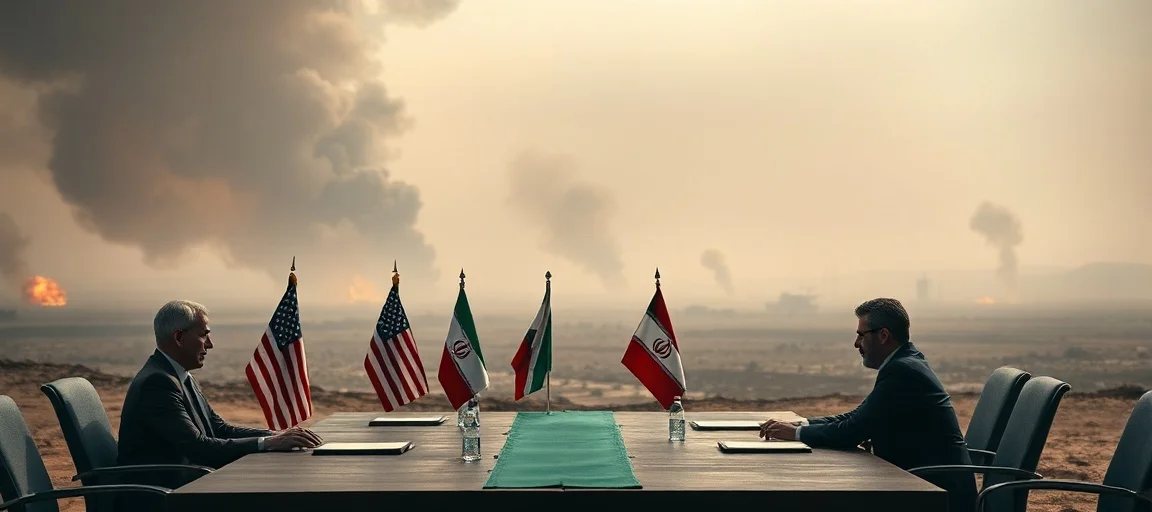
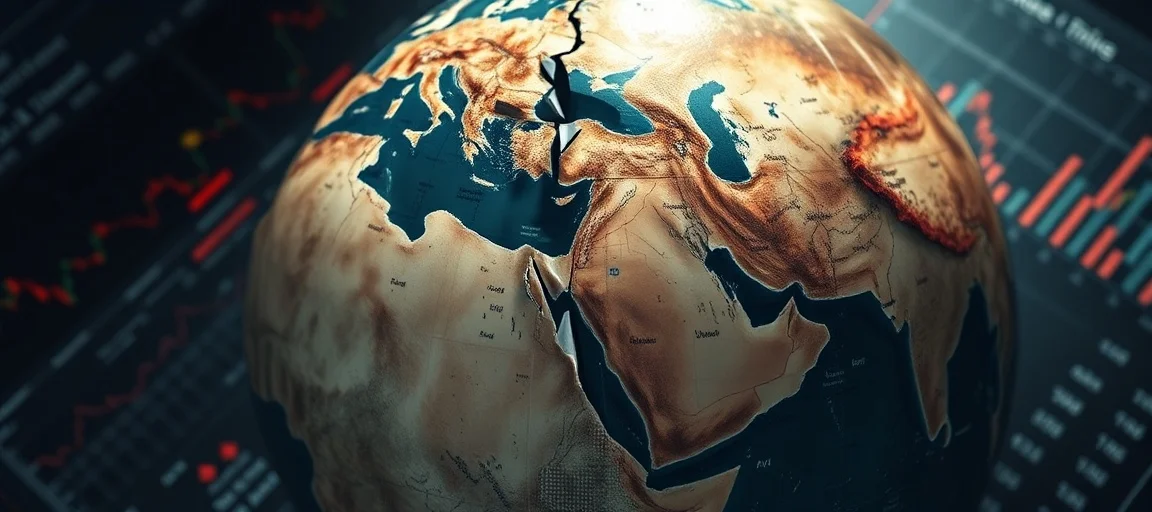
The delicate process of negotiation between the United States and Iran has once again been plunged into uncertainty. Hopes for a diplomatic breakthrough have dimmed as US-Iran Peace Talks Hit Snag Amid New Strikes across the volatile Middle East region. This latest escalation threatens to unravel months of painstaking efforts aimed at de-escalating long-standing tensions, leaving the future of regional stability hanging in the balance. The recent developments underscore the immense challenges inherent in bridging the deep-seated mistrust and divergent strategic interests that characterize the relationship between Washington and Tehran.
Background to the Standoff
The historical relationship between the United States and Iran has been marked by periods of intense animosity and proxy conflicts, particularly since the 1979 Iranian Revolution. Decades of distrust have been punctuated by various attempts at rapprochement and numerous breakdowns in communication. A significant diplomatic achievement came with the 2015 Joint Comprehensive Plan of Action (JCPOA), a multilateral agreement that sought to limit Iran's nuclear program in exchange for sanctions relief. However, the U.S. withdrawal from the JCPOA in 2018 under the previous administration reignited tensions and led to a "maximum pressure" campaign of sanctions against Iran, which further exacerbated economic hardship in the country and spurred a reciprocal increase in Iranian nuclear activities beyond the agreement's limits.
The period following the JCPOA's collapse saw a dangerous escalation of military incidents, including attacks on shipping in the Gulf, drone incursions, and strikes on oil infrastructure. Both nations deployed military assets to the region, and proxy groups supported by Iran engaged in actions perceived as destabilizing by the U.S. and its allies. Efforts to revive negotiations have been complex, often indirect, and fragile, with each step forward frequently overshadowed by new provocations or military actions from either side or their regional partners. These ongoing tensions have created an environment where peace talks are perpetually vulnerable to external shocks, highlighting the precarious nature of any diplomatic progress.
Escalation Derailed: US-Iran Peace Talks Hit Snag
Recent military actions have delivered a severe blow to the already fragile diplomatic efforts, causing the US-Iran Peace Talks Hit Snag Amid New Strikes. Reports indicate that a series of targeted aerial bombardments and missile launches have occurred in several strategic locations across the Middle East. While specific attribution remains a point of contention, these strikes have significantly raised regional temperatures and cast a long shadow over the negotiating table. The timing of these hostilities, coinciding with a critical juncture in the peace process, suggests a deliberate attempt by some factions to undermine any potential for reconciliation.
Sources close to the negotiations reveal that American and Iranian delegations were reportedly making incremental progress on several key issues, including pathways for sanctions relief, verifiable limits on Iran's nuclear enrichment, and guarantees regarding regional security. However, the latest wave of strikes has abruptly halted this momentum. U.S. officials have condemned the attacks, attributing them to Iran-backed militias and warning that such actions are counterproductive to peace. They have reiterated their commitment to protecting American interests and personnel in the region. Conversely, Iranian officials have denied direct involvement in certain incidents, instead blaming regional adversaries and foreign interference for instigating instability. They maintain that Iran reserves the right to defend its sovereignty and its regional allies against aggression. The conflicting narratives and mutual accusations serve only to deepen the existing chasm of mistrust, making it exceedingly difficult to find common ground for continued dialogue.
The Escalating Cycle of Retaliation
The recent strikes appear to be the latest chapter in a protracted cycle of retaliation that has plagued the U.S.-Iran relationship for years. This pattern often involves an initial provocation, followed by a retaliatory strike, leading to further escalation, making de-escalation exceptionally difficult. For instance, reports detail missile attacks targeting facilities utilized by U.S. forces in Iraq and Syria, which were subsequently met with precision strikes by American forces against alleged Iranian-backed militia strongholds. These actions, while often framed as defensive by their perpetrators, inevitably lead to a tit-for-tat dynamic that fuels regional instability.
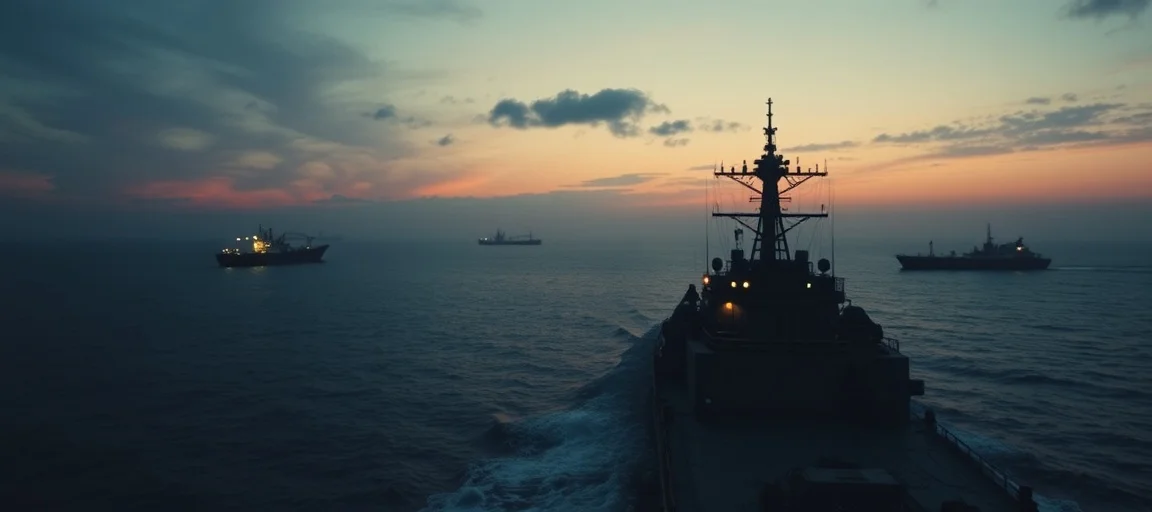
Further complicating the situation are incidents involving maritime security in the Strait of Hormuz, a critical chokepoint for global oil transit. Naval skirmishes and the seizure of vessels, often attributed to both Iranian forces and perceived adversaries, contribute to the volatile environment. Beyond direct military engagements, the cyber warfare front has also seen increased activity. Both nations have accused the other of launching cyberattacks targeting critical infrastructure, financial institutions, and government systems, adding another layer of complexity to the conflict. These digital skirmishes, while often clandestine, have the potential for widespread disruption and further erode trust, making a unified front for peace increasingly difficult to achieve. The interconnected nature of these incidents means that a single event can quickly cascade into a broader regional crisis, pulling in various state and non-state actors. The involvement of regional proxies further blur the lines of responsibility, making it challenging to identify clear pathways to de-escalation and accountability. This complex web of alliances and antagonisms means that any peace talks must contend not only with the direct grievances between the U.S. and Iran but also with the wider regional power dynamics and the actions of various aligned groups.
Diplomatic Efforts and Sticking Points
Despite the setbacks caused by recent military actions, diplomatic channels between the U.S. and Iran, often facilitated by intermediaries such as Oman or Qatar, have not entirely closed. These efforts aim to re-establish a framework for the mutual return to the JCPOA or to forge a new, more comprehensive agreement addressing both nuclear issues and regional security concerns. However, the path to a breakthrough is fraught with significant obstacles.
One of the primary sticking points remains the scope and sequencing of sanctions relief versus verifiable limitations on Iran's nuclear program. Iran insists on the immediate and comprehensive lifting of all sanctions imposed since 2018 as a prerequisite for full compliance with nuclear commitments. The U.S., on the other hand, demands concrete, verifiable steps from Iran regarding its nuclear enrichment levels, centrifuge deployment, and transparency measures before any substantial sanctions relief is granted. Iran has also frequently called for guarantees that any future U.S. administration would not unilaterally withdraw from an agreement again, a demand the U.S. finds difficult to provide given its political system. Another critical area of disagreement revolves around Iran's regional influence and its ballistic missile program. The U.S. and its allies seek to curb what they view as Iran's destabilizing activities in the Middle East, while Iran views its missile capabilities and support for regional allies as essential for its national security. These deeply entrenched positions make it difficult to find a mutually acceptable compromise that satisfies the core security concerns of both nations. The U.S. often highlights Iran's human rights record and its detention of dual nationals as further complications to building trust, though these are typically not direct subjects of nuclear negotiations.
International Reactions and Concerns
The international community has reacted with growing alarm to the latest escalation in U.S.-Iran tensions. European powers, who were signatories to the original JCPOA, have consistently called for de-escalation and a return to diplomacy. They fear that a complete breakdown of talks could lead to an uncontrolled nuclear proliferation crisis in the Middle East and further destabilize an already fragile region. China and Russia, also parties to the JCPOA, have echoed similar sentiments, urging both Washington and Tehran to exercise restraint and prioritize negotiation over confrontation.
The United Nations has frequently called upon both parties to adhere to international law and engage in constructive dialogue, with the Secretary-General’s office often issuing statements of deep concern following each new escalation. UN agencies, alongside humanitarian groups, continue to advocate for unimpeded access to populations in need and a cessation of hostilities to allow for relief efforts. Beyond the nuclear implications, there are significant concerns about the humanitarian impact of prolonged conflict and economic sanctions. International aid organizations have repeatedly highlighted the suffering of ordinary Iranians, while regional conflicts fueled by proxy rivalries continue to displace populations and exacerbate humanitarian crises. The broader geopolitical implications are also substantial; a direct confrontation between the U.S. and Iran would have ripple effects across global energy markets, international trade routes, and alliance structures, potentially drawing in other major powers and creating a far wider conflict. Furthermore, regional states, particularly those allied with the U.S. or feeling directly threatened by Iran's activities, watch the talks with intense scrutiny. Countries like Saudi Arabia and Israel have expressed strong reservations about certain aspects of a renewed nuclear deal, fearing it might not adequately address Iran's broader regional ambitions or its missile program. Their security concerns add another layer of complexity to the multilateral diplomatic landscape, often pushing for a harder line against Tehran and influencing Washington's negotiating stance. The urgency for a peaceful resolution is therefore felt not just in Washington and Tehran, but in capitals around the world.
The Impact on Regional Stability and Global Oil Markets
The protracted standoff between the U.S. and Iran, now exacerbated by fresh military strikes, has profound and far-reaching implications for regional stability. The Middle East remains a crucible of conflicts, and any further deterioration in U.S.-Iran relations risks igniting new fronts or intensifying existing ones. Countries like Iraq, Syria, Lebanon, and Yemen, already grappling with internal strife and external interference, are particularly vulnerable to the fallout from this geopolitical rivalry. For a deeper dive into these complexities, see our analysis on understanding Middle East geopolitics. Proxy groups operating in these nations often find themselves caught in the crossfire, or worse, become direct instruments in the broader strategic competition, perpetuating cycles of violence and hindering prospects for lasting peace. The humanitarian cost of such prolonged instability is immense, leading to mass displacement, food insecurity, and a collapse of essential services in affected areas.
Furthermore, the heightened tensions invariably send jitters through global oil markets. The Middle East is a vital source of crude oil, and the Strait of Hormuz is a crucial transit point for a significant portion of the world's oil supply. Any threat to this waterway, or to oil production facilities in the region, immediately impacts prices. The recent strikes, by signaling increased uncertainty and potential disruptions, have already led to a noticeable uptick in crude oil futures. Energy analysts are closely monitoring the situation, warning that a major escalation could trigger a significant spike in oil prices, leading to global economic instability and inflationary pressures worldwide. This makes the U.S.-Iran dynamic a matter of not just regional security, but global economic health.
Voices from the Ground: Analyst Perspectives
Geopolitical analysts offer a range of perspectives on the current impasse and the likelihood of a peaceful resolution. Dr. Sarah Al-Dajani, a senior research fellow at the Middle East Policy Institute, notes that "the recent strikes represent a significant regression, eroding the limited trust that had been painstakingly built. Both sides are under immense domestic pressure, making concessions difficult, but the alternative is a trajectory towards greater conflict." Her view highlights the domestic political calculations influencing both Washington and Tehran.
Similarly, Dr. Michael Horowitz, an expert on international security, suggests that "the window for a comprehensive agreement is narrowing. Without a strong diplomatic push from external actors and a clear commitment from both the U.S. and Iran to de-escalate, these talks will remain stalled in a cycle of action and reaction." Other analysts point to the upcoming electoral cycles in both countries as potential complicating factors, where leaders might be less inclined to compromise on issues perceived as vital to national security. The consensus among many experts is that while direct military confrontation remains undesirable for all parties, the current environment is highly susceptible to miscalculation and unintended escalation, making cautious diplomacy more critical than ever.
Looking Ahead: Pathways to De-escalation
Despite the formidable challenges, pathways to de-escalation and a resumption of productive dialogue still exist, albeit narrow ones. The immediate priority must be a halt to all military actions and provocations from all sides, creating a necessary breathing space for diplomacy. This would require robust communication channels, potentially through neutral third parties, to convey intentions clearly and avoid misunderstandings. Concurrent to this, international pressure from global powers could play a crucial role. A united front from the UN Security Council members, urging restraint and offering a framework for mediated talks, could provide the impetus needed to bring both the U.S. and Iran back to the negotiating table with renewed commitment.
Furthermore, focusing on incremental, confidence-building measures rather than an immediate grand bargain might offer a more pragmatic approach. This could involve limited, reciprocal gestures such as humanitarian aid corridors, prisoner exchanges, or small-scale de-escalation agreements in specific regional hotspots. These steps, while not resolving the core issues, could help rebuild trust and demonstrate a willingness to engage constructively. Ultimately, for genuine peace talks to succeed, both the United States and Iran will need to acknowledge each other's legitimate security concerns and be willing to compromise on long-held maximalist positions, recognizing that a stable Middle East benefits all.
Conclusion
The latest surge in military activity has undeniably complicated the already delicate diplomatic landscape, proving that the US-Iran Peace Talks Hit Snag Amid New Strikes. While the prospect of a lasting peace agreement appears more distant with each new incident, the necessity for dialogue remains paramount. The ongoing cycle of retaliation not only endangers regional stability and global energy markets but also perpetuates humanitarian crises and deepens mistrust. A concerted, international effort to de-escalate tensions, coupled with a renewed commitment from both Washington and Tehran to pursue diplomatic solutions over military confrontation, is essential to navigate this treacherous path. The world watches anxiously, hoping that statesmanship will ultimately prevail over the dangerous currents of escalation.
Frequently Asked Questions
Q: What caused the latest snag in US-Iran peace talks?
A: The talks hit a snag due to a new series of military strikes across the Middle East. These actions, attributed to various actors, have heightened regional tensions and undermined diplomatic momentum, making it harder for both sides to find common ground.
Q: What are the main obstacles in current US-Iran negotiations?
A: Key obstacles include disagreements over the sequencing of sanctions relief versus verifiable limits on Iran's nuclear program. Iran insists on full sanctions removal, while the US demands concrete nuclear compliance steps first. Iran's ballistic missile program and regional influence are also major sticking points.
Q: What are the international community's concerns regarding the US-Iran tensions?
A: International concerns center on the risk of nuclear proliferation, regional destabilization, and the humanitarian impact of prolonged conflict and sanctions. Global energy markets also face potential disruptions, prompting widespread calls for de-escalation and renewed diplomacy.