US-Iran Peace Deal Near: Hormuz Strait Reopening? A Global Shift
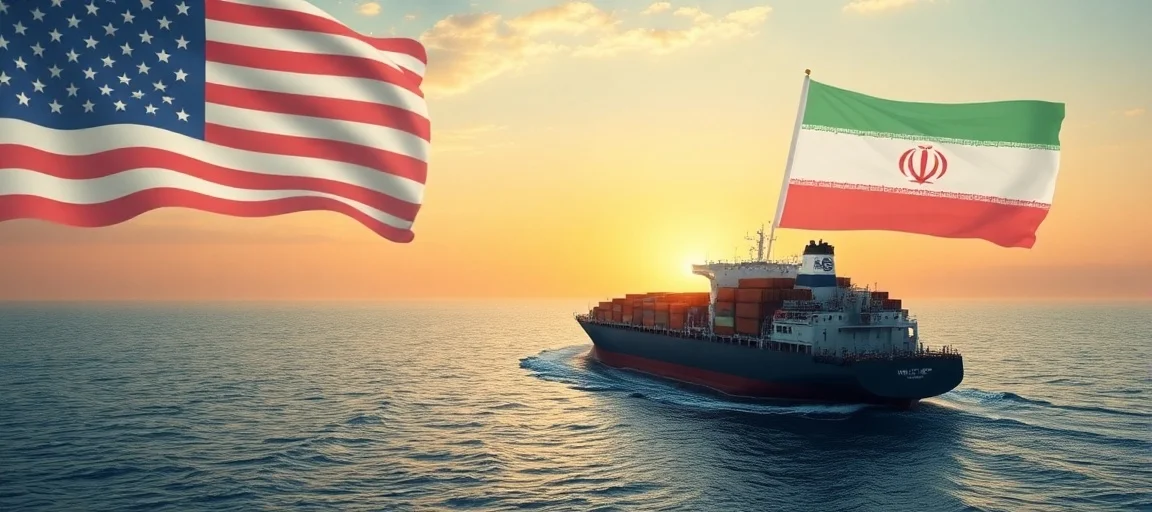
Amid escalating regional tensions and a prolonged diplomatic stalemate, recent developments suggest that a US-Iran Peace Deal Near: Hormuz Strait Reopening? could be on the horizon, potentially ushering in a significant global shift in geopolitics and energy markets. This anticipated peace deal, if realized, would mark a pivotal moment for international relations, offering a path towards de-escalation in the Middle East and promising the secure and unimpeded flow of oil through the critical Hormuz Strait. The prospect of such a deal has captivated policymakers, economists, and the general public alike, eager to understand the intricate details and far-reaching implications of renewed diplomatic ties between Washington and Tehran.
- Background to Tensions and the Need for a Resolution
- Key Details and Progress Towards a US-Iran Peace Deal
- Economic Implications of a Hormuz Strait Reopening
- Geopolitical Ramifications of a US-Iran Peace Deal Near: Hormuz Strait Reopening?
- Expert Perspectives on a US-Iran Peace Deal
- Challenges and Roadblocks Ahead
- Conclusion
- Frequently Asked Questions
- Further Reading & Resources
Background to Tensions and the Need for a Resolution
The relationship between the United States and Iran has been fraught with complexities for decades, characterized by periods of intense hostility, proxy conflicts, and sanctions. At the heart of many disputes lies Iran's nuclear program, regional influence, and maritime activities in the Persian Gulf. Decades of distrust have created a challenging environment for diplomacy, with each side often viewing the other's actions through a lens of suspicion and strategic competition. This historical backdrop makes any discussion of a potential peace deal particularly noteworthy and difficult to achieve.
The Nuclear Deal's Shadow
A significant chapter in US-Iran relations was the 2015 Joint Comprehensive Plan of Action (JCPOA), commonly known as the Iran nuclear deal. This agreement saw Iran limit its nuclear activities in exchange for sanctions relief from global powers. However, the US withdrawal from the JCPOA in 2018 under the Trump administration reignited tensions, leading to increased uranium enrichment by Iran and a return of stringent US sanctions. The subsequent years witnessed a series of tit-for-tat actions, including attacks on oil tankers, drone incidents, and heightened military postures, particularly around the Strait of Hormuz. The current efforts for a peace deal often aim to address some of the unresolved issues that lingered after the JCPOA's collapse, or to forge a new framework for engagement.
Regional Alliances and Geopolitical Chessboard
The US and Iran are also deeply enmeshed in a complex web of regional alliances and rivalries. Countries like Saudi Arabia, Israel, and the UAE view Iran's regional influence with apprehension, often aligning with the US. Conversely, Iran has fostered relationships with non-state actors and other regional powers, leading to proxy conflicts in Yemen, Syria, and Lebanon. Any comprehensive peace deal would necessitate careful navigation of these intricate regional dynamics, requiring assurances and considerations for the security concerns of all parties involved. The potential for a US-Iran Peace Deal Near: Hormuz Strait Reopening? carries immense weight for the stability of the entire Middle East.
Key Details and Progress Towards a US-Iran Peace Deal
Recent reports from diplomatic circles suggest a confluence of factors creating an opening for a potential peace agreement. While specific details remain under wraps due to the sensitive nature of negotiations, several key areas are understood to be central to the discussions. These include the parameters of Iran's nuclear program, the lifting of specific sanctions, regional security assurances, and critically, guarantees regarding the free flow of navigation in crucial waterways like the Strait of Hormuz.
Reports from May 24, 2026, indicate that the US and Iran are nearing a significant agreement, potentially a 60-day ceasefire extension, during which the Strait of Hormuz would be reopened without tolls. This preliminary deal also suggests Iran could freely sell oil and would engage in negotiations to curb its nuclear program, including the possibility of giving up its enriched uranium stockpile. US President Donald Trump stated that a peace agreement with Iran and several Middle Eastern countries had been "largely negotiated," with final details expected to be announced shortly. However, an Iranian official cited by Reuters stated that the nuclear issue was not part of the preliminary agreement, and Iran had not agreed to hand over its highly enriched uranium stockpile, emphasizing that nuclear discussions would occur in negotiations for a final agreement.
The proposed framework outlines a three-stage approach:
- Formally ending the war
- Resolving the crisis in the Strait of Hormuz
- Initiating a 30-day window for negotiations on a broader agreement, which could be extended.
Secretary of State Marco Rubio noted "significant" progress in talks but cautioned that this was not a "final" agreement. Iran's semi-official Fars News Agency, however, reported on Sunday that the Strait of Hormuz would remain under Iranian control, disputing Trump's announcement as "incomplete and inconsistent with reality".
Unpacking the Potential US-Iran Peace Deal Near: Hormuz Strait Reopening?
The core of the emerging deal appears to revolve around several key components:
-
Strait of Hormuz: The agreement aims to ensure the unhindered passage of vessels through the Strait of Hormuz, a critical choke point for global oil supplies. This includes Iran clearing mines it deployed in the strait and agreeing not to impose tolls on ships.
-
Sanctions Relief: In exchange for Iran's concessions, the US would reportedly lift its blockade on Iranian ports and issue some sanctions waivers, allowing Iran to freely sell its oil. The US Treasury Department has recently continued to impose sanctions on Iranian financial and shipping networks as part of "Economic Fury" initiatives.
-
Nuclear Program Negotiations: While the immediate deal focuses on a ceasefire and the Strait, a crucial aspect involves future negotiations on curbing Iran's nuclear program. This includes discussions on suspending uranium enrichment and the removal of highly enriched uranium stockpiles. The International Atomic Energy Agency (IAEA) has noted challenges in verifying the peaceful nature of Iran's nuclear program, particularly after Iran reduced monitoring activities in 2021 and has not provided full access to affected facilities following military attacks in June 2025.
Economic Implications of a Hormuz Strait Reopening
The Strait of Hormuz is a narrow waterway between the Persian Gulf and the Arabian Sea, through which a significant portion of the world's seaborne oil and liquefied natural gas passes. Its strategic importance cannot be overstated, as disruptions in this area have historically led to volatility in global energy markets. A secure and open Strait of Hormuz would have profound economic implications worldwide.
Oil Markets and Global Trade
The primary impact of a fully reopened Strait of Hormuz would be on the global oil market. The unhindered flow of crude oil from major producers in the Persian Gulf to international markets would likely stabilize oil prices, reducing the risk premium associated with regional instability. This could lead to lower energy costs for consumers and businesses globally. The US official involved in the negotiations conceded that allowing Iran to trade oil would provide relief to the Iranian economy, but also free up oil trade for the rest of the world. However, some analyses suggest that even with an end to the current conflict, full oil flows might not return to pre-war levels until early to mid-2027.
Shipping and Maritime Security
Beyond oil, the Strait is a vital route for international shipping. Its reopening without tolls or threats would significantly enhance maritime security, reducing insurance premiums and operational costs for shipping companies. This would facilitate smoother global supply chains, benefiting industries reliant on international trade. The US had imposed a naval blockade on Iran in April 2026 following the failure of earlier talks, which Iran viewed as a breach of a ceasefire. The current proposed deal explicitly addresses clearing mines and ensuring no tolls, directly tackling previous concerns.
Geopolitical Ramifications of a US-Iran Peace Deal Near: Hormuz Strait Reopening?
A peace deal between the US and Iran would represent a monumental shift in the geopolitical landscape of the Middle East and beyond. It would necessitate a recalibration of alliances, a rethinking of security strategies, and potentially pave the way for broader regional de-escalation.
Regional Stability
A reduction in direct conflict and heightened tensions between the US and Iran could significantly improve regional stability. This could lead to a decrease in proxy conflicts, foster dialogue among rival states, and potentially allow for greater focus on internal development and cooperation. However, some regional actors, such as Israel, have expressed concerns, with an unnamed Israeli official indicating that Israel would not be constrained in responding to "all threats," including those in Lebanon, even with a potential US-Iran deal.
International Response
The international community's response to such a deal would be mixed, yet generally leaning towards cautious optimism. European nations, China, and Russia have consistently advocated for diplomatic solutions and would welcome a de-escalation of tensions. However, some regional allies of the US might view the deal with apprehension, fearing a shift in the balance of power or a weakening of their security assurances. The President of the European Commission, Ursula von der Leyen, emphasized the need for a deal that genuinely de-escalates conflict, reopens the Strait of Hormuz, guarantees toll-free freedom of navigation, and ensures Iran does not develop nuclear weapons.
Expert Perspectives on a US-Iran Peace Deal
Analysts and diplomats offer a range of perspectives on the potential peace deal. While many see it as a necessary step towards stability, others remain cautious, highlighting the deep-seated mistrust and complex challenges that persist.
Diplomatic Avenues:
-
Positive Outlook: Many diplomats view the re-engagement as a pragmatic approach to avert further conflict and address critical issues. The potential for a US-Iran Peace Deal Near: Hormuz Strait Reopening? is seen as a win for multilateralism and diplomacy.
-
Cautious Optimism: Others emphasize that this is likely an initial, temporary agreement, a "time-buying ceasefire" that extends negotiations rather than a definitive resolution. The verbal nature of Iran's commitments on nuclear issues raises questions about the long-term enforceability and scope of the deal.
Security Concerns:
-
Nuclear Ambitions: A major point of contention remains Iran's nuclear program. Experts from the Arms Control Association note that Iran's advances have brought it to the threshold of nuclear weapons capability, and that reduced IAEA monitoring makes it challenging to verify the peaceful nature of its program. The IAEA's latest reports from February and March 2026 also indicate that Iran has not provided access to verify the suspension of enrichment activities at affected facilities and that the Agency cannot provide assurances regarding the non-diversion of declared nuclear material.
-
Regional De-escalation: While a ceasefire is a positive step, analysts question whether it will genuinely lead to a broader de-escalation of Iran's regional activities, including its support for various proxy groups.
Challenges and Roadblocks Ahead
Despite the apparent progress, numerous challenges and roadblocks could impede the finalization and long-term success of a US-Iran peace deal. Historical grievances, domestic political considerations in both countries, and the diverse interests of regional and international actors all contribute to a complex negotiating environment.
Trust Deficit
Decades of animosity and broken agreements have created a significant trust deficit between Washington and Tehran. Rebuilding this trust will require sustained diplomatic engagement, verifiable commitments, and consistent adherence to agreed-upon terms. The Iranian government's immediate dispute of President Trump's statements regarding the Strait of Hormuz remaining under Iranian control highlights this ongoing lack of complete alignment. This historical baggage often leads both sides to interpret gestures of goodwill with suspicion, making genuine rapprochement a slow and arduous process. Any enduring agreement must therefore include robust verification mechanisms and transparent communication channels to gradually bridge this gap. Without mutual confidence, even a signed deal risks unraveling at the first sign of perceived non-compliance.
Domestic Political Opposition
In both the US and Iran, domestic political factions may oppose a peace deal for various reasons. In the US, hardline elements might criticize any concessions to Iran, while in Iran, conservative factions could view rapprochement with the US as a betrayal of revolutionary principles. President Masoud Pezeshkian of Iran has stated that no deal with the US will be made without the Supreme Leader's permission. These internal political battles can easily derail diplomatic efforts, as leaders must constantly balance international negotiations with their domestic mandates and public opinion. The longevity of any peace deal will hinge not only on its international acceptance but also on its ability to withstand partisan critiques and secure broad internal buy-in from key political stakeholders in both nations.
Implementation and Verification
Even if an agreement is reached, its successful implementation and rigorous verification will be paramount. This includes ensuring Iran's adherence to nuclear limitations, the unimpeded flow of shipping, and the lifting of sanctions. The IAEA's reports underscore the existing difficulties in monitoring Iran's nuclear activities.
Conclusion
The prospect of a US-Iran Peace Deal Near: Hormuz Strait Reopening? represents a fragile yet potentially transformative moment in international relations. While significant progress appears to have been made towards an initial agreement focused on de-escalation and maritime security, particularly regarding the Strait of Hormuz, the path to a comprehensive and lasting peace remains fraught with challenges. The intricate details of Iran's nuclear program, the efficacy of sanctions relief, and the deep-seated geopolitical rivalries in the Middle East will all require careful and sustained diplomatic efforts. The world watches with cautious optimism, hoping that this potential diplomatic breakthrough can pave the way for greater stability and prosperity in a vital region.
Frequently Asked Questions
Q: What are the main points of the proposed US-Iran peace deal?
A: The preliminary deal focuses on a 60-day ceasefire extension, reopening the Strait of Hormuz without tolls, and allowing Iran to sell oil. It also sets the stage for future negotiations on curbing Iran's nuclear program.
Q: Why is the Strait of Hormuz so crucial to this agreement?
A: The Strait of Hormuz is a vital global chokepoint for a significant portion of the world's seaborne oil and liquefied natural gas. Reopening it ensures the unhindered flow of energy supplies, stabilizing global markets and enhancing maritime security.
Q: What are the biggest challenges to a lasting US-Iran peace deal?
A: Significant challenges include a deep-seated trust deficit between Washington and Tehran, strong domestic political opposition in both nations, and the complexities of verifying Iran's nuclear commitments and regional activities.
Further Reading & Resources
- The Times of Israel: US-Iran deal said to open strait for 60 days, Iran to discuss giving up enriched uranium
- Axios: Exclusive: What's inside the Iran deal Trump is close to signing
- The Guardian: Middle East crisis live: Rubio sees initial progress on reopening Hormuz after Trump claims Iran deal 'largely negotiated'
- Al Jazeera: Threat of war 'still looms large' as US, Iran inch towards deal