US-Iran Deal Stalls: Trump Undecided Amid Tehran Pushback
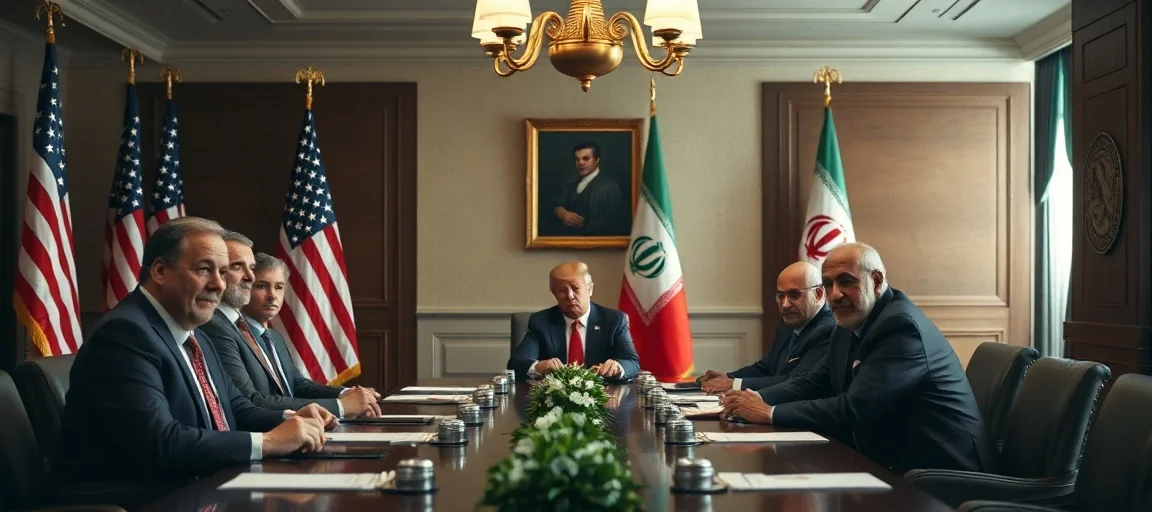
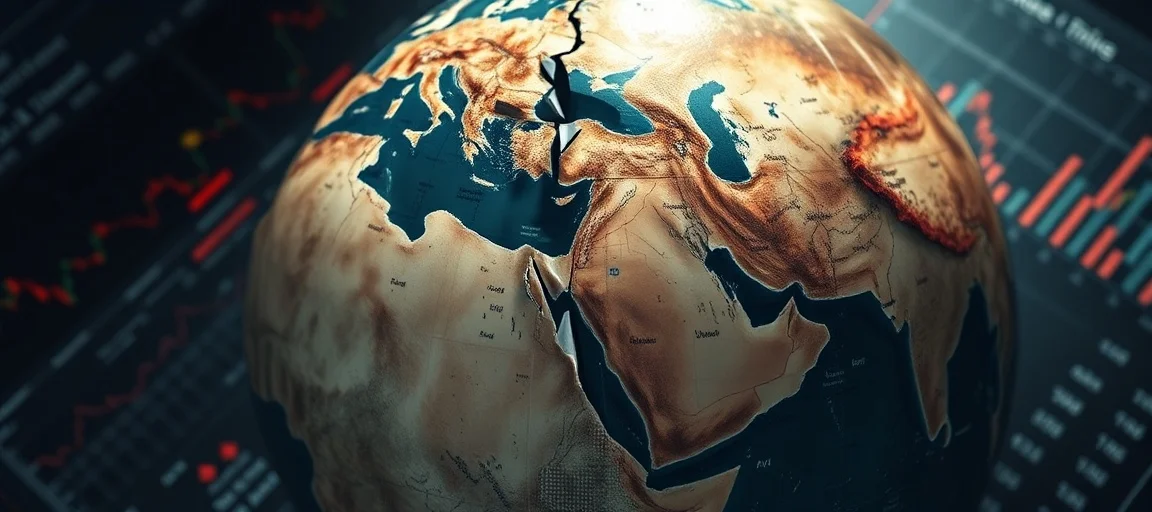
In a critical juncture for global diplomacy, the US-Iran Deal Stalls: Trump Undecided Amid Tehran Pushback, leaving the international community on edge. Reports indicate President Trump is deliberating over the final terms of a potential new nuclear agreement, encountering significant resistance from Tehran on several contentious points. This indecision and the staunch pushback from Iran underscore the deep complexities inherent in reconciling the security interests of the United States with Iran's demands for sovereignty and economic relief. The prolonged impasse threatens to prolong a period of heightened geopolitical uncertainty, impacting regional stability and global energy markets.
- The Stalled US-Iran Deal: Trump's Indecision and Tehran's Resistance
- Core Sticking Points and Tehran's Firm Pushback
- The President's Deliberations: A Balancing Act
- Expert Opinions on the Stalled Negotiations
- Geopolitical and Economic Implications
- Conclusion: Awaiting a Pivotal Decision Amidst Enduring Tensions
- Frequently Asked Questions
- Further Reading & Resources
The Stalled US-Iran Deal: Trump's Indecision and Tehran's Resistance
The history of diplomatic efforts between the United States and Iran concerning its nuclear program is a long and often contentious one, marked by periods of engagement and severe estrangement. For a deeper understanding of this complex relationship, refer to the history of U.S.-Iran relations. The Joint Comprehensive Plan of Action (JCPOA), brokered in 2015 under the Obama administration, stands as the most comprehensive attempt to date to curb Iran's nuclear ambitions in exchange for sanctions relief. Under the JCPOA, Iran agreed to significant limitations on its uranium enrichment capacity, restrictions on its uranium stockpile, and enhanced international inspections. This agreement was hailed by its proponents as a crucial step towards preventing Iran from developing nuclear weapons and mitigating regional conflict.
However, the JCPOA faced considerable opposition within the United States, particularly from Republicans who criticized its "sunset" provisions, which would eventually lift some restrictions, and its failure to address Iran's ballistic missile program or its regional influence. Former President Donald Trump, during his first term, was a vocal critic, famously calling it "one of the worst and most one-sided transactions" and unilaterally withdrawing the U.S. from the pact in May 2018. This withdrawal led to the re-imposition of crippling U.S. economic sanctions on Iran, targeting its energy, petrochemical, and financial sectors. In response, Iran began to gradually step away from its commitments under the JCPOA, accelerating its uranium enrichment and limiting international inspections, leading to the deal's further deterioration.
Following the U.S. withdrawal, attempts to revive a nuclear agreement have been fraught with difficulty. Throughout 2025, there were multiple rounds of talks between Iran and the U.S., often mediated by other countries like Oman, signaling continued diplomatic efforts despite significant hurdles. However, these negotiations were abruptly complicated by military actions, including reported U.S. and Israeli strikes on Iranian nuclear facilities in June 2025, which Iran's atomic energy body responded to by announcing plans to open new uranium enrichment plants and increase production of enriched fissile material. The JCPOA officially expired in October 2025, with Iran declaring it would no longer be bound by its terms after a UN Security Council decision not to renew the suspension of sanctions. The current situation reflects a continuation of this complex, high-stakes diplomatic dance, with both sides holding firm on their core demands.
Core Sticking Points and Tehran's Firm Pushback
The current deadlock in negotiations stems from several deep-seated disagreements, where President Trump's administration and Tehran hold "fundamentally different ideas" on the path forward. At the heart of the U.S. position is the demand for a comprehensive agreement that not only prevents Iran from acquiring nuclear weapons but also addresses its ballistic missile program and its alleged support for Iran's regional influence in the Middle East. Historically, the first Trump administration sought a deal that would ensure the "complete dismantlement of Iran's nuclear program," a far more stringent demand than the JCPOA's allowance for a limited civilian nuclear capacity under intense verification.
Tehran, conversely, has consistently asserted its "inherent right to enrich uranium" for peaceful purposes under the Nuclear Non-Proliferation Treaty (NPT). Iranian officials maintain that their nuclear program is exclusively for civilian energy and medical uses, rejecting Western accusations of pursuing nuclear weapons. This claim is often met with skepticism by the international community, particularly given past revelations of undisclosed nuclear activities and a history of failing to provide satisfactory explanations to the International Atomic Energy Agency (IAEA) regarding traces of radioactive materials at undeclared sites.
Key areas of Tehran's pushback include:
- Uranium Enrichment Levels and Stockpiles: Iran has repeatedly exceeded the JCPOA's limits on enriched uranium levels and stockpiles, indicating its resolve to maintain and advance its enrichment capabilities. Negotiations have seen Iran offering concessions, such as a hypothetical 15-year ban on enrichment before reverting to JCPOA-level enrichment, but demanding a reciprocal understanding of its enrichment rights.
- Verification and Inspection Regimes: While Iran initially implemented the Additional Protocol under the JCPOA, granting IAEA inspectors broad access, it suspended these measures in February 2021. Tehran has often resisted what it perceives as intrusive inspections, particularly concerning military sites, arguing it infringes on its sovereignty. The IAEA has expressed "serious and growing concerns" over Iran's lack of full cooperation and its failure to explain the presence of uranium particles at undeclared locations.
- Sanctions Relief: A central demand from Iran is the lifting of all U.S. sanctions, which have had a devastating impact on its economy. Iran views these sanctions as unjust and unilateral, arguing that their removal is a prerequisite for any meaningful engagement. The U.S. has used sanctions as a primary tool to pressure Iran, and reversing them without significant Iranian concessions is a major point of contention.
- Regional Activities and Ballistic Missiles: The U.S. consistently seeks to include restrictions on Iran's ballistic missile program and its regional activities, which are seen as destabilizing. Iran vehemently rejects these demands, considering its missile program a defensive necessity and its regional influence a matter of national security.
President Trump's current indecision highlights the immense pressure to secure a deal perceived as "better" than the JCPOA, as he has historically stated. However, Tehran's firm stance and refusal to yield on what it considers fundamental rights and security interests create a significant diplomatic chasm.
The President's Deliberations: A Balancing Act
President Trump's reported indecision signals an internal debate within the administration regarding the optimal strategy for dealing with Iran. His past approach was characterized by a "maximum pressure" campaign, utilizing stringent sanctions to compel Iran back to the negotiating table on more favorable U.S. terms. This strategy, while imposing severe economic strain on Iran, did not lead to a new comprehensive deal during his first term.
The current deliberations likely involve weighing several critical factors:
- Domestic Political Considerations: Any new deal with Iran would face intense scrutiny from both sides of the political spectrum. Critics might argue it's too lenient, while proponents might advocate for a return to diplomacy to avert conflict.
- Geopolitical Ramifications: A collapse of talks could escalate tensions in an already volatile Middle East, potentially leading to military confrontations. Conversely, a perceived "weak" deal could embolden Iran and worry regional allies like Israel and Saudi Arabia.
- Effectiveness of Sanctions: While sanctions have severely impacted Iran's economy, they have not fully halted its nuclear advancements or forced a capitulation. There's a debate on whether continued maximum pressure is the most effective path or if a diplomatic off-ramp, even with concessions, is preferable.
- International Alignment: European allies, who were signatories to the original JCPOA, have often advocated for diplomacy and preserving the deal, albeit with some criticisms. Any U.S. decision will have implications for transatlantic relations and broader international cooperation on Iran.
President Trump has historically expressed a desire for a deal he could brand as superior, often criticizing the JCPOA for its perceived flaws. However, the current reality of Iran's advanced nuclear program — with increased enrichment levels and reduced IAEA access post-JCPOA expiration — means that securing a truly comprehensive and more restrictive agreement presents a steeper challenge than ever before. His indecision reflects the difficult trade-offs between maximalist demands and the practicalities of achieving a viable diplomatic solution with a defiant adversary.
Expert Opinions on the Stalled Negotiations
Geopolitical analysts and former diplomats offer varied perspectives on the ongoing deadlock. Many agree that the current situation is precarious. Ethan A. Goldrich, a veteran U.S. diplomat, highlighted the "fundamentally different ideas" held by the U.S. and Iran regarding Iran's nuclear program, noting Iran's consistent assertion of its right to enrich uranium against U.S. demands for stronger guarantees.
Experts often point to the cyclical nature of U.S.-Iran relations, marked by periods of tension, sanctions, and attempts at negotiation. Some argue that the maximum pressure campaign, while financially detrimental to Iran, has ironically pushed Tehran to accelerate its nuclear program, bringing it closer to weapons-grade uranium enrichment capability. This creates a more urgent, and dangerous, negotiating environment.
Mehran Kamrava, a professor specializing in Middle East politics, observed that Iran has shown some willingness for "huge concession" in the past, such as proposing a 15-year ban on enrichment before returning to 3.67% enrichment levels (the JCPOA limit). However, he noted these concessions are often coupled with demands for the clearing of mines in the Strait of Hormuz and recognition of their other rights. This suggests that while Iran might be open to negotiation, it seeks a balanced outcome that addresses its security and economic concerns.
Conversely, some security experts express deep concern about Iran's continued stockpiling of highly enriched uranium and its non-compliance with international safeguards. They argue that diplomatic efforts must be coupled with robust deterrence and a clear stance against any Iranian move towards nuclear weapons capability. The potential for military action, as seen in June 2025, remains a stark backdrop to any diplomatic overtures.
The consensus among many is that the window for a purely diplomatic resolution is narrowing, particularly as Iran continues to advance its nuclear capabilities and limit international oversight. The "gridlock or standoff" between the two sides, as described in prior analyses, continues to define the current environment, making President Trump's ultimate decision all the more critical.
Geopolitical and Economic Implications
The prolonged stall in the US-Iran Deal Stalls: Trump Undecided Amid Tehran Pushback carries significant geopolitical and economic implications, reverberating far beyond the immediate negotiating rooms.
Geopolitical Impact:
- Regional Instability: The lack of a clear agreement exacerbates tensions across the Middle East. Allies like Israel and Saudi Arabia remain deeply wary of Iran's nuclear ambitions and regional activities. A breakdown in talks could increase the risk of regional conflicts, potentially involving preemptive military actions or proxy confrontations.
- Nuclear Proliferation Concerns: With Iran continuing to enrich uranium and reduce IAEA access, challenges to nuclear non-proliferation are mounting. Other regional actors might be incentivized to pursue their own nuclear programs, leading to a dangerous arms race in an already volatile region. Saudi Arabia, for instance, has signaled a willingness to obtain a nuclear weapon if Iran detonates one.
- Weakening of Non-Proliferation Regime: The failure to secure a durable agreement with Iran could undermine the broader international nuclear non-proliferation regime. It might send a message that countries can advance their nuclear programs in defiance of international norms and agreements.
- Impact on Global Alliances: The U.S. approach to Iran directly impacts its relationships with European partners, who often prioritize a diplomatic solution, and with other global powers like China and Russia, who have different strategic interests in the region.
Economic Impact:
- Oil Markets Volatility: Iran is a significant oil producer. Uncertainty surrounding its nuclear program and the possibility of renewed or tightened sanctions can lead to increased volatility in global oil prices. Any disruption to oil exports from the Persian Gulf, a critical chokepoint, could have substantial economic consequences.
- Sanctions Strain on Iran: The re-imposed U.S. sanctions have crippled Iran's economy, severely limiting its oil exports, access to international banking, and foreign investment. While Iran has shown some resilience, the long-term strain contributes to domestic instability and reduces its ability to invest in critical infrastructure. The lifting of sanctions, conversely, would significantly benefit Iran's economy, boosting its per capita welfare and increasing oil exports.
- Global Trade Disruptions: Beyond oil, sanctions affect Iran's broader trade relations. Companies doing business with Iran face the risk of secondary U.S. sanctions, deterring investment and trade. This creates complexities for international businesses and supply chains.
- Humanitarian Concerns: The economic strain from sanctions can have humanitarian consequences, impacting the availability of essential goods and medicines, although humanitarian exemptions typically exist.
The delicate balance between achieving security objectives and avoiding wider conflict or economic disruption rests heavily on the outcome of these stalled negotiations. President Trump's final decision will undoubtedly shape the geopolitical landscape for years to come.
Conclusion: Awaiting a Pivotal Decision Amidst Enduring Tensions
The current stalemate where the US-Iran Deal Stalls: Trump Undecided Amid Tehran Pushback represents a moment of profound uncertainty for international relations. The intricate dance between diplomatic overtures and hardened stances has brought the world to a critical juncture, demanding a decision that will shape the trajectory of an already tumultuous region. The historical context of failed agreements, renewed sanctions, and escalating military actions underscores the immense challenges facing both the U.S. and Iran in finding common ground.
President Trump's deliberations are fraught with the weight of domestic expectations, regional security concerns, and the complexities of international diplomacy. Meanwhile, Tehran's steadfast refusal to compromise on its perceived sovereign rights and its demands for comprehensive sanctions relief ensures that any path forward will be arduous. The implications of this prolonged impasse are far-reaching, threatening to further destabilize the Middle East, intensify nuclear proliferation concerns, and introduce renewed volatility into global economic markets.
As the world watches, the ultimate resolution—or lack thereof—to this deeply entrenched diplomatic challenge will undoubtedly set a precedent for future interactions between global powers and defiant states. The coming weeks and months will reveal whether a new equilibrium can be found, or if the current stalemate will pave the way for a more dangerous escalation.
Frequently Asked Questions
Q: Why has the US-Iran nuclear deal stalled again?
A: The deal has stalled due to fundamental disagreements between the U.S. and Iran. The U.S. seeks a comprehensive agreement covering ballistic missiles and regional activities, while Iran insists on its right to peaceful enrichment and the lifting of all sanctions, without compromising on its sovereignty.
Q: What were the main criticisms of the original JCPOA?
A: Critics, particularly former President Trump, argued the JCPOA was too lenient, citing its "sunset" clauses that would eventually lift restrictions, and its failure to address Iran's ballistic missile program and regional destabilizing activities.
Q: What are the primary economic impacts of the stalled deal on Iran?
A: The U.S. sanctions, reimposed after the U.S. withdrawal from the JCPOA, have severely crippled Iran's economy by limiting oil exports, restricting access to international banking, and deterring foreign investment. This leads to economic hardship and domestic instability.