Ukraine Nuke Plant Nears 'Point of No Return': International Alarm Over Zaporizhzhia
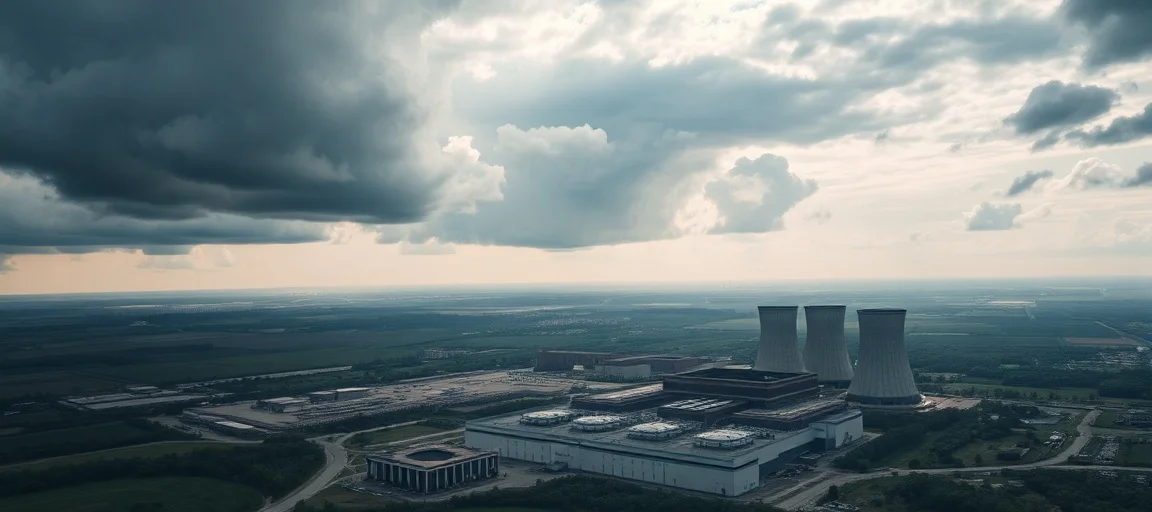
The head of Russia's state nuclear corporation Rosatom recently issued a stark warning: the situation surrounding the Zaporizhzhia Nuclear Power Plant (ZNPP) in Ukraine is rapidly approaching a "point of no return." This grave assessment comes as the facility, Europe's largest nuclear power plant, continues to endure persistent military activity and significant operational challenges, raising global instability about potential catastrophic consequences. The plant, seized by Russian forces early in the 2022 invasion, has been a focal point of international concern, with experts and world leaders calling for its demilitarization and the establishment of a robust safety zone. The ongoing fragility of its power lines, cooling systems, and the relentless pressure on its operational staff underscores the dire need for immediate and sustained de-escalation to prevent a nuclear disaster.
- Escalating Tensions: Ukraine Nuke Plant Nears 'Point of No Return'
- Critical Infrastructure Under Constant Threat
- The Human Element and International Oversight
- The Potential Impact of a Nuclear Accident
- Conclusion: Preventing the Ukraine Nuke Plant Nears 'Point of No Return' Scenario
- Frequently Asked Questions
- Further Reading & Resources
Escalating Tensions: Ukraine Nuke Plant Nears 'Point of No Return'
The warning from Rosatom's chief, Alexei Likhachev, on May 18, 2026, highlighted the escalating risks at the Zaporizhzhia Nuclear Power Plant. He explicitly stated that ongoing Ukrainian assaults are threatening nuclear safety and that the situation is "getting closer and closer to the point of no return". Likhachev stressed that such a trajectory poses significant danger, particularly for Eastern European countries, and urged all of Europe to unite efforts in de-escalating the situation around the plant. This declaration amplifies the urgent calls from international bodies for an immediate cessation of hostilities in the vicinity of the plant.
The Precarious State of Europe's Largest Nuclear Facility
The Zaporizhzhia Nuclear Power Plant, a colossal installation with six reactors, became the first operational nuclear power plant in history to be subjected to full-scale military attack and occupation when Russian forces seized it in March 2022. While the plant currently generates no electricity, its continued operation is critical for maintaining the cooling of approximately 2,600 metric tons of nuclear fuel stored on site. All six reactors have been placed in a cold shutdown state, a measure intended to reduce the need for cooling water and enhance safety margins. However, even in this state, consistent cooling remains essential to prevent a meltdown.
The International Atomic Energy Agency (IAEA) has maintained a continuous presence at the ZNPP since September 2022, with permanent monitors observing and reporting on safety and security incidents. Despite their efforts, the facility continues to face severe challenges, including frequent disruptions to its external power supply, which is vital for operating cooling systems and other essential safety functions.
Critical Infrastructure Under Constant Threat
The most immediate and recurring threat to the ZNPP's safety is the vulnerability of its external power lines. These lines are crucial for supplying the electricity needed to cool the reactors and spent fuel pools. Since the start of the conflict, the plant has experienced an alarming number of off-site power losses.
Frequent Power Outages and Reliance on Emergency Systems
The ZNPP has temporarily lost all off-site power a staggering 15 times since the military conflict began in February 2022. Each instance necessitates the immediate activation of emergency diesel generators to ensure the continued cooling of nuclear fuel and other critical safety functions. These emergency generators, while vital, are not a long-term solution and their prolonged reliance underscores the severe fragility of the plant's operational safety.
Recent incidents highlight this precarious situation:
- April 26, 2026: The plant lost all off-site power for the 15th time. The 330 kV Ferosplavna-1 backup power line, the ZNPP's last remaining off-site power line, was temporarily disconnected for approximately 60 minutes. Emergency diesel generators activated automatically to maintain essential safety functions.
- April 14 & 16, 2026: The ZNPP lost connection to the Ferosplavna-1 backup power line for approximately 90 minutes and over two hours, respectively, relying on emergency diesel generators during these outages.
- March 24, 2026: The main 750 kV Dniprovska power line has been disconnected since this date. The plant has since relied predominantly on a single 330 kV backup line.
IAEA Director General Rafael Mariano Grossi has consistently warned about these frequent power loss events, emphasizing the "still precarious nuclear safety situation in Ukraine". He highlighted that the plant's fragility, owing to limited off-site power options, severely constrains electrical maintenance and underscores the critical importance of a robust, diverse, and dependable off-site power infrastructure for nuclear safety and security.
The Kakhovka Dam Incident and Cooling Water Concerns
Another significant challenge emerged in June 2023 with the breach of the Kakhovka Dam. This event led to the depletion of the Kakhovka Reservoir, which historically served as a primary source of cooling water for the plant's systems. While the IAEA initially assessed no immediate risk to the plant's safety due to alternative water sources, the long-term water supply situation remains a concern.
To mitigate this, additional groundwater wells have been constructed to supply the sprinkler ponds used for cooling the reactors and spent fuel. As of September 2025, ZNPP staff indicated seven wells were supplying just over half the needed water, with plans for a tenth well to reassess the situation. However, the water level in the cooling pond was reported at 13.4 meters in September 2025, nearing the critical 12-meter threshold below which cooling systems could fail. The IAEA continues to monitor the water supply and has sought access to newly constructed dams intended to stabilize water levels.
The Human Element and International Oversight
Beyond the physical infrastructure, the human element—the dedicated plant personnel—operates under immense psychological pressure in a war zone. Reports have indicated difficulties in communication with staff and concerns about their ability to operate the reactors safely under duress.
IAEA's Seven Pillars of Nuclear Safety Compromised
IAEA Director General Rafael Grossi has repeatedly articulated the "Seven Indispensable Pillars of nuclear safety and security during an armed conflict." According to Grossi's statement on September 8, 2025, six of these seven pillars are currently compromised at the ZNPP. These compromised pillars include:
- Physical integrity of the facilities
- Functionality of safety and security systems
- Ability of operating staff to fulfill their duties without undue pressure
- Reliable off-site power supply
- Continuous logistics and supply chains
- Effective radiation monitoring and emergency response arrangements
- Reliable communications with the regulator and others
The ongoing military activities, including drone attacks, near the plant further exacerbate these concerns. An incident in April 2026, where a drone attack in a transportation workshop few kilometers from the site resulted in one fatality, served as a "stark reminder of the very real dangers posed when military activities take place anywhere near a nuclear facility," as stated by Director General Grossi.
Calls for a Demilitarized Zone
International calls for a demilitarized safety and security protection zone around the Zaporizhzhia Nuclear Power Plant have been ongoing since its occupation. The United Nations Security Council (UNSC) and IAEA have repeatedly urged both sides to agree on principles that would prevent any attacks from or against the plant. Despite these efforts, such an agreement has remained elusive, with both Ukrainian and Russian forces frequently accusing each other of military activity liable to compromise nuclear safety.
Establishing a protection zone would involve refraining from firing at the plant and removing heavy weapons from the area, a measure experts believe is crucial to de-escalate the situation and allow for necessary repairs and maintenance.
The Potential Impact of a Nuclear Accident
The prospect of a nuclear accident at the Zaporizhzhia Nuclear Power Plant carries severe implications, far beyond the immediate conflict zone. Experts warn that a major incident could lead to widespread radiological contamination, impacting public health and the environment across vast areas.
Health and Environmental Consequences
A meltdown at a reactor or a fire within a spent fuel pool, although currently deemed not immediately imminent by some experts given the cold shutdown state, could result in significant releases of radioactive material. Such an event would pose acute and chronic health effects, including acute radiation syndrome, increased risk of cancers, and other long-term health complications for affected populations. The environmental impact would be equally devastating, rendering areas hundreds of kilometers from the plant potentially uninhabitable for decades and contaminating agricultural land and water sources.
While some experts argue that a Chernobyl-scale disaster is technically and physically not possible at ZNPP due to its reactor design and containment vessels, the potential for a catastrophe worse than the Fukushima Daiichi incident cannot be entirely ruled out in a worst-case scenario where explosions destroy containment and cooling systems.
Global Repercussions
Beyond the immediate human and environmental toll, a nuclear accident at Zaporizhzhia would have profound global repercussions. The disruption to global energy markets, already seen after the plant's seizure, would intensify. The global economy could face further instability, and the psychological impact on populations fearing nuclear fallout would be immense. Moreover, such an event would set a dangerous precedent for nuclear security norms in future conflicts, undermining decades of international efforts to establish robust nuclear security norms.
Conclusion: Preventing the Ukraine Nuke Plant Nears 'Point of No Return' Scenario
The situation at the Zaporizhzhia Nuclear Power Plant remains critically unstable, with warnings that it is approaching a "point of no return" serving as a stark reminder of the unprecedented risks posed by militarized nuclear facilities. The cumulative impact of repeated power losses, ongoing military actions, and the compromised integrity of essential safety pillars necessitates urgent international action. The international community, led by bodies like the IAEA, continues to call for maximum restraint and the establishment of a demilitarized zone to safeguard the plant. Preventing a nuclear disaster at this vital facility requires a concerted global effort to de-escalate military activity and ensure the safe and secure operation of the plant, protecting not only Ukraine but the broader region from potentially catastrophic consequences.
Frequently Asked Questions
Q: What does "point of no return" mean for the Zaporizhzhia Nuclear Power Plant?
A: It signifies a critical threshold where the plant's safety systems or infrastructure might suffer irreversible damage, making a major nuclear accident increasingly probable and difficult to prevent, regardless of future efforts.
Q: What are the main threats to the ZNPP's safety?
A: The primary threats include frequent disruptions to external power lines crucial for cooling, the long-term water supply for cooling systems, and the immense psychological pressure on the plant's operating staff amidst a conflict zone.
Q: What is the IAEA's role at the Zaporizhzhia Nuclear Power Plant?
A: The IAEA maintains a continuous presence at the ZNPP, monitoring safety and security incidents, reporting on the plant's status, and advocating for a demilitarized zone to ensure the integrity of its "Seven Indispensable Pillars of nuclear safety."
Further Reading & Resources
- Zaporizhzhia Nuclear Power Plant on Wikipedia
- IAEA Updates on Ukraine
- Reuters: Ukraine's Zaporizhzhia nuclear plant loses last main power line
- BBC News: Ukraine war: What is happening at the Zaporizhzhia nuclear power plant?
- Council on Foreign Relations: The Zaporizhzhia Nuclear Power Plant Is an Unacceptable Risk