India's New EV Battery Tech Shakes Up Market: A Game Changer
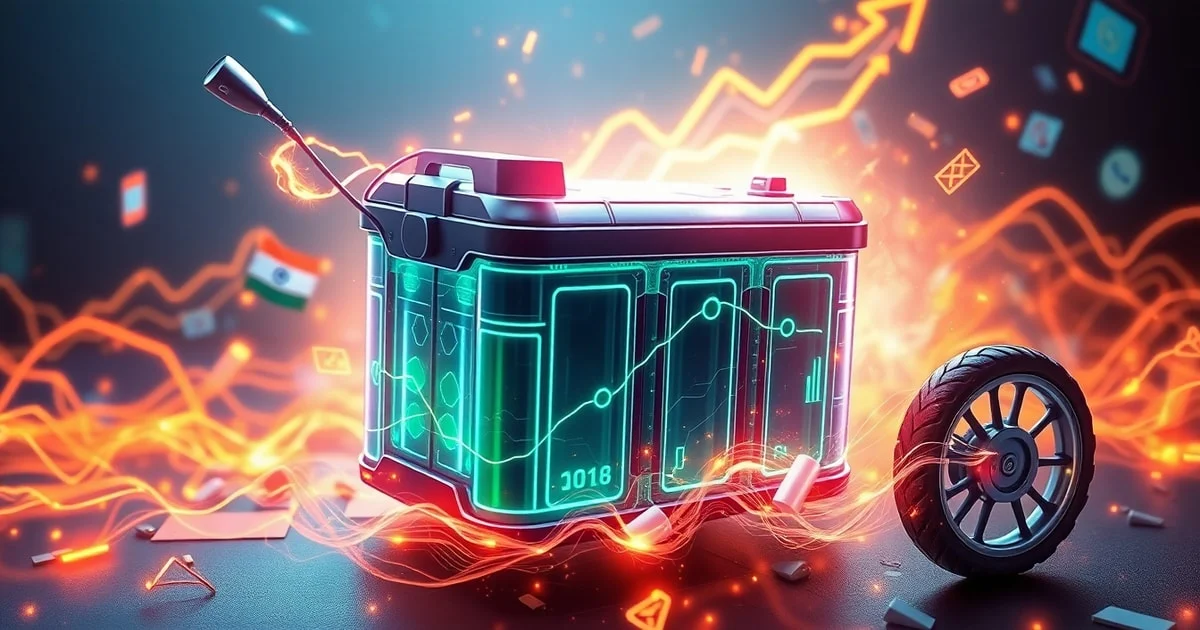
India is on the cusp of a significant transformation in its automotive sector, driven by recent breakthroughs in electric vehicle (EV) battery technology. These innovations are set to disrupt the status quo, promising to make EVs more accessible, efficient, and sustainable for the masses. This pivotal moment, where India's New EV Battery Tech Shakes Up Market dynamics, heralds a future where indigenous solutions could redefine global benchmarks for clean mobility.
- The Imperative for Indigenous Battery Technology
- Pioneering Research and Development: The Heart of Innovation
- Key Players and Their Contributions
- The Economic & Global Ripple: India's New EV Battery Tech Shakes Up Market
- Navigating Challenges and Future Outlook
- Frequently Asked Questions
- Further Reading & Resources
The Imperative for Indigenous Battery Technology
India's journey towards electric mobility has been ambitious, spurred by a commitment to reduce carbon emissions, lower crude oil import bills, and combat urban pollution. However, a major hurdle has been the reliance on imported battery cells, primarily lithium-ion, which carry significant costs and supply chain vulnerabilities. The high price of these imported components directly impacts the final cost of EVs, making them less competitive against traditional internal combustion engine (ICE) vehicles. Furthermore, the global scramble for critical battery minerals like lithium and cobalt presents geopolitical challenges and price volatility, emphasizing the urgent need for self-reliance in battery manufacturing.
India's EV Ambition and Challenges
The Indian government has set aggressive targets for EV adoption, aiming for 30% private cars, 70% commercial vehicles, and 80% two-wheelers and three-wheelers by 2030. This ambitious vision, critical for India's commitment to climate goals and energy independence, is underpinned by various policy initiatives like the Faster Adoption and Manufacturing of Electric Vehicles (FAME) scheme and Production Linked Incentive (PLI) schemes for Advanced Chemistry Cell (ACC) battery manufacturing. These schemes aim to galvanize domestic production capabilities, fostering an ecosystem where billions of dollars in investment can translate into tangible manufacturing output. Despite these efforts, challenges persist, including limited charging infrastructure, consumer apprehension about range anxiety, and, most critically, the cost and performance of battery packs. Indigenous battery technology is seen as the linchpin to overcoming these obstacles, fostering a robust domestic EV ecosystem, and achieving energy security, thereby establishing India as a leader rather than just a consumer in the global EV market.
Pioneering Research and Development: The Heart of Innovation
The recent buzz around "India's New EV Battery Tech Shakes Up Market" stems from significant strides made by Indian scientists, startups, and established companies in developing advanced battery solutions. These efforts are not merely incremental improvements but often involve novel material science, innovative cell chemistries, and smarter battery management systems designed specifically for India's diverse climate and driving conditions.
Beyond Lithium-Ion: Exploring New Chemistries
While lithium-ion remains the dominant technology, Indian researchers are actively exploring alternatives that offer advantages in terms of cost, safety, and raw material availability.
- Sodium-Ion Batteries: Given India's abundant reserves of sodium, sodium-ion batteries present a highly promising alternative to lithium-ion. These batteries typically use common materials like sodium and iron, making them significantly cheaper to produce and less dependent on imported critical minerals. Research is focused on improving energy density, cycle life, and charge/discharge rates to make them viable for automotive applications. Several Indian institutions and companies are reportedly in advanced stages of developing sodium-ion cell prototypes, with some aiming for commercialization within the next few years.
- Solid-State Batteries: Often touted as the "holy grail" of battery technology, solid-state batteries replace the flammable liquid electrolyte with a solid material, offering enhanced safety, higher energy density, and potentially faster charging times. Indian R&D initiatives are exploring various solid-state electrolyte materials and manufacturing processes to overcome existing challenges related to cost and scalability. The potential for these batteries to offer significantly longer ranges and safer operation could be a game-changer for the Indian EV market.
- Aluminium-Air Batteries: While not rechargeable in the same way as lithium-ion or sodium-ion, aluminium-air batteries offer extremely high energy density and could serve as range extenders or power sources for specific applications. Research in India is exploring their potential, particularly for heavy-duty vehicles or scenarios where rapid energy replenishment is critical.
Advancements in Battery Management Systems (BMS)
Beyond the cell chemistry, intelligent Battery Management Systems (BMS) are crucial for optimizing battery performance, extending lifespan, and ensuring safety. Indian companies are developing advanced BMS solutions that incorporate artificial intelligence and machine learning to predict battery degradation, manage thermal runaway, and optimize charging patterns. These smart BMS technologies are essential for maximizing the value of any new battery chemistry introduced to the market.
Key Players and Their Contributions
The ecosystem of battery innovation in India is diverse, involving public sector research institutions, private companies, and agile startups.
- ISRO (Indian Space Research Organisation): ISRO has been at the forefront of battery technology for its space missions and has successfully transferred its indigenous lithium-ion battery technology to Indian industries for commercial production. This transfer has been instrumental in kickstarting domestic Li-ion cell manufacturing capabilities.
- CSIR (Council of Scientific & Industrial Research): Various CSIR labs, such as the Central Electrochemical Research Institute (CECRI), are actively involved in research on advanced battery materials and new cell chemistries, including sodium-ion and solid-state batteries. Their work often forms the foundational science for future commercial applications.
- Startups and Private Sector: A new wave of Indian startups and established auto component manufacturers are investing heavily in battery R&D. Companies like Log9 Materials, for instance, are developing rapid-charging battery technology tailored for commercial EV fleets and two-wheelers. Other players are focusing on localized manufacturing, recycling solutions, and developing specialized battery packs for various EV segments. Large Indian conglomerates are also entering the fray, setting up gigafactories and forming partnerships to leverage global expertise while building domestic capabilities.
The Economic & Global Ripple: India's New EV Battery Tech Shakes Up Market
The development and widespread adoption of India's new EV battery tech will have far-reaching implications, extending beyond just the automotive industry.
Boosting Economic Growth and Job Creation
A thriving domestic battery manufacturing sector will lead to significant economic benefits. It will create numerous jobs across the value chain, from raw material processing and cell manufacturing to battery pack assembly, testing, and recycling. This industrial growth will attract further investment, both domestic and foreign, into the clean energy sector. Reducing reliance on imported batteries will also save substantial foreign exchange, positively impacting India's trade deficit. The PLI scheme for ACC batteries, for example, is expected to attract over INR 45,000 crore (approximately USD 6 billion) of investment and create direct and indirect employment for over 50,000 people.
Enhancing Energy Security and Reducing Import Bills
By producing batteries domestically, India can significantly reduce its dependence on global supply chains for critical EV components. This enhances national energy security, insulating the country from geopolitical shocks and price fluctuations in the international market for raw materials and finished cells. The reduction in crude oil imports due to increased EV adoption, combined with local battery production, will lead to substantial savings in India's import bill.
Environmental Sustainability and Circular Economy
Indigenous battery technology often comes with the opportunity to design for sustainability. Localized production allows for greater control over manufacturing processes, potentially leading to lower carbon footprints. Furthermore, Indian companies are actively exploring battery recycling technologies to establish a circular economy for EV batteries. This approach aims to recover valuable materials from end-of-life batteries, reducing the need for virgin mining and minimizing environmental impact. The development of sodium-ion batteries, which rely on more abundant and less environmentally impactful materials, aligns perfectly with these sustainability goals.
Navigating Challenges and Future Outlook
While the promise of India's new EV battery tech is immense, several challenges need to be addressed to ensure its successful large-scale deployment.
Scaling Production and Investment
Translating laboratory breakthroughs into mass-producible, cost-effective batteries requires substantial investment in manufacturing infrastructure. Establishing gigafactories, each demanding investments potentially in the hundreds of millions or even billions of dollars, and building a robust supply chain for raw materials, even for indigenous chemistries, will be critical. Government support through policies and financial incentives, such as further extensions of PLI schemes or creation of specialized funds, will continue to play a crucial role in de-risking these investments for private players, ensuring that India can compete effectively on a global scale against established battery manufacturing hubs.
Raw Material Sourcing and Processing
Even for technologies like sodium-ion, which use more abundant materials, efficient and sustainable sourcing and processing of these raw materials are essential. Developing domestic capabilities for mineral extraction, refining, and precursor material manufacturing will strengthen the entire battery value chain. This includes investing in advanced metallurgy and chemical engineering processes to refine raw materials to battery-grade purity within India.
Standardization and Safety Regulations
As new battery technologies emerge, developing clear standards for performance, safety, and interoperability will be vital. Robust regulatory frameworks are necessary to ensure consumer confidence and prevent market fragmentation. India's unique climate conditions also necessitate rigorous testing and certification processes to ensure battery performance and safety under various environmental stresses, from extreme heat to monsoons.
The Road Ahead for "India's New EV Battery Tech Shakes Up Market"
The future of India's EV battery sector looks bright, propelled by a combination of scientific innovation, government backing, and private sector dynamism. Continued investment in R&D, fostering collaborations between academia and industry, and creating a supportive policy environment will be key to unlocking the full potential of these indigenous technologies. As India moves closer to self-reliance in battery manufacturing, it is not just transforming its own automotive market but also positioning itself as a significant player in the global clean energy transition. The coming years will undoubtedly see accelerated innovation and commercialization, solidifying the impact as India's New EV Battery Tech Shakes Up Market dynamics globally.
Frequently Asked Questions
Q: What makes India's new EV battery technology a "game changer"?
A: India's innovations go beyond traditional lithium-ion, exploring alternatives like sodium-ion and solid-state batteries. These promise lower costs, enhanced safety, and reduced reliance on imported critical minerals, making EVs more accessible and sustainable for the mass market.
Q: What are the main types of advanced battery chemistries being developed in India?
A: Indian researchers are focusing on sodium-ion batteries due to abundant local reserves, solid-state batteries for improved safety and energy density, and aluminium-air batteries for specific high-energy applications or range extension.
Q: How will indigenous battery production benefit India economically and environmentally?
A: Localized production will create jobs, attract investment, and save foreign exchange by reducing import bills. Environmentally, it allows for greater control over sustainable manufacturing, and supports a circular economy through advanced recycling technologies, minimizing environmental impact.