Trump Delays Iran Deal on Hormuz Reopening, Global Markets React
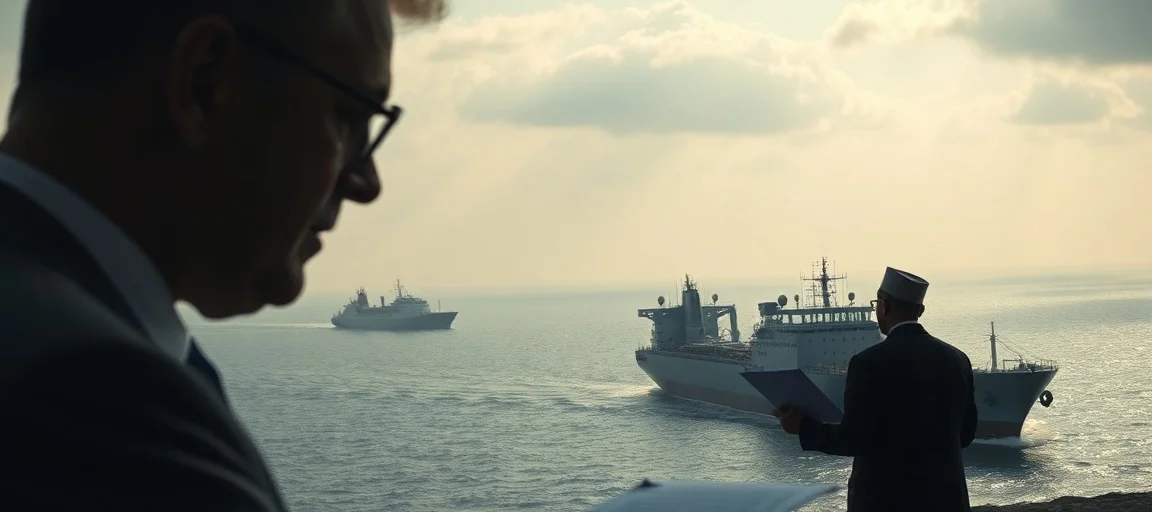
The global community watches with bated breath as President Donald Trump delays a final determination on a potential agreement with Iran, leaving the critical Strait of Hormuz reopening shrouded in uncertainty. This crucial development comes amidst reports of a tentative memorandum of understanding between U.S. and Iranian negotiators aimed at extending a ceasefire and initiating new talks on Iran's nuclear program. The delay, however, prolongs significant global economic disruption caused by the effective closure of the Strait, a vital artery for international energy trade.
- The Strait of Hormuz: A Critical Chokepoint
- Navigating the Negotiations: A Tentative Deal
- Trump's Stance: Delaying the Iran Deal on Hormuz Reopening
- Global Economic Fallout
- Historical Context of Iran-US Tensions
- Future Outlook and Unresolved Issues
- Conclusion
- Frequently Asked Questions
- Further Reading & Resources
The Strait of Hormuz: A Critical Chokepoint
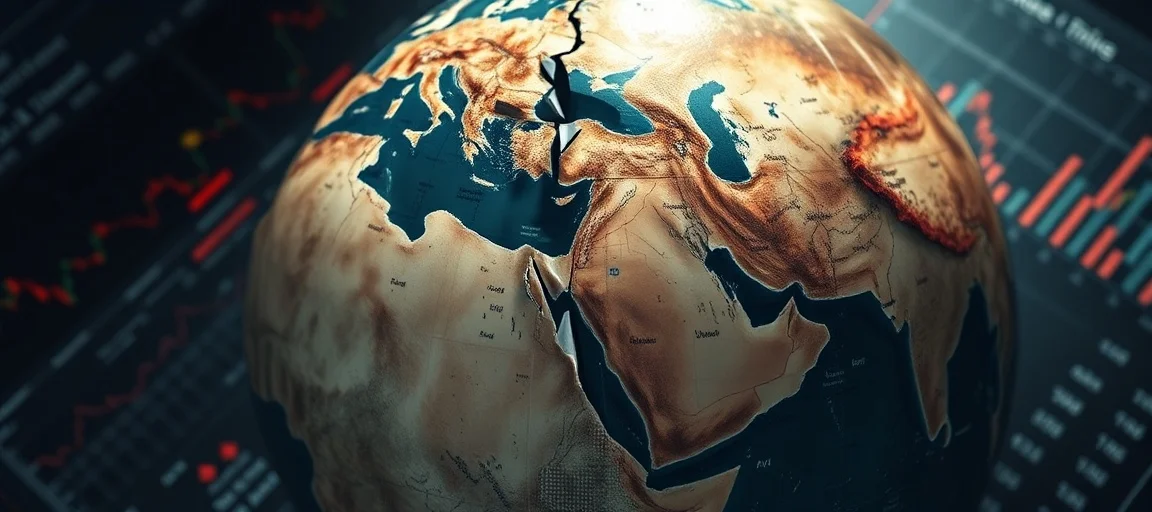
The Strait of Hormuz, a narrow maritime passage connecting the Persian Gulf to the open ocean, stands as one of the world's most strategically vital chokepoints. Approximately 20% of global oil and a significant portion of liquefied natural gas (LNG) transit through this waterway annually, making its unobstructed flow indispensable for global energy markets and supply chains. Since February 28, 2026, the Strait has faced a de facto closure, or at least severe disruption, following a coordinated military campaign against Iranian military infrastructure. This has had immediate and severe repercussions worldwide.
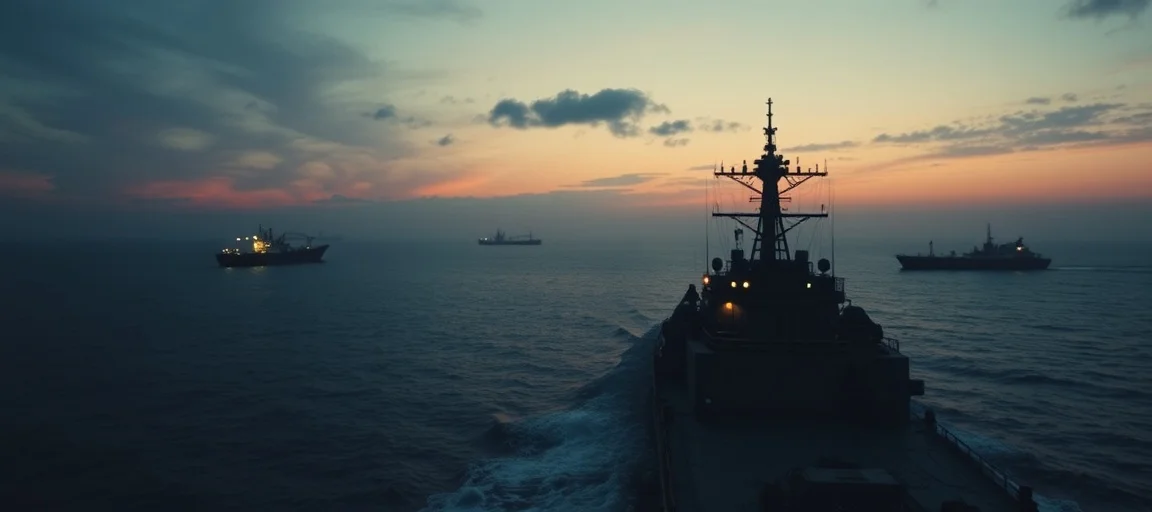
The ongoing disruption has led to a dramatic reduction in vessel traffic, with some reports indicating a plummet of up to 95% in transit through the Strait. Iran's Islamic Revolutionary Guard Corps (IRGC) has reportedly broadcast warnings declaring vessels bound for the United States, Israel, or their regional partners as legitimate military targets. This has effectively transformed the Strait into a "toll system" or a zone under Iranian control, where access is conditional and fraught with risk. The implications extend beyond energy, affecting global supply chains, shipping systems, and financial markets, causing measurable economic damage and destabilizing the global economy.
Navigating the Negotiations: A Tentative Deal
Recent diplomatic efforts have centered on a proposed memorandum of understanding (MOU) between U.S. and Iranian negotiators. This tentative agreement aims to extend a fragile ceasefire, in place for several months, by an additional 60 days. The primary goals of this framework include the reopening of the Strait of Hormuz for international shipping and the resumption of deeper negotiations on contentious issues, particularly Iran's nuclear program.
The United States, under President Trump, has outlined several "red lines" that Iran must meet for a deal to be finalized. These demands include Iran's commitment to never possess a nuclear weapon, the destruction or removal of its highly enriched uranium stockpile, and the immediate, unconditional reopening of the Strait of Hormuz without tolls. U.S. officials have stated that President Trump will only sign an agreement that satisfies these critical conditions.
Conversely, Iran's position remains distinct. While acknowledging progress in some areas, Iranian officials have denied that a final agreement has been reached. Iran's Foreign Ministry spokesperson has emphasized that the country's primary focus is on ending the ongoing conflict and securing a ceasefire, rather than negotiating the specifics of its nuclear program at this stage. Iran also seeks the inclusion of broader regional issues in any agreement, such as ceasefire arrangements between Israel and Hezbollah in Lebanon, and the release of frozen Iranian funds. Furthermore, Iran has asserted its "legal right" to manage the Strait of Hormuz, a stance that directly contradicts U.S. demands for unrestricted international navigation.
Vice President JD Vance has been closely involved in these negotiations, confirming that while significant progress has been made, the two sides are "not there yet" on a complete deal. The intricate web of demands and counter-demands underscores the deep mistrust and complex geopolitical realities at play.
Trump's Stance: Delaying the Iran Deal on Hormuz Reopening
President Trump's decision to delay final approval on the Iran deal concerning the Hormuz reopening reflects a cautious and calculated approach to a highly sensitive geopolitical issue. Public statements from the President have consistently emphasized a policy of not rushing into an agreement, asserting that "time is on our side" and that "there can be no mistakes" in such a critical deal. This aligns with his historical skepticism regarding international agreements, notably his withdrawal from the Joint Comprehensive Plan of Action (JCPOA), often referred to as the Iran nuclear deal, in 2018.
Trump has sharply contrasted the current negotiations with the 2015 JCPOA, which he famously called "one of the worst deals ever made" and a "direct path to Iran developing a nuclear weapon". His administration's current focus is on securing a "good and proper" agreement that effectively curbs Iran's nuclear ambitions and ensures the immediate, free passage through the Strait of Hormuz. This insistence on meeting specific "redlines" indicates a desire for a comprehensive and ironclad resolution that addresses perceived shortcomings of previous accords.
The delay in making a final determination, even after a tentative framework has been reached, highlights the political complexities involved. Senior administration officials have noted that the meeting held on Friday, May 30, 2026, concluded without a definitive decision, underscoring the gravity of the concessions and assurances required from both sides. This approach may also be a tactic to exert further pressure on Iran, signaling that the U.S. is prepared to maintain its naval blockade and other economic measures until its demands are fully met.
Global Economic Fallout
The prolonged uncertainty surrounding the Strait of Hormuz reopening, compounded by President Trump's delayed decision on the Iran deal, has sent significant shockwaves across global energy and financial markets. The effective closure or severe disruption of this vital waterway since late February 2026 has been described as the "single greatest threat to global energy markets in decades".
Impact on Oil and Gas Prices:
The most immediate and visible consequence has been the dramatic surge in oil prices. Brent crude prices, which were around 115 and could reach as high as $200/bbl in severe scenarios. While expectations of a ceasefire extension and potential reopening have recently caused a pullback in prices, the underlying volatility remains high. Over 11 million barrels per day (b/d) of Gulf crude and condensate production, along with more than 80 million tonnes per annum (Mtpa) of LNG supply (approximately 20% of global supply), have become inaccessible to global markets. LNG markets are particularly vulnerable, given Qatar's dependence on Hormuz for exports to Asian buyers.
Broader Economic Contagion:
The economic fallout extends far beyond energy. Wood Mackenzie warns of a shallow global recession in the second half of 2026 if supply shortages persist, with global GDP growth falling below 2%. Regional impacts are severe and uneven, with the Middle East potentially seeing GDP contract by 10.7% in 2026, while EU27 GDP could decline by 1.5% and US GDP growth fall below 1%. China's GDP growth is also projected to slow significantly. The crisis has disrupted global supply chains, affecting shipping, air freight, tourism, and trade timing. The blockage has stranded an estimated 170 containerships carrying 450,000 Twenty-foot Equivalent Units (TEUs) of cargo, severely impacting just-in-time logistics networks.
International Reactions:
International leaders have expressed grave concerns. UK Prime Minister Keir Starmer stated Britain would not support a naval blockade and would not be drawn into confrontation with Iran. Spain's Defense Minister Margarita Robles criticized the blockade as "something that makes no sense," warning of further destabilization. China has urged restraint and called for renewed diplomatic engagement. German Chancellor Friedrich Merz has warned that the economic impact will persist long after hostilities subside, with Germany announcing relief measures like fuel tax cuts. Even distant island nations like Palau have felt the pressure, with President Surangel Whipps Jr reporting a doubling of diesel prices.
Strategic Shifts and Beneficiaries:
The crisis has also forced a strategic re-evaluation of energy security. Importing countries are accelerating efforts to reduce oil dependence through electrification, while resource-rich producers outside the Gulf, such as U.S. LNG exporters, are benefiting from increased demand for supply diversification. The long-term outlook points to structurally weaker oil prices if importing countries successfully reduce dependence. Interestingly, amid the disruptions, Russia and China, and even Iran, may emerge as key beneficiaries. Iran has reportedly allowed only Chinese-affiliated vessels to transit the Strait, and it stands to gain significant oil and gas revenues. Furthermore, J.P. Morgan estimates that clearing stranded vessels in the Gulf could generate billions for Tehran's post-war reconstruction, rivaling the annual toll revenues of major canals.
Historical Context of Iran-US Tensions
The current standoff is deeply rooted in a long and tumultuous history of Iran-U.S. relations, particularly since the Trump administration's first term. In 2018, President Trump withdrew the United States from the Joint Comprehensive Plan of Action (JCPOA), the multinational Iran nuclear deal signed in 2015 under the Obama administration. He characterized the deal as "horrible" and "one-sided," arguing it merely delayed Iran's path to nuclear weapons and failed to address its ballistic missile program or regional activities.
Following the withdrawal, the Trump administration launched a "maximum pressure campaign" against Iran, reimposing and intensifying economic sanctions across Iran's financial, oil, and shipping sectors. This campaign aimed to compel Iran to negotiate a new, more comprehensive agreement that would permanently dismantle its nuclear program and curb its malign influence in the region.
Iran responded by gradually scaling back its commitments under the JCPOA, increasing uranium enrichment levels and stockpiles beyond the deal's limits. Tensions escalated significantly with attacks on oil tankers, the downing of a U.S. drone, and suspected strikes on Saudi oil facilities. Iran has a long history of threatening to close the Strait of Hormuz in response to sanctions or military pressure, viewing it as a strategic lever to exert pressure on the international community. These threats, often accompanied by naval maneuvers, aim to demonstrate Iran's credible operational capabilities to disrupt maritime traffic. The recent military campaign and subsequent de facto closure of the Strait mark a significant escalation of these long-standing tensions, pushing the region and global markets to the brink.
Future Outlook and Unresolved Issues
The immediate future of the Iran deal and the reopening of the Strait of Hormuz hinges critically on President Trump's final determination. Despite the tentative framework reached by negotiators, the President has yet to sign off, signaling that key differences remain unresolved. Iran, for its part, continues to express skepticism, with its top negotiator stating, "We have no trust in guarantees or words – only actions are the measure". This lingering distrust underscores the fragility of the current diplomatic efforts.
The demands from both sides reveal the depth of the chasm that still needs to be bridged. While the U.S. insists on Iran relinquishing its enriched uranium stockpile and reopening the Strait without conditions or tolls, Iran prioritizes an end to the war, the release of frozen assets, and continued management of the strategic waterway. The involvement of regional issues, such as the ceasefire between Israel and Hezbollah, further complicates the negotiations.
Beyond the immediate crisis, the Strait of Hormuz disruption has accelerated structural changes in global energy markets. Countries are increasingly investing in alternative energy sources and new export infrastructure, such as pipelines that bypass the Strait, and focusing on cleaner energy solutions like green hydrogen. This long-term shift towards reducing hydrocarbon dependence could reshape energy geopolitics, creating a more volatile pricing environment and increasing pressure on import-dependent economies to strengthen energy security. The ongoing situation in the Gulf serves as a stark reminder that energy markets are intrinsically linked to geopolitical events and regional conflicts.
Conclusion
The decision by President Donald Trump to delay final approval on the Trump Delays Iran Deal on Hormuz Reopening has created a moment of significant global apprehension. While negotiators have forged a tentative path towards a 60-day ceasefire extension and renewed nuclear talks, the President's insistence on specific "red lines" and Iran's differing priorities leave the future of the critical waterway and the broader regional stability in a precarious state. The ongoing closure of the Strait of Hormuz continues to exert immense pressure on global energy markets and supply chains, underscoring the profound economic and geopolitical consequences of this unresolved standoff. The world awaits a definitive resolution, hoping for a path to de-escalation that ensures both regional stability and global economic security.
Frequently Asked Questions
Q: Why is the Strait of Hormuz critical to global markets?
A: The Strait of Hormuz is a vital maritime chokepoint through which approximately 20% of the world's oil supply and a significant portion of liquefied natural gas transit daily. Its disruption has immediate and severe impacts on global energy prices and supply chains.
Q: What are the key demands from the U.S. and Iran in the ongoing negotiations?
A: The U.S. demands Iran commit to never possessing a nuclear weapon, destroy its enriched uranium stockpile, and unconditionally reopen the Strait. Iran seeks an end to conflict, release of frozen funds, and asserts its right to manage the Strait, also seeking inclusion of broader regional issues.
Q: What has been the economic impact of the Strait of Hormuz disruption?
A: The disruption has caused dramatic surges in oil and gas prices, with Brent crude reaching near $115/bbl. It threatens a global recession, disrupts supply chains, and has severe regional GDP impacts, prompting countries to re-evaluate energy security.