Somali Forces Eliminate 14 Al Shabaab Militants in Major Operation
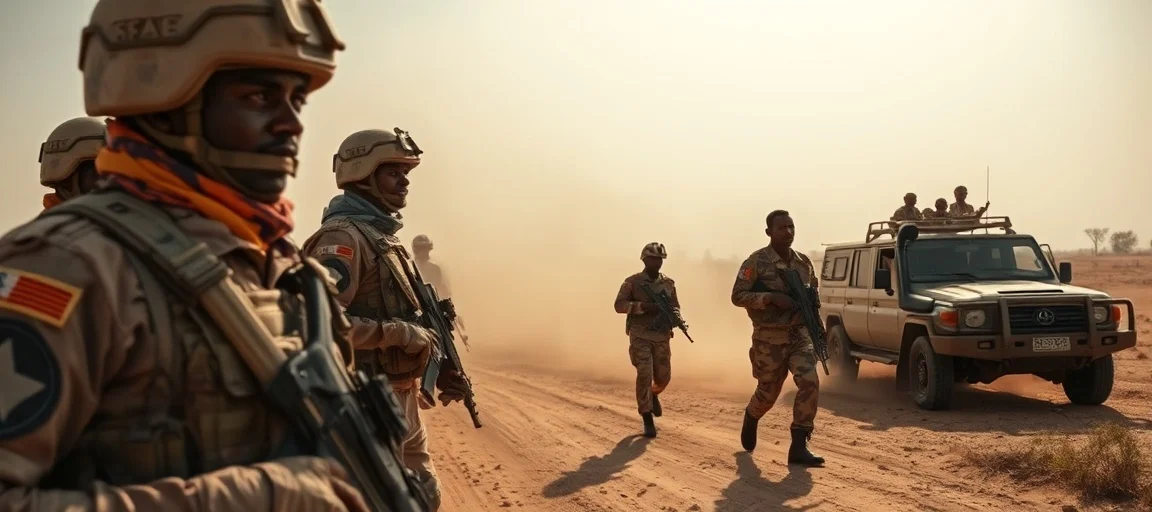
In a significant victory against the persistent threat of terrorism, Somali forces successfully eliminated 14 Al Shabaab militants, including several senior commanders, during a targeted security operation in the country's southwestern Bay region. This decisive action, reported by government officials on Saturday, marks another crucial step in Somalia's ongoing campaign to restore stability and security to the nation. The operation, which also saw the destruction of militant bases and weapons caches, underscores the unwavering commitment of the Somali government and its allied forces to eradicate the al-Qaeda-linked extremist group.
- Somali Forces Strike Al-Shabaab Stronghold in Bay Region
- Background to the Conflict: Al-Shabaab's Enduring Threat
- The Somali Government's Counter-Insurgency Efforts
- The Role of Elite Forces: Danab Commandos
- Strategic Significance of Recent Operations
- Challenges and International Support
- Expert Analysis: Somali Forces Eliminate 14 Al Shabaab Militants and the Path Forward for Somalia
- Frequently Asked Questions
- Further Reading & Resources
- Conclusion
Somali Forces Strike Al-Shabaab Stronghold in Bay Region
On Saturday, September 5, 2026, Somali government forces carried out a meticulously planned overnight operation in the Buula Fulay area of the southern Bay region, resulting in the elimination of 14 Al Shabaab militants. The Ministry of Defense confirmed that the assault targeted hideouts where the fighters, including key commanders, were located. This strategic strike not only neutralized a significant number of active combatants but also severely disrupted the group's operational capabilities in a critical area.
The operation was spearheaded by elite units of the Somali National Army, including the highly trained Danab special forces. These specialized commandos, known for their precision and effectiveness, successfully destroyed the militant bases and a cache of arms and military equipment that Al-Shabaab used to plan and execute their attacks. The Ministry of Defense statement lauded the courage and sacrifice of the soldiers, emphasizing that such operations will continue until the militants are fully eradicated.
A particularly impactful outcome of this recent engagement was the identification and killing of five senior Al-Shabaab commanders. The Ministry of Defense released their identities as Bishaar Mohamed Mukhtar (also known as Sheikh Bishaar), Ali Nur Mohamed Idris, Hussein Hassan Dahir (Lahelow), Nur Abdullahi Hashi (Sudeysi), and Omar Hassan Hussein. Sheikh Bishaar was described as a long-standing member of Al-Shabaab's so-called judicial office and served as the group's self-appointed qadi for the Gedo Region, having previously held the same position in Bay and Lower Shabelle regions. Ali Nur Mohamed Idris was identified as a battalion commander and one of the leaders orchestrating militant activities in the Bay Region, involved in organizing and carrying out attacks in Baidoa. The Ministry further noted that the operation seriously wounded Jafar Abu Hamza, Al-Shabaab's self-proclaimed "governor" of Bay Region, and Hassan Ibrahim, a member of the group's extortion and illicit revenue collection wing in the region. This blow to their leadership is expected to significantly degrade Al-Shabaab's command structure, operational capacity, and explosives networks in the Bay Region.
Background to the Conflict: Al-Shabaab's Enduring Threat
Al-Shabaab, meaning "The Youth" in Arabic, is an al-Qaeda-affiliated religiously motivated violent extremist organization that has plagued Somalia for over a decade and a half. Emerging in 2006 as the most prominent militia within the militant wing of the Council of Islamic Courts, the group's primary objective is the establishment of an Islamist state in the Horn of Africa based on Sharia law, and the elimination of secular and foreign influence. The group currently controls territory in southern Somalia, though this control remains fluid and subject to change based on counter-terrorism activities by the African Union Transition Mission in Somalia (ATMIS) and the Somali National Army (SNA).
The group has been responsible for countless acts of terrorism, including suicide bombings, mortar attacks, and ambushes, targeting civilians, government officials, and security forces within Somalia and in neighboring countries like Kenya and Ethiopia. Their tactics also include exploiting clan divisions, humanitarian crises, and gaps in state authority to expand their presence and influence.
Over the years, Al-Shabaab has developed a sophisticated network for gathering resources through both licit and illicit means, including extorting fees at checkpoints and taxing businesses. They have proven to be resilient, often regrouping and recapturing territory previously lost to government forces, taking advantage of haphazard post-conflict stabilization efforts. The conflict with Al-Shabaab is recognized as one of the deadliest in Africa involving Islamist militants, presenting a continuous challenge to regional security.
The Somali Government's Counter-Insurgency Efforts
The Federal Government of Somalia (FGS) has intensified its military offensive against Al-Shabaab, particularly under President Hassan Sheikh Mohamud, who launched a "total war" against the group in August 2022. This renewed offensive has seen significant territorial gains in central Somalia, especially in the Hirshabelle and Galmudug regions. A key characteristic of this campaign has been the strategic support provided to local clan militias, known as Ma'awisley, who have been instrumental in resisting Al-Shabaab's control.
The initial phase of the offensive concentrated on dislodging Al-Shabaab from central Somalia. By April 2023, the campaign had reportedly recovered over 200 settlements. Despite these early successes, the government has faced challenges in consistently implementing stabilization policies, allowing Al-Shabaab to regroup and launch counterattacks throughout 2023.
In August 2023, one year after President Mohamud declared "total war," Somali forces announced the launch of the campaign's second phase, focusing on uprooting militants from their southern strongholds. This phase also incorporated new financial and ideological tactics, including offering amnesty to Al-Shabaab fighters. However, the campaign has experienced limited success, with the group claiming to have inflicted significant casualties on government forces and forcing retreats from several towns.
The government's commitment to eradicating Al-Shabaab remains firm. President Mohamud has stated that the next phase of operations will target the southwest of the country and the state of Jubaland, which are historical Al-Shabaab strongholds. He expressed confidence that the Somali National Army would eventually defeat Al-Shabaab and assume full responsibility for the country's security, even amidst the gradual withdrawal of African Union forces.
The Role of Elite Forces: Danab Commandos
Central to Somalia's counter-terrorism strategy is the active involvement of specialized units like the Danab Commandos. These highly trained elite special operations units of the Somali National Army are frequently deployed in critical operations against Al-Shabaab. Their training and capabilities enable them to conduct precision raids, dismantle militant infrastructure, and neutralize high-value targets.
The recent operation in Buula Fulay is a testament to the Danab Commandos' effectiveness. Their ability to successfully eliminate 14 Al Shabaab militants, including senior figures, demonstrates their pivotal role in weakening the group's leadership and operational capacity. Such targeted operations are crucial in degrading Al-Shabaab's ability to plan and execute large-scale attacks, thereby contributing significantly to the overall security of the nation.
The Danab brigade, often supported by international partners, represents a modernized and professional component of the Somali National Army, vital for prosecuting the war against Al-Shabaab. Their continued development and deployment are seen as essential for achieving long-term stability and security in Somalia.
Strategic Significance of Recent Operations
The elimination of 14 Al Shabaab militants, particularly with the confirmed deaths of five senior commanders, carries significant strategic implications for the ongoing conflict. Firstly, it represents a substantial decapitation strike against the group's leadership in a key region. The loss of experienced commanders like Sheikh Bishaar, who held judicial and administrative roles within the group, disrupts their command and control structure, potentially leading to disarray and internal power struggles. Secondly, the destruction of militant bases and weapons caches impedes Al-Shabaab's logistical capabilities and their ability to launch future attacks. By denying them safe havens and resources, Somali forces can reduce the frequency and intensity of extremist violence.
Thirdly, successful operations like this boost the morale of the Somali National Army and local populations, fostering greater trust and cooperation between communities and government forces. When the military demonstrates its ability to protect citizens and effectively counter the terrorist threat, it strengthens public support for the government's anti-insurgency efforts. Conversely, it sends a strong message to Al-Shabaab and its sympathizers that their activities will be met with decisive force.
However, security analysts emphasize that while tactical victories are important, Al-Shabaab's resilience stems from its ability to adapt and exploit existing vulnerabilities. Sustained pressure, coupled with comprehensive governance and development initiatives, will be necessary to prevent the group from regrouping and reasserting control in affected areas.
Challenges and International Support
Despite the recent successes, Somalia faces a complex and multifaceted security landscape. The effectiveness of its counter-terrorism response is often impeded by political and constitutional instability, persistent clan divisions, and fragmentation between central and federal member state authorities. These internal challenges can create opportunities for Al-Shabaab to exploit and expand its influence.
The planned withdrawal of the African Union Transition Mission in Somalia (ATMIS) forces, which is expected to be completed by the end of 2024, poses both an opportunity and a challenge. While it signifies a step towards Somalia assuming full responsibility for its own security, there are concerns about whether the Somali National Army is fully prepared to take over all security duties without sustained international support. The African Union Support and Stabilization Mission in Somalia (AUSSOM) replaced ATMIS in January 2025, with a mandate to support Somali Security Forces, yet challenges remain in effective command and coordination across various forces.
International partners continue to play a crucial role in supporting Somalia's fight against terrorism. The African Union, United States, Turkey, and the United Nations provide varying forms of assistance, including training, logistical support, intelligence sharing, and targeted airstrikes. For instance, the UN Office of Counter-Terrorism (UNOCT) has conducted consultations in Mogadishu to enhance national capacities in countering the terrorist use of improvised explosive devices (IEDs), which Al-Shabaab frequently employs. This collective international effort is vital in bolstering Somalia's capabilities and ensuring the sustainability of its counter-terrorism operations.
Expert Analysis: Somali Forces Eliminate 14 Al Shabaab Militants and the Path Forward for Somalia
Security experts frequently highlight the need for a multi-pronged approach to effectively counter Al-Shabaab. The recent operation, where Somali forces eliminate 14 Al Shabaab militants, including commanders, is a testament to improved intelligence and tactical capabilities. While military operations are essential for degrading the group's capacity, they must be complemented by robust governance, economic development, and reconciliation efforts.
"The recent operation, where Somali forces eliminate 14 Al Shabaab militants, including commanders, is a testament to improved intelligence and tactical capabilities," states Dr. Abdi Osman, a security analyst specializing in the Horn of Africa. "However, sustainable peace in Somalia will only come through a holistic strategy that not only targets militants on the battlefield but also addresses the root causes of extremism: poverty, lack of opportunity, and political grievances. The government must focus on extending state authority and services to newly liberated areas to prevent Al-Shabaab from returning."
Dr. Osman further emphasizes the importance of consistent international support tailored to Somalia's evolving needs, especially as African Union forces transition responsibilities. "Building the capacity of the Somali National Army and ensuring a unified command structure are paramount. At the same time, promoting inclusive political dialogue and fostering reconciliation among clans will be critical in undermining Al-Shabaab's ability to exploit local divisions."
Frequently Asked Questions
Q: What was the recent operation by Somali forces?
A: Somali forces conducted a targeted security operation in the Bay region, successfully eliminating 14 Al Shabaab militants, including five senior commanders, and destroying militant bases.
Q: Who are Al Shabaab and what are their goals?
A: Al Shabaab is an al-Qaeda-affiliated extremist group seeking to establish an Islamist state in Somalia based on Sharia law and eliminate foreign influence. They have been responsible for numerous terror attacks.
Q: What is the strategic significance of this operation?
A: The operation represents a significant blow to Al Shabaab's leadership and operational capacity in the Bay region, disrupting their command structure and hindering their ability to plan future attacks.
Further Reading & Resources
- African Union Transition Mission in Somalia (ATMIS) Official Site
- United Nations Office of Counter-Terrorism (UNOCT)
- Al-Shabaab - Wikipedia
- Council on Foreign Relations - Al-Shabaab
Conclusion
The successful operation where Somali forces eliminate 14 Al Shabaab militants, including five senior commanders, represents a significant operational achievement and a positive development in the ongoing fight against terrorism in Somalia. This decisive action by the Somali National Army and its elite Danab Commandos demonstrates their growing capability to confront and degrade the al-Qaeda-linked group in its strongholds. While challenges persist, including political instability and the enduring adaptability of Al-Shabaab, the commitment of the Somali government, bolstered by crucial international support, remains steadfast. Sustained military pressure, coupled with comprehensive efforts to strengthen governance, promote economic development, and foster national reconciliation, will be vital in paving the way for lasting peace and security in the Horn of Africa. The elimination of these 14 Al Shabaab militants is a clear signal that Somalia is determined to reclaim its future from the grip of extremism.