SE Asia Tech Boom: AI Investment Faces Grid Hurdles
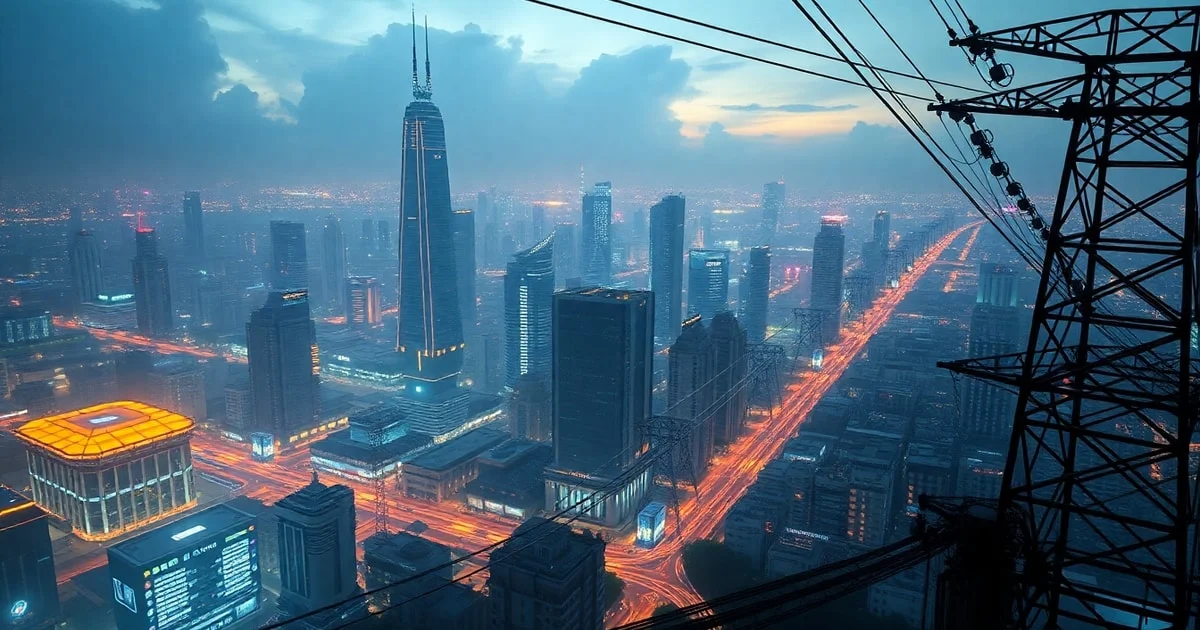
The dynamic digital economy of Southeast Asia is experiencing a significant tech boom, attracting substantial AI investment, but this growth trajectory is increasingly encountering grid hurdles due to the region's energy infrastructure. This impressive SE Asia Tech Boom: AI Investment Faces Grid Hurdles as the region grapples with an energy infrastructure that struggles to keep pace with the voracious power demands of advanced AI technologies. The confluence of burgeoning tech innovation and persistent energy limitations presents a critical challenge for governments and businesses alike, threatening to slow down an otherwise promising trajectory for the region's digital future. The rapid influx of capital and the expansion of AI capabilities underscore the urgency of addressing these foundational energy concerns to ensure sustainable growth and continued economic prosperity.
SE Asia's AI Investment Boom and Grid Infrastructure Hurdles
Southeast Asia's digital economy is experiencing unprecedented growth, fueled by a young, digitally-native population and robust government support for technological advancement. This environment has created fertile ground for a significant tech boom, attracting substantial foreign direct investment, particularly in artificial intelligence. The region's vibrant startup ecosystem and increasing digital penetration are key drivers, positioning it as a hotbed for innovation and a critical market for global tech players. This rapid expansion, however, brings with it a colossal demand for energy, placing immense pressure on existing infrastructure.
Surging Digital Economy and AI Adoption
The digital economy in Southeast Asia is projected to reach significant milestones, with substantial growth in sectors such as e-commerce, ride-hailing, online media, and digital financial services. This expansion is inextricably linked to the increasing adoption and deployment of AI technologies across various industries. From optimizing supply chains and enhancing customer service to powering sophisticated data analytics and smart city initiatives, AI is becoming integral to the region's economic fabric. Countries like Singapore, Vietnam, and Indonesia are particularly aggressive in their AI strategies, aiming to leverage the technology for national development and competitiveness. This enthusiastic embrace of AI, while promising, necessitates a robust and reliable power supply, a condition not uniformly met across the diverse landscape of Southeast Asia.
Regional Investment Trends
Investment in AI within Southeast Asia has seen a dramatic increase, with both local startups and international tech giants pouring capital into research, development, and deployment. Major tech companies are establishing regional hubs and data centers to serve the growing digital consumer base and enterprise needs. Venture capital funding for AI-focused companies has also surged, indicating strong investor confidence in the region's potential. This financial commitment highlights the perceived value and future impact of AI, but also signals a proportional increase in the demand for energy-intensive computing infrastructure. The sustainability of this investment hinges directly on the region's capacity to provide consistent and affordable power. Without a reliable and expandable energy supply, the sustained influx of capital and the realization of ambitious AI projects will face significant bottlenecks, potentially leading to lost opportunities and a slowdown in digital transformation.
The Energy Conundrum: Powering AI's Future
The core challenge facing the SE Asia Tech Boom is the critical need for a stable and scalable energy supply capable of meeting the escalating demands of AI infrastructure. Artificial intelligence, particularly large language models and complex machine learning algorithms, requires immense computational power, which translates directly into substantial electricity consumption. The current energy grids in many Southeast Asian nations are often aging, prone to outages, and heavily reliant on fossil fuels, making them ill-equipped for the future of AI.
The Demands of AI: A Thirsty Technology
AI data centers are notoriously power-hungry. Running complex algorithms, training large models, and supporting real-time AI applications require thousands of high-performance GPUs and CPUs operating continuously. These components generate significant heat, necessitating extensive cooling systems that further contribute to electricity consumption. A single modern data center can consume as much electricity as a small town, and with the proliferation of AI, the number and scale of these facilities are rapidly expanding across Southeast Asia. The energy intensity of AI is a fundamental aspect that must be addressed, as it directly impacts operational costs, carbon footprint, and the reliability of AI services. Furthermore, the sheer volume of data processing and storage required for advanced AI systems means that this demand is not a temporary spike but a sustained and growing requirement.
Existing Infrastructure Gaps
Many Southeast Asian countries have historically focused on expanding basic electricity access rather than modernizing grids for high-tech industrial loads. This has resulted in power grids that are often inefficient, lack advanced smart grid technologies, and suffer from insufficient generation capacity to handle sudden surges in demand. Blackouts and brownouts, while becoming less frequent in major urban centers, still pose a significant risk, particularly outside capital cities. Such unreliability is a major deterrent for data center operators and AI firms that require uninterrupted power for their mission-critical operations. The existing infrastructure simply wasn't designed for the sustained, high-load requirements of an AI-driven economy, and upgrading it presents a colossal, expensive, and time-consuming endeavor.
Reliance on Fossil Fuels and Sustainability Concerns
A significant portion of Southeast Asia's electricity generation still comes from coal and natural gas. While these sources provide relatively cheap and consistent power, their environmental impact is a growing concern, especially for environmentally conscious global tech companies. The drive towards sustainability and net-zero emissions means that relying solely on fossil fuels for AI infrastructure is not a viable long-term strategy. This creates a dual challenge: not only does the region need more power, but it needs cleaner power to attract and retain cutting-edge AI investment and meet global sustainability standards. The shift to renewable energy sources, while vital, requires substantial investment and time to implement, including the development of new transmission lines and storage solutions.
Regional Challenges and Specific Cases
The energy challenges facing AI investment are not uniform across Southeast Asia but manifest differently depending on each country's stage of development, geographical characteristics, and energy policies. Examining specific examples helps to illustrate the varied hurdles and potential solutions.
Vietnam's Rapid Growth and Energy Needs
Vietnam has emerged as a key manufacturing and tech hub, attracting significant foreign investment in electronics and digital services. Its digital economy is booming, and the government has ambitious plans for AI development. However, Vietnam faces a critical electricity shortage, particularly during peak seasons, driven by rapid industrialization and urbanization. The country's grid infrastructure struggles with transmission losses and insufficient generation capacity to reliably meet the demands of new data centers and AI research facilities. While Vietnam is investing in new power plants, including renewables, the pace of grid modernization and capacity expansion needs to accelerate to keep up with its tech ambitions. The country's burgeoning manufacturing sector also competes fiercely for available power, exacerbating the supply challenges for data-intensive AI operations.
Thailand's Digital Ambitions vs. Power Supply
Thailand also harbors strong aspirations to become a leading digital economy and a regional hub for data centers. The government has implemented policies to attract high-tech investment, including incentives for cloud computing and AI services. Despite these efforts, Thailand's electricity supply remains a concern for potential investors. The grid, while relatively stable in urban areas, can experience localized issues, and the cost of electricity can be a factor. The nation is exploring liquefied natural gas (LNG) imports and renewable energy projects to diversify its power mix and enhance grid stability, but these transitions require considerable capital and strategic planning. Ensuring reliable, cost-effective, and green energy will be paramount for Thailand to fully realize its digital potential, as any perceived instability could deter major foreign AI investors.
Singapore's Data Center Hub and Sustainable Solutions
Singapore stands out as a regional leader in data center infrastructure and digital connectivity. However, its small size and dense urban environment present unique energy challenges. To manage its carbon footprint and energy consumption, Singapore had previously implemented a moratorium on new data center developments. This pause allowed the city-state to reassess its energy strategy and focus on highly efficient and sustainable data center designs. Singapore is now cautiously lifting the moratorium, prioritizing data centers that utilize green energy, advanced cooling technologies, and contribute to the national sustainability goals. This approach highlights a potential model for other nations, emphasizing efficiency and renewable integration from the outset, rather than simply expanding existing, often less sustainable, capacity, thereby promoting a more resilient and eco-conscious digital future.
Strategies for Overcoming Grid Hurdles
Addressing the energy infrastructure deficit requires a multi-faceted approach involving substantial investment, policy reform, and regional cooperation. Without proactive strategies, the region risks stifling its burgeoning AI sector and losing out on future economic opportunities.
Investing in Renewable Energy Sources
Transitioning to renewable energy sources like solar, wind, and hydropower is a critical long-term strategy for powering AI sustainably. Southeast Asia has abundant renewable energy potential, particularly solar and hydro. Investments in large-scale solar farms, offshore wind projects, and geothermal plants can provide cleaner and more reliable power. Furthermore, developing robust energy storage solutions, such as battery energy storage systems (BESS), can mitigate the intermittency of renewables, ensuring a consistent power supply crucial for data centers. This shift not only addresses environmental concerns but also offers long-term energy security and price stability compared to volatile fossil fuel markets, making the region more attractive for AI investments that prioritize sustainability.
Modernizing Grid Infrastructure
Upgrading and modernizing existing electricity grids is essential to support the increased load and specific demands of AI data centers. This includes implementing smart grid technologies, which can improve efficiency, reduce transmission losses, and enable better management of fluctuating supply and demand. Investing in high-voltage transmission lines, digital substations, and advanced monitoring systems can enhance grid reliability and resilience. Such modernization efforts are not merely about increasing capacity but about creating a more intelligent, responsive, and robust energy network capable of handling the complexities of an AI-driven economy. Public-private partnerships can play a crucial role in funding these extensive infrastructure projects, sharing the financial burden and leveraging expertise from both sectors.
Regional Cooperation and Cross-Border Grids
Given the diverse energy landscapes and resource endowments across Southeast Asia, regional cooperation on energy policy and infrastructure development can offer significant benefits. Developing cross-border electricity grids and promoting energy trading among ASEAN member states can enhance energy security and optimize resource utilization. For instance, countries with surplus renewable energy generation, such as Laos with hydropower, could export power to energy-deficient nations hosting major data centers. Such integrated grids would create a more resilient and efficient energy ecosystem, allowing for better load balancing and reducing reliance on single-country power sources. The ASEAN Power Grid initiative, though complex, is a vital step in this direction, promising a more interconnected and robust energy future for the entire region.
Economic Implications and the Path Forward
The success or failure in overcoming these energy grid hurdles will have profound economic implications for Southeast Asia. The region stands at a critical juncture where strategic energy investments can unlock immense potential for AI-driven growth, or conversely, a lack of action could impede its digital aspirations. The cost of unreliable power can be astronomical for data-intensive businesses, leading to significant financial losses and reputational damage.
Attracting and Retaining AI Investment
Reliable and sustainable energy infrastructure is a fundamental prerequisite for attracting and retaining high-value AI investments. Global tech companies prioritize locations with stable power, competitive energy costs, and a commitment to green energy. Without these assurances, AI developers and data center operators will look to other regions, potentially diverting significant economic opportunities, job creation, and technological advancement away from Southeast Asia. Governments must understand that energy is not merely a utility but a strategic asset in the global race for AI leadership, directly impacting a nation's competitiveness and long-term economic prosperity.
The Role of Government Policy
Government policies play a pivotal role in shaping the energy landscape for AI investment. This includes providing clear regulatory frameworks, offering financial incentives for renewable energy projects and grid modernization, and streamlining permitting processes for critical infrastructure. Long-term energy master plans that integrate AI demand projections and sustainability goals are essential. Additionally, fostering a skilled workforce capable of designing, building, and maintaining advanced energy systems is crucial. Proactive and forward-thinking energy policies can significantly de-risk investments and accelerate the necessary transitions, ensuring that the region can capitalize on the opportunities presented by the global AI boom.
The SE Asia Tech Boom: AI Investment Faces Grid Hurdles, underscoring a critical challenge for the region's burgeoning digital economy. While the potential for AI-driven growth is immense, the current energy infrastructure in many Southeast Asian nations is struggling to meet the intense power demands of advanced computing. Addressing this gap requires urgent and coordinated efforts, including substantial investments in renewable energy, modernization of existing grids, and enhanced regional cooperation on energy policy. Without these strategic interventions, the region risks hindering its technological advancement and losing its competitive edge in the global AI landscape. The path forward demands a concerted focus on building a resilient, sustainable, and intelligent energy ecosystem to power Southeast Asia's digital future, ensuring that the promise of AI can be fully realized.
Frequently Asked Questions
Q: Why are power grids a challenge for AI investment in Southeast Asia?
A: AI operations, especially data centers, demand immense and consistent power. Many SE Asian grids are aging, inefficient, and prone to outages, making them unreliable for mission-critical AI infrastructure. This unreliability leads to higher operational costs and significant risks for businesses reliant on uninterrupted power.
Q: Which Southeast Asian countries are most impacted by these grid hurdles?
A: Countries experiencing rapid industrialization and urbanization, like Vietnam and Thailand, face significant electricity shortages, particularly during peak demand periods. Even advanced hubs like Singapore are challenged with ensuring a sustainable and green energy supply for their dense data center operations.
Q: What solutions are being pursued to address Southeast Asia's energy challenges for AI?
A: Strategies include aggressive investment in renewable energy sources like solar and wind, modernizing existing grid infrastructure with smart technologies, and fostering regional cooperation for cross-border power trading and enhanced energy security. These initiatives aim to provide both greater capacity and cleaner energy.