SA Protest: Unpacking the Latest Waves of Discontent in South Africa
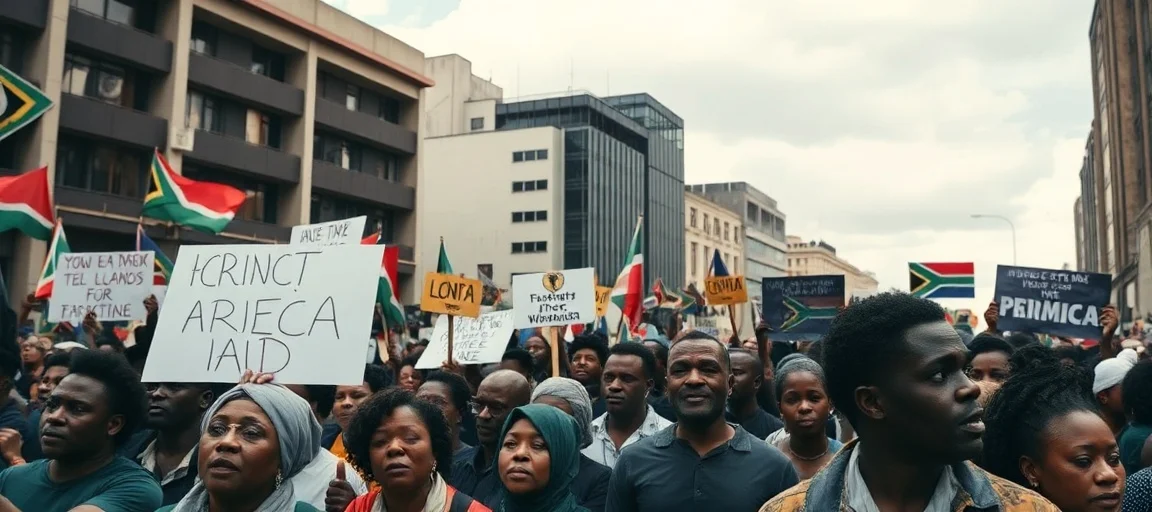
South Africa has frequently been a crucible of social and political expression, and recent weeks have seen renewed waves of SA Protest actions across various provinces, highlighting deep-seated societal issues and frustrations. These demonstrations, ranging from localized community grievances to broader national concerns, underscore a populace actively engaged in demanding accountability and systemic change from its leadership. For a deeper understanding of global political dynamics, explore our related articles. From economic disparities to service delivery failures, the ongoing unrest reflects a complex interplay of factors driving citizens to the streets.
- Understanding the Landscape of SA Protest Movements
- Key Areas and Forms of Discontent
- Voices from the Ground: Expert Opinions and Community Leaders
- Impact of Protests on South African Society and Economy
- Conclusion: The Enduring Power of the SA Protest
- Frequently Asked Questions
- Further Reading & Resources
Understanding the Landscape of SA Protest Movements
Protests in South Africa are not a new phenomenon; they are woven into the fabric of the nation's history, often serving as a critical mechanism for the voiceless to articulate their demands. The current series of SA Protest actions, however, appears to be characterized by both continuity in underlying issues and evolving dynamics in organization and scale. These movements often emerge from a combination of economic hardship, political dissatisfaction, and unmet promises of improved public services.
Historical Context of Protests in South Africa
The legacy of apartheid and the subsequent transition to democracy in 1994 brought with it high expectations for a more equitable society. While significant progress has been made, many structural inequalities persist, often fueling discontent. Historically, South Africa has experienced frequent service delivery protests, particularly in informal settlements and townships, where residents demand basic amenities like water, electricity, and sanitation. These protests are often localized, spontaneous, and can sometimes turn violent, reflecting the desperation of communities. Beyond service delivery, labor disputes, student movements, and anti-corruption campaigns have also been prominent features of the protest landscape. To learn more about the historical evolution of social movements, consult our archives.
Current Triggers and Demands
Recent protests have been sparked by a confluence of factors. High unemployment rates, particularly among youth, remain a critical concern, pushing many into poverty and fostering disillusionment. The rising cost of living, exacerbated by inflationary pressures and increasing fuel prices, has further squeezed household budgets, leading to demonstrations against economic policies. Allegations of corruption within government and state-owned enterprises continue to erode public trust, prompting calls for greater transparency and accountability. Furthermore, ongoing issues related to inadequate housing, crumbling infrastructure, and a struggling public healthcare system consistently surface as core grievances driving communities to protest. The upcoming general elections in 2029 are also beginning to influence the political climate, with various groups utilizing protest as a means to draw attention to their causes and pressure political parties. Dive into our analysis of electoral politics in emerging democracies.
Key Areas and Forms of Discontent
The geographical spread of recent SA protests has been broad, encompassing major urban centers and rural areas alike. The forms of protest have also varied, reflecting the diverse grievances and organizational capacities of different groups.
Urban vs. Rural Demonstrations
In urban areas, protests often manifest as organized marches, sit-ins, and demonstrations targeting government buildings or corporate offices. These are frequently led by civil society organizations, labor unions, or student bodies, which possess established structures for mobilization. For example, recent protests in Johannesburg and Cape Town have focused on issues like urban development, affordable housing, and public transport.
Conversely, rural protests tend to be more localized and often revolve around land disputes, mining operations' impact on communities, and the lack of basic services. These can sometimes involve road blockades and confrontations with local authorities, signifying the intense frustration felt by marginalized communities who feel ignored by distant governmental structures. The resource distribution disparities between urban and rural settings often fuel these regional differences in protest focus and intensity.
Prominent Protest Themes
Several recurring themes dominate the current wave of protests:
- Economic Inequality and Unemployment: This remains a foundational driver. Protesters highlight the vast gap between the rich and the poor, demanding job creation initiatives, better social welfare programs, and equitable distribution of national wealth.
- Service Delivery Failures: Access to reliable electricity, clean water, proper sanitation, and waste management continues to be a major point of contention, particularly in underserviced communities.
- Corruption and Governance: Calls for transparent governance and an end to corruption are widespread. Demonstrators demand accountability for alleged misuse of public funds and greater integrity from elected officials.
- Land Reform: The slow pace and contentious nature of land reform, particularly in relation to expropriation without compensation, remains a significant, albeit often localized, protest issue with deep historical roots.
- Gender-Based Violence (GBV): While not always manifesting as large-scale general protests, consistent demonstrations against GBV reflect a deep societal concern and a demand for more effective government action to protect women and children.
Voices from the Ground: Expert Opinions and Community Leaders
To truly understand the depth of these movements, it is essential to hear from those directly involved or observing the situation closely. Experts and community leaders offer valuable insights into the motivations behind the protests and their potential ramifications.
Sociological and Political Analysis
Dr. Nomusa Dlamini, a political sociologist at the University of Witwatersrand, notes that "the current protest climate in South Africa is a direct reflection of a 'democracy deficit' where citizens feel their voices are not adequately heard through formal channels." She elaborates, stating, "When institutional avenues for redress fail, street protests become the most potent, albeit sometimes disruptive, form of engagement." Dr. Dlamini also points to the increasing sophistication of some protest movements, using social media to organize and disseminate their messages, bypassing traditional media gatekeepers.
Mr. Sipho Ngwenya, a community activist from Khayelitsha, emphasizes the human element. "People are tired of empty promises," he states. "We protest because our children go to bed hungry, our streets are unsafe, and our basic human dignity is denied. This isn't just about politics; it's about survival." His words resonate with many who feel marginalized and forgotten by the political elite.
The Role of Youth and Social Media
Young people, disproportionately affected by unemployment and economic stagnation, are often at the forefront of these demonstrations. Social media platforms like X (formerly Twitter), Facebook, and WhatsApp play a crucial role in mobilizing participants, sharing information, and organizing solidarity. Hashtags quickly become rallying cries, uniting disparate groups under common causes. This digital activism not only amplifies local grievances to a national audience but also connects South African activists with global social justice movements. The ability to rapidly disseminate information and counter official narratives empowers young organizers, giving their actions a broader reach and impact than ever before.
Impact of Protests on South African Society and Economy
The ongoing waves of SA protests carry significant implications, affecting everything from economic stability to social cohesion and the nation's international image. While protests are a fundamental right in a democracy, their methods and consequences can be far-reaching.
Economic Repercussions
Frequent protests, especially those involving road closures, property damage, or business disruptions, can have a tangible negative impact on the economy. Supply chains are interrupted, businesses suffer losses, and investor confidence can be eroded. The South African Chamber of Commerce and Industry (SACCI) has repeatedly expressed concerns about the economic cost of unrest, urging for peaceful and constructive dialogue to resolve grievances. Sectors such as retail, transport, and tourism are particularly vulnerable to protest-related disruptions, leading to job losses and reduced revenue. Furthermore, the perception of instability can deter foreign direct investment, which is crucial for economic growth and job creation in a developing economy like South Africa's.
Political and Social Fallout
Politically, protests put immense pressure on the ruling African National Congress (ANC) and opposition parties to address the grievances. They can influence policy decisions, accelerate debates on contentious issues, and even shift electoral dynamics as citizens evaluate governmental responses to their demands. For instance, the government's recent announcements regarding accelerated infrastructure projects and anti-corruption measures can be seen as responses to persistent public pressure.
Socially, while protests aim to foster solidarity and bring about positive change, they can sometimes lead to divisions within communities, particularly if they turn violent or are perceived to target specific groups. However, they also serve as a vital mechanism for collective catharsis and the articulation of a shared vision for a more just society. The broader social impact includes increased awareness of systemic issues, prompting national conversations that might otherwise be ignored.
Government Response and Future Outlook
The South African government has responded to the protests with a mix of dialogue, promises of action, and, at times, law enforcement intervention. There have been calls for greater engagement between communities and local authorities, as well as efforts to fast-track service delivery projects in affected areas. However, critics often argue that these responses are reactive rather than proactive, failing to address the root causes of discontent comprehensively. The upcoming elections will be a critical period, as political parties will undoubtedly attempt to channel public frustrations into electoral support. The ability of the government to effectively address the underlying issues of inequality, unemployment, and corruption will largely determine the future trajectory of protest actions in South Africa. Without meaningful progress, the cycle of discontent and demonstration is likely to continue.
Conclusion: The Enduring Power of the SA Protest
The recent surge in SA Protest actions across South Africa is a powerful indicator of a society grappling with significant challenges. From persistent economic inequality and high unemployment to widespread dissatisfaction with public service delivery and governance, the grievances are diverse yet interconnected. These protests, while sometimes disruptive, represent a critical democratic expression, serving as a vital barometer of public sentiment and a powerful tool for citizens to demand accountability from their leaders. As South Africa moves forward, the ability of its government to genuinely listen, engage, and implement lasting solutions to these deep-seated issues will be paramount in fostering a more stable and equitable future for all its people. The ongoing dialogue between the state and its citizens, often initiated in the streets, remains essential for the nation's democratic health and progress.
Frequently Asked Questions
Q: What are the primary drivers behind the recent SA protest movements?
A: The protests are largely fueled by persistent economic inequality, high youth unemployment rates, and widespread dissatisfaction with the quality and delivery of public services. Allegations of government corruption further erode public trust and prompt demands for accountability.
Q: How do youth and social media contribute to the SA protests?
A: Young people, severely affected by unemployment, are often at the forefront. Social media platforms like X, Facebook, and WhatsApp are crucial for mobilizing participants, sharing information, and uniting diverse groups, amplifying their messages nationally and globally.
Q: What has been the South African government's response to the protests?
A: The government has responded with a mix of dialogue, promises of accelerated service delivery, and law enforcement interventions. While some efforts have been made, critics argue that responses are often reactive and fail to address the fundamental systemic issues driving the widespread discontent.