Putin in Beijing: Boosting Russia-China Strategic Alliance
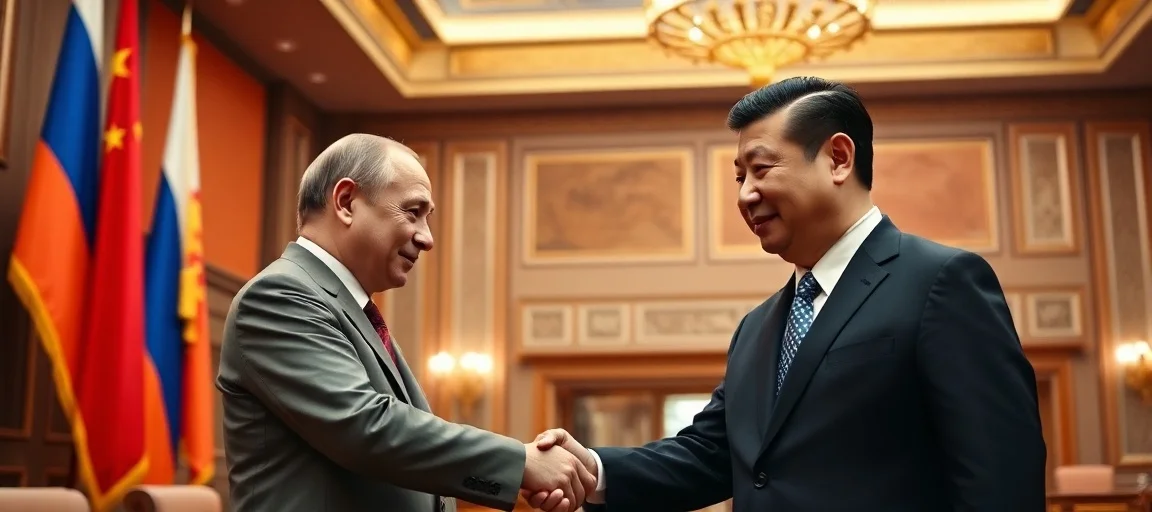
Russian President Vladimir Putin's recent state visit to Beijing marks a pivotal moment in the ongoing recalibration of global power dynamics, further solidifying the Putin in Beijing: Boosting Russia-China Strategic Alliance. This high-stakes visit aimed to deepen economic, political, and security cooperation between the two nations, showcasing a united front against perceived Western dominance and advancing their shared vision for a multipolar world order. The discussions between President Putin and Chinese President Xi Jinping spanned a wide array of topics, from energy agreements and trade expansion to military collaboration and coordination within international bodies, highlighting the robust and evolving nature of their strategic partnership.
- Background Context: A Relationship Forged in Shifting Sands
- Strategic Implications of Putin in Beijing: Boosting Russia-China Strategic Alliance
- The Strategic Alliance: A Deeper Dive into its Significance
- Impact and Implications: Reshaping the Global Order
- Expert Opinions and Analysis: A Unified Front
- Frequently Asked Questions
- Conclusion: A Steadfast Partnership in a Changing World
- Further Reading & Resources
Background Context: A Relationship Forged in Shifting Sands
The relationship between Russia and China has undergone a significant transformation in recent decades, moving from Cold War-era rivalry to a comprehensive strategic partnership. This evolution has been largely driven by a convergence of interests, particularly a shared skepticism of a unipolar world dominated by the United States and its allies. The foundation of this modern era was arguably laid with the 2001 Treaty of Good-Neighborliness and Friendly Cooperation, which established a framework for resolving border disputes and enhancing economic ties.
Economic sanctions imposed on Russia by Western nations following geopolitical developments in Eastern Europe have accelerated Moscow's pivot towards Beijing, making China an increasingly indispensable economic partner. Meanwhile, China views Russia as a crucial ally in its broader geopolitical ambitions, providing access to vital energy resources and military technology, and bolstering its diplomatic leverage on the global stage. This relationship was famously described as a "no limits" partnership just prior to the Beijing Winter Olympics in 2022, signaling that no area of cooperation was off-limits.
Historically, both nations have navigated complex internal and external challenges, which have subtly pushed them closer. Early bilateral agreements focused on border demarcation and trade, but the scope rapidly expanded to encompass technology, energy, and defense. Joint military exercises, such as the "Vostok" and "Zapad" drills, have become more frequent and sophisticated, signaling a growing interoperability and strategic alignment between their armed forces. These exercises are not merely symbolic; they represent a practical deepening of military ties and a shared commitment to regional security. The current global landscape, marked by heightened geopolitical tensions and economic uncertainties, further underscores the importance of this bilateral relationship for both Moscow and Beijing.
Strategic Implications of Putin in Beijing: Boosting Russia-China Strategic Alliance
President Putin's visit to Beijing was packed with high-level meetings and significant announcements, underscores the broad scope of the Russia-China strategic alliance. The discussions were characterized by a mutual desire to expand existing cooperation and explore new avenues for collaboration, reinforcing their commitment to a robust partnership.
Economic Cooperation and De-dollarization
Economic ties were a central theme of the visit. Both leaders emphasized the importance of increasing bilateral trade, which has seen substantial growth in recent years, reaching record levels. The focus was on diversifying trade beyond energy, including agricultural products, industrial goods, and high-tech equipment.
New agreements were reportedly signed to streamline customs procedures and facilitate investment, aiming to remove barriers to commerce. A major point of discussion included:
-
The expansion of the Cross-Border Interbank Payment System (CIPS) to facilitate smoother transactions.
-
The greater use of national currencies (Ruble and Yuan) in bilateral trade, a move aimed at reducing reliance on the US dollar.
-
Joint ventures in the manufacturing sector to boost industrial self-reliance.
This shift is part of a broader de-dollarization effort supported by both nations, seeking to build alternative financial infrastructures that are immune to Western financial leverage.
Energy Security and the "Power of Siberia"
Energy remains a cornerstone of the Russia-China relationship. During the visit, new energy agreements were reportedly discussed, building upon existing long-term contracts for oil and gas supply. This includes potential progress on the "Power of Siberia 2" pipeline, which would significantly increase the volume of Russian gas delivered to China.
Russia, facing reduced demand from Europe, continues to reroute its energy exports to Asian markets, with China being the primary beneficiary. These deals provide Russia with crucial revenue and ensure China's energy security, a vital component for its continued economic growth and industrial expansion. The energy partnership is not solely about supply and demand; it also involves joint investment in energy infrastructure and technological collaboration in the Arctic shelf.
Military and Security Ties
The military and security dimension of the alliance continues to strengthen. While no new major arms deals were publicly announced, discussions likely covered ongoing military-technical cooperation, joint research and development, and intelligence sharing. Both countries reiterated their commitment to conducting more joint military exercises, designed to enhance their combined defense capabilities and interoperability.
The leaders also addressed regional security concerns, particularly in Central Asia and the Asia-Pacific, where they share interests in maintaining stability and counteracting perceived external interference. This aspect of their relationship sends a clear message about their capacity and willingness to coordinate on defense matters, specifically regarding the presence of NATO and AUKUS influences in their respective spheres of interest.
Multilateral Engagements and BRICS
Beyond bilateral issues, Putin and Xi discussed greater coordination within multilateral frameworks such as the Shanghai Cooperation Organization (SCO) and BRICS. Both leaders emphasized these organizations as platforms for fostering a multipolar world order and promoting regional stability without Western involvement.
With the recent expansion of BRICS to include new members, the coordination between Moscow and Beijing within this group has become even more critical. They reportedly agreed to enhance cooperation on issues ranging from counter-terrorism to economic development within these bodies, aiming to amplify their collective voice on global issues.
The Strategic Alliance: A Deeper Dive into its Significance
The strengthening of the Russia-China strategic alliance is more than just a series of bilateral agreements; it represents a profound shift in global geopolitics, driven by shared ideological perspectives and pragmatic interests. This partnership is increasingly seen as a counterweight to Western influence, with significant implications for international relations, trade, and security.
Shared Vision for a Multipolar World
Both Russia and China advocate for a multipolar international system, where power is distributed among multiple major poles rather than concentrated in a single hegemonic entity. They view the current US-led unipolar order as outdated and unjust, arguing that it fails to adequately represent the interests of emerging powers. Their collaboration aims to gradually erode this order, promoting greater diversity in global governance and a more balanced distribution of influence. This shared vision forms the philosophical bedrock of their strategic alignment, driving their coordinated actions on various international issues and within global institutions.
Counterbalancing Western Influence
A primary driver of the alliance is the mutual desire to counterbalance the perceived influence and interventions of Western powers, particularly the United States and NATO. Both nations have expressed strong opposition to what they describe as "bloc politics" and unilateralism. By strengthening their strategic ties, they seek to limit Western leverage, challenge sanction regimes, and provide an alternative model for international cooperation based on non-interference in internal affairs. This aspect of the alliance directly impacts global security dynamics and the future of international law, as they collectively push back against norms set by Western democracies.
Economic Interdependence and Innovation
The economic interdependence between Russia and China has become increasingly pronounced. China's insatiable demand for energy and raw materials perfectly complements Russia's vast natural resource base. Conversely, Russia looks to China for manufactured goods, technology, and investment, particularly as Western markets become less accessible.
This symbiotic relationship provides both countries with economic resilience against external pressures and reduces their vulnerability to global supply chain disruptions. Furthermore, they are looking toward the future of technology, with discussions centering on:
-
Artificial Intelligence: Collaborating on ethical frameworks and industrial AI applications.
-
Space Exploration: Joint efforts for a lunar research station and satellite navigation compatibility.
-
Cybersecurity: Sharing best practices to protect national digital sovereignty.
Impact and Implications: Reshaping the Global Order
The reinforced Putin in Beijing: Boosting Russia-China Strategic Alliance carries profound implications for the global political landscape, regional stability, and the future of international relations. The deepening of this partnership is already observable in various international arenas.
Global Power Dynamics
The most significant impact of this alliance is its potential to accelerate the shift towards a multipolar world. As Russia and China coordinate more closely on diplomatic, economic, and security fronts, their combined influence challenges the long-standing dominance of Western-led institutions. This could lead to a more fragmented and complex international system, where various power centers compete for influence and set different norms and rules. The alliance fundamentally alters the balance of power, forcing other nations to re-evaluate their own foreign policy strategies and alignments in response to this powerful bloc.
Regional Stability in Eurasia and Beyond
The alliance also has direct consequences for regional stability, particularly in Eurasia. In Central Asia, both countries are active through the SCO, aiming to ensure stability and counter terrorism, but also limiting Western penetration. In the Asia-Pacific, Russia's support for China's positions on issues like Taiwan and the South China Sea could escalate tensions with regional players and the United States. Conversely, China's backing of Russia on European security matters emboldens Moscow and complicates diplomatic efforts to resolve conflicts. The combined military capabilities and strategic coordination of these two powers could therefore introduce new complexities and potential flashpoints in various regions.
Reactions from the West
Western nations have largely viewed the strengthening Russia-China alliance with concern. Leaders in the United States and Europe often describe it as an "axis of authoritarianism" that seeks to undermine democratic values and international norms. Responses have included:
-
Increased Sanctions: Tightening restrictions on dual-use technology transfers.
-
Alliance Strengthening: NATO and G7 members coordinating more closely on their China and Russia policies.
-
Economic De-risking: Efforts by the EU and USA to reduce dependency on Chinese manufacturing and Russian energy.
The fear is that a stronger Russia-China bloc could make it more difficult to address global challenges such as climate change, pandemics, and nuclear proliferation, due to divergent geopolitical interests and approaches.
Expert Opinions and Analysis: A Unified Front
Analysts widely agree that the Putin in Beijing: Boosting Russia-China Strategic Alliance represents a significant and enduring challenge to the existing global order. Experts frequently highlight the shared long-term objectives that bind the two nations, despite their historical differences.
According to Dr. Li Ming, a professor of international relations at Tsinghua University, "This alliance is not merely transactional; it's a strategic convergence born out of shared geopolitical grievances and a mutual desire to reshape global governance. Both Beijing and Moscow seek a world where their respective national interests are not dictated by external powers." Dr. Ming emphasizes that the visit solidifies a long-term strategy rather than a short-term tactical alignment.
Similarly, Dr. Ivan Petrov, a senior fellow at the Carnegie Russia Eurasia Center, notes, "For Russia, China is the lifeline, providing economic buoyancy amidst Western sanctions and a powerful partner on the global stage. For China, Russia is a critical source of energy, raw materials, and a crucial diplomatic ally." He further suggests that the alliance is robust enough to withstand minor disagreements, given the overwhelming shared interest in counterbalancing Western influence.
However, some analysts caution against overstating the alliance's ideological cohesion. While they share an anti-Western sentiment, their long-term national interests are not perfectly aligned. China's economic power far outstrips Russia's, and Beijing will always prioritize its own economic stability, which still has significant ties to Western markets. Despite these potential fault lines, the immediate future points to continued deepening of their strategic partnership.
Frequently Asked Questions
Q: Why was Putin's visit to Beijing significant for global trade?
A: The visit was significant because it accelerated the shift toward using national currencies rather than the US dollar, potentially creating a parallel financial system that bypasses Western-controlled banking networks.
Q: Does the Russia-China alliance constitute a formal military treaty?
A: No, the relationship is currently defined as a "comprehensive strategic partnership" rather than a formal mutual defense treaty, though their level of military cooperation and joint exercises is at an all-time high.
Q: How does this alliance impact energy markets?
A: It reshapes energy flows by directing Russian oil and gas away from Europe and toward China, securing a long-term energy supply for Chinese industry and providing Russia with a stable revenue stream.
Conclusion: A Steadfast Partnership in a Changing World
President Putin's recent visit to Beijing undeniably underscored the deepening strategic collaboration between Russia and China. This crucial engagement served to solidify economic partnerships, enhance military cooperation, and reinforce a shared vision for a multipolar global order, directly contributing to the Putin in Beijing: Boosting Russia-China Strategic Alliance.
As both nations continue to navigate complex geopolitical challenges and redefine their roles on the international stage, their robust partnership is set to play an increasingly significant role in shaping the future trajectory of international relations. The outcomes of this visit affirm that the alliance is not merely a transient response to immediate pressures but a foundational element of their long-term foreign policy strategies, poised to influence global dynamics for years to come.