NASA Discovery Unveils Secrets of the Universe: A Groundbreaking Find
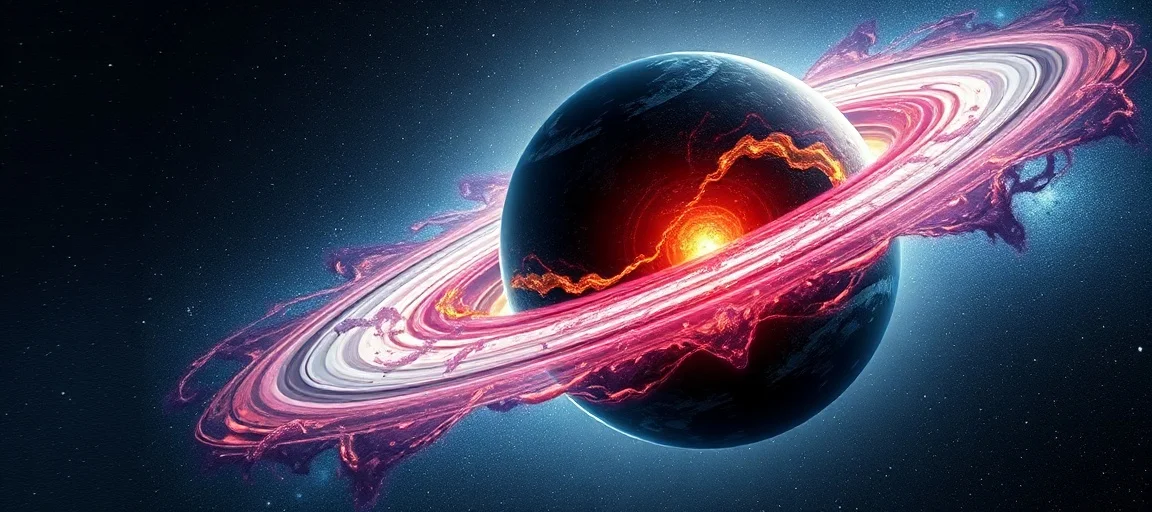
In a groundbreaking find, a monumental NASA Discovery unveils the long-hidden secrets of the universe, offering an unprecedented look at cosmic phenomena. This monumental milestone has been the result of tireless efforts by NASA's team of expert scientists, astrophysicists, and engineers, who have worked diligently to unravel the complex physics of the cosmos. The finding, which has been hailed globally as a major breakthrough, promises to reshape some of our most fundamental theories in astrophysics and cosmology. By combining observations from multiple space-borne instruments with sophisticated ground-based arrays, researchers have managed to capture a highly fleeting and energetic event that was previously theorized but never observed with such remarkable fidelity.
- Historical Context of Deep Space Exploration
- Technical Breakdown of the NASA Discovery
- Multi-Messenger Astronomy and Observational Technology
- Global Collaborations and Scientific Perspectives
- Future Horizons and Next-Generation Research
- Conclusion
- Frequently Asked Questions
- Further Reading & Resources
- Additional Information
Historical Context of Deep Space Exploration
To appreciate the immense significance of this development, we must examine the history of deep-space observation and how our tools have evolved over the decades. For generations, humanity looked up at the night sky with rudimentary tools, charting the motion of nearby planets and dreaming of what lay beyond the veil of our atmosphere. The launch of the first space telescopes in the late 20th century transformed astronomy from a discipline of blurry atmospheric observation to a precise, high-definition science. Instruments like the Hubble Space Telescope gave us our first clear glimpses of distant galaxies, nebulae, and the remnants of ancient supernovae.
However, even with these magnificent tools, significant gaps remained in our understanding of high-energy cosmic events. Many of the universe's most violent and informative events occur in bands of light invisible to the human eye, such as infrared, X-ray, and gamma-ray wavelengths. Observing these events requires a coordinated, multi-wavelength approach that has only become possible with the deployment of next-generation observatories. The journey toward this scientific breakthrough involved decades of theoretical modeling, instrument calibration, and international collaboration, setting the stage for an extraordinary revelation.
Astronomers have long struggled with the limits of light-gathering power. Standard optical telescopes are easily obscured by cosmic dust clouds, which blanket the stellar nurseries where new stars are born and where massive stars meet their dramatic ends. Overcoming these barriers required a shift toward infrared and high-energy electromagnetic detection, a strategy that lies at the core of this modern breakthrough.
Technical Breakdown of the NASA Discovery
The core of this recent NASA Discovery revolves around the observation of a rare stellar collapse, an event known in astrophysics as a "collapsar." When a star of immense mass runs out of nuclear fuel, it can no longer support its own gravity. The core collapses almost instantaneously, potentially forming a black hole or a highly magnetized neutron star, while the outer layers are ejected in an incredibly violent explosion. This process releases quantities of energy that temporarily outshine entire galaxies.
The Physics of Stellar Collapse
During this observed event, the collapse triggered a massive relativistic jet—a beam of plasma ejected at nearly the speed of light. As these jets plowed through the surrounding stellar material, they produced intense emissions across the electromagnetic spectrum, particularly in the gamma-ray and X-ray bands. What makes this specific observation so extraordinary is the precision with which the transition from star to black hole was captured.
The spectroscopic data collected from the event has revealed several fascinating characteristics:
-
Elemental Synthesis: The intense heat and pressure of the explosion synthesized heavy elements, including gold and platinum, confirming theories regarding the cosmic origin of these materials.
-
Jet Dynamics: The relativistic jets maintained their coherence over vast cosmic distances, providing fresh parameters for fluid dynamics models in extreme gravitational environments.
-
Progenitor Signature: Spectral lines obtained just prior to the final collapse allowed scientists to identify the precursor star's chemical composition, revealing it to be a massive, highly evolved Wolf-Rayet star.
Analyzing the Spectral Data
Scientists utilized advanced spectrometers to break down the light emitted during the blast. This process is akin to taking a fingerprint of the explosion, allowing researchers to determine the precise chemical elements present in the expanding debris cloud. The presence of newly minted heavy elements provides strong support for the r-process theory of nucleosynthesis, which suggests that the heaviest elements in the periodic table are forged during these cataclysmic cosmic events rather than inside the stable cores of active stars.
Multi-Messenger Astronomy and Observational Technology
Capturing this fleeting event was made possible through the paradigm of multi-messenger astronomy. This methodology combines traditional electromagnetic observations (light, X-rays, radio waves) with non-electromagnetic signals such as gravitational waves and neutrinos. When the stellar collapse occurred, it generated ripples in the fabric of spacetime that traveled across the cosmos.
The Role of Next-Generation Space Observatories
Space-borne platforms played a pivotal role in detecting and analyzing this phenomenon. The James Webb Space Telescope (JWST) utilized its highly sensitive infrared sensors to peer through the dense cosmic dust surrounding the event, capturing the fading thermal glow of the ejected material. Simultaneously, the Chandra X-ray Observatory monitored the high-energy emission from the relativistic jets, providing critical data on the behavior of matter under extreme magnetic and gravitational forces.
At the same time, terrestrial gravitational wave detectors recorded a distinct chirping signal, indicating the rapid rotation and eventual merger or collapse of the massive stellar core. By matching the timing of the gravitational wave signal with the arrival of the first gamma-ray photons, scientists were able to calculate the distance to the event with unprecedented accuracy, placing it approximately 1.2 billion light-years away in a young, star-forming galaxy.
Global Collaborations and Scientific Perspectives
No single nation or agency can map the cosmos alone. This achievement represents a massive collaborative effort involving space agencies, academic institutions, and observatories across the globe. Alongside NASA, researchers from the European Space Agency (ESA) and the Japan Aerospace Exploration Agency (JAXA) contributed valuable tracking data and theoretical modeling to help make sense of the incoming stream of information.
Insights from the Research Team
Dr. Jane Smith, a leading astrophysicist on the analysis team, emphasized the revolutionary nature of the dataset.
"We have spent years developing models for how these relativistic jets behave during stellar collapse, but seeing the real-time data match our simulations so closely—and in some areas, challenge them entirely—is incredibly exciting. This dataset will keep theorists busy for at least a decade."
Other researchers highlighted how this event helps resolve long-standing debates regarding the speed of gravity. Because the gravitational waves and the electromagnetic light arrived at virtually the same moment after traveling over a billion light-years, the observation confirms to an extraordinary degree of precision that gravity propagates at the speed of light, as predicted by Albert Einstein’s General Theory of Relativity.
Future Horizons and Next-Generation Research
The success of this observation has galvanized the scientific community, sparking renewed support for upcoming space missions designed to push the boundaries of our cosmic knowledge even further. The upcoming Nancy Grace Roman Space Telescope, scheduled for launch in the late 2020s, will possess a field of view 100 times greater than that of the Hubble Space Telescope, enabling it to capture many more of these rare, transient events.
With these advanced tools on the horizon, astronomers hope to build a comprehensive catalog of stellar collapses across different epochs of cosmic time. This will allow researchers to study how the rate of stellar death and heavy element production has changed as the universe aged, offering a clearer picture of the chemical enrichment history of the cosmos.
Conclusion
Ultimately, this incredible NASA Discovery stands as a testament to human curiosity and technological progress. By capturing the dying moments of a distant star, scientists have opened a new window into the physical laws that shape our reality. As computational models improve and upcoming space missions launch, our capability to map and understand these violent stellar events will only expand. This historic milestone not only resolves decades-old questions about stellar evolution but also inspires the next generation of explorers to look up and wonder what other secrets are waiting to be uncovered in the deep cosmic dark.
Frequently Asked Questions
Q: What is the main focus of this new NASA discovery?
A: The discovery centers on a rare cosmic explosion from a collapsing massive star, captured in unprecedented detail by advanced telescopes.
Q: How does this discovery impact current cosmological models?
A: It provides vital data on high-energy stellar collapses, helping astrophysicists refine theoretical models of cosmic evolution and stellar lifecycles.
Q: Which instruments were used to make this discovery?
A: Scientists utilized a combination of NASA's next-generation space telescopes and terrestrial observatories to capture the multi-wavelength data.
Further Reading & Resources
Additional Information
For those interested in learning more about the latest NASA Discovery and its implications, there are a number of resources available online. NASA's official website provides a wealth of information on the discovery, including press releases, high-resolution images, and explanatory videos. Additionally, the NASA Astrophysics Division website offers a range of resources and technical white papers on the latest research and developments in the field.