Mideast: Hezbollah Claims Tank Hits, Israel Evacuates – Escalating Tensions
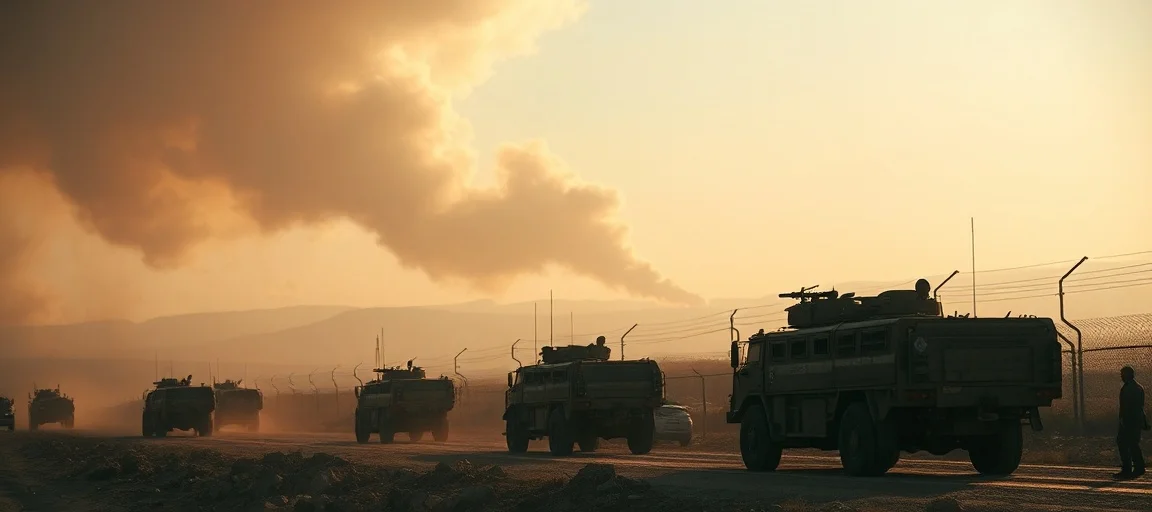
Recent developments along the volatile Israel-Lebanon border have seen a significant escalation, with Hezbollah claiming successful tank hits against Israeli forces and Israel responding by evacuating several border communities. This intensifying exchange underscores the precarious security situation in the Mideast: Hezbollah Claims Tank Hits, Israel Evacuates, bringing renewed international attention to a region perpetually on edge. The events signal a potentially dangerous new phase in the long-standing conflict, raising concerns about broader regional stability.
- Mideast: Hezbollah Claims Tank Hits, Israel Evacuates - Understanding the Escalation
- Historical Context of Israel-Hezbollah Tensions
- Regional Implications and International Response
- Expert Analysis and Future Scenarios
- The Human Cost of Conflict
- Conclusion: Navigating the Perilous Path in the Mideast
- Frequently Asked Questions
- Further Reading & Resources
Mideast: Hezbollah Claims Tank Hits, Israel Evacuates - Understanding the Escalation
The latest round of hostilities unfolded rapidly, drawing immediate international condemnation and calls for de-escalation. Hezbollah, the Iran-backed Shiite militant group and political party in Lebanon, announced via its media channels that its fighters had targeted Israeli tanks and military positions along the border. These claims, if confirmed independently, would mark a a notable increase in the sophistication and directness of attacks from Lebanese territory.
Hezbollah's Operational Statements
Hezbollah's military wing, often referred to as the Islamic Resistance, released communiqués detailing specific operations. These statements typically include:
- Target Identification: Naming Israeli military outposts, patrol routes, or specific vehicle types purportedly struck.
- Weaponry Used: While often vague, some statements might hint at anti-tank guided missiles (ATGMs) or other precision weaponry.
- Casualty Claims: Hezbollah frequently claims Israeli casualties, which are almost invariably disputed or downplayed by Israeli authorities.
The precise number and nature of the alleged tank hits remain subject to verification. Such claims are often part of a broader psychological warfare strategy aimed at bolstering morale among supporters and projecting strength.
Israel's Evacuation Protocols and Defensive Measures
In response to the reported attacks and the heightened threat perception, Israeli authorities initiated the evacuation of residents from several northern communities situated close to the Lebanese border. This is a standard defensive measure designed to protect civilians from potential cross-border shelling, missile attacks, or infiltrations. The decision to evacuate indicates a serious assessment of the threat level by Israeli security forces.
Evacuation Procedures:
- Designated Shelters: Residents are directed to temporary accommodations or safer areas further south.
- Emergency Services: Deployment of additional medical and rescue teams to the affected zones.
- Increased Military Presence: Bolstering troop numbers and defensive capabilities along the border.
The Israeli Defense Forces (IDF) typically responds to such incidents with retaliatory strikes against Hezbollah infrastructure or launch sites in southern Lebanon. The stated objective is usually to deter further aggression and degrade the group's operational capabilities.
Historical Context of Israel-Hezbollah Tensions
The current flare-up is not an isolated event but rather the latest chapter in a decades-long antagonism between Israel and Hezbollah. Understanding this historical backdrop is crucial for comprehending the dynamics of the ongoing conflict.
The Formation and Ideology of Hezbollah
Hezbollah emerged in the early 1980s during the Lebanese Civil War, with significant support from Iran, primarily as a resistance movement against the Israeli occupation of southern Lebanon. Over time, it evolved into a powerful political party, social service provider, and heavily armed militia, often described as a "state within a state" in Lebanon. Its core ideology includes:
- Resistance to Israeli occupation and influence.
- Support for Palestinian rights.
- Adherence to Khomeinist Islamic principles.
Hezbollah's military arsenal is believed to include a vast array of rockets, missiles (including precision-guided munitions), drones, and anti-tank weaponry, largely supplied by Iran. This formidable military capability makes it one of the most potent non-state actors in the world.
Major Conflicts and Stand-offs
The history between Israel and Hezbollah is punctuated by several major confrontations:
- Israeli Occupation of Southern Lebanon (1982-2000): Hezbollah's insurgency played a key role in Israel's eventual withdrawal.
- 2006 Lebanon War: A 34-day conflict triggered by Hezbollah's cross-border raid and capture of Israeli soldiers. The war resulted in significant casualties on both sides and extensive damage to Lebanese infrastructure.
- Frequent Border Incidents: Since 2006, the border has largely remained tense but quiet, governed by UN Security Council Resolution 1701. However, periodic skirmishes, aerial incursions, and rhetorical exchanges are common.
The current situation bears similarities to previous escalations, where localized incidents threaten to spiral into wider conflict. Both sides maintain a delicate balance of deterrence, but miscalculation remains a constant danger.
Regional Implications and International Response
Any significant escalation between Israel and Hezbollah has far-reaching consequences across the Middle East and beyond. The interconnected nature of regional conflicts means that events on the Lebanese-Israeli border can quickly ripple through other flashpoints.
Iran's Role and the "Axis of Resistance"
Iran is a primary patron of Hezbollah, providing financial, military, and ideological support. Hezbollah is a key component of Iran's "Axis of Resistance," a network of allied groups aimed at countering Israeli and Western influence in the region. Therefore, an escalation involving Hezbollah is often viewed through the lens of the broader Iran-Israel proxy conflict.
Key considerations regarding Iran:
- Strategic Depth: Hezbollah provides Iran with a strategic outpost on Israel's northern border.
- Leverage: Iran uses Hezbollah to exert pressure on Israel and to demonstrate its regional reach.
- Escalation Control: Tehran often plays a role in managing the intensity of Hezbollah's actions, though the group also maintains a degree of operational autonomy.
Any major conflict involving Hezbollah could potentially draw in Iran more directly, further destabilizing the region.
The Plight of Lebanon
Lebanon itself is in a perpetual state of political and economic crisis, exacerbated by internal divisions and the presence of heavily armed non-state actors like Hezbollah. A new conflict would be catastrophic for the country, which is already struggling with:
- Economic Collapse: A severe financial crisis has crippled the nation's economy.
- Political Gridlock: Persistent inability to form stable governments and implement reforms.
- Syrian Refugee Crisis: Hosting a large population of Syrian refugees puts immense strain on resources.
- Infrastructure Degradation: Years of neglect and conflict have left much of the country's infrastructure in disrepair.
A military confrontation would undoubtedly worsen these challenges, leading to further displacement, destruction, and humanitarian suffering. The international community often expresses concern for Lebanese stability, as the country is a critical linchpin in regional security.
International Calls for De-escalation
Global powers and international organizations routinely call for restraint and de-escalation in response to such incidents. The United Nations Interim Force in Lebanon (UNIFIL) plays a crucial role in monitoring the border and attempting to prevent hostilities. However, UNIFIL's mandate and capabilities are often stretched thin by the complex political and military realities on the ground.
Key international actors and their roles:
- United States: Traditionally a strong ally of Israel, the U.S. often engages in diplomatic efforts to de-escalate tensions and protect Israeli security interests.
- European Union: Expresses concerns for regional stability and humanitarian consequences, often advocating for a diplomatic solution.
- United Nations: Through UNIFIL and its political missions, the UN works to maintain peace and security along the Blue Line (the demarcation line between Lebanon and Israel).
The international community's ability to influence the situation is often limited by the deep-seated mistrust and conflicting agendas of the primary actors.
Expert Analysis and Future Scenarios
Security analysts and geopolitical experts are closely monitoring the situation, offering various perspectives on potential trajectories and underlying motivations behind the recent actions.
Motivations Behind Hezbollah's Actions
Hezbollah's decision to launch attacks and claim tank hits is likely driven by a combination of factors:
- Deterrence: Sending a message to Israel that any perceived aggression will be met with a response.
- Regional Alignment: Demonstrating solidarity with other elements of the "Axis of Resistance," particularly in the context of broader regional tensions.
- Internal Legitimacy: Reinforcing its image as the protector of Lebanon against external threats, which is crucial for its political standing within the country.
- Testing Israeli Resolve: Probing Israeli defenses and response mechanisms.
"Hezbollah operates within a calculated risk framework," states Dr. Marcus Thorne, a geopolitics expert. "They aim to demonstrate their capabilities and commitment to resistance without necessarily triggering an all-out war, which would be devastating for Lebanon and potentially for their own strategic position."
Israel's Strategic Dilemmas
Israel faces constant security challenges on its northern front. Its strategic objectives typically include:
- Maintaining Deterrence: Ensuring that Hezbollah understands the severe consequences of large-scale attacks.
- Protecting Civilians: Safeguarding its border communities from harm.
- Degrading Threat Capabilities: Striking Hezbollah's military infrastructure and weaponry to reduce its offensive capacity.
- Avoiding a Multi-Front War: Preventing the conflict from expanding beyond the Lebanese border or drawing in other adversaries.
The decision to evacuate civilians, while necessary for safety, also highlights the vulnerability of Israeli border towns to Hezbollah's arsenal. "Israel's response will be carefully calibrated," noted a defense analyst. "They want to restore quiet and re-establish deterrence without playing directly into Hezbollah's hands by igniting a wider conflict."
Potential Future Scenarios
Several scenarios could unfold in the coming days and weeks:
- De-escalation: International diplomatic pressure, combined with a mutual desire to avoid a full-scale war, could lead to a gradual reduction in hostilities. This is often the most hoped-for outcome.
- Limited Exchange: The current back-and-forth could continue for a period, with both sides conducting targeted strikes while attempting to avoid civilian casualties that would provoke a wider response.
- Wider Conflict: A miscalculation, an accidental strike, or a deliberate escalation by either side could trigger a full-blown war, similar to the 2006 conflict. This would have catastrophic consequences for Lebanon and potentially draw in other regional actors.
The path forward remains uncertain, heavily dependent on the decisions made by key leaders in Beirut, Jerusalem, and Tehran.
The Human Cost of Conflict
Beyond the geopolitical maneuvers and military strategies, it is imperative to remember the profound human cost of these ongoing tensions. For residents of border communities in both Israel and Lebanon, life is lived under the constant shadow of potential conflict.
Impact on Civilian Life
- Displacement: Evacuations force families to leave their homes, disrupting lives, education, and livelihoods.
- Psychological Trauma: Exposure to conflict, sirens, and the threat of violence takes a heavy toll on mental health, especially for children.
- Economic Disruption: Agricultural activities, local businesses, and tourism suffer immensely during periods of heightened tension.
- Loss of Life and Injury: The most tragic consequence, directly from military action or collateral damage.
The repeated cycles of conflict prevent sustainable development and foster a pervasive sense of insecurity in these communities.
Role of Humanitarian Organizations
In times of crisis, humanitarian organizations play a vital role in providing aid, shelter, and support to affected populations. These groups often work under challenging conditions to deliver essential services.
Support Provided:
- Emergency food and water.
- Medical assistance and psychological support.
- Temporary shelter and relief supplies.
- Advocacy for the protection of civilians and adherence to international humanitarian law.
Their efforts are critical in mitigating the immediate suffering caused by military actions and displacement.
Conclusion: Navigating the Perilous Path in the Mideast
The latest developments, where Mideast: Hezbollah Claims Tank Hits, Israel Evacuates, underscore the enduring fragility of peace along the Israel-Lebanon border. This volatile situation is a stark reminder of the complex web of historical grievances, regional power dynamics, and ideological divides that characterize the Middle East. While immediate de-escalation is the priority for many international observers, the underlying tensions and the readiness of both sides to engage militarily suggest that future flare-ups remain a distinct possibility. The region continues to navigate a perilous path, with the potential for wider conflict always looming, demanding constant vigilance and renewed efforts towards a more durable peace.
Frequently Asked Questions
Q: What triggered the recent escalation between Hezbollah and Israel?
A: Recent tensions began with Hezbollah claiming hits on Israeli tanks and military sites. This prompted Israeli retaliatory strikes and the evacuation of northern border communities to protect civilians.
Q: How has Israel responded to Hezbollah's claims?
A: Israel has responded by evacuating several border communities to ensure civilian safety. Its military also typically conducts retaliatory strikes against Hezbollah targets in southern Lebanon to deter further aggression.
Q: What is Iran's role in the Israel-Hezbollah conflict?
A: Iran is Hezbollah's primary patron, offering financial, military, and ideological support. Hezbollah is a key part of Iran's "Axis of Resistance," extending its regional influence and putting pressure on Israel.