Middle East Conflict Escalates: Israel & US Amid Strikes Fuel Regional Tensions
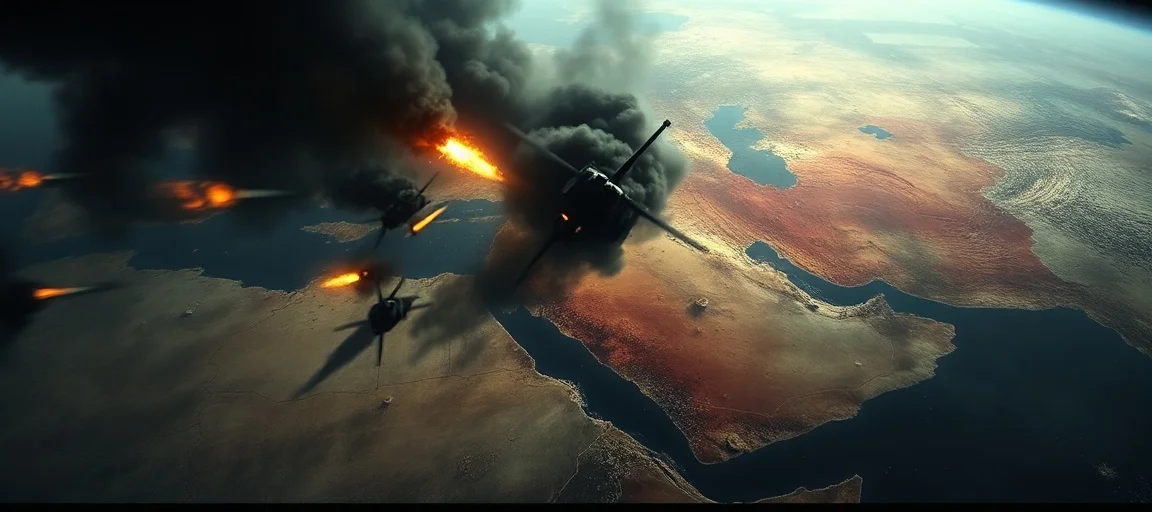
The volatile landscape of the Middle East has once again been plunged into a period of severe instability, with a significant Middle East Conflict Escalates: Israel & US Amid Strikes fueling regional tensions. As of June 2026, the region is grappling with the aftermath of joint US-Israeli military operations against Iran, alongside a deeply concerning escalation of hostilities between Israel and Hezbollah in Lebanon. These interconnected conflicts have dramatically reshaped the security paradigm, drawing major global powers deeper into a complex web of alliances and antagonisms. The current situation demands close attention from the international community as the humanitarian toll mounts and the specter of broader confrontation looms.
- Middle East Conflict Escalates: Genesis of a Wider Confrontation
- Escalation on the Northern Front: Israel and Hezbollah in Lebanon
- The Unfolding Humanitarian Crisis and Regional Impact
- Expert Analysis: A Perilous Trajectory
- Looking Ahead: Challenges and Uncertainties
- Conclusion
- Frequently Asked Questions
- Further Reading & Resources
Middle East Conflict Escalates: Genesis of a Wider Confrontation
The current wave of regional instability was dramatically ignited on February 28, 2026, with the launch of "Operation Epic Fury," a series of joint military strikes by the United States and Israel against Iran. This coordinated action marked a significant turning point, escalating the long-standing tensions between the involved nations into direct military confrontation.
Operation Epic Fury and its Immediate Aftermath
The primary objectives of Operation Epic Fury, as stated by the US and Israel, were multifaceted: to dismantle the Iranian regime's security apparatus, target its nuclear and ballistic missile programs, and ultimately induce regime change. The initial wave of nearly 900 strikes in just 12 hours targeted critical Iranian military infrastructure, air defenses, and leadership facilities. Shockwaves reverberated across the globe when it was confirmed that Iran's Supreme Leader, Ali Khamenei, was killed in the first wave of strikes on February 28, 2026, alongside dozens of other top Iranian officials. This unprecedented action, occurring amid ongoing negotiations between the US and Iran regarding its nuclear program, profoundly altered the geopolitical landscape.
The prelude to these strikes involved a substantial US military buildup in the Middle East, the largest since the 2003 invasion of Iraq. Beginning in late January 2026, the United States deployed an array of air, naval, and missile defense assets. Key deployments included the USS Abraham Lincoln carrier strike group to CENTCOM's area of operations on January 26, and additional warships positioned in strategic waterways like the Strait of Hormuz and the Red Sea. On February 24, 2026, twelve F-22 fighter jets were deployed to Ovda Airbase in southern Israel, marking the first US deployment of offensive weaponry in Israel. Further deployments included F-15E Strike Eagle fighters to Jordan and numerous tanker aircraft to support sustained operations. This military posture underscored the gravity of the US-Israeli commitment to the operation.
In swift and forceful retaliation, Iran launched hundreds of retaliatory missiles and thousands of drones across the Middle East. These counter-strikes targeted Israel, US military bases in the region, and neighboring Arab countries that house US forces or were perceived as allies of the US and Israel. Kuwait, for instance, reported missile and drone attacks, with its Foreign Ministry condemning them as a "flagrant violation of international law". Other affected nations included Bahrain, Jordan, Oman, Qatar, Saudi Arabia, the United Arab Emirates, and Iraq's Kurdistan region. The attacks extended to civilian infrastructure and oil facilities, raising significant concerns about global energy security.
The economic ramifications of this conflict were immediately apparent. Concerns over the closure of the Strait of Hormuz, a vital shipping lane for a fifth of the world's oil, led to oil price jumps. While a partial closure has occurred previously, a full closure would be unprecedented and could drastically increase oil costs, impacting global economies.
International Reactions and Diplomatic Efforts
The joint US-Israeli strikes on Iran triggered widespread international alarm and calls for de-escalation. European leaders, including France, Germany, and the UK, held emergency meetings, urging restraint and a return to diplomatic solutions. While some, like Australia and Canada, expressed support for the strikes, others, such as Russia and China, condemned the military action as destabilizing and an unprovoked act of aggression against a sovereign state. Oman, which had previously served as a mediator in nuclear negotiations between the US and Iran, expressed dismay, noting that talks had been undermined by the strikes.
A conditional ceasefire was eventually declared on April 8, 2026, aimed at halting active fighting and creating conditions for further negotiations. Pakistan reportedly served as a mediator in these discussions. However, the fragility of this truce was evident almost immediately. Iran's top diplomat stated on June 1, 2026, that peace talks with the US would not continue unless Israel ceased its escalating operations in Lebanon, highlighting the interconnectedness of the regional conflicts.
Escalation on the Northern Front: Israel and Hezbollah in Lebanon
Parallel to the conflict with Iran, tensions between Israel and Hezbollah in Lebanon have dramatically escalated, intensifying since March 2026 and persisting into June 2026. This northern front has seen a significant increase in cross-border hostilities, leading to substantial military movements and civilian displacement.
Renewed Hostilities and Israeli Ground Operations
Hezbollah has launched repeated rocket and drone attacks targeting northern Israel, including the outskirts of the coastal city of Haifa and the Upper Galilee region. These assaults have caused damage and civilian injuries, compelling Israel to respond robustly.
In response to what it termed "repeated violations of the ceasefire" by Hezbollah, Israel has undertaken extensive retaliatory strikes. On June 1, 2026, Israeli Prime Minister Benjamin Netanyahu and Defense Minister Israel Katz ordered strikes on the southern suburbs of Beirut, specifically the Dahiyeh district, a known Hezbollah stronghold. These strikes followed days of heightened activity, including Israeli airstrikes on southern Lebanese towns and villages near Nabatiyeh and Tyre, causing heavy damage to infrastructure, including Jabal Amel Hospital.
Critically, Israeli ground forces have pushed deeper into Lebanon than they have in 26 years, capturing strategic locations such as the Beaufort Castle and areas north of the Litani River, including Beaufort Ridge and Wadi al-Saluki. Israeli Defense Minister Israel Katz articulated the military's objective to "turn the Litani area into a zone under IDF security control, free of weapons and terrorists," indicating a significant shift in Israel's operational scope within Lebanon. This incursion has further exacerbated the humanitarian situation, displacing over 1.2 million Lebanese citizens since March 2, 2026.
Ceasefire Attempts and Violations
A temporary ceasefire between Israel and Lebanon was brokered by the United States on April 16, 2026, for an initial period of 10 days, with the intention of creating space for further negotiations towards a longer-term settlement. This truce was subsequently extended for another 45 days in May. However, its implementation has been fraught with challenges.
Hezbollah, while not a formal signatory to the agreement, indicated that it would respond to any Israeli violations and would not revert to its pre-March operational status. True to this stance, fighting has continued despite the ceasefire, with both sides accusing each other of breaches. Israeli officials have appealed to the US to allow for expanded strikes in Beirut, hoping for a favorable response given the stalled negotiations with both Washington and Tehran, and with Lebanon. Meanwhile, Lebanese officials have engaged in intensive diplomatic contacts with Arab and international parties to pressure Israel against further escalation in Beirut. Saudi Arabia, for instance, condemned Israel's attacks on Lebanon and urged the international community to prevent deeper Israeli incursions.
The Unfolding Humanitarian Crisis and Regional Impact
Beyond the immediate military clashes, the conflicts in the Middle East have unleashed a severe humanitarian crisis, with devastating consequences for civilian populations across the region.
Gaza's Enduring Struggle
Despite a ceasefire agreement that took effect on October 10, 2025, the humanitarian situation in the Gaza Strip remains dire, with little improvement in living conditions. Israel's continued military campaign, blockade, and restrictions on humanitarian aid have severely impacted the enclave. The Palestinian Foreign Ministry warned in May 2026 of a worsening humanitarian catastrophe, citing Israel's ongoing targeting of civilians, infrastructure, and displacement centers.
Since the ceasefire, more than 1,000 Palestinians, predominantly women and children, have been killed, and thousands more injured due to continued Israeli actions. The vast majority of Gaza's population, approximately 1.9 million out of 2.4 million, remain displaced, living in makeshift shelters that lack basic necessities. These overcrowded conditions, coupled with a severe shortage of clean water, have led to a public health disaster. Reports indicate a rise in respiratory infections, acute watery diarrhea, and widespread skin conditions like rashes, scabies, lice, and mites. UNICEF has highlighted that children in Gaza are trapped "in an endless cycle of suffering," with parents unable to protect their children's health and safety. Furthermore, while famine conditions were temporarily reversed, the number of malnourished and vulnerable children remains extremely serious. Efforts by humanitarian partners to provide aid are often hampered by obstacles and restrictions on critical supplies, with incidents of aid workers being killed.
In the West Bank, OCHA has documented a record number of movement obstacles—925 as of April 2026—the highest in 20 years, significantly restricting Palestinian movement. Settler violence has also intensified, with over 870 attacks documented in 2026 alone, leading to casualties, property damage, and the displacement of dozens of communities. Since January 2023, 45 Palestinian communities, comprising over 3,500 people, have been fully displaced due to settler attacks and related access restrictions, including nine communities in 2026.
Wider Regional Instability and Displacement
The broader conflict, particularly the 2026 Iran War and the Israel-Hezbollah clashes, has also generated significant regional instability and displacement. Thousands of people have been killed in Iran, Lebanon, Israel, and the Gulf Arab states as a direct consequence of the war. In Lebanon, the intensification of Israeli strikes and evacuation orders has displaced over 1.2 million people, creating an immense humanitarian burden. The United Nations has repeatedly urged restraint and emphasized that children are bearing the brunt of the escalating wars.
The risk of further escalation and its impact on the global oil market remain a significant concern, especially given the threats to maritime navigation in the Strait of Hormuz. Moreover, experts have warned that an all-out regional conflict could render the US military presence in Iraq and Syria unsustainable and potentially reanimate Sunni jihadist groups, increasing global terrorism concerns.
Expert Analysis: A Perilous Trajectory
Security analysts and Middle East experts largely concur that the region finds itself on a perilous trajectory. Many describe the current situation as "unsettled" and unprecedented in recent memory.
According to some experts, Israeli Prime Prime Minister Benjamin Netanyahu's strategy of pursuing "total victory" in Gaza, aiming to completely destroy Hamas, is seen as an unachievable goal. The continuous military operations and the humanitarian catastrophe they engender are believed to fuel further radicalization and undermine long-term stability. The concept of "Westbankification" of Gaza, where the enclave is fragmented into small pieces for humanitarian aid delivery without granting Palestinians political agency, is also a concern for analysts.
Iran has been consistently identified as the "strategic center of gravity" of the entire regional system by institutions like the Jerusalem Center for Security and Foreign Affairs. The belief among some policymakers is that weakening or dismantling Iran's "messianic terror regime" would significantly alter the regional balance. However, the assassination of Supreme Leader Ali Khamenei and the ensuing chaos have introduced new uncertainties regarding Iran's future leadership and its regional posture.
The critical US-Israeli coordination is acknowledged, yet some experts point out potential clashes with President Donald Trump's broader vision for reshaping the Middle East. Trump's emphasis on expanding the Abraham Accords to include countries like Syria and Lebanon, while seeking to secure his legacy as a peacemaker, may not always align with Israel's immediate operational red lines or long-term regional interests. There is a strategic trade-off for Israel: accommodating aspects of US plans in Gaza in exchange for decisive American partnership against Iran, while preserving its freedom of action on multiple fronts. The risk of a broader regional conflict, particularly if Israel were to move towards annexation of Gaza or the West Bank, could jeopardize existing peace treaties with Egypt and Jordan, further destabilizing the region.
Looking Ahead: Challenges and Uncertainties
The immediate future of the Middle East remains fraught with immense challenges and uncertainties. Diplomatic efforts, though ongoing, are severely tested by the continued hostilities, deep-seated mistrust, and conflicting objectives of the various actors. The assassination of Supreme Leader Ali Khamenei introduces a period of potential instability within Iran, with questions surrounding the succession and the future direction of its government.
The international community faces a critical imperative to redouble its efforts for de-escalation and to address the catastrophic humanitarian crises unfolding across Gaza and and Lebanon. Securing unfettered access for humanitarian aid and ensuring the protection of civilians must be paramount. The long-term impact on global energy security and trade, particularly if key maritime routes remain threatened, could have far-reaching consequences for the world economy.
Achieving any semblance of lasting peace will require sustained and coordinated diplomatic engagement, addressing the root causes of the conflicts, and fostering pathways for dialogue and resolution among all parties involved. Without such efforts, the region risks sinking deeper into a cycle of violence with devastating implications not only for its inhabitants but for global stability.
Conclusion
The current Middle East Conflict Escalates: Israel & US Amid Strikes represents a dangerous intensification of long-standing regional rivalries and conflicts. The joint US-Israeli strikes on Iran and the subsequent Iranian retaliation, coupled with the escalating conflict between Israel and Hezbollah in Lebanon, have created an unprecedented level of volatility. The immense humanitarian suffering in Gaza and Lebanon underscores the urgent need for a comprehensive and sustained international response. Navigating this complex landscape will require exceptional diplomatic skill, a commitment to de-escalation, and a collective resolve to protect civilian lives and promote a stable future for the Middle East.
Frequently Asked Questions
Q: What triggered the recent escalation of the Middle East conflict?
A: The conflict escalated dramatically with "Operation Epic Fury," joint US-Israeli military strikes against Iran on February 28, 2026. This targeted Iran's military infrastructure and leadership, including the Supreme Leader, leading to widespread retaliatory strikes from Iran across the region.
Q: What is the current humanitarian impact of these conflicts?
A: The situation is dire, particularly in Gaza where a blockade and continued military actions cause severe displacement, health crises, and food insecurity. In Lebanon, escalating Israeli-Hezbollah clashes have displaced over 1.2 million citizens, leading to immense suffering and a critical need for aid.
Q: How has the international community reacted to the situation?
A: International reactions have been mixed. European leaders called for de-escalation, while Russia and China condemned the US-Israeli strikes. Calls for restraint and diplomatic solutions are widespread, with Pakistan and Oman attempting mediation, though ceasefires remain fragile.