Middle East Conflict Escalates: Israel Pushes Deeper into Lebanon
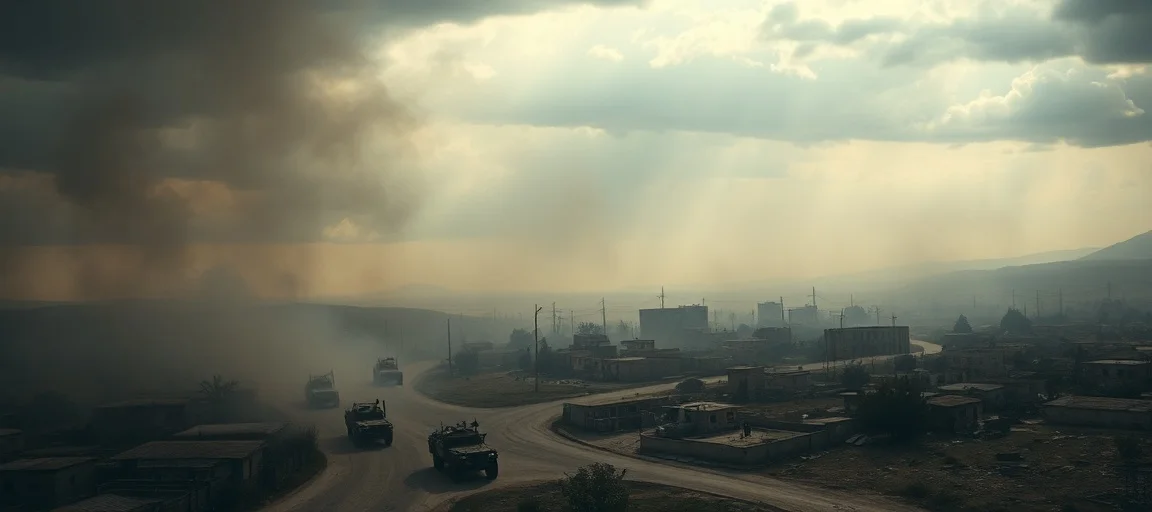
The geopolitical landscape of the Middle East is witnessing a perilous turn as the Middle East Conflict Escalates: Israel Pushes Deeper into Lebanon. Recent developments indicate a significant intensification of military operations, with Israeli forces expanding ground incursions and launching numerous airstrikes across southern and eastern Lebanon. This critical escalation is straining an already fragile region, deepening humanitarian concerns, and challenging ongoing diplomatic efforts to secure a lasting peace. The sustained offensive has drawn considerable international attention, as the potential for wider regional destabilization looms large.
- Israel's Deepening Offensive: Middle East Conflict Escalates
- Background to the Intensification
- Humanitarian Crisis Deepens
- International Reactions and Diplomatic Efforts
- Broader Regional Implications
- Expert Analysis and Future Outlook
- Conclusion
- Frequently Asked Questions
- Further Reading & Resources
Israel's Deepening Offensive: Middle East Conflict Escalates
Since early March 2026, the conflict between Israel and Hezbollah, which initially escalated in October 2023 following the Gaza War Context and intensified in September 2024, has entered a critical new phase. Despite a U.S.-brokered ceasefire announced on April 16, 2026, Israeli military operations have significantly deepened. Lebanese security sources reported that Israel conducted over 120 airstrikes in a single day in late May, marking one of the heaviest bombing campaigns in weeks.
Israeli Prime Minister Benjamin Netanyahu confirmed his military's deepening operations in Lebanon, with forces acting "with large forces in the field and capturing and controlling areas" to "fortify the security strip to protect the northern communities." The Israel Defense Forces (IDF) have explicitly confirmed conducting raids beyond their declared "forward defense line," which demarcates Israel's security zone in southern Lebanon. This "Yellow Line," distinct from the UN-demarcated "Blue Line," forms part of a proposed buffer zone extending 5 to 10 kilometers (3 to 6 miles) into southern Lebanon. Israeli troops are reportedly operating in dozens of largely abandoned villages within this area.
The objective of these expanded operations, according to an Israeli military official, is to push Hezbollah further from the border and enhance the defense of the security zone, particularly in response to Hezbollah's increased use of first-person view (FPV) drones in attacks on Israeli troops and northern Israeli towns. IDF Spokesman Brig. Gen. Effie Defrin stated that troops are carrying out ground operations in locations previously inaccessible, "with great success." The IDF has claimed to have killed 2,500 Hezbollah operatives in Lebanon since hostilities escalated in March, with 800 of those fatalities occurring since the April 16 ceasefire took effect.
Hezbollah, in turn, has responded to Israeli incursions with explosive drones, rockets, and artillery, targeting Israeli forces and tanks advancing toward towns like Zawtar al-Sharqiya. The group has consistently stated that Israeli attacks, drone strikes, assassinations, and military incursions constitute violations of the ceasefire, justifying their continued resistance operations.
Background to the Intensification
The current flare-up in hostilities has roots in a prolonged period of tension and conflict. The initial conflict between Israel and Hezbollah began in October 2023, following the outbreak of the Gaza war. This led to an Israeli invasion of southern Lebanon in October 2024, which concluded with a U.S.-brokered ceasefire in November 2024. However, violations of this ceasefire were reported almost daily throughout 2025, with Israel conducting airstrikes and Hezbollah rebuilding its militant infrastructure.
A significant turning point came on March 2, 2026, when Hezbollah launched an attack against Israel in what it described as retaliation for the assassination of Iranian Supreme Leader Ali Khamenei, which occurred after a U.S.-Israeli military operation targeting Iran on February 28, 2026. This initiated a large-scale escalation, with Israel responding with heavy bombardment and expanded ground operations.
Despite a temporary ceasefire brokered by the United States on April 16, 2026, intended to halt active fighting and create conditions for negotiations, hostilities continued. The truce was initially for 10 days and was later extended for another 45 days on May 15. However, Israeli Prime Minister Netanyahu asserted that the ceasefire did not apply to Lebanon, leading to continued operations. Hezbollah leader Naim Qassem also stated on April 27 that the group would not revert to the pre-March status and would respond to Israeli aggression.
Humanitarian Crisis Deepens
The escalating conflict has precipitated a severe humanitarian crisis in Lebanon. Since March 2, 2026, over one million people in Lebanon, representing nearly 20% of the population, have been forced from their homes due to intensified Israeli military campaigns. This widespread displacement has placed immense strain on a country already hosting one of the world's largest refugee populations per capita.
Casualties and Displacement:
- As of May 26, Lebanon's health ministry reported a cumulative toll of 3,213 dead and 9,737 wounded from the Israeli offensive since March 2. The World Health Organization (WHO) reported at least 608 deaths and 1,774 injuries in Lebanon between April 17 and May 22 alone.
- Women, children, and the elderly account for an estimated 25% to 35% of civilian casualties. In the first week of the latest escalation, 20% of casualties were children.
- More than 822,000 people, including nearly 300,000 children, have registered as displaced, with approximately 128,000 sheltering in nearly 600 collective sites across the country. UNHCR reported over a million newly displaced people by March 27, many lacking basic necessities.
- Evacuation orders have been issued for entire cities, including Nabatieh, located north of the Litani River, and renewed for towns like Mashgara in Bekaa. Israeli Defence Minister Israel Katz declared in March that Shia residents south of the Litani River would not be permitted to return until Israel's security conditions are met. This deliberate targeting of Shia communities and barring their return is viewed by Human Rights Watch as forced displacement, a potential war crime under international humanitarian law.
Infrastructure Damage and Aid Shortfalls:
- Airstrikes and missile exchanges have caused widespread damage to civilian infrastructure, including residential buildings, schools, health facilities, and essential services, particularly in Southern Lebanon, the Bekaa Valley, and Beirut's southern suburbs. The Civil Defense Center in Nabatieh was destroyed, impacting emergency response capacity.
- The humanitarian response remains severely underfunded. The UN's USD 308.3 million Flash Appeal for March-May 2026 had secured only 51.3% of the required funding by late May 2026, leaving critical gaps in essential services. Prior to the current crisis, an estimated 3 million people in Lebanon already required assistance.
International Reactions and Diplomatic Efforts
The international community has expressed grave concern over the escalation, urging de-escalation and adherence to existing agreements.
United Nations and European Union
The Understanding UN Resolutions in Middle East Security Council Resolution 1701, adopted in 2006, calls for a full cessation of hostilities between Israel and Hezbollah, the withdrawal of Hezbollah and other forces from south of the Litani River, the disarmament of armed groups, and the withdrawal of Israeli forces from Lebanon, with only UNIFIL and Lebanese military forces south of the Litani. However, Hezbollah's repeated violations have hindered UNIFIL's mandate.
European nations have actively called for a cessation of hostilities and respect for Lebanon's territorial integrity. Foreign ministers from several European countries expressed full support for the Lebanese government and its "historic and courageous decisions." They condemned Hezbollah's attacks and urged Israel to avoid further widening the conflict, including through ground operations. There's also a push for Europe to assert a greater role in securing peace, with proposals for a post-UNIFIL mission.
United States' Role
The United States has been a key mediator, brokering the April 16 ceasefire and facilitating direct talks between Israeli and Lebanese officials. These discussions, the first direct diplomatic engagement in decades, aim to achieve a comprehensive agreement for lasting security and peace. A "security track" of negotiations involving military delegations is scheduled to begin at the Pentagon in late May, followed by a "political track" in early June.
However, the U.S.-brokered talks are complicated by the ongoing U.S.-Israeli conflict with Iran and President Donald Trump's efforts to extend a separate ceasefire with Iran. Israel's escalation in Lebanon is seen by some as a move to gain leverage before a potential U.S.-Iran peace agreement that might require Israel to halt operations against Iran-aligned factions.
Lebanese President Joseph Aoun has emphasized that a ceasefire with Israel is an "essential gateway to moving on to any other step." However, Hezbollah has firmly rejected direct diplomatic engagement with Israel, condemning the talks as a "free concession" and stepping up fire on northern Israel as they began.
Broader Regional Implications
The escalation in Lebanon is deeply intertwined with the broader regional conflict, particularly the The 2026 Iran War: Regional Impact. The assassination of Iran's Supreme Leader Ali Khamenei triggered Hezbollah's initial response, linking the Lebanese front directly to the wider regional power struggles.
Geopolitical Chessboard:
- Israel's continued operations are seen as an attempt to restore deterrence against Hezbollah and secure political traction domestically.
- The intensification of fighting complicates U.S.-Iran talks, with the IDF highly likely to continue expanding operations beyond the Yellow Line.
- Further Israeli-Hezbollah fighting threatens to derail any potential U.S.-Iran agreement and could upend the fledgling U.S.-brokered talks between Beirut and Israel.
- Some analysts suggest Israel's actions are aimed at complicating U.S.-Iran talks and offsetting domestic criticism that the government is allowing the United States to restrain Israeli military action.
The conflict also highlights the long-standing border disputes between Israel and Lebanon, despite the UN's "Blue Line" demarcation. Lebanon continues to argue that Israel occupies Lebanese lands.
Expert Analysis and Future Outlook
Experts suggest that Israel will likely continue and expand military operations in southern Lebanon, conducting occasional strikes on Beirut, but that these actions are unlikely to fundamentally alter the balance of power with Hezbollah. Such a campaign risks overstretching the Israeli military the deeper it pushes into southern Lebanon and will continue to strain the Lebanese government's ability to progress in peace talks.
The Lebanese government has banned all military activities by Hezbollah, urging the group to confine itself to the political arena and surrender its weapons. However, Hezbollah has rejected disarmament efforts.
The strategic implications are significant. The conflict reinforces Hezbollah's argument that Lebanon cannot negotiate under fire, thereby undermining U.S.-brokered talks and progress toward disarming the group. The international community remains committed to supporting the Lebanese Armed Forces to enable them to become the sole guarantors of Lebanon's sovereignty. However, the path to a lasting resolution remains fraught with challenges, with market pricing suggesting a low probability of a permanent peace deal between Israel and Hezbollah by the end of May 2026.
Conclusion
The recent escalation, where the Middle East Conflict Escalates: Israel Pushes Deeper into Lebanon, underscores the extreme volatility of the region. The intensified military operations, the deepening humanitarian crisis, and the complex interplay of regional and international diplomacy paint a grim picture. While diplomatic efforts are underway, the continued violence and divergent objectives of the parties involved make a swift and comprehensive resolution appear distant. The international community's sustained engagement and humanitarian support remain crucial as Lebanon grapples with the devastating consequences of this protracted conflict.
Frequently Asked Questions
Q: What's the main reason for the current escalation in Lebanon?
A: The current escalation began in early March 2026 following a Hezbollah attack, described as retaliation for the assassination of Iran's Supreme Leader. This reignited a conflict that intensified from October 2023, leading to deeper Israeli ground incursions.
Q: What is the humanitarian impact of the conflict in Lebanon?
A: The conflict has displaced over a million people in Lebanon, with thousands dead or wounded. Civilian infrastructure is severely damaged, and humanitarian aid efforts are significantly underfunded, exacerbating an existing crisis.
Q: What is the international community doing to address the conflict?
A: The international community, including the UN, EU, and US, has called for de-escalation and adherence to Resolution 1701. The US has brokered ceasefire talks between Israeli and Lebanese officials, but a lasting resolution remains elusive amidst continued hostilities.