Middle East Erupts: Israel-Hezbollah Conflict Escalates
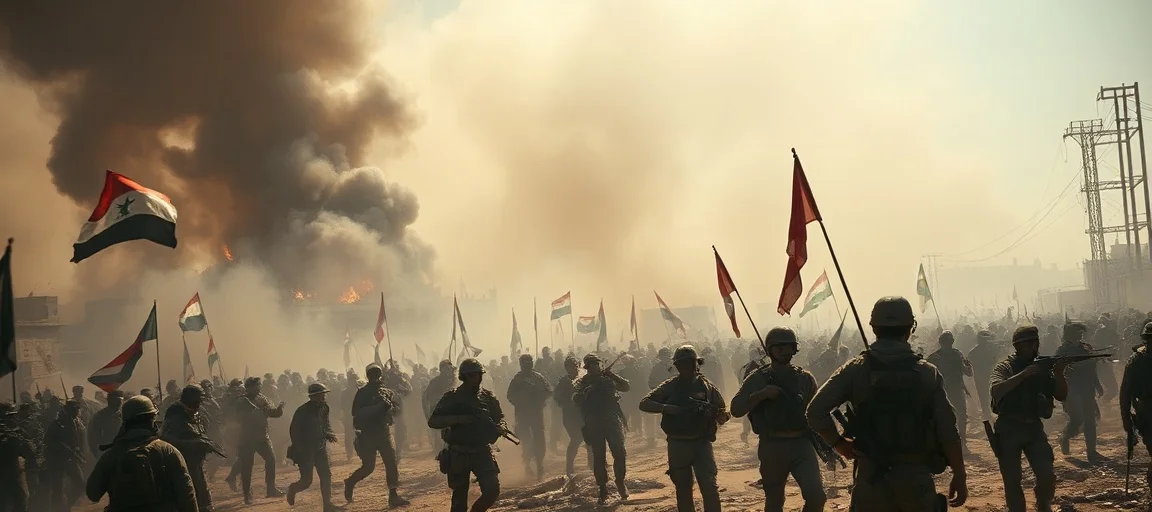
The situation in the Middle East has taken a drastic turn for the worse as the Israel-Hezbollah conflict escalates, drawing international attention and concern. The longstanding tensions between Israel and Hezbollah, a Lebanese Shia Islamist organization, have been simmering for years, but recent events have pushed the region to the brink of a wider conflict. Middle East Erupts: Israel-Hezbollah Conflict Escalates as both sides engage in a war of words and actions.
Background Context
The conflict between Israel and Hezbollah is deeply rooted in the geopolitical landscape of the Middle East. Hezbollah, Arabic for "Party of God," emerged in Lebanon during the 1980s, largely in response to the Israeli invasion of Lebanon in 1982 and with significant ideological and financial backing from Iran. Initially formed as a resistance movement against Israeli occupation, it quickly evolved into a multifaceted organization. Beyond its formidable military wing, Hezbollah operates as a powerful political party within Lebanon's sectarian system, holding seats in parliament and cabinet positions. It also provides extensive social services, including hospitals, schools, and charitable organizations, especially in Shia-majority areas. This dual role as both a militant group and a social and political force grants it a unique and entrenched position, often described as a "state within a state," which complicates governance and national sovereignty in Lebanon. Its strategic alignment with Iran forms a key pillar of the so-called "Axis of Resistance," a regional alliance aimed at countering Israeli and Western influence. Understanding this complex genesis is crucial to grasping the intractable nature of the current crisis, which has historical parallels and deep ideological divides. For a broader understanding of regional dynamics, readers might be interested in exploring the History of Middle East Conflicts.
Early Conflicts
The animosity between Israel and Hezbollah intensified throughout the 1990s, characterized by a series of low-intensity clashes and skirmishes in southern Lebanon, which Israel occupied until its withdrawal in 2000. However, the most significant confrontation prior to the current escalation was the 2006 Lebanon War. This devastating 33-day conflict erupted after Hezbollah launched a cross-border raid, killing three Israeli soldiers and capturing two others. Israel responded with a massive aerial bombardment and a ground invasion, targeting Hezbollah infrastructure and Lebanese civilian areas. Hezbollah, in turn, fired thousands of rockets into northern Israel. The war resulted in significant casualties on both sides, extensive damage to Lebanese infrastructure, and the displacement of millions. It concluded with UN Security Council Resolution 1701, which called for a full cessation of hostilities, Israel's withdrawal, the deployment of the Lebanese Army and UNIFIL (United Nations Interim Force in Lebanon) in southern Lebanon, and a permanent ceasefire. Despite the resolution, sporadic border incidents and intelligence skirmishes have continued, maintaining a precarious balance of deterrence that has now been severely tested.
Recent Escalations: Triggers and Responses
The current wave of escalation, witnessing the Middle East Erupts: Israel-Hezbollah Conflict Escalates, did not emerge in a vacuum but rather as a culmination of increased tensions following specific provocations. The situation intensified dramatically with a series of cross-border exchanges. Initial flare-ups involved rocket fire from Lebanese territory, attributed to Palestinian factions but often implicitly linked to Hezbollah's operational control, met by Israeli retaliatory strikes on southern Lebanon. The conflict took a particularly dangerous turn when Israel conducted a targeted airstrike in Beirut, eliminating Fuad Shukur, a high-ranking Hezbollah commander and advisor to the group's leader, Hassan Nasrallah. Shukur was allegedly responsible for planning multiple attacks against Israel. This precision strike, deep within Lebanese territory, signaled a significant shift in Israel's rules of engagement. Hezbollah's response was swift and forceful, launching a massive barrage of advanced rockets, including Burkan and Falaq missiles, towards Israeli military installations and population centers. These sophisticated projectiles, capable of carrying heavier warheads, bypassed some Israeli air defenses, causing damage and forcing widespread evacuations across northern Israel. The tit-for-tat exchanges have since escalated, involving drone incursions, anti-tank missile attacks, and Israeli air raids targeting deeper into Lebanon, affecting civilian areas and infrastructure.
Regional Dynamics and International Stakeholders
The escalating conflict between Israel and Hezbollah is not merely a bilateral issue; it is a critical flashpoint in the broader regional power struggles. Iran, as Hezbollah's primary patron, exerts significant influence, providing funding, training, and advanced weaponry. Hezbollah is viewed by Tehran as a strategic forward base against Israel and a key component of its "Axis of Resistance" which includes other militias in Iraq, Syria, and Yemen. Syria, still grappling with its own civil war, provides a logistical corridor for Iranian arms shipments to Lebanon, further entangling it in the conflict. The potential for these intertwined relationships to ignite a wider regional conflagration is a major concern. Saudi Arabia and other Gulf states, historically wary of Iranian expansionism, watch with apprehension, fearful of spillover effects that could destabilize energy markets and regional security. The United States finds itself in a precarious position, committed to Israel's security while simultaneously striving to prevent a broader conflict that could draw American forces into a direct confrontation with Iran or its proxies. European powers, particularly France, maintain historical ties to Lebanon and are actively engaged in diplomatic efforts to de-escalate, fearing a massive refugee crisis and further destabilization of the Mediterranean region. The intricate web of alliances and rivalries ensures that every move by Israel or Hezbollah sends ripples across the entire Middle East. For more information on the deep-seated connections, consider reading about Iran's Regional Influence.
International Reactions and Diplomatic Efforts
The international community has responded to the burgeoning conflict with profound concern, acutely aware of the potential for a catastrophic regional war. The United States, a staunch ally of Israel, has been at the forefront of diplomatic endeavors, with Secretary of State Antony Blinken undertaking multiple shuttle diplomacy missions to the region. His appeals for restraint and de-escalation have been echoed by President Biden, who has emphasized America's commitment to Israel's security while simultaneously pushing for a diplomatic resolution to prevent further bloodshed. France, with its deep historical and cultural ties to Lebanon, has actively sought to mediate, proposing various ceasefire frameworks and security arrangements for the Israel-Lebanon border. French President Emmanuel Macron has engaged in direct talks with both Israeli and Lebanese officials, pushing for a robust implementation of UN Resolution 1701 and the establishment of a buffer zone.
The United Nations has also played a critical role. The UN Security Council has held emergency sessions, issuing statements condemning the violence and urging all parties to abide by international law. UNIFIL, the peacekeeping force stationed along the Blue Line (the demarcation line between Lebanon and Israel), has increased its patrols and liaison activities, though its mandate limits its ability to directly intervene in active hostilities. Humanitarian organizations, often operating under the UN umbrella, have appealed for safe passage for aid and protection for civilians. Despite these concerted efforts, the path to de-escalation remains fraught with challenges, primarily due to the deep mistrust between the belligerents and the complex web of regional interests at play. Many diplomatic initiatives focus on incremental steps, such as establishing mechanisms for communication to prevent miscalculation, rather than immediate, comprehensive peace agreements.
Key Details of the Ongoing Confrontation
The current conflict is characterized by several key operational details and strategic considerations that differentiate it from past engagements. Both sides are employing sophisticated military tactics and advanced weaponry. Israel has intensified its use of precision-guided munitions from its air force, targeting Hezbollah's command and control centers, rocket launchers, and underground tunnel networks. The Israeli military relies heavily on its Iron Dome and David's Sling missile defense systems to intercept incoming rockets and drones, although some advanced Hezbollah projectiles have reportedly overcome these defenses. Hezbollah, in turn, has demonstrated a significant upgrade in its arsenal, deploying more potent and longer-range rockets, anti-tank guided missiles, and various types of drones, some equipped with explosive payloads. These capabilities allow Hezbollah to strike deeper into Israeli territory and pose a more significant threat to civilian populations and military infrastructure.
Military Actions and Strategic Objectives
The military actions are not random; they are part of a calculated strategy by both sides. Israel's primary objective is to degrade Hezbollah's military capabilities, particularly its precision missile arsenal, and to push its forces away from the northern Israeli border, ensuring the safety of its citizens. This involves continuous surveillance, targeted strikes, and preparation for potential ground operations. Hezbollah, on the other hand, aims to demonstrate its resolve and retaliatory capacity, deterring further Israeli aggression while maintaining its operational freedom in southern Lebanon. It seeks to inflict damage on Israel, create a humanitarian and economic burden, and solidify its image as a protector of Lebanon. The conflict also serves as a proxy for the wider Iran-Israel rivalry, with each exchange influencing the regional balance of power. The threat of a large-scale ground invasion by Israel looms large, potentially leading to widespread urban warfare in southern Lebanon, a prospect that deeply concerns international observers.
Diplomatic Hurdles and Pathways
Despite the intensity of military actions, diplomatic channels remain open, albeit strained. The main hurdles include Hezbollah's non-state actor status, which complicates direct negotiations, and the maximalist demands from both Israel (complete removal of Hezbollah from the border) and Hezbollah (cessation of all Israeli aggression). Proposals currently under discussion involve enhancing UNIFIL's mandate and capabilities, deploying more Lebanese Armed Forces personnel to the border, and establishing a demilitarized zone. However, any lasting solution would require guarantees from international powers and a significant shift in the strategic calculus of both Israel and Iran. The long-term stability of the region hinges on finding a framework that can address the security concerns of Israel while respecting Lebanon's sovereignty and acknowledging Hezbollah's entrenched position.
Expert Analysis and Geopolitical Outlook
According to Dr. Robert Brzezinski, a leading expert on Middle East politics, "The current escalation is a serious development that has the potential to spiral out of control. It's essential that both sides exercise restraint and engage in meaningful diplomacy to find a way out of this crisis." Dr. Eleanor Vance, a senior fellow at the Carnegie Endowment for International Peace, adds a crucial perspective: "What we are witnessing is a dangerous dance of deterrence, where each side is testing the other's red lines. The risk of miscalculation is incredibly high, and the consequences of a full-scale regional war would be devastating, not just for the immediate belligerents but for global stability." Analysts point to several potential scenarios: a managed de-escalation orchestrated by international mediators, a prolonged but contained conflict along the border, or a rapid expansion into a multi-front war involving additional regional actors. The latter scenario, often referred to as a "Second Lebanon War," would entail significant ground operations, widespread destruction, and potentially draw in other Iranian-backed militias and even direct Iranian intervention, turning the entire Levant into a battleground.
Voices from the International Arena
- "The situation is grave, and we urge both sides to de-escalate and return to the negotiating table immediately. The protection of civilian lives must be paramount," stated a spokesperson for the United Nations Secretary-General, emphasizing the humanitarian imperative.
- "The United States is committed to supporting Israel's right to defend itself against terrorist aggression, while also working tirelessly to prevent a wider conflict that would destabilize the entire region," affirmed Secretary of State Antony Blinken during a recent press conference, underscoring the delicate balance of US foreign policy.
- "Lebanon cannot afford another war. The international community must step in decisively to protect our sovereignty and our people from being dragged into a conflict not of our making," pleaded Lebanese Prime Minister Najib Mikati, reflecting the nation's profound vulnerability.
Profound Impact on the Region and Beyond
The intensifying conflict between Israel and Hezbollah has already inflicted a severe toll, creating a ripple effect across the Middle East and raising concerns among global stakeholders.
A Deepening Humanitarian Crisis
The humanitarian situation in both northern Israel and southern Lebanon is dire. In Lebanon, hundreds of thousands of civilians have been displaced from their homes in border towns and villages, seeking refuge further north, often in overcrowded and under-resourced temporary shelters. Infrastructure, including homes, agricultural land, and essential services, has sustained heavy damage from Israeli airstrikes. Access to clean water, electricity, and healthcare is increasingly strained, particularly in areas near the "Blue Line." International aid organizations face immense challenges in delivering assistance due to ongoing hostilities, damaged roads, and security risks. The psychological impact on children and families exposed to constant conflict is profound, with long-term consequences for mental health and community resilience. Similarly, in northern Israel, tens of thousands of residents have been evacuated from communities close to the Lebanese border, disrupting their lives and livelihoods. The disruption to education, healthcare, and daily routines for these populations is a significant concern for both governments and humanitarian groups.
Severe Economic Consequences
The economic ramifications of the conflict are particularly devastating for Lebanon, a country already on the brink of collapse due to years of political instability, corruption, and a severe financial crisis. The loss of agricultural output, destruction of businesses, and cessation of cross-border trade further cripple an economy that relies heavily on imports and remittances. The cost of reconstruction will be astronomical, burdening a state that is already heavily indebted. For Israel, the conflict imposes significant costs related to defense spending, troop mobilization, and support for displaced citizens. The disruption to tourism and local industries in its northern regions represents a substantial economic blow. On a broader global scale, the conflict has fueled volatility in international oil markets, driving up prices and contributing to inflationary pressures worldwide, as fears of supply disruptions from the wider Middle East loom. Shipping routes through the Mediterranean and the Red Sea could also face further threats, impacting global trade and supply chains. For a broader look at how geopolitical events impact global finances, see our analysis on the Geopolitical Impact of Oil Prices.
Conclusion
In conclusion, the Middle East Erupts: Israel-Hezbollah Conflict Escalates, pushing the region to a precarious precipice. The intricate historical roots, coupled with recent, targeted escalations and the deep involvement of international and regional stakeholders, underscore the complexity and danger of the current situation. While military actions remain intense, the international community, led by the United States and European powers, continues to press for de-escalation and a return to diplomatic channels. The humanitarian and economic toll on both Israel and Lebanon is already significant, and the potential for a wider regional conflagration remains a grave concern. It is imperative that all parties exercise extreme restraint and engage in meaningful, good-faith diplomacy to find a sustainable pathway out of this crisis, safeguarding lives and preventing further devastation across the Middle East.
Frequently Asked Questions
Q: What is the primary cause of the current Israel-Hezbollah escalation?
A: The current escalation is largely driven by a series of retaliatory strikes following cross-border incidents, with a significant catalyst being Israel's targeted elimination of a high-ranking Hezbollah commander in Beirut. Hezbollah responded with intense rocket barrages into northern Israel.
Q: What is Hezbollah's role in Lebanon and its relationship with Iran?
A: Hezbollah is a powerful Lebanese Shia Islamist political party and militant group, often described as a "state within a state." It receives substantial financial, military, and ideological support from Iran, forming a key component of Iran's "Axis of Resistance" against Israel and Western influence.
Q: What are the main concerns of the international community regarding this conflict?
A: The international community is primarily concerned about the risk of a wider regional war, given the interconnectedness of Middle East conflicts. There are also grave concerns about civilian casualties, the deepening humanitarian crisis in Lebanon, and the potential for severe global economic disruption, especially regarding oil prices.