Global Copper Production Hit by Sulfuric Acid Scarcity: A Looming Crisis
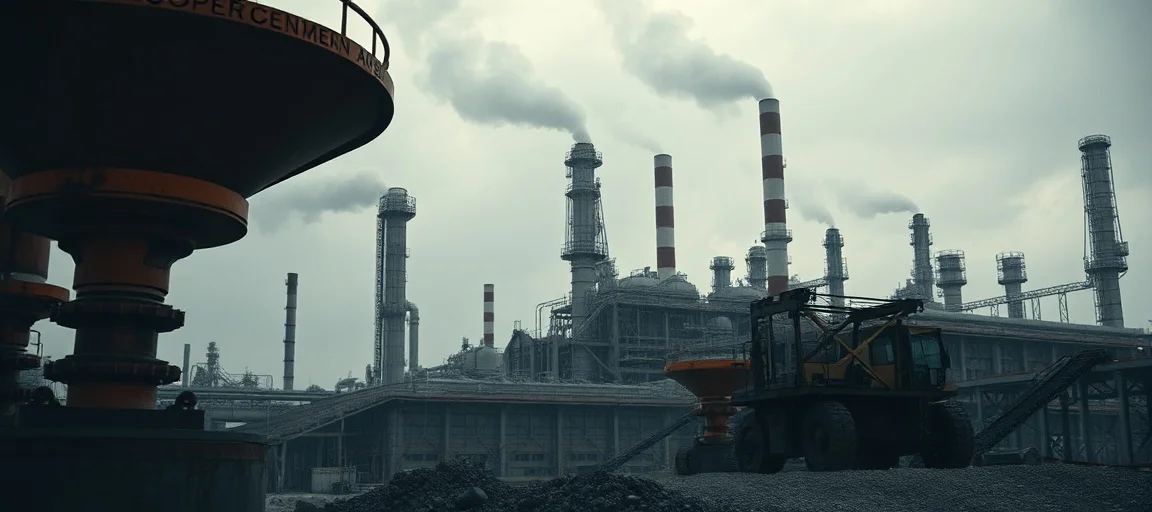
The global economy is bracing for potential shocks as global copper production is hit by sulfuric acid scarcity, a critical chemical input essential for the extraction of the red metal. This escalating shortage threatens to significantly disrupt the copper supply chain, leading to higher prices and potentially impacting industries from construction and electronics to renewable energy and electric vehicles. The unfolding crisis highlights the interconnectedness of industrial supply chains and the ripple effects that disruptions in one sector can have across the entire global market.
- The Unseen Crisis: Sulfuric Acid's Pivotal Role in Copper
- Causes Behind the Global Sulfuric Acid Scarcity
- Direct Impact on Global Copper Production by Sulfuric Acid Scarcity
- Expert Opinions and Industry Responses
- Broader Economic and Environmental Implications
- Looking Ahead: Navigating a Complex Market
- Frequently Asked Questions
- Further Reading & Resources
The Unseen Crisis: Sulfuric Acid's Pivotal Role in Copper
Copper, often dubbed "Dr. Copper" for its perceived ability to predict economic health, is fundamental to modern infrastructure and technology. Its extraction from ore bodies relies heavily on sulfuric acid, particularly in the processing of oxide ores and secondary sulfide ores through a method known as solvent extraction-electrowinning (SX-EW). This hydrometallurgical process allows for the efficient and cost-effective recovery of copper from lower-grade ores that would be uneconomical to process via traditional smelting methods.
Hydrometallurgy and Leaching Explained
Hydrometallurgy involves using aqueous solutions to recover metals from ores. For copper, this primarily means leaching:
- Heap Leaching: Crushed ore is piled into heaps, and a sulfuric acid solution is trickled through it. The acid dissolves the copper minerals, forming a copper sulfate solution.
- Solvent Extraction: The copper-rich solution is then treated with an organic solvent that selectively extracts the copper ions.
- Electrowinning: The copper is stripped from the organic solvent into a new acidic solution, from which pure copper cathodes are produced through electrolysis.
Without a consistent and affordable supply of sulfuric acid, a substantial portion of global copper production, particularly from major mining regions, faces operational hurdles and reduced output. This dependence underscores the vulnerability of the industry to chemical supply chain disruptions.
Causes Behind the Global Sulfuric Acid Scarcity
The current shortage of sulfuric acid is not a monolithic issue but rather a confluence of factors, ranging from shifts in global trade to environmental policies and unforeseen industrial events. Understanding these underlying causes is crucial to grasping the complexity of the problem.
Decreased Sulfur Dioxide Emissions
Ironically, one of the primary drivers of the sulfuric acid shortage stems from environmental successes. A significant portion of the world's sulfuric acid is produced as a byproduct of smelting non-ferrous metals like copper, lead, and zinc, where sulfur dioxide (SO2) emissions are captured and converted into sulfuric acid to meet stricter environmental regulations. As smelters globally adopt cleaner technologies or reduce operations due to various pressures (e.g., lower ore grades, energy costs, or local environmental enforcement), the byproduct output of sulfuric acid naturally declines. This is particularly evident in regions like China, a major producer and consumer, where stringent emission controls have led to a reduction in SO2 capture, thus limiting sulfuric acid availability.
Geopolitical and Trade Disruptions
Global geopolitical shifts and trade dynamics have further exacerbated the problem. Conflicts, sanctions, and protectionist trade policies can disrupt the movement of essential raw materials and finished chemicals across borders. For instance, the ongoing conflict in Ukraine has impacted sulfur and sulfuric acid supplies, particularly affecting European markets which traditionally relied on imports from the region. These disruptions create bottlenecks, drive up transportation costs, and compel nations to seek alternative, often more expensive, supply routes, adding another layer of complexity to an already strained market.
Maintenance and Unexpected Plant Outages
Like any industrial commodity, sulfuric acid production is subject to planned maintenance shutdowns and unexpected operational failures at chemical plants. When major producers undertake lengthy maintenance cycles or experience accidents, it can temporarily but significantly reduce market supply. The cumulative effect of several such events occurring simultaneously or in close succession can tighten the market considerably, making it difficult for industries downstream, such as copper mining, to secure their required volumes without facing significant delays or price premiums.
Increased Demand from Other Industries
While copper mining is a major consumer, sulfuric acid is also indispensable in numerous other sectors, including:
- Fertilizer Production: Over half of global sulfuric acid production goes into making phosphate fertilizers, crucial for agriculture.
- Chemical Manufacturing: It's used in the production of detergents, pigments, plastics, and various industrial chemicals.
- Oil Refining: Used as a catalyst in alkylation processes.
- Battery Production: Essential for lead-acid batteries.
As global population growth and industrialization continue, the demand from these diverse sectors is steadily increasing, putting additional strain on an already constrained supply of sulfuric acid. The competition for available volumes further drives up prices and reduces accessibility for specific industries like copper mining, creating a bidding war for a finite resource.
Direct Impact on Global Copper Production by Sulfuric Acid Scarcity
The scarcity of sulfuric acid presents a multifaceted challenge for copper miners, directly affecting operational costs, production volumes, and strategic planning. The ripple effects are already being felt across the industry.
Operational Disruptions and Reduced Output
Mines heavily reliant on SX-EW operations are the most vulnerable. Shortages of sulfuric acid mean these operations cannot run at full capacity, leading to reduced copper output. Some mines have reportedly cut production forecasts or idled parts of their leaching operations due to insufficient acid supplies. This direct reduction in output from individual mines quickly aggregates to a significant shortfall at a global level, potentially leading to a deficit in the overall copper market. Miners are forced to weigh the cost of sourcing expensive, often imported, sulfuric acid against the economic viability of extracting lower-grade ores.
Escalating Production Costs
The basic economics of supply and demand dictate that when supply is constrained and demand remains high, prices will rise. The cost of sulfuric acid has surged globally, with some reports indicating price increases of several hundred percent in certain markets. For copper miners, this translates directly into higher operating expenditures. These increased costs erode profit margins and can make some marginal projects economically unfeasible, potentially delaying new investments or expansions critical for future copper supply. The added cost burden is ultimately passed down the supply chain, contributing to higher copper prices for end-users.
Supply Chain Vulnerability and Logistics Challenges
The sulfuric acid shortage exposes and exacerbates vulnerabilities in the broader mining supply chain. Miners are often tied into long-term contracts for acid supply, but force majeure clauses or renegotiations can occur during periods of extreme scarcity. Securing alternative supplies often involves complex logistics, including sourcing from distant producers and navigating intricate international shipping routes. The specialized nature of transporting large volumes of corrosive sulfuric acid adds another layer of complexity and cost, requiring specific safety protocols and infrastructure that further complicate procurement and increase lead times.
Expert Opinions and Industry Responses
Industry analysts and experts are closely monitoring the situation, offering insights into the potential long-term ramifications and suggesting strategies for mitigation. The consensus points to a prolonged period of market tightness if new solutions are not rapidly implemented.
Perspectives from Analysts
"The sulfuric acid market has been undergoing a structural shift, moving from a surplus position to one of increasing tightness, largely driven by environmental policies reducing byproduct acid from smelting," states Dr. Lena Petrova, a senior analyst at Global Chemical Insights. "This isn't a temporary blip; it reflects a fundamental change in how this essential chemical is produced and consumed, with significant implications for downstream industries like copper mining."
Another expert, James Chen, Head of Metals Research at Nexus Resources, notes, "The impact on copper is twofold: direct production cuts from SX-EW operations and increased costs across the board. Companies with diversified extraction methods or robust supply chain agreements will fare better, but the overall market will feel the squeeze, inevitably leading to higher copper prices globally."
Mining Sector's Adaptation Strategies
In response to the scarcity, copper miners are exploring various strategies:
- Optimizing Acid Use: Implementing more efficient leaching processes and technologies to minimize acid consumption per ton of copper produced, often through improved process control and recycling within the plant.
- Recycling and Regeneration: Investing in technologies to recycle sulfuric acid from spent solutions or regenerate it on-site, though this can be capital-intensive and requires significant upfront investment and specialized expertise.
- Diversifying Supply Sources: Seeking new suppliers, including those from less conventional markets, and building larger inventories where feasible to mitigate immediate supply shocks.
- Shifting Production Mix: For integrated miners, there might be a strategic shift towards increasing production from sulfide ore bodies that are processed via traditional smelting, which can also produce byproduct sulfuric acid, thereby creating a closed-loop system if the acid can be utilized internally.
- Long-Term Contracts: Attempting to secure longer-term, more stable supply agreements with sulfuric acid producers, potentially at higher fixed prices to ensure availability and hedge against market volatility.
Broader Economic and Environmental Implications
The sulfuric acid shortage and its impact on copper production extend far beyond the mining sector, touching global economic stability, sustainability goals, and the pace of the green energy transition.
Impact on Global Industries and Green Transition
Copper is indispensable for the global shift towards renewable energy and electric vehicles. It's a key component in:
- Electric Vehicles (EVs): Used in batteries, extensive wiring harnesses, charging infrastructure, and powerful electric motors. An average EV uses significantly more copper than a conventional internal combustion engine vehicle, sometimes exceeding 80 kilograms.
- Renewable Energy Infrastructure: Essential for the intricate wiring in solar panels, the massive generators in wind turbines, and the extensive grid infrastructure required to transmit renewable energy efficiently over long distances.
- Electronics: Found in virtually all electronic devices, from smartphones to sophisticated industrial controls.
- Construction: Widely used in electrical wiring, plumbing, and roofing for buildings.
A sustained disruption in copper supply due to global copper production hit by sulfuric acid scarcity could slow down the adoption of these critical technologies, impede national and international climate goals, and increase the cost of green transition initiatives. Businesses across these sectors will face higher input costs, which could be passed on to consumers, potentially fueling inflation and creating economic headwinds.
Environmental Considerations and Sustainable Solutions
The crisis also brings environmental considerations to the forefront. While reducing SO2 emissions from smelters is a positive environmental outcome, it inadvertently creates a sulfuric acid deficit. This prompts a re-evaluation of sustainable sulfuric acid production methods.
- Pyrite Smelting: Some regions are exploring the economic viability of smelting pyrite (iron disulfide) specifically for sulfuric acid production, though this is an energy-intensive process that can generate its own set of emissions and environmental concerns if not managed properly.
- Circular Economy Approaches: Greater emphasis on recycling copper from end-of-life products can reduce the demand for newly mined copper, thereby lessening reliance on sulfuric acid for primary extraction. However, current recycling capacities are insufficient to meet soaring global demand, requiring substantial investment to scale up.
- Bioleaching: While still niche, research into bioleaching (using microorganisms to extract metals) as an alternative to acid leaching could offer a long-term, more sustainable pathway for copper extraction, reducing dependence on synthetic chemical inputs. However, widespread commercial adoption faces challenges related to process speed and efficiency at an industrial scale.
Looking Ahead: Navigating a Complex Market
The current situation suggests that the sulfuric acid market will likely remain tight for the foreseeable future, placing continued pressure on global copper production. The interplay of environmental regulations, industrial demand, and logistical challenges creates a complex environment for producers and consumers alike.
Governments and industry stakeholders will need to collaborate on long-term strategies to ensure the availability of critical industrial chemicals while simultaneously pursuing environmental sustainability goals. This could involve incentivizing domestic sulfuric acid production, investing in advanced recycling technologies, and supporting research into novel extraction methods. The resilience of the global copper supply chain, and indeed the pace of global development, hinges on effectively navigating this intricate challenge.
In conclusion, the emerging challenge of global copper production hit by sulfuric acid scarcity is a significant concern that requires immediate attention and strategic planning. Its resolution will be critical for maintaining economic stability and advancing critical green technologies worldwide.
Frequently Asked Questions
Q: What is sulfuric acid used for in copper production?
A: Sulfuric acid is crucial for hydrometallurgical copper extraction, specifically in solvent extraction-electrowinning (SX-EW). It leaches copper from ores, enabling efficient recovery from lower-grade deposits, vital for many mines.
Q: Why is there a global scarcity of sulfuric acid?
A: Scarcity results from reduced SO2 emissions (a byproduct of smelting) due to environmental regulations, geopolitical trade disruptions, unexpected plant outages, and increased demand from other industries like fertilizer production.
Q: How does the sulfuric acid shortage impact the green energy transition?
A: Copper is vital for EVs, renewable energy, and electronics. A shortage could slow EV adoption and green energy projects, raising costs for clean technologies and hindering global climate goals.