Europe Celebrates Unity & Values on Europe Day 2026: A Vision for the Future
Europe Celebrates Unity & Values on Europe Day 2026: A Vision for the Future
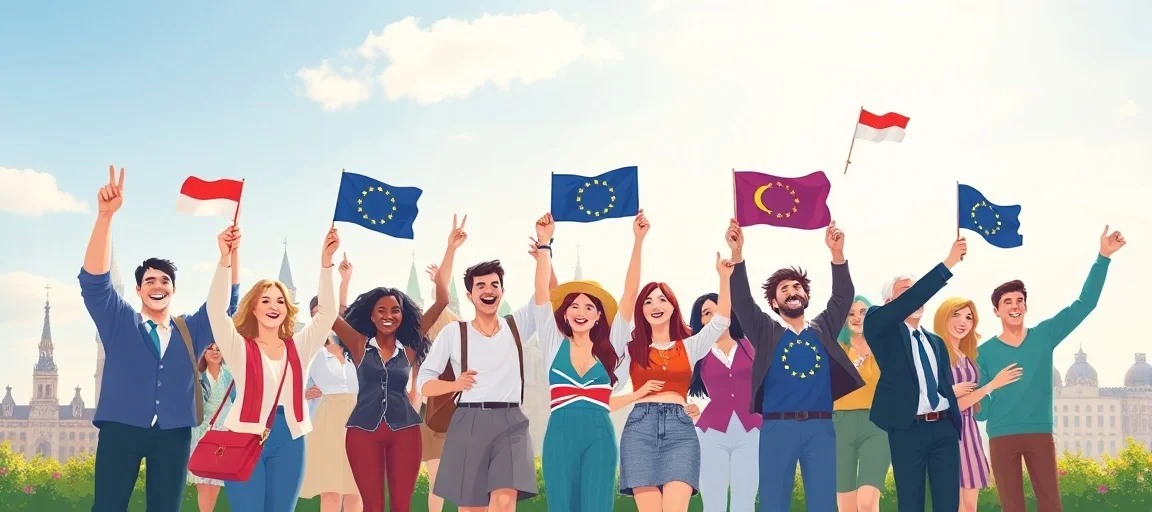
This year, across the continent, Europe celebrates Unity & Values on Europe Day 2026, marking a significant occasion for reflection and forward-looking determination. The annual observance on May 9th commemorates the foundational Schuman Declaration, a pivotal moment in the creation of a peaceful and integrated European continent. As nations come together, the celebrations underscore the profound importance of peace, democracy, and shared values in shaping Europe's enduring future. It is a powerful reminder of how far the European Union has come from its post-war origins to its current role as a global actor fostering cooperation and progress.
Background and Significance of Europe Day
Europe Day, celebrated every May 9th by the European Union, stands as a testament to the continent's journey from conflict to cohesion. The day commemorates the anniversary of the historic Schuman Declaration of 1950, which laid the groundwork for what would eventually become the European Union. This declaration proposed a revolutionary idea: to place French and West German coal and steel production under a common High Authority, effectively making war between these historical rivals "not merely unthinkable, but materially impossible".
The Council of Europe also observes Europe Day, though on May 5th, marking its own founding in 1949. However, it is the May 9th celebration that holds particular significance for the European Union and its member states, symbolizing a commitment to lasting peace, economic integration, and political cooperation. Since its inception, Europe Day has grown in prominence, with many countries extending the observance to a full "Europe Week" of events and activities.
The Schuman Declaration: A Foundation of Peace
On May 9, 1950, Robert Schuman, then French Foreign Minister, delivered a seminal speech proposing a new form of political cooperation for Europe. This proposal, known as the Schuman Declaration, aimed to prevent future conflicts by creating shared economic interests, particularly in the vital coal and steel industries. The audacious plan involved pooling these resources under a supranational authority, a radical concept at the time. The six founding members—France, West Germany, Italy, the Netherlands, Belgium, and Luxembourg—signed the Treaty of Paris in 1951, establishing the European Coal and Steel Community (ECSC).
The ECSC was the first in a series of supranational European institutions that ultimately evolved into the modern European Union. Schuman's vision was not merely economic; it was deeply political, seeking to foster a "de facto solidarity" among European nations. This diplomatic initiative marked a fundamental re-imagining of Franco-German relations and provided a framework for West Germany's reintegration into Western Europe. The Declaration famously stated, "Europe will not be made all at once, or according to a single plan. It will be built through concrete achievements which first create a de facto solidarity". This principle continues to guide the EU's incremental yet profound process of integration.
Evolution of European Integration
The ECSC proved to be a successful model, leading to the signing of the Treaties of Rome in 1957, which established the European Economic Community (EEC) and the European Atomic Energy Community (Euratom). These treaties laid the foundation for a common market, customs union, and the free movement of capital and labor, further deepening European integration. Over the decades, the European project expanded both in scope and membership. Milestones included the direct elections to the European Parliament in 1979, the Schengen Agreement in 1985 allowing free movement, and the Single European Act in 1986, which formalized the European Community.
The Maastricht Treaty in 1992 transformed the European Community into the European Union, introducing the concept of European citizenship and paving the way for a single European currency, the Euro. Subsequent enlargements saw the accession of numerous countries, particularly from Central and Eastern Europe, following the end of the Cold War, significantly increasing the EU's influence on the global stage. This continuous process of integration, while not without its challenges, has fostered an unprecedented era of peace, democracy, and prosperity across the continent.
Europe Celebrates Unity & Values on Europe Day 2026
Europe Day 2026 represents a vibrant celebration of the core principles that bind the European Union together. This year holds particular significance as it marks 40 years since Portugal and Spain joined the EU, and also the 40th anniversary of the first official Europe Day celebrations and the public use of the EU flag and anthem. These milestones underscore the long-standing commitment to a united and values-driven Europe.
The festivities across the continent are designed to connect citizens with the European project, highlighting how the EU works to protect and create opportunities for its people, and promote partnerships globally. Events range from open-door days at EU institutions in Brussels, Strasbourg, and Luxembourg to cultural festivals, debates, and concerts across all member states and even by EU delegations worldwide.
Events and Festivities Across the Continent
In 2026, Europe Day celebrations are anticipated to be particularly spirited, reflecting both historical anniversaries and contemporary aspirations. Many EU institutions, including the European Parliament and the European Commission, traditionally open their doors to the public, offering educational activities and a glimpse into their work and policies. These "Open Doors Day" events allow citizens to engage directly with the democratic processes and institutions that shape their lives.
Beyond institutional engagement, cities and towns across Europe organize a multitude of public events. These often include:
- Cultural Performances: Showcasing the rich diversity of European cultures through music, dance, and art.
- Public Debates and Conferences: Fostering discussions on Europe's future, its challenges, and its role in the world.
- Festivals and Fairs: Providing opportunities for communities to come together, share food, and celebrate their shared European identity.
- Flag Days: In countries like Germany and Austria, Europe Day is a flag day, with flags displayed by federal decree. Poland's Schuman Foundation has organized a "Warsaw Schuman Parade" on Europe Day since 1999, advocating for European integration.
In Luxembourg, Europe Day became an official public holiday in 2019, reflecting its deep commitment to the European project. These diverse celebrations serve as a powerful reminder of the EU's founding values and promote a sense of belonging among its diverse nations.
Highlighting Core European Values
At the heart of Europe Day celebrations are the fundamental values upon which the European Union is built. These values, enshrined in Article 2 of the Treaty of Lisbon, are respect for human dignity, freedom, democracy, equality, the rule of law, and respect for human rights, including the rights of persons belonging to minorities. These are not mere ideals but are meant to be common to Member States in a society characterized by pluralism, non-discrimination, tolerance, justice, and solidarity.
Key values emphasized during Europe Day include:
- Human Dignity: Recognizing the inviolable nature of every individual, forming the basis of fundamental rights.
- Freedom: Encompassing freedom of movement for citizens within the Union, and fundamental freedoms such as thought, religion, assembly, expression, and information, protected by the EU Charter of Fundamental Rights.
- Democracy: Stressing that the functioning of the EU is founded on representative democracy, with citizens having political rights, including the right to vote and stand in European Parliament elections.
- Equality: Advocating for equal rights for all citizens before the law, combating social exclusion and discrimination, and promoting equality between women and men.
- Rule of Law: Underlining that the EU is based on the rule of law, ensuring that every process is voluntarily undertaken, with an independent judiciary upholding law and justice.
- Human Rights: Protecting human rights through the EU Charter of Fundamental Rights, ensuring protection against discrimination based on sex, race, ethnicity, religion, disability, age, or sexual orientation.
These values are continuously promoted by the EU, both internally and in its foreign policy, contributing to peace and security, sustainable development, and the eradication of poverty globally.
Addressing Contemporary Challenges Through Unity
While Europe Day is a celebration of achievements, it also serves as a moment to acknowledge and address the challenges facing the continent. In an increasingly complex global landscape, the EU's commitment to unity and its foundational values is more critical than ever. The Union faces threats from rising authoritarianism, nationalist tensions, and external pressures, necessitating a strong, independent, and cohesive response.
The European Commission's priorities for 2024-2029 reflect these challenges, focusing on sustainable prosperity, security, social cohesion, and the protection of democracy and values. These priorities guide the EU's efforts to strengthen its resilience and strategic autonomy in a changing world.
Economic Resilience and Future Prospects
The EU strives for sustainable economic growth, competitiveness, and a highly competitive market economy with full employment and social progress. Priorities for 2024-2029 include a new plan for Europe's sustainable prosperity and competitiveness, making business easier, supporting competitive industries, and creating quality jobs. The focus also extends to developing a circular and resilient economy, fostering research and innovation, and tackling skills gaps.
Recent years have underscored the importance of economic solidarity and coordinated responses to crises. The EU's efforts to tackle inflation, improve energy affordability, and boost household purchasing power remain central to its economic agenda. By working towards greater economic, social, and territorial cohesion, the EU aims to ensure that all member states and citizens benefit from the Union's prosperity.
Global Role and Diplomatic Efforts
The EU's role as a global actor is deeply intertwined with its internal unity and adherence to its values. The Union aims to uphold and promote its values and interests on the world stage, contributing to peace and security and the sustainable development of the Earth. This involves promoting solidarity and mutual respect among peoples, free and fair trade, and the protection of human rights globally.
In response to global challenges, the EU is committed to strengthening its security and defense capabilities, ensuring coherent and influential external action, and preparing for a potentially larger and stronger Union. The creation of a European Defence Union, capable of addressing modern security threats, is a key objective, alongside continued support for partners like Ukraine. Beyond traditional diplomacy, the EU has increasingly asserted its role in areas such as climate change, championing ambitious environmental goals and fostering international agreements. Its Green Deal initiative, for example, sets a global benchmark for sustainable economic transformation. Furthermore, in the digital realm, the EU has pioneered regulations on data privacy and digital markets, aiming to shape a human-centric digital future that reflects its core values of freedom and human rights. This proactive stance showcases the Union's commitment to multilateralism and its belief in collective action to address shared global challenges. The EU's diplomatic efforts are aimed at fostering peace, partnerships, and economic stability in its wider neighborhood and reforming the international system to fit today's world. However, achieving a unified diplomatic voice remains a constant challenge, requiring continuous reconciliation of national identities with a shared European purpose.
The Youth Perspective and Future Generations
Europe Day also serves as a crucial opportunity to engage younger generations in the European project. Understanding the history of European integration and the values it represents is vital for ensuring the continuity and evolution of the Union. Educational initiatives and youth programs often coincide with Europe Day, aiming to foster a sense of shared identity and responsibility among young Europeans.
These programs encourage young people to actively participate in shaping the future of Europe, emphasizing civic engagement and democratic processes. By promoting pluralism, non-discrimination, and tolerance, the EU seeks to build a future where all citizens, regardless of their background, can thrive and contribute to a stronger, more united continent. The continued relevance of European values relies heavily on their embrace and championing by the youth.
Conclusion: Reinforcing European Unity and Shared Future
Europe Day 2026 is more than just a commemoration of past achievements; it is a dynamic celebration of ongoing commitment to peace, democracy, and shared values. As Europeans gather to reflect on the legacy of the Schuman Declaration and the subsequent journey of integration, the message of unity resonates strongly amidst contemporary global complexities. The anniversaries observed this year, particularly the 40th anniversary of Portugal and Spain's accession and the first official Europe Day celebrations, highlight the continuous evolution and strengthening of the European family.
The European Union's dedication to its core values—human dignity, freedom, democracy, equality, the rule of law, and human rights—remains the bedrock of its collective identity and its mission to build a more just and prosperous continent. The collective celebrations of "Europe Celebrates Unity & Values on Europe Day 2026" reaffirm the commitment to a shared future, demonstrating the power of cooperation to overcome differences and build a better, more secure Europe for all its citizens. The path ahead requires continued solidarity, adaptation, and an unwavering belief in the principles that unite Europe, ensuring its continued relevance and positive impact on the world stage.
Frequently Asked Questions
Q: What is Europe Day?
A: Europe Day, celebrated on May 9th by the European Union, commemorates the 1950 Schuman Declaration. It symbolizes the continent's journey towards peace, unity, and cooperation, recognizing the foundational steps taken to prevent future conflicts and foster integration.
Q: Why is the Schuman Declaration important?
A: The Schuman Declaration, delivered on May 9, 1950, proposed pooling French and German coal and steel production under a common authority. This initiative was designed to make war "materially impossible" between historical rivals, laying the groundwork for the European Coal and Steel Community and ultimately the modern European Union.
Q: What values does Europe Day celebrate?
A: Europe Day celebrates the fundamental values of the European Union, including human dignity, freedom, democracy, equality, the rule of law, and respect for human rights. These principles guide the EU's internal governance and its role as a global advocate for peace and sustainable development.