TVK Chief Vijay's CM Tenure Begins, Faces Crucial Trust Vote Today
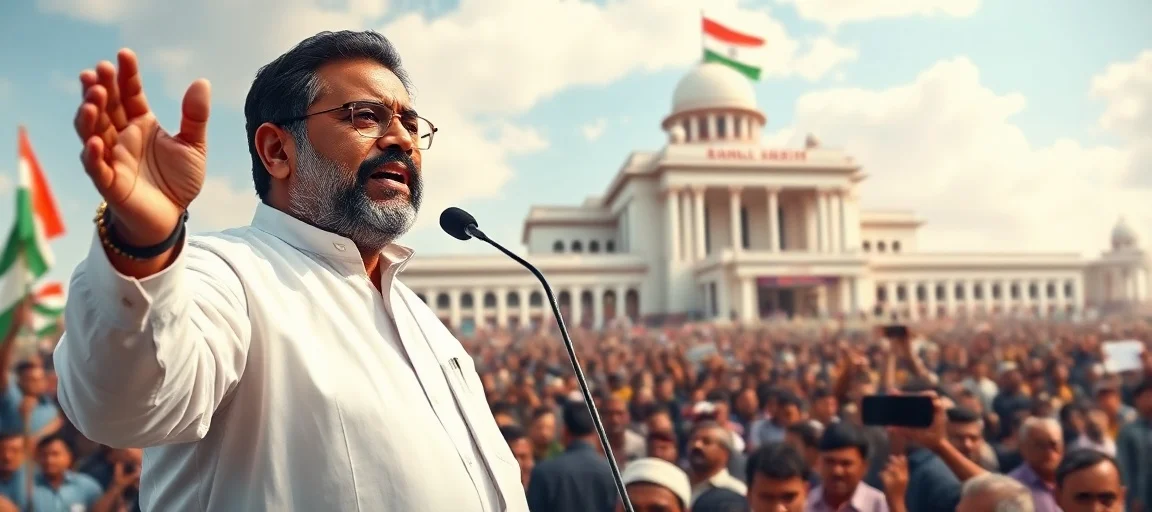
The political landscape of Tamil Nadu has been irrevocably altered with TVK Chief Vijay's CM tenure beginning, as the actor-turned-politician C. Joseph Vijay, widely known as "Thalapathy," ascends to the state's highest office and faces a crucial trust vote today. While the momentous swearing-in as Chief Minister took place just days ago, the nascent administration of the Tamilaga Vettri Kazhagam (TVK) faces a critical juncture today. The anticipation surrounding the floor test in the Tamil Nadu Assembly, where the TVK Chief Vijay is set to become Tamil Nadu CM today in effect by proving his majority, underscores the dramatic shift in the state's governance. This period marks a significant break from decades of entrenched two-party dominance, ushering in an era of new political dynamics. Learn more about the phenomenon of celebrity politicians in India.
- From Silver Screen Stardom to Political Ascent
- The Genesis of Tamilaga Vettri Kazhagam (TVK)
- The Historic 2026 Tamil Nadu Assembly Elections
- From Star to Chief Minister: The Swearing-in Ceremony
- The Path to Majority: Coalition Building
- Crucial Test Ahead: TVK Chief Vijay Set to Become Tamil Nadu CM Today
- Challenges and Expectations for the New Administration
- Impact on Tamil Nadu Politics
- Conclusion
- Frequently Asked Questions
- Further Reading & Resources
From Silver Screen Stardom to Political Ascent
The journey of C. Joseph Vijay from a beloved cinema icon to the Chief Minister of Tamil Nadu is a testament to the powerful intersection of celebrity and public appeal in Indian politics. For years, Vijay nurtured his connection with the masses through the "Vijay Makkal Iyakkam" (Vijay People's Movement), a fan club that evolved into a significant grassroots organization. This movement, established in July 2009, served not only as a platform for philanthropic activities but also as a political feeder, demonstrating Vijay's growing interest in public service. The Iyakkam's participation in local body elections in 2021, where it secured 115 out of 169 contested seats, offered a clear glimpse into the organizational strength and voter base Vijay commanded, even before formally launching a political party. His sporadic political statements, such as condemning the Citizenship (Amendment) Act in 2019, further signaled his burgeoning political consciousness and willingness to engage with pressing societal issues. These early forays laid the groundwork for his eventual full-fledged political plunge, building a foundation of public trust and a dedicated cadre across the state.
The Genesis of Tamilaga Vettri Kazhagam (TVK)
The formal announcement of the Tamilaga Vettri Kazhagam (TVK), meaning "Victory Party of the Tamilakam," on February 2, 2024, marked Vijay's official entry into the electoral arena. This move was strategically positioned ahead of the 2026 Tamil Nadu Assembly elections, with Vijay expressing his unwavering commitment to bringing about "fundamental political change" and advocating for a transparent, caste-free, and corruption-free administration. The party's ideology is deeply rooted in egalitarianism, secularism, and social justice, positioning itself as a distinct centre-left force in the state's complex political spectrum. The TVK explicitly rejected associations with right-wing politics and firmly identified the Dravida Munnetra Kazhagam (DMK) as a "political adversary" due to alleged corruption and dynastic politics, while terming the Bharatiya Janata Party (BJP) an "ideological opponent" reflecting a clear ideological stance. The Election Commission of India officially registered TVK as a political party in September 2024, granting it formal permission to participate in electoral politics. The launch was accompanied by the unveiling of the party's distinctive flag and symbol, with Vijay emphasizing a collaborative approach for Tamil Nadu's comprehensive development. The party's rapid growth and effective outreach to the youth demographic quickly prompted traditional parties like the DMK and the All India Anna Dravida Munnetra Kazhagam (AIADMK) to intensify efforts to retain their voter base in anticipation of the fiercely contested 2026 elections.
The Historic 2026 Tamil Nadu Assembly Elections
The 2026 Tamil Nadu Legislative Assembly elections proved to be a watershed moment in the state's political history, with the Tamilaga Vettri Kazhagam (TVK) making a stunning debut that defied all conventional predictions. Contesting all 234 seats independently, a move considered bold and highly risky by many political analysts, TVK emerged as the single largest party, securing an impressive 108 seats. This unprecedented performance effectively shattered the long-standing duopoly of the Dravida Munnetra Kazhagam (DMK) and the All India Anna Dravida Munnetra Kazhagam (AIADMK), which had dominated Tamil Nadu politics for over half a century, seemingly without challenge.
Vijay himself contested from two key constituencies, Perambur and Tiruchirappalli East, and emerged victorious in both, later resigning from the Tiruchirappalli East seat to retain Perambur as his primary constituency. The election results, declared on May 4, 2026, indicated a significant and decisive shift in voter behavior, particularly among younger demographics and first-time voters, who were powerfully drawn to Vijay's fresh approach, charismatic personality, and compelling promises of change. The TVK's overwhelming success firmly established its credentials as a viable and potent alternative to the traditional political heavyweights, marking a truly new and transformative chapter in Tamil Nadu's democratic journey.
From Star to Chief Minister: The Swearing-in Ceremony
Following the decisive electoral mandate, which saw the TVK emerge as a dominant force, C. Joseph Vijay was ceremoniously sworn in as the 9th Chief Minister of Tamil Nadu on May 10, 2026. The ceremony, held at the sprawling Jawaharlal Nehru Indoor Stadium in Chennai, was a meticulously orchestrated spectacle that skillfully blended elements of cinema, high-stakes politics, and immense public fervor. Governor Rajendra Vishwanath Arlekar administered the oath of office and secrecy to the new Chief Minister, a moment that elicited emotional cheers, thunderous applause, and tears of joy from thousands of fervent supporters who had gathered to witness their 'Thalapathy' assume the state's top political office, marking a new dawn for Tamil Nadu.
The event was particularly noted for its refreshing departure from traditional political imagery; Vijay chose to wear a sharp black suit instead of the conventional white shirt and veshti, symbolizing a new-age leader breaking away from old political conventions while retaining his powerful mass appeal. He notably delivered the oath of office entirely from memory, a dramatic and heartfelt touch that quickly went viral online, further cementing his image as an unconventional leader. The ceremony was attended by his proud parents, numerous friends from the film industry, and prominent political figures from across the national spectrum, including Congress leader Rahul Gandhi, signifying the broad appeal and newfound political alliances of the TVK. This momentous occasion underscored Vijay's successful and inspiring transition from a cinematic powerhouse to the state's most powerful elected leader, officially ending six decades of entrenched dominance by the Dravidian parties and signaling a profound shift in the state's political narrative.
The Path to Majority: Coalition Building
Despite its impressive electoral debut and emergence as the single largest party, the TVK secured 108 seats, which fell just short of the 118 seats required for an absolute majority in the 234-member Assembly. This crucial shortfall necessitated swift and strategic post-poll negotiations to form a stable and legitimate government. Over the five intense days following the declaration of election results on May 4, Vijay engaged in intensive discussions and complex horse-trading with various political parties to garner the necessary support to cross the majority threshold.
The TVK successfully forged a robust coalition government with the invaluable backing of the Indian National Congress, which holds five seats in the Assembly, and other significant parties including the Communist Party of India (CPI) with two seats, the Communist Party of India (Marxist) (CPI(M)) with two seats, the Viduthalai Chiruthaigal Katchi (VCK), and the Indian Union Muslim League (IUML). These parties, which were notably and historically allied with the DMK in previous elections, strategically switched their support to the TVK, signaling a major and dramatic realignment in Tamil Nadu politics. This newly formed coalition, on paper, provided the TVK-led government with approximately 120 seats, comfortably ensuring a stable majority required for governance. The intricate formation of this diverse coalition not only highlights the inherent fluidity of political alliances in the state but also underscores Vijay's remarkable ability to unite disparate factions under his nascent leadership, demonstrating a strong capacity for political acumen and consensus-building.
Crucial Test Ahead: TVK Chief Vijay Set to Become Tamil Nadu CM Today
As of today, May 13, 2026, the TVK government, under Chief Minister C. Joseph Vijay, is scheduled to face a crucial trust vote in the Tamil Nadu Assembly. This floor test is a fundamental constitutional requirement for the government to formally prove its majority and legitimacy on the floor of the house, a pivotal moment in any parliamentary democracy. While already sworn in and having assumed office, today's floor test is the final, decisive step that solidifies the mandate, thereby setting the stage for TVK Chief Vijay to formally become Tamil Nadu CM today by unequivocally proving his government's stability and strength in the legislative assembly. Chief Minister Vijay has been actively engaged in exhaustive meetings with leaders of all supporting parties to consolidate and confirm their unwavering backing ahead of this vital vote, leaving absolutely no stone unturned in his efforts.
In a dramatic turn of events that has added considerable intrigue to the proceedings, a rebel faction of the All India Anna Dravida Munnetra Kazhagam (AIADMK), led by influential former ministers C. Ve. Shanmugam and S. P. Velumani, has unexpectedly declared its full support for the new TVK government. This breakaway group, reportedly comprising around 30 MLAs, accused the official AIADMK's general secretary, Edappadi K. Palaniswami (EPS), of attempting to align with the rival DMK, fueling internal discord. Their decision to support the TVK government during the trust vote adds significant and unexpected strength to Vijay's position, potentially pushing the TVK's overall support to around 150 MLAs, far exceeding the simple majority needed. Furthermore, S. Kamaraj, the lone MLA of Amma Makkal Munnetra Kazhagam (AMMK), an erstwhile ally of the AIADMK, has also pledged his crucial support to the TVK, though he was subsequently and swiftly expelled from his party for this independent decision.
However, the situation remains inherently tense and unpredictable, as the official AIADMK, under EPS, has issued a stringent party whip directing all its MLAs to vote against the confidence motion, sternly warning of severe legal action against any legislator who dares to defy the directive. The Tenth Schedule of the Constitution, pertaining to anti-defection law, may come into play depending on the outcome and strict adherence to party whips, potentially leading to disqualifications. The floor test today is therefore not merely a formality; it is a critical and defining moment that will solidify the new government's stability, confirm its legislative strength, and could potentially reshape the internal dynamics of the AIADMK, creating further ripples and realignments in the state's always-volatile political landscape.
Challenges and Expectations for the New Administration
Chief Minister Vijay's administration steps into office amidst an unprecedented wave of public expectations and confronts a myriad of significant challenges. Upon swiftly taking office, Vijay promptly signed major files related to providing free electricity to households, implementing free bus travel for women, and launching a comprehensive women's safety initiative, indicating a clear and immediate focus on welfare schemes and social empowerment that resonated deeply with the electorate. His manifesto and numerous public appearances have consistently emphasized key policy areas: robust youth and employment generation programs, comprehensive women's welfare initiatives, substantial support for farmers through agricultural reforms, wide-ranging education reform, and an unwavering commitment to transparent, corruption-free governance. Beyond these, addressing critical infrastructure gaps, improving public health services across the state, and tackling pressing environmental concerns like escalating water scarcity will also be paramount and require urgent attention.
However, the political environment remains inherently complex and fraught with potential pitfalls and opposition. The deep-rooted rivalry between the DMK and AIADMK, though significantly disrupted by TVK's groundbreaking entry, continues to simmer beneath the surface, promising strong and vocal opposition to the new government. The internal strife within the AIADMK, exacerbated by the floor test results and subsequent defections, could lead to further political realignments and periods of instability, requiring adept political management. Vijay's leadership will be meticulously scrutinized not only on his ability to deliver on his ambitious promises and enact meaningful policy but also on his capacity to navigate the intricate and often volatile political landscape of Tamil Nadu, forging necessary consensus and skillfully managing the diverse expectations of a heterogeneous electorate. The state, famously known for its unique blend of cinema and politics, will be watching closely as Vijay embarks on this new and challenging chapter, with the widespread hope that his governance will indeed bring about the fundamental and transformative changes he has promised. His extensive previous philanthropic work through the Vijay Makkal Iyakkam, including educational awards, provision of essential relief during natural disasters, and various community initiatives, suggests a pre-existing and deep-seated commitment to public welfare that many hope will seamlessly translate into effective state governance, delivering tangible benefits to the people of Tamil Nadu.
Impact on Tamil Nadu Politics
The emergence of TVK and C. Joseph Vijay as Chief Minister represents nothing less than a seismic shift in Tamil Nadu's long-established political topography. For nearly six decades, the state's governance alternated almost exclusively between the Dravida Munnetra Kazhagam (DMK) and the All India Anna Dravida Munnetra Kazhagam (AIADMK), establishing a political duopoly that seemed almost unshakeable and ingrained in the state's identity. TVK's historic victory marks the first time a non-Dravidian party has assumed power in Tamil Nadu since 1967, a significant moment in the state's political history and unequivocally signaling a major reshaping of voter sentiment and the dawn of a potential new political era.
This profound disruption suggests a growing appetite among the electorate for fresh leadership, innovative policy approaches, and alternative political narratives, moving decisively beyond traditional Dravidian ideologies that have dominated for generations. Vijay's unparalleled mass appeal, painstakingly cultivated over decades as a beloved film star, has effectively translated into a formidable and undeniable political force, drawing clear and compelling parallels to former Chief Minister M. G. Ramachandran, another iconic actor who transitioned successfully and powerfully into politics. The breaking of the two-party dominance opens up exciting possibilities for new alliances, more diverse political representation, and potentially more issue-based politics rather than purely ideological battles that often characterize the state. However, it also brings with it the inherent complexities of coalition governance, the challenge of establishing a new and distinct political identity while simultaneously managing the sky-high expectations of a diverse electorate, and the inevitable reactions of established political players who will vigorously seek to regain lost ground. The ramifications of this profound and historic shift will undoubtedly be felt for many years to come, profoundly influencing future elections, policy-making, and the very fabric of political discourse in the state of Tamil Nadu.
Conclusion
The political journey of C. Joseph Vijay has culminated in a truly historic moment for Tamil Nadu, with his swearing-in as Chief Minister on May 10, 2026. Today, as the TVK Chief Vijay is set to become Tamil Nadu CM today in a more definitive sense by demonstrating his government's majority in the Assembly, the eyes of the nation are fixed on Chennai, keenly observing this pivotal event. This crucial trust vote will affirm the stability of his newly formed coalition government and potentially redefine the state's political future for decades to come. The successful transition from cinematic superstardom to powerful political leadership, coupled with the breaking of long-standing political traditions, marks a compelling and inspirational narrative in Indian democracy. As the TVK government embarks on its tenure, the focus will remain squarely on its ability to navigate the complex political landscape, deliver on its promises to the people, and forge a new, progressive path for Tamil Nadu, bringing about the fundamental change he has championed and that the electorate so eagerly anticipates.
Frequently Asked Questions
Q: Who is C. Joseph Vijay and what is TVK?
A: C. Joseph Vijay, widely known as "Thalapathy," is a popular actor and the head of the Tamilaga Vettri Kazhagam (TVK) party. TVK is a centre-left political party advocating for transparent, caste-free, and corruption-free governance in Tamil Nadu.
Q: Why is the trust vote today crucial for TVK Chief Vijay?
A: The trust vote, also known as a floor test, is a constitutional requirement for Chief Minister Vijay's government to formally prove its majority in the Tamil Nadu Assembly. It is essential for solidifying the legitimacy and stability of his newly formed coalition administration.
Q: How did TVK break the two-party dominance in Tamil Nadu?
A: TVK achieved a stunning debut in the 2026 Tamil Nadu Legislative Assembly elections, contesting all 234 seats independently and securing 108 seats. This performance effectively disrupted the decades-long duopoly of the DMK and AIADMK, appealing particularly to younger and first-time voters.