Euro Vision: Unveiling Europe's Musical Spectacle and Cultural Impact
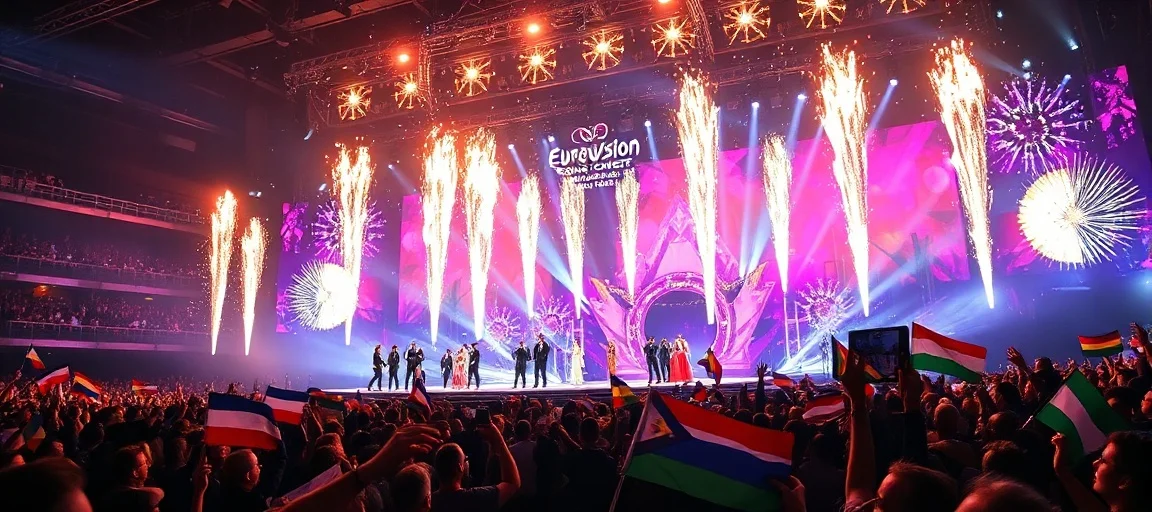
The Euro Vision Song Contest stands as a testament to Europe's enduring spirit of unity and celebration through music. This annual spectacle, renowned for its flamboyant performances, diverse musical genres, and enthusiastic fanbase, has captivated audiences across the globe for decades. Far more than just a song competition, Euro Vision has evolved into a significant cultural event, reflecting geopolitical shifts, embracing social change, and continually pushing the boundaries of live entertainment. From its humble beginnings to its current status as a global phenomenon, the contest offers a unique lens through which to observe Europe's musical landscape and its broader cultural impact.
The History and Evolution of Euro Vision
The genesis of the Euro Vision Song Contest dates back to 1956, a period of post-war reconstruction and the burgeoning era of television. Conceived by the European Broadcasting Union (EBU), an alliance of public broadcasters, the contest aimed to foster technical cooperation and program exchange among its members. The very name, Euro Vision, was inspired by the EBU's network, which facilitated the sharing of radio and television programs. At a time when national television broadcasters were in their infancy, this collaboration provided an invaluable opportunity to exchange content at low cost. The first contest, held in Lugano, Switzerland, featured just seven participating countries, a stark contrast to the dozens that now compete annually.
Early Beginnings and Core Mission
Initially, the contest served a practical purpose: a grand experiment in live, transnational television broadcasting. It was a means to unite a continent still recovering from the ravages of war, using the universal language of music. The early contests were characterized by orchestras, formal attire, and songs predominantly sung in national languages. The emphasis was on melody and traditional song structures, reflecting the musical tastes of the mid-20th century. While not explicitly designed as a political instrument, the contest inherently carried a message of cross-border cooperation and cultural exchange, offering a platform for countries to present themselves to a pan-European audience.
Growth and International Appeal
Over the decades, Euro Vision expanded significantly, both in terms of participating nations and its cultural footprint. The fall of the Iron Curtain in the late 20th century saw a surge in new countries joining, eager to assert their European identity and engage with a wider audience. This expansion brought a richer tapestry of musical styles, languages, and cultural expressions to the stage. The introduction of televoting in the late 1990s revolutionized audience participation, transforming the contest into a massive interactive event where public opinion played a crucial role. This shift also contributed to the contest's growing unpredictability and excitement. Notable winners who achieved international stardom, such as ABBA in 1974 with "Waterloo" and Céline Dion in 1988 with "Ne partez pas sans moi," cemented Euro Vision's reputation as a launchpad for global music careers. More recently, artists like Duncan Laurence (2019 winner with "Arcade") and Måneskin (2021 winners with "Zitti e buoni") have leveraged their victories into worldwide streaming success, demonstrating the contest's continued relevance in the modern music industry.
Recent Euro Vision Highlights and Controversies
The Euro Vision Song Contest continues to be a vibrant and often contentious event, reflecting both the unity and the divisions within Europe and beyond. The most recent editions have showcased spectacular productions while also navigating complex geopolitical landscapes.
Memorable Performances and Winners
The 2025 contest was held in Basel, Switzerland, following Nemo's victory in 2024 with the song "The Code". Basel, making history as a host city for the first time, hosted the event at the St. Jakobshalle from May 13 to May 17, 2025. The city embraced the occasion with numerous side events, including the Eurovision Village at Messe Basel and EuroClub activities. Switzerland celebrated its third time hosting the contest.
The 2026 Euro Vision Song Contest, the 70th edition, took place in Vienna, Austria, from May 12 to May 16, 2026. Austria earned the right to host after JJ's victory in the 2025 contest with his song "Wasted Love," which blended techno beats with operatic vocals. The Wiener Stadthalle, which previously hosted the contest in 2015, served as the venue. Vienna, a city renowned for its classical music, leveraged its vast accommodation capacity and excellent transport links to host the event under the slogan "Europe, shall we dance?".
Viewership for the 2026 Grand Final remained strong in key markets, with Germany leading at 8.94 million viewers, despite a slight decrease from 2025. Italy also drew strong numbers with over 5 million viewers. However, some traditional strongholds like the United Kingdom and Sweden experienced significant drops in viewership, recording their lowest audiences in years. Conversely, Finland saw its strongest Euro Vision audience since 2007, and host nation Austria achieved its best figures since 2015. Livestreaming viewership on the official YouTube channel for the semi-finals in 2026 also saw a decline compared to its peak in 2024, indicating shifts in audience consumption habits.
Geopolitical Influences and Voting Dynamics
While the EBU consistently states that Euro Vision is apolitical, the contest has frequently become a mirror reflecting Europe's political realities and tensions. Voting patterns have long been observed to reveal geographical and diplomatic affinities, with countries like Greece and Cyprus famously exchanging "12 points." Research by Ginsburgh and Noury found that while musical quality plays a role, geographical proximity and shared cultural identity are powerful predictors of voting outcomes.
The 2026 contest, in particular, was marked by significant geopolitical controversy, stemming from Israel's participation amidst the ongoing conflict in Gaza. This led to a historic five-country boycott by Spain, Ireland, Slovenia, the Netherlands, and Iceland, protesting Israel's inclusion, which critics argued represented a double standard compared to Russia's exclusion in 2022. The controversy extended to accusations of voting manipulation after Israel secured the highest public vote despite a subpar jury score, prompting the EBU to reduce the maximum number of votes per person to 10. This highlighted how the contest, intended for unity, can become a battleground for political and social debates.
Past controversies have also included instances of political references in song lyrics leading to disqualifications (like Georgia's "We Don't Wanna Put In" in 2009) and protests against certain countries' policies. Armenia and Azerbaijan's long-standing conflict has repeatedly impacted the contest, with voting irregularities and alleged political pressure on voters.
Technical Innovations in Production
Beyond the music, Euro Vision is a showcase for cutting-edge television production and technical innovation. Each year, the host broadcaster pushes the boundaries of stage design, lighting, sound engineering, and visual effects to create a truly immersive experience for both live audiences and millions of viewers worldwide. Advances in projection mapping, LED screens, and robotic cameras have transformed the visual storytelling capabilities of the show, making it an ever-more spectacular event. The coordination of live performances, complex camera work, and intricate stage changes within tight timeframes represents a significant logistical and technical achievement, setting benchmarks for live television production globally.
The contest also increasingly embraces digital engagement. Social media platforms and streaming services enhance audience participation through live chats, polls, and interactive content. The official Euro Vision app now offers real-time voting and behind-the-scenes content, fostering a sense of global community among fans.
The Economic and Cultural Impact of Euro Vision
The Euro Vision Song Contest exerts a significant influence far beyond its three live shows, creating ripple effects across tourism, culture, and the careers of emerging artists.
Tourism and Local Economies
Hosting Euro Vision is a substantial undertaking, requiring significant investment from the host city and country. However, this investment often yields considerable economic returns. The influx of tens of thousands of fans, delegations, journalists, and tourists boosts local economies through increased spending on accommodation, dining, transport, and local attractions. For example, Turin, the 2022 host city, spent around 11 million euros but reported making seven times that amount back through tourism. Similarly, cities like Vienna, chosen for 2026, tout their "enormous" accommodation capacities and "excellent" transport links as key advantages, recognizing the economic windfall the event brings.
The economic benefits extend beyond the immediate event, contributing to a city's "soft power." Hosting such a high-profile international event elevates a city's global profile, attracting future tourism and investment. It provides an unparalleled platform to showcase a country's culture, infrastructure, and hospitality to a worldwide audience of over 100 million viewers.
Cultural Exchange and Soft Power
At its heart, Euro Vision is a celebration of cultural diversity and exchange. It brings together nations from across Europe (and even beyond, with participants like Australia and Israel) to share their unique musical traditions and contemporary artistic expressions. Despite the competitive nature, the contest fosters a sense of shared European identity, even though it was not originally intended as an integration project for the European Union. Phrases like "twelve points" have become commonplace across the continent, signifying a shared cultural vocabulary.
The contest serves as a potent tool for "soft power," allowing countries to project a favorable image, promote national distinctiveness, and highlight cultural values to a global audience. Performances often blend traditional elements with modern pop, showcasing the rich tapestry of European cultures. Moreover, Euro Vision has been a platform for addressing and reflecting social change, notably in areas such as LGBTQIA+ rights, with performances featuring same-sex kisses and public coming-outs sparking debate and, in some cases, aligning with or even leading shifts in public attitudes.
Emerging Artists and Career Launches
For many artists, Euro Vision represents a life-changing opportunity. The immense exposure provided by the contest can launch careers overnight, turning national stars into international sensations. Winning artists, as mentioned earlier, like ABBA, Céline Dion, Duncan Laurence, and Måneskin, have leveraged their Euro Vision success into sustained global careers. Even non-winning but memorable acts can gain significant traction and fanbases. The platform allows artists to experiment with diverse music genres, from folk ballads to high-energy electronic dance music, appealing to a wide array of listener preferences. This focus on diverse music genres not only enriches the competition but also encourages artists to experiment with their sound and cultural backgrounds.
Looking Ahead: The Future of Euro Vision
The Euro Vision Song Contest has proven its remarkable resilience and adaptability over seven decades. As it looks to the future, the competition is poised to continue its evolution, embracing new technologies and confronting contemporary challenges.
Adapting to New Media
The future of Euro Vision is intrinsically linked to its ability to adapt to an ever-changing media landscape. Increased digital engagement is a cornerstone of this evolution, with social media platforms and streaming services playing a growing role in audience participation. The virality potential of platforms like TikTok can transform a Euro Vision performance into a global hit, as seen with Duncan Laurence's "Arcade." Future editions will likely see even deeper integration of interactive content, real-time fan engagement, and personalized viewing experiences to cater to younger, digitally native audiences. The contest's organizers are exploring how to leverage these tools not only to boost viewership but also to foster a stronger sense of community among its global fanbase.
Challenges and Opportunities
Euro Vision faces both challenges and opportunities. One significant challenge lies in maintaining its core identity as a non-political music event while continuously navigating complex geopolitical realities. The controversies of recent years underscore the tension between the EBU's stated apolitical stance and the inevitable political undertones that arise when sovereign nations compete on a global stage. The contest will need to find a delicate balance to ensure inclusivity while adhering to its rules.
Opportunities abound in technological advancements and sustainability efforts. Emerging voting technologies, such as blockchain, could enhance transparency and security in the voting process, while mobile voting apps can further increase participation. Sustainability is also becoming a key priority, with organizers exploring eco-friendly stage designs, renewable energy sources, and sustainable merchandise to reduce the event's environmental footprint. Furthermore, there's potential for continued expansion beyond Europe, potentially even breaking into the U.S. mainstream, further cementing its status as a truly global pop culture phenomenon. Rule changes are consistently under consideration to keep the playing field level and ensure the contest remains unpredictable and exciting.
Conclusion: The Enduring Legacy of Euro Vision
From a post-war initiative to a global cultural touchstone, the Euro Vision Song Contest has transcended its origins to become a powerful symbol of unity, artistic expression, and popular entertainment. It is a spectacle that consistently brings together millions, sparking conversations, celebrating diversity, and showcasing the vibrant musical talents of Europe and invited nations. Despite its share of controversies and the ever-present challenges of a rapidly changing world, Euro Vision's ability to adapt, innovate, and unite people through music remains unparalleled. As it moves forward, the contest will undoubtedly continue to evolve, surprise, and entertain, ensuring its place as a cherished annual event in the global cultural calendar.
Frequently Asked Questions
Q: What is the Euro Vision Song Contest?
A: The Euro Vision Song Contest is an annual international song competition, primarily involving European countries. Organized by the European Broadcasting Union (EBU), it aims to promote unity through music and showcase diverse cultural talent from across the continent and beyond.
Q: Which countries participate in Euro Vision?
A: Primarily European nations participate, but the EBU's membership extends beyond geographical Europe, including countries like Israel and Australia. The specific number of participants can vary each year, influenced by various factors including national broadcaster decisions and geopolitical considerations.
Q: How does voting work in Euro Vision?
A: Voting in Euro Vision employs a hybrid system that combines the scores from national juries and public televoting from each participating country. Each country awards points (1-8, 10, and 12) to their favorite songs, with points from both the jury and the public vote aggregated to determine the overall winner.