EU Revamps Global Humanitarian Aid Strategy Amidst Rising Crises
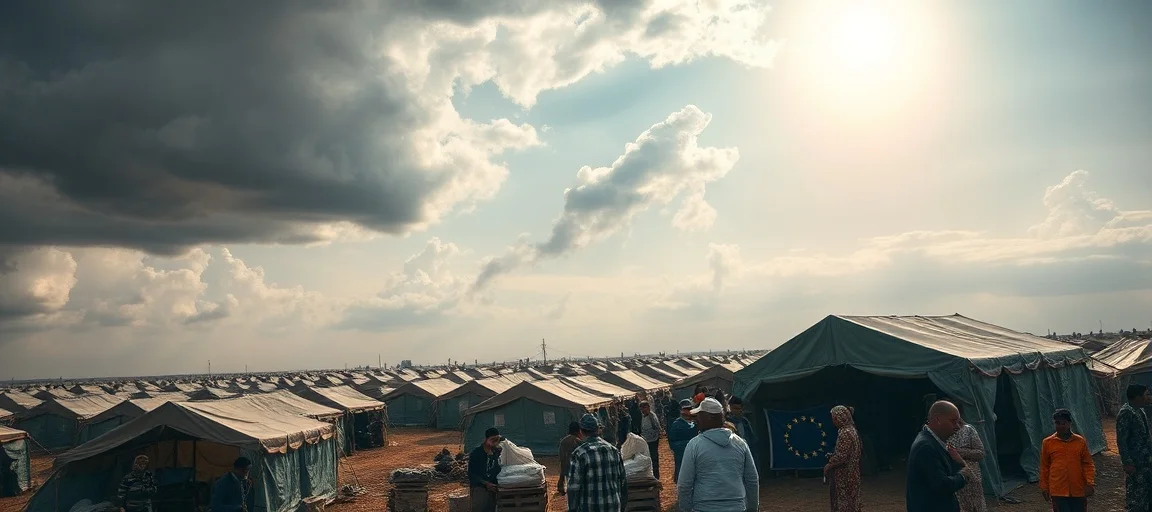
The European Union has announced a significant overhaul of its global humanitarian aid strategy, a crucial move designed to address the escalating and complex humanitarian crises afflicting populations worldwide. This comprehensive revamp, officially termed the EU Revamps Global Humanitarian Aid Strategy, aims to bolster the effectiveness, reach, and resilience of the EU's aid efforts, ensuring that assistance reaches those most in need amidst a backdrop of increasing conflicts, climate-induced disasters, and widespread displacement. The EU, a long-standing leader in humanitarian assistance, is adapting its approach to meet contemporary challenges, marking a pivotal moment in its commitment to global solidarity.
Addressing Unprecedented Global Humanitarian Needs
The international community faces an unprecedented scale of humanitarian need. Millions are displaced by conflict, natural disasters, and the increasingly severe impacts of climate change. From protracted conflicts in regions like Ukraine and the Sahel to devastating floods and droughts across continents, the demand for humanitarian assistance continues to outstrip available resources. The European Union has consistently been one of the largest humanitarian donors globally, providing life-saving aid to millions caught in emergencies. However, the existing global landscape necessitates a more agile, coordinated, and forward-looking strategy.
Over the past decade, humanitarian crises have grown not only in frequency but also in complexity and duration. The United Nations reports that an estimated 300 million people worldwide are currently in need of humanitarian assistance. This figure represents a dramatic increase, placing immense pressure on aid organizations and donor countries alike. Furthermore, the politicization of aid, access restrictions, and attacks on humanitarian workers have added layers of difficulty to delivering timely and effective assistance. The EU's decision to critically evaluate and update its strategy reflects a recognition that business-as-usual is no longer sufficient to tackle these multifaceted challenges.
The previous frameworks, while effective in their time, were often reactive rather than proactive. They sometimes struggled to integrate long-term development goals with immediate relief efforts, leading to potential gaps in sustained recovery. The new approach seeks to bridge these divides, focusing on more holistic solutions that not only provide immediate relief but also build resilience and reduce future vulnerabilities. This shift is crucial for fostering sustainable peace and stability in crisis-affected regions.
Key Pillars of the EU Revamps Global Humanitarian Aid Strategy
The core of the EU Revamps Global Humanitarian Aid Strategy rests on several interconnected pillars, each designed to enhance the Union's capacity to respond to and mitigate humanitarian suffering more effectively. These pillars represent a strategic evolution, moving towards a more integrated, principles-based, and forward-looking approach to aid delivery.
Strengthening the Humanitarian-Development-Peace Nexus
One of the most significant aspects of the new strategy is its emphasis on strengthening the humanitarian-development-peace (HDP) nexus. Historically, humanitarian aid, development assistance, and peacebuilding efforts have often operated in silos, leading to inefficiencies and missed opportunities for long-term impact. The revised strategy aims to foster greater coherence and coordination among these areas. By working together, the EU seeks to ensure that humanitarian interventions are designed with an eye towards supporting long-term development objectives and contributing to sustainable peace. For example, providing emergency food aid might be linked to initiatives that strengthen local agricultural systems, while refugee assistance could include vocational training to empower displaced populations for future self-sufficiency. This integrated approach acknowledges that crises often have deep-seated causes that require comprehensive, multi-sectoral responses, and that lasting solutions extend beyond immediate relief.
Promoting and Upholding International Humanitarian Law
The new strategy reiterates the EU's unwavering commitment to International Humanitarian Law (IHL) and humanitarian principles (humanity, neutrality, impartiality, and independence). In an era where IHL is increasingly challenged and violated in conflicts around the world, the EU aims to strengthen its advocacy for the protection of civilians, humanitarian workers, and essential infrastructure. This includes using its diplomatic influence to ensure unhindered humanitarian access to affected populations and to hold perpetrators of IHL violations accountable. The strategy outlines mechanisms for increased engagement with international bodies and partner countries to promote respect for IHL, recognizing that principled humanitarian action is the bedrock of effective aid delivery. The safety and security of humanitarian personnel remain a paramount concern, and the EU intends to reinforce measures to protect those on the front lines.
Enhancing Preparedness and Early Action
Moving beyond a purely reactive stance, the EU's revamped strategy places a strong emphasis on preparedness and early action. This involves investing in early warning systems, risk assessments, and anticipatory humanitarian action. By predicting potential crises and acting before they fully escalate, the EU aims to reduce the severity of their impact, save more lives, and decrease overall response costs. For instance, pre-positioning aid supplies in disaster-prone areas, implementing cash-transfer programs ahead of predicted food shortages, or reinforcing infrastructure before extreme weather events can significantly mitigate human suffering. This proactive approach not only makes aid more efficient but also empowers local communities to build their own resilience against future shocks. The strategy will also focus on strengthening local capacities to respond to disasters, fostering a sense of ownership and reducing reliance on external assistance in the long run.
Addressing Climate Change and Environmental Risks
Climate change is identified as a major driver of humanitarian crises, exacerbating existing vulnerabilities and creating new ones. The EU's new strategy integrates climate and environmental considerations across all its humanitarian actions. This means not only responding to climate-induced disasters but also designing interventions that are environmentally sustainable and contribute to climate adaptation. Examples include promoting climate-smart agriculture, investing in renewable energy solutions in humanitarian settings, and ensuring that reconstruction efforts are green and resilient, aligning with broader initiatives on climate-change impact on disasters. The strategy acknowledges the disproportionate impact of climate change on vulnerable communities and aims to support them in adapting to and recovering from environmental shocks. This commitment underscores the EU's leadership in linking climate action with humanitarian imperative.
Boosting Funding and Efficiency
A critical element of the revamped strategy is the commitment to boost funding and enhance the efficiency of humanitarian aid delivery. The EU aims to mobilize increased resources from its member states and other international partners to meet the growing global needs, which have steadily climbed year-on-year. Furthermore, the strategy emphasizes greater accountability and transparency in aid spending, ensuring that funds are used effectively and reach the intended beneficiaries without diversion or waste. This includes exploring innovative financing mechanisms such as impact bonds and blended finance, streamlining administrative processes to reduce bureaucratic burdens on implementing partners, and strengthening partnerships with local and international humanitarian organizations to foster a more integrated aid ecosystem. The goal is to maximize the impact of every euro spent, delivering more aid to more people in a more timely manner, particularly through the adoption of multi-year funding commitments. The EU also intends to advocate for more flexible and predictable funding mechanisms to allow humanitarian partners to respond more quickly and adaptively to evolving crises and unforeseen emergencies, moving away from short-term, project-specific grants.
Challenges and Opportunities in Implementation
Implementing such a comprehensive strategy will undoubtedly present both challenges and significant opportunities for the European Union and its partners.
Navigating Geopolitical Complexities
One of the primary challenges lies in navigating increasingly complex geopolitical landscapes, where humanitarian action often becomes entangled in political power struggles. Access to affected populations is frequently hampered by ongoing conflict, political instability, and nationalistic agendas that prioritize sovereign control over urgent human need. The EU will need to leverage its considerable diplomatic strength and strong partnerships with multilateral organizations and key global players to persistently advocate for unhindered humanitarian access and principled aid delivery, even in politically sensitive environments. This requires a nuanced approach, carefully balancing humanitarian imperatives with broader foreign policy objectives, always ensuring that aid remains distinct from political agendas, reflecting the EU's role in global diplomacy. Opportunities lie in demonstrating the EU's unwavering commitment to humanitarian principles as a cornerstone of its global influence, fostering trust among diverse stakeholders, and building bridges for dialogue and cooperation even amidst deeply fractured international relations. This commitment can strengthen the EU's legitimacy as a neutral and effective humanitarian actor.
Ensuring Local Ownership and Participation
Another crucial challenge and opportunity lies in ensuring genuine local ownership and participation in humanitarian responses. While international aid is vital, empowering local communities and organizations to lead and manage their own responses is key to sustainability and effectiveness. The strategy aims to strengthen partnerships with local actors, build their capacities, and channel more funding directly to them. This shift not only ensures that aid is culturally appropriate and context-specific but also fosters resilience and reduces long-term dependency on external assistance. However, overcoming historical power imbalances and building equitable partnerships will require sustained effort and commitment.
Leveraging Technology for Impact
The new strategy also recognizes the immense potential of technology to enhance humanitarian aid. This includes leveraging digital tools for more efficient data collection, needs assessments, and aid distribution. Innovations such as blockchain for transparent cash transfers, satellite imagery for disaster monitoring, and artificial intelligence for predictive analytics can revolutionize how aid is delivered, echoing discussions on innovation in humanitarian aid. However, ensuring equitable access to technology, addressing digital divides, and safeguarding data privacy are critical considerations. The opportunity lies in making humanitarian action more data-driven, accountable, and responsive to real-time needs.
Expert Perspectives and Reactions
Initial reactions from humanitarian organizations and experts to the EU's revamped strategy have been largely positive, albeit with a universal call for robust and sustained implementation. Many welcome the strong emphasis on the humanitarian-development-peace nexus and the unequivocal commitment to uphold international humanitarian law, seeing these as essential for contemporary aid challenges. "The EU's renewed focus on linking emergency aid with long-term development and peacebuilding is a critical step towards breaking the persistent cycles of crisis," commented Dr. Anya Sharma, a leading expert in international humanitarian affairs at the Global Policy Institute. "Too often, aid has been a temporary band-aid solution; this comprehensive strategy promises more integrated and sustainable solutions that tackle root causes." Concerns remain, however, regarding the actual funding levels necessary to meet escalating global needs and the political will required to consistently overcome access barriers in complex environments. "While the strategy is ambitious and laudable on paper, its success will ultimately depend on the consistent political commitment of EU member states to provide adequate, flexible, and multi-year funding, and to consistently champion humanitarian principles on the global stage, even when faced with diplomatic pressures," stated a spokesperson for a major international NGO, highlighting the gap between policy and practice. Experts also highlight the paramount importance of truly empowering local actors, ensuring that the shift towards localization is not merely rhetorical but translates into tangible changes in funding allocations, decision-making power, and partnership structures. The strategy's proactive stance on climate change and its integration across all humanitarian actions is also widely applauded as a necessary and forward-thinking adaptation to current global realities, acknowledging the disproportionate impact on vulnerable communities.
The Road Ahead: Implementation and Impact
The launch of the EU Revamps Global Humanitarian Aid Strategy marks the beginning of a crucial implementation phase. The success of this ambitious undertaking will depend on several factors, including sustained political will from EU member states, effective coordination with international partners, and the active involvement of local communities and organizations.
The EU plans to engage in extensive dialogues with partner countries, humanitarian organizations, and other stakeholders to ensure that the strategy's principles are translated into actionable programs on the ground. This will involve developing specific roadmaps, establishing clear monitoring and evaluation frameworks, and regularly reporting on progress. Key performance indicators will likely include metrics related to timely aid delivery, improved access, enhanced local capacities, and the integration of the HDP nexus across interventions.
Ultimately, the impact of the EU Revamps Global Humanitarian Aid Strategy will be measured by its ability to reduce human suffering, protect vulnerable populations, and foster greater resilience in the face of escalating global crises. By embracing a more integrated, proactive, and principled approach, the European Union aims not only to solidify its role as a leading humanitarian actor but also to inspire a broader international commitment to more effective and sustainable humanitarian action for the years to come.
Frequently Asked Questions
Q: What are the main objectives of the EU's revamped humanitarian aid strategy?
A: The strategy aims to enhance the effectiveness and reach of EU aid, strengthen the humanitarian-development-peace nexus, promote international humanitarian law, enhance preparedness, integrate climate considerations, and boost funding efficiency to address escalating global crises.
Q: How does the strategy address climate change and environmental risks?
A: It integrates climate and environmental considerations across all humanitarian actions, focusing on responding to climate-induced disasters, promoting environmentally sustainable interventions, and building climate resilience in vulnerable communities.
Q: What is the humanitarian-development-peace (HDP) nexus emphasized in the strategy?
A: The HDP nexus seeks to foster greater coherence and coordination among humanitarian aid, development assistance, and peacebuilding efforts. It aims to provide immediate relief while simultaneously supporting long-term development objectives and contributing to sustainable peace.