Deadly Earthquake Strikes Southern China: A Nation Responds
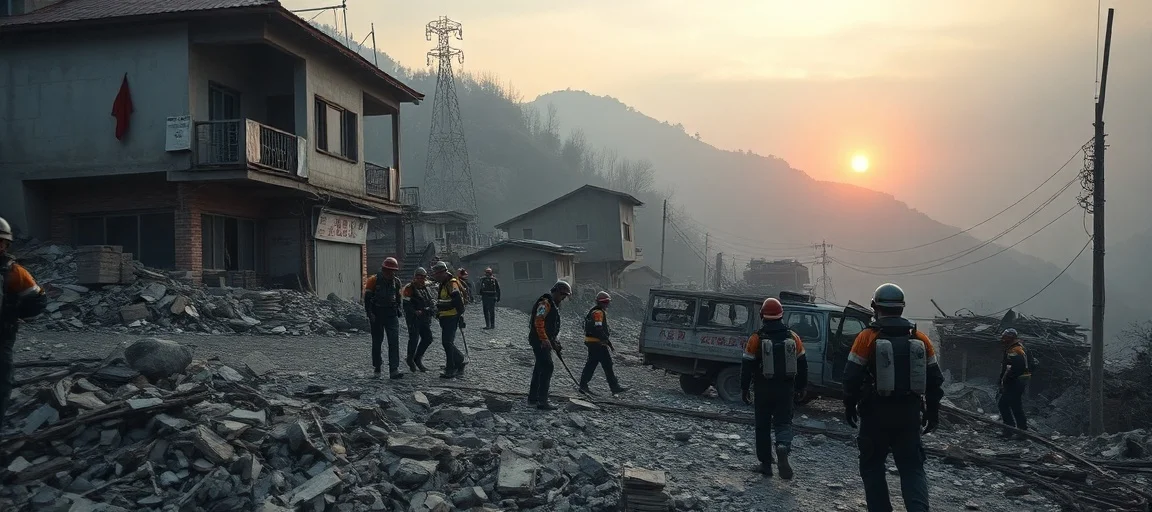
A powerful and deadly earthquake strikes Southern China, sending shockwaves through communities and triggering immediate emergency responses across the region. The seismic event, which occurred earlier today, has tragically claimed numerous lives and caused widespread destruction, prompting a massive rescue and relief operation. This devastating natural disaster highlights the ever-present geological risks in the area and the critical importance of robust disaster preparedness.
- The Immediate Aftermath and Human Cost
- Understanding Southern China's Seismic Activity
- China's Comprehensive Emergency Response
- The Role of Technology in Earthquake Preparedness
- Long-Term Recovery and Reconstruction
- International Cooperation in Disaster Reduction
- Challenges and Future Outlook After a Deadly Earthquake Strikes Southern China
- Frequently Asked Questions
- Further Reading & Resources
The Immediate Aftermath and Human Cost
The initial reports following the earthquake paint a grim picture, with significant casualties and extensive damage to infrastructure. Emergency services, including search and rescue teams, medical personnel, and military units, were rapidly deployed to the affected areas. Their primary objective is the urgent search for survivors trapped under debris and providing immediate medical aid to the injured. The scale of the tragedy is still unfolding, as communication lines in some of the more remote, mountainous regions have been severely disrupted, making assessment challenging.
Eyewitness accounts describe scenes of chaos and fear as the ground violently shook. Many residents were caught unaware, leading to tragic outcomes. The earthquake's intensity resulted in the collapse of residential buildings, schools, and essential public facilities, trapping countless individuals. Roads and bridges, crucial for accessing remote villages, have also suffered damage, impeding the swift arrival of aid and rescue equipment.
Understanding Southern China's Seismic Activity
Southern China, while not as seismically active as its western counterparts near the collision zone of the Indian and Eurasian plates, is still susceptible to significant seismic events. The region sits within a complex geological landscape characterized by numerous active fault lines. These fault lines are primarily a result of the ongoing tectonic stresses originating from the broader Himalayan orogeny and the movement of smaller tectonic blocks within the Eurasian plate itself.
The seismic activity in this area is often associated with the Longmenshan Fault Zone or related smaller fault systems that traverse the region. Earthquakes here can be shallow, which often leads to more intense shaking and greater damage at the surface, even with moderate magnitudes. Understanding these geological nuances is crucial for developing effective earthquake-resistant building codes and early warning systems.
China is one of the most earthquake-prone countries globally, experiencing over 30 earthquakes of magnitude 5 and above annually. A significant portion of these are tectonic earthquakes, caused by crustal movement along fault lines. While western regions like Tibet, Yunnan, Xinjiang, Sichuan, Gansu, and Qinghai provinces are particularly active, eastern and southern coastal regions also face seismic threats. The devastating 2008 Wenchuan earthquake, a magnitude 8.0 event in Sichuan, killed almost 90,000 people and caused over $121 billion in direct economic losses, highlighting the immense destructive power of such events in China.
Historical Context of Seismic Events
Historically, China has been subjected to some of the deadliest earthquakes on record. The 1556 Huaxian earthquake in Shaanxi Province, with an estimated magnitude of 8.0 to 8.3, is considered the deadliest earthquake in recorded history, claiming approximately 830,000 lives. Another catastrophic event was the 1976 Tangshan earthquake, a magnitude 7.8 quake that struck without warning and resulted in 242,769 deaths. These historical events underscore the long-standing vulnerability of various regions in China to seismic activity and the critical need for continuous preparedness and improved building standards.
China's Comprehensive Emergency Response
In the face of frequent seismic challenges, China has developed a robust and multi-faceted earthquake emergency response system. This system has been continually refined by lessons learned from numerous past earthquakes, emphasizing unified leadership, classified administration, and level-to-level responsibilities. The immediate response typically involves the rapid deployment of specialized rescue teams, medical personnel, and military units to the affected areas.
Mobilization of Resources
Following a major earthquake, the Chinese government mobilizes substantial resources to manage the crisis. This includes:
- Search and Rescue Operations: Teams equipped with advanced tools and K9 units work tirelessly to locate and extract individuals trapped under rubble.
- Medical Aid and Support: Field hospitals are established, and medical professionals provide urgent care to the injured, often flown in via helicopter to overcome damaged infrastructure.
- Provision of Essential Supplies: Relief materials such as tents, blankets, food, water, and medical kits are rapidly distributed to displaced populations. In past events like the 2008 Wenchuan earthquake, international aid, including tents and food, was also received from countries like Russia and the U.S.
- Infrastructure Repair: Engineers and construction crews begin immediate work to clear debris, repair damaged roads, bridges, and communication networks to facilitate aid delivery and long-term recovery.
The Role of Technology in Earthquake Preparedness
China has increasingly leveraged technology to enhance its earthquake preparedness and response capabilities. This includes advanced seismic monitoring networks and early warning systems. By the end of 2025, China's earthquake early-warning system had over 240 million users and issued around 300 alerts, serving more than 18 million people. Such systems provide crucial seconds to minutes of warning, allowing for essential actions like stopping high-speed trains, shutting down critical infrastructure, and enabling people to take cover.
Advancements in Seismic Design Codes
Another critical aspect of China's strategy is the continuous improvement of its seismic design codes for buildings and infrastructure. The "Code for Seismic Design of Buildings" (GB 50011-2001 and its later revisions like GB 50011-2010) sets stringent requirements for earthquake-resistant construction, especially in seismically active zones. These codes have been updated based on experiences from major earthquakes, such as the 2008 Wenchuan earthquake, leading to adjustments in seismic precautionary intensities, and adding compulsory provisions for structures in mountainous areas and requirements for seismic structure construction.
Long-Term Recovery and Reconstruction
The journey from disaster to recovery is long and arduous. Following the immediate emergency phase, the focus shifts to transitional resettlement and comprehensive post-disaster reconstruction. This involves rebuilding homes, infrastructure, and supporting the economic and social recovery of affected communities.
Government Initiatives and Support Programs
China has implemented various programs to facilitate long-term recovery. For instance, after the 2008 Wenchuan earthquake, the government established a "counterpart support program," where provinces and municipalities were assigned to aid specific earthquake-affected areas with financial and technical support. This program, along with policies covering finance, taxes, land, and industry, played a crucial role in post-disaster reconstruction. Reconstruction efforts often involve:
- Housing Reconstruction: Providing subsidies and subsidized loans for families to rebuild damaged homes, often emphasizing safer, more resilient construction.
- Infrastructure Restoration: Repairing and enhancing essential services like water supply plants, wastewater treatment facilities, and transportation networks.
- Economic Revival: Restructuring local industries, promoting agricultural development, and encouraging investment to help communities regain their livelihoods.
- Psychosocial Support: Recognizing the profound psychological impact of earthquakes, efforts are made to provide mental health support to survivors, addressing issues like PTSD, depression, and chronic anxiety. Children, the elderly, and low-income individuals are identified as particularly vulnerable groups requiring specialized attention.
International Cooperation in Disaster Reduction
China has also been proactive in fostering international cooperation on earthquake disaster reduction. The country has broadened cooperation mechanisms, contributing expertise, technology, and humanitarian support to global efforts. This includes participating in emergency response, post-disaster assessments, and scientific surveys in other countries, and assisting nations in strengthening their seismic monitoring networks. China also promotes earthquake disaster reduction as a key agenda item at international forums, signing agreements and providing early warnings for major projects under initiatives like the Belt and Road framework. This collaborative approach enhances global resilience against seismic threats.
Challenges and Future Outlook After a Deadly Earthquake Strikes Southern China
Despite significant advancements, challenges remain in managing the impact of earthquakes. The sheer scale and geographical distribution of seismic activity across China mean that preparedness must be continuously adapted and improved. Remote, mountainous regions, often with older infrastructure, present unique difficulties for rapid response and long-term rebuilding. Poor building codes in some areas still increase damage and loss of life from earthquakes.
Looking ahead, China plans to intensify its efforts in earthquake disaster prevention and mitigation, emergency response, and early-warning capabilities. This includes releasing a national plan for earthquake disaster prevention and mitigation for the 15th Five-Year Plan period (2026-2030) and strengthening the seismic resilience of major infrastructure. The emphasis is shifting towards pre-disaster risk reduction, aiming to minimize the human and economic toll of future seismic events.
The Human Element of Recovery
Beyond the technical and structural aspects, the human element of recovery remains paramount. Communities devastated by a deadly earthquake, such as the one that strikes Southern China, require long-term support for rebuilding not just their physical environment but also their social fabric and mental well-being. The resilience of these communities, combined with sustained national and international support, will be crucial in overcoming the profound impacts of such natural disasters.
Frequently Asked Questions
Q: Why is Southern China susceptible to earthquakes?
A: Southern China, while not as active as its western parts, lies within a complex geological region with active fault lines. These faults result from tectonic stresses tied to the Himalayan orogeny, leading to shallow earthquakes that can cause significant surface damage.
Q: What are the key components of China's earthquake emergency response?
A: China has a robust, multi-faceted response system emphasizing unified leadership and rapid deployment. It includes specialized search and rescue teams, immediate medical aid via field hospitals, rapid distribution of essential supplies like food and tents, and urgent infrastructure repair to facilitate aid.
Q: How does China utilize technology in earthquake preparedness and mitigation?
A: China employs advanced seismic monitoring networks and early warning systems, providing crucial seconds of warning to take protective actions. Additionally, continuous improvements in seismic design codes ensure buildings and infrastructure are more resistant to earthquake damage, reducing potential casualties.