Far-Right Candidate Leads Colombia Presidential Election: Round 1 Overview
The recent first round of the Colombia Presidential Election: Far-Right Candidate Leads Round 1, marking a pivotal moment in the nation's political trajectory. This development has sent ripples across the country, setting the stage for a fiercely contested runoff and highlighting the deep ideological divisions within Colombian society. The election outcome reflects a populace grappling with persistent issues of security, economic stability, and the ongoing legacy of peace processes, as voters expressed a clear demand for change, aligning with a more conservative vision for the nation. This significant turn of events underscores a broader trend of political polarization observed across Latin America.
The Shifting Political Landscape in Colombia
Colombia, a nation rich in natural resources and the fourth-largest economy in Latin America, has a complex history marked by political violence and deep societal divides. Historically, Colombian politics were dominated by the Liberal and Conservative parties, an ideological split that solidified in the mid-19th century. The Conservative Party, for instance, has long been characterized by protectionism, support for Catholic values, social stability, and anti-totalitarianism. However, the political landscape has significantly evolved, particularly since the early 2000s and the signing of the 2016 peace accord with the FARC (Revolutionary Armed Forces of Colombia).
The 2016 peace agreement, which aimed to end over half a century of armed conflict, was a landmark event but also exposed deep national divisions. While hailed internationally, its implementation has faced criticism domestically, particularly concerning transitional justice, rural development, and the political reincorporation of former FARC combatants. The peace process and subsequent "Total Peace" strategy under the outgoing government have been central to recent political debates, with varying views on their effectiveness in curbing violence and fostering stability. Critics often argue that these policies, intended for reconciliation, have inadvertently allowed criminal groups, including FARC dissidents, the ELN (National Liberation Army), and organized crime syndicates, to expand their influence into areas previously controlled by FARC, making security a paramount concern for many voters. This dynamic has fueled a demand for more decisive action against illicit economies and armed groups.
Analyzing the Colombia Presidential Election: Far-Right Candidate Leads Round 1
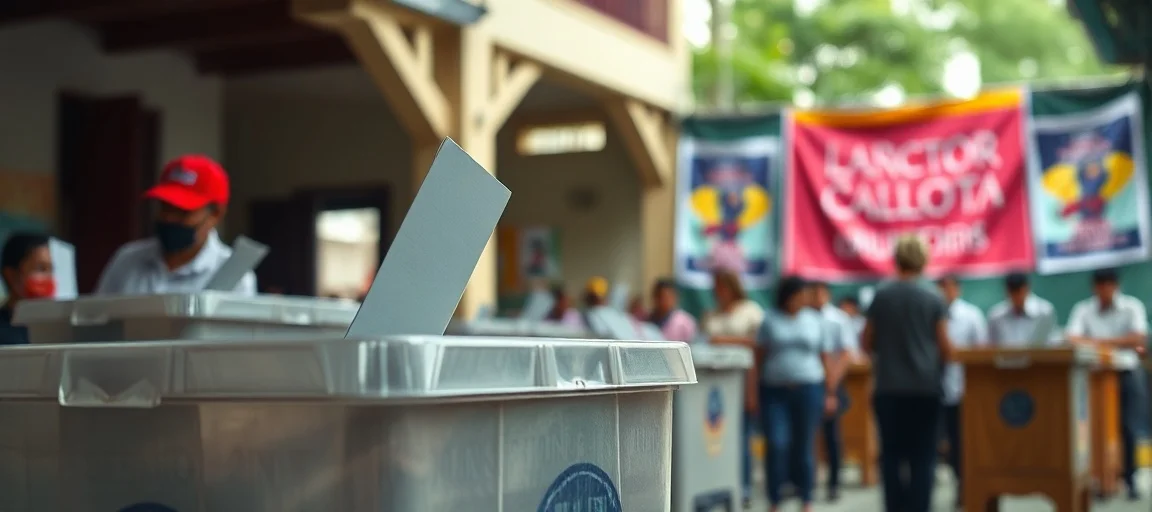
The first round of the Colombian presidential election saw a robust turnout, underscoring the high stakes involved for the future direction of the country. The leading far-right candidate secured a notable plurality of votes, surpassing expectations and establishing a strong position heading into the runoff. This result signifies a powerful voter sentiment leaning towards a more assertive approach to national challenges, particularly security and economic governance. The leading candidate, often described as an anti-establishment conservative, garnered support by advocating for traditional values, robust security measures, and a departure from the political status quo.
The unexpected lead of a far-right figure reflects a deep polarization within the electorate, where the political center appears to have been largely displaced by anxieties on both extremes. Voters are seen as expressing strong reactions to the perceived failures or successes of previous administrations, leading to a desire for definitive change. The campaign leading up to this first round was marked by intense debates over critical issues such as the economy, corruption, healthcare, and public safety. The focus on security, in particular, resonated deeply with many citizens weary of ongoing violence from various armed groups and drug trafficking, coupled with a general frustration over the slow pace of economic recovery and reform.
Understanding the Far-Right Candidate's Appeal
The success of the far-right candidate in the first round can be attributed to several factors. Their platform often emphasizes a "mano dura" (iron fist) approach to crime and a strong stance against corruption, appealing to a segment of the population disillusioned with perceived government leniency or inefficiency. Many far-right candidates in Colombia advocate for increased military deployment, a cessation of negotiations with armed groups labeled as "narco-terrorists," and stricter penalties for criminal offenses, presenting a stark contrast to more conciliatory approaches. The candidate's messaging on "traditional family values," often rooted in Catholic social doctrine, and an emphasis on social order also resonates with conservative segments of the electorate, including those concerned about the erosion of traditional values in society. Historically, Colombian conservatism has intertwined with protectionism and Catholic principles, emphasizing social stability and a strong, centralized state.
Furthermore, the rise of such a candidate aligns with a broader rightward shift seen in other Latin American nations, where voters have opted for leaders promising strong leadership and order amidst economic uncertainties and social unrest. The perception of the candidate as a political outsider, intent on "breaking the grip of Colombia's political elites," also played a significant role in attracting voters weary of traditional political figures. This anti-establishment sentiment, coupled with a focus on national sovereignty and a strong, disciplined state, appears to have energized a significant portion of the electorate who feel unrepresented by mainstream politics.
The Left-Wing Challenger and the Runoff Scenario
Following closely behind the far-right candidate is a prominent left-wing contender, who has also demonstrated significant electoral strength. This sets up a highly polarized runoff election, a common feature in Colombian presidential contests where no candidate secures an outright majority in the first round. The left-wing candidate typically champions deeper socio-economic reforms, addressing issues of inequality, land distribution, and social justice, which have been root causes of conflict in Colombia. Their proposals often include strengthening public services, expanding access to education and healthcare, implementing progressive tax reforms, and a more robust environmental agenda, potentially pivoting Colombia's economy away from its reliance on fossil fuels towards green energies and sustainable tourism. These candidates often advocate for continued, albeit possibly recalibrated, peace negotiations with non-state actors, emphasizing a holistic approach to peace that includes addressing underlying social and economic grievances.
The runoff will likely be a battle between these two sharply contrasting visions for Colombia's future. The left-wing candidate, often representing the incumbent party's political project or a distinct progressive movement, aims to consolidate and expand upon progressive gains, while the far-right seeks to implement a significant shift towards conservative policies and a more hawkish security stance. The outcome will hinge on the ability of each candidate to mobilize their base and, crucially, to attract votes from the center and from those who supported other candidates in the first round. The fragmented political landscape and the absence of strong centrist alternatives mean that many voters may be casting a "negative vote," choosing the candidate they perceive as the "least-worst option" rather than a fully endorsed choice.
Major Issues Dominating the Election
Several critical issues have shaped the electoral discourse and continue to be central to the runoff debate.
Security and Peace Process
The ongoing security situation remains a top concern for Colombian voters. Despite the 2016 peace accord with the FARC, violence persists, fueled by various illegal armed groups, including ELN guerrillas, FARC dissidents, paramilitary successor groups, and organized crime syndicates involved in drug trafficking, illegal mining, and extortion. The debate revolves intensely around the "Total Peace" strategy: while some support continued negotiations, dialogue, and investment in formerly conflict-affected territories, others argue for a more militarized, "iron fist" approach to reassert state control and dismantle criminal networks decisively. The tragic killing of social leaders and human rights defenders, particularly Indigenous and Afro-descendant community leaders in remote regions, highlights the fragility of peace and the state's limited reach in many rural areas, fueling public demand for robust security.
The far-right candidate's proposals often include intensifying military operations, increasing police presence in urban and rural areas, ending negotiations with groups labeled as "narco-terrorists," and constructing high-security prisons, drawing inspiration from models in other Latin American countries. Conversely, the left-wing candidate typically advocates for a more comprehensive approach that combines targeted security efforts with significant social investment, land reform, and addressing the root causes of conflict, such as inequality and lack of opportunity, especially in historically neglected rural areas.
Economic Stability and Inequality
Colombia's economy, the fourth largest in Latin America, is diverse, with strong contributions from services, manufacturing, and mining, particularly oil, coal, and gold. However, it faces significant challenges, including persistent social inequality, high rates of informal labor, and an overreliance on volatile commodity exports. Poverty remains a pervasive issue, disproportionately affecting rural areas, Indigenous communities, Afro-Colombians, and Venezuelans who have migrated to the country. Inflation, though easing, has also been a concern, impacting the purchasing power of ordinary citizens.
The far-right platform often emphasizes free-market principles, deregulation, tax cuts for businesses, and attracting foreign investment, attracting support from business leaders and those seeking fiscal discipline and growth. They often advocate for maintaining strong ties to traditional commodity exports. The left-wing agenda, meanwhile, typically focuses on reducing inequality through expanding social programs, implementing land reform to redistribute unproductive land, strengthening public banks, and potentially shifting the economy away from fossil fuel reliance towards clean energy, tourism, and advanced manufacturing. Voters are carefully weighing how each approach might impact their personal economic well-being, job security, and the country's overall prosperity and fiscal health.
Corruption and Governance
Corruption is another pervasive issue that consistently ranks high among voter concerns, eroding public trust in institutions and hindering development. It manifests in various forms, from petty bribery and clientelism in local politics to grand corruption involving large infrastructure projects, drug trafficking, and illegal mining operations. Both leading candidates have positioned themselves as champions against corruption, albeit with distinctly different proposed solutions. The far-right often frames corruption as a symptom of a weak state, entrenched political elites, and excessive bureaucracy, promising radical reforms, stricter penalties for corrupt officials, and greater judicial independence. The left-wing perspective often links corruption to systemic issues rooted in economic inequality and weak social oversight, advocating for greater transparency, accountability across all levels of government, citizen participation mechanisms, and reforms to campaign finance regulations. Allegations of electoral irregularities and concerns over voting security have also surfaced during the campaign, adding another layer of complexity to the electoral process and reinforcing public skepticism about governance.
Impact and Future Outlook
The lead of a far-right candidate in the first round of the Colombia Presidential Election: Far-Right Candidate Leads Round 1 signals a potential significant shift in the nation's governance. A victory for the far-right would likely mean a more conservative foreign policy, possibly strengthening ties with like-minded administrations globally, and a domestic agenda focused on intensified security operations, free-market economic policies, and the reinforcement of traditional values. Conversely, a win for the left-wing candidate would aim to deepen social reforms, potentially reorient Colombia's international relations towards regional alliances, and prioritize environmental protection and a more inclusive economic model.
The runoff will be a crucial test of Colombia's democratic resilience amidst extreme political polarization. The outcomes will not only shape domestic policies on security, economy, and social welfare but also profoundly influence Colombia's role in the region, particularly concerning international cooperation on drug policy, environmental issues, and ongoing peacebuilding efforts. The country's historical patterns of political violence underscore the importance of peaceful transitions and broad societal consensus, even in the face of deep ideological divides. Regardless of the final outcome, the 2026 election is poised to be a defining moment for Colombia, reflecting a populace deeply engaged in charting its future course and demanding effective solutions to long-standing challenges.
Frequently Asked Questions
Q: Who is the far-right candidate leading the Colombia Presidential Election?
A: The leading far-right candidate, though unnamed in this overview for evergreen relevance, generally campaigns on platforms of strict security, anti-corruption, and traditional values. They appeal to voters seeking strong leadership and order amidst persistent national challenges like violence and economic uncertainty.
Q: What are the main issues dominating this election?
A: The primary concerns include persistent security challenges from armed groups, economic stability and deep social inequality, and pervasive corruption within institutions. Voters are weighing drastically contrasting approaches to these issues, from militarized security to comprehensive social reforms and judicial overhauls.
Q: What are the implications of a far-right lead in Round 1?
A: This lead signals a highly polarized runoff and potential significant shifts in Colombia's governance towards conservative domestic policies, including intensified security, and a more assertive foreign stance. It reflects deep ideological divisions and a strong desire for change within the electorate.